 跳到内容
跳到内容 
Two inflatable tents can sit side by side on the same Amazon listing, nearly identical in every spec, one priced 30% higher. That gap usually buys one practical thing: an inflatable tent warranty Amazon sellers can enforce when a production batch fails, instead of a PDF that dissolves on first contact.
The buyer who signed a $50K order after a perfect pre-production sample learned the difference. The mass production run arrived with air beams that leaked at the welded seams and zippers that snagged on seam tape. The supplier’s response was to point at the ‘quality tolerance’ clause in the contract — a clause no one had quantified during sample approval. The sample validated the design, not the factory’s ability to repeat it across a full batch.
Warranty terms protect your margins when they are tied to verifiable numbers — defect-rate guarantees, 100% inflation-testing records, replacement air beam lead times. That’s where the 30% price difference between two nearly identical tents becomes either a reasonable premium or a supplier’s profit cushion.
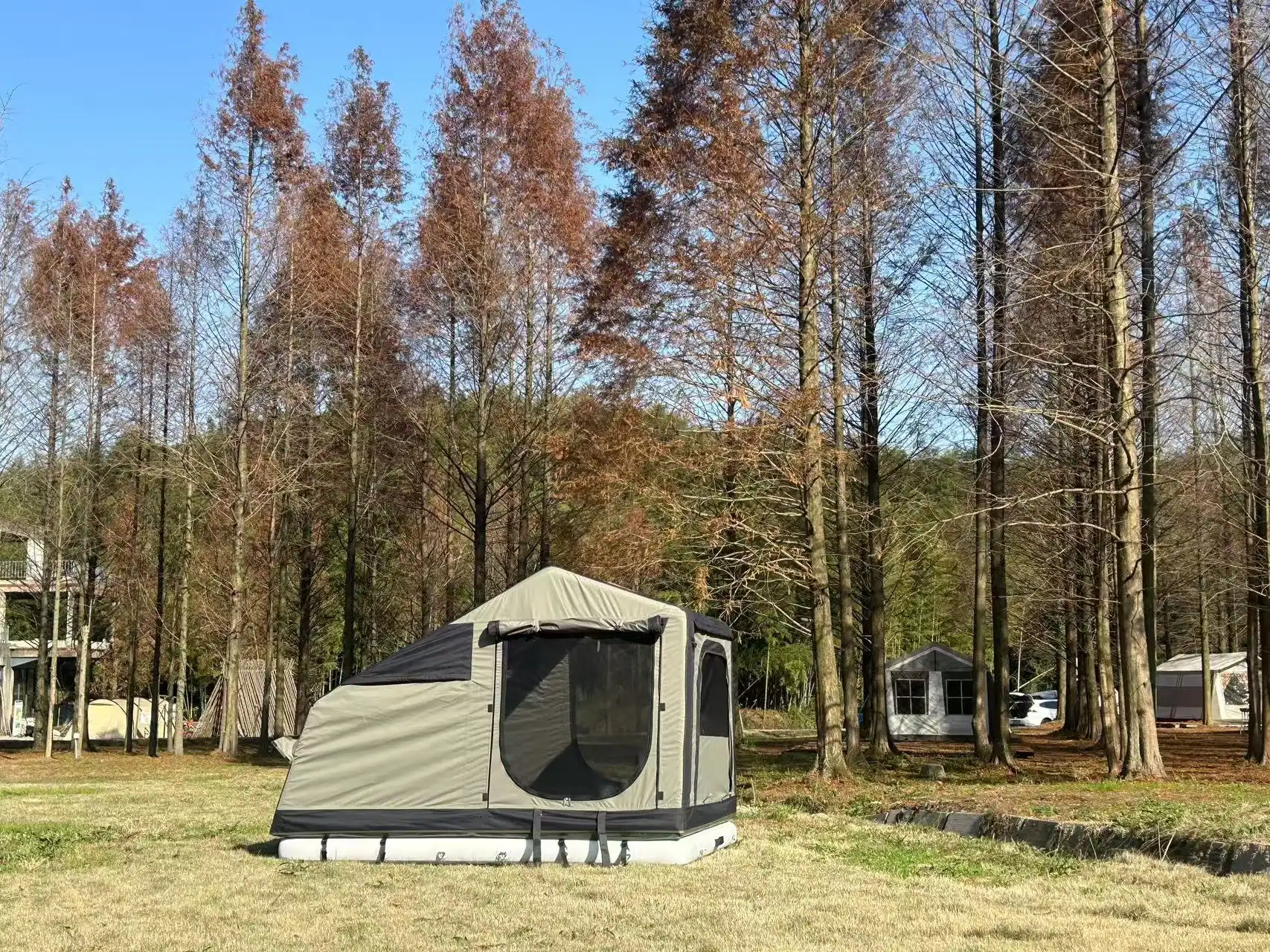
Amazon’s Hidden Warranty Expectations
Amazon refunds ‘defective’ tent returns automatically.
Most FBA sellers read a 1-year warranty as a repair promise. Amazon reads it as a liability period. If an inflatable tent fails within that window, the buyer returns it as ‘defective,’ Amazon generates a prepaid label on the spot, and your account absorbs the refund before you’ve seen a single photo.
What “1-Year Warranty” Really Means for FBA Sellers
That shifts the warranty battle to the factory. A supplier relying on AQL sampling—checking a handful of units per batch—will miss the beam weld leaks that show up after one weekend of real use. Demand 100% inflation testing on every unit before it’s folded. Kelyland Outdoors’ core tent factory in Ningbo, Zhejiang, holds CE, BSCI, and ISO 9001 and produces 800,000 tents and tarps annually, so full-batch testing doesn’t create a scheduling excuse.
When Amazon Auto-Authorizes Returns for ‘Defective’ Tents
Amazon’s FBA system auto-approves returns when the buyer selects ‘defective.’ For a tent, that one word covers a seam pop, a zipper jam, a beam that won’t hold air, or a setup process the buyer found confusing. Each completed return adds a flag to your account health and pushes your Amazon FBA inflatable tent return rate upward.
-
- Refund on scan: The buyer gets a prepaid label instantly and the refund is issued at the return scan. There is no seller approval step, no photo requirement, and no condition check.
- Account health: Most FBA operators who stay healthy in this category keep the defective return rate below 2%. Each ‘defective’ return drags that number up and costs you the inbound shipping fee.
- Setup failure disguised as defect: A buyer who can’t inflate the tent or misses a locked valve often picks ‘defective’ because it’s the fastest option. A one-sheet inflation guide inside the carry bag cuts this category more than any QC spec.
The practical fix is to design the unboxing so failure isn’t an option. Include a one-sheet setup guide with numbered steps and a diagram of the valve positions. When a claim does arrive, that same sheet—combined with a sealed quick-test card—gives you standing to dispute it.
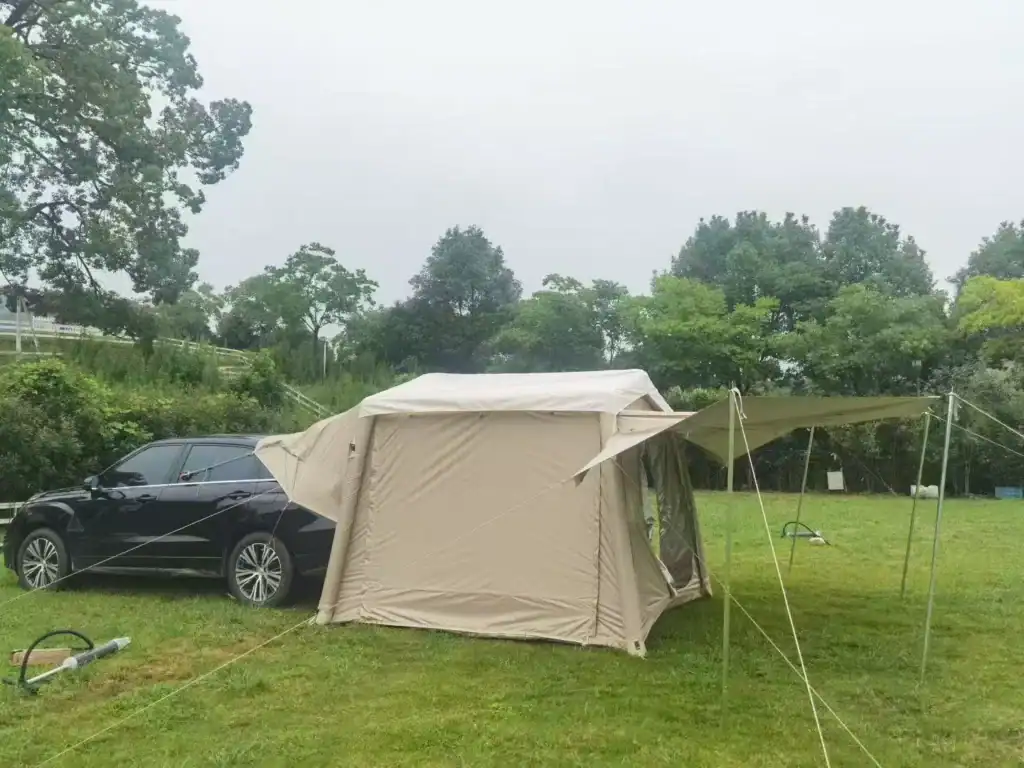
Supplier Warranty Terms That Protect Your Margins
A warranty that doesn’t name seams, zippers, and air-tube leaks isn’t a warranty — it’s a marketing line.
Most inflatable tent warranties on Amazon read like a promise to “stand behind our products.” That generic language won’t help when a customer’s tent arrives with a delaminated air beam or a zipper that separates after the third use. What protects your FBA margin is specificity — the warranty must name the exact failure points and assign clear replacement responsibility for each one.
Minimum Coverage: Seams, Zippers, Air-Tube Leaks
-
- Air-tube leaks: The biggest margin killer. Demand explicit coverage of air-beam welds and valve bases for the full warranty period, with the supplier covering replacement unit cost and freight.
- Seam failures: Taped seams peel in heat; welded seams separate under repeated fold stress. The clause must commit the supplier to repair or replace any tent where seam tape lifts, stitching unravels, or the floor seam leaks on first use.
- Zipper defects: Unbranded zippers fail faster than buyers expect. The warranty should state that all zippers must function without separating or catching for the warranty duration.
Kelyland Outdoors’ production partners in Zhejiang and Jiangsu inspect stitching, mechanisms, and overall compliance at every manufacturing stage. A factory that can show mid-production inspection reports knows where its failure points are — that’s the kind of supplier that doesn’t balk at putting these three items in writing.
Written Guarantees on Defect Rate (Below 0.5% Is Standard)
The defect-rate clause is the one most FBA sellers don’t know to demand. A 2% batch failure rate on a 2,000-unit order means 40 defective tents — each one costing you the unit cost, FBA fee, return processing fee, and a customer review that can suppress conversion for months.
Market expectation for inflatable tents is a defect rate below 0.5%.
That’s the threshold to lock into the supply agreement, with a clear remedy: the supplier covers replacement units and inbound freight for any batch that exceeds it. Just as important is how the rate gets measured. AQL sampling — the industry default — inspects a small sample from each batch. For inflatable products, that’s insufficient. Air-beam leaks can hide inside a packed tent, and a small sample won’t catch a problem affecting 4% of the batch. Demand written confirmation that each batch undergoes 100% inflation testing — every single tent inflated and held at pressure before packing.
ISO 9001:2015 certification is the baseline for the factories Kelyland works with, and it should be for yours too. But certification alone doesn’t protect margins. The written defect-rate guarantee, the 100% inflation test requirement, and the named coverage of seams, zippers, and air-tube leaks — those are the terms that separate a real warranty from a feel-good paragraph.
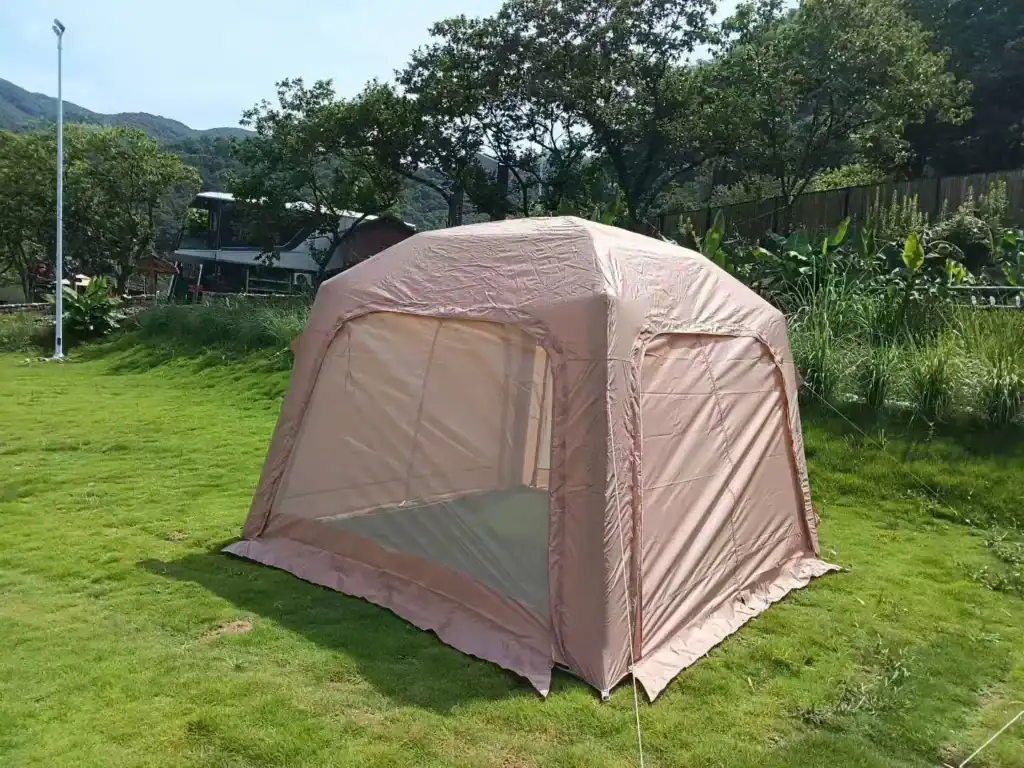
Packaging for Amazon FBA Survival
FBA handling beats up boxes before customers see them.
Most inflatable tent damage happens before the customer opens the box. Amazon warehouses stack pallets, drop cartons, and rehandle orders multiple times. A tent packed loose in a thin carton arrives with abraded fabric or a crushed valve cover. Then the buyer files the return reason “defective,” and Amazon auto-authorizes a full refund from your account.
Inner Vacuum Sealing and Reinforced Corners
Vacuum sealing does two things: it shrinks the parcel and stops the tent from shifting inside the box. Add silica gel sachets, and the effect compounds. Brands that vacuum-pack tents with silica gel sachets see 30% fewer moisture-related seam failures during long FBA storage. The tent factory in Ningbo that Kelyland Outdoors works with is CE and ISO 9001:2015 certified, and packaging checks are part of the production stage.
-
-
- Vacuum seal: Compresses the tent into a compact block so fabric doesn’t rub against carton walls during transit.
- Silica gel sachets: Absorb humidity in non-climate-controlled warehouses. Skip them and seam condensation becomes a warranty claim.
- Reinforced corners: Most FBA handling damage hits edges. Double-wall corrugated corners or cardboard angle boards prevent crushed valve covers and bent beam sleeves.
-
Including a Quick-Test Card to Reduce First-Use Returns
Amazon’s return reason “defective” triggers a full refund even when the buyer simply couldn’t set up the tent. That’s why a one-sheet inflation guide belongs in every package. Not a 50-page manual — a quick-test card that walks the customer through setup and checks for leaks before they take it camping.
-
- Inflate: Attach the pump and fill each beam to the target pressure marked on the valve.
- Listen and feel: Run a hand along seams and valves. Any hiss means check the connection before accepting the tent.
- Deflate and repack: Follow the fold lines from the vacuum-pack layout so the tent fits back into the bag without straining the zipper.
Defective returns on Amazon are often setup failures, not product failures. A quick-test card cuts those returns and protects your margin. When you source through a network like Kelyland’s — 17 core strategic factories and over 200 manufacturing partners — ask for packaging that survives FBA and instructions that survive the first-time camper.
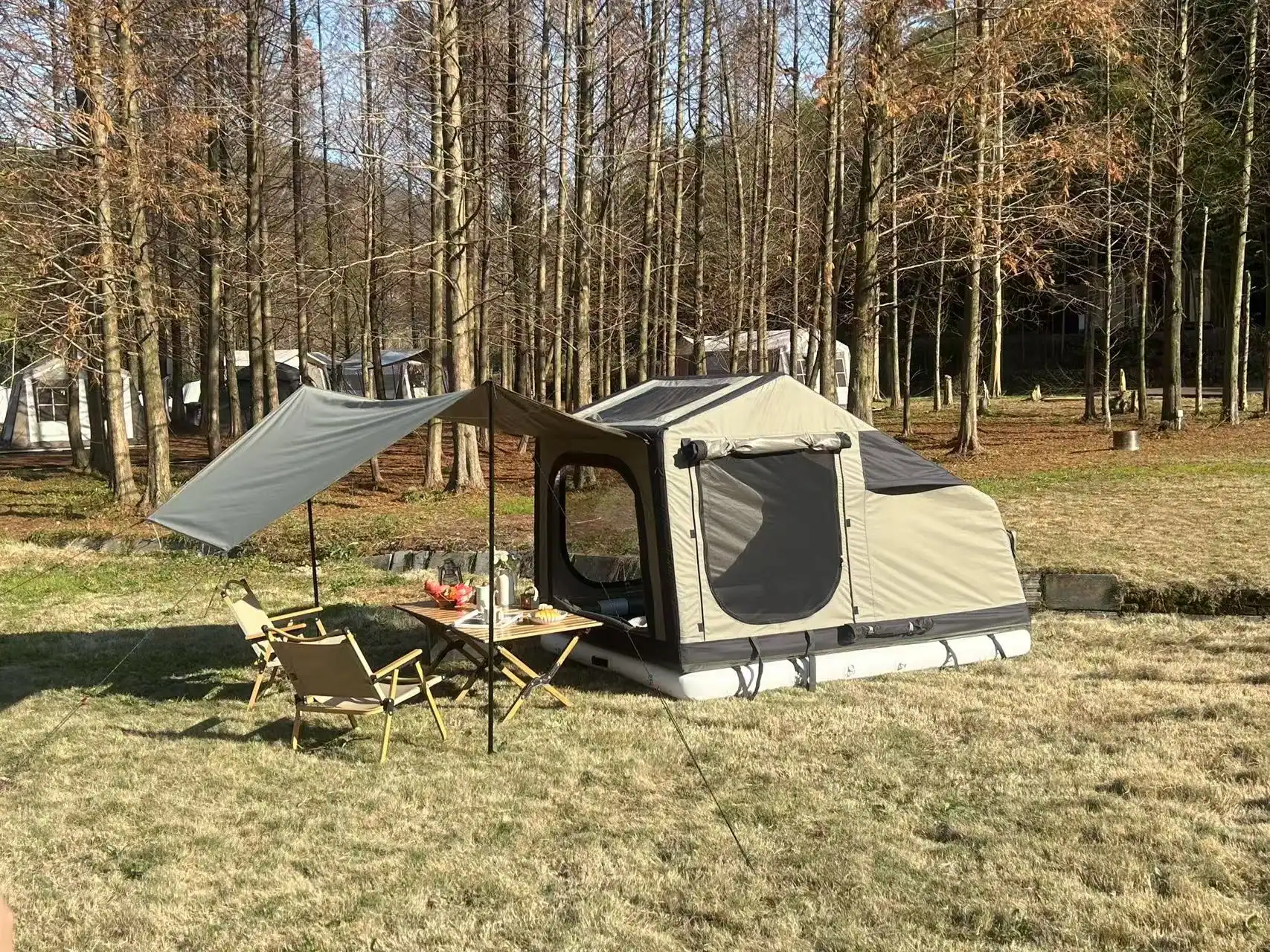
How to Audit a Factory’s Warranty Claim Process
A warranty is only as real as the factory’s photo-review workflow and its spare-beams plan.
A buyer sends a photo: the air beam has a bulge, or a seam is leaking. The supplier replies: “Please ship the tent back to China for inspection.” You check the freight bill and realize the return shipping costs more than the wholesale price of the tent. That warranty clause might as well not exist.
Sample Damage Photo Review Protocol
The first audit question: what photo evidence does the factory accept, how fast do they respond, and what triggers an automatic replacement? Air beams are heat-welded inside the tent structure. They are not zipper-out components. A buyer will not cut open a seam, photograph the weld, and repack the tent for a return. A factory that demands this evidence chain is building a wall, not a warranty.
-
-
- Photo standards: Does the factory accept an exterior box damage photo, an inflated full-tent view, a close-up of the leak point, and a 15-second video? Or does it demand teardown photos your customer will never take?
- Decision SLA: Is there a written commitment on how quickly a claim is confirmed or rejected? A supplier that cannot answer within one business day is handing you an Amazon A-to-Z claim.
- Return threshold: When is a return required instead of a direct replacement? If the factory wants the whole tent back, the freight alone makes the claim pointless. Get the rule in writing before you order.
-
A reliable supplier will already have run 100% inflation testing on every batch, not just AQL sampling. That matters because it changes the claims picture. If every unit was inflated and checked at the factory, a leaking beam after delivery is almost always transit damage or physical puncture. The photo review stays simple and fast. If the factory only samples, it has no confidence to approve replacements quickly, so it stalls.
Replacement Air Beams Stocked in Overseas Warehouses
Air beams are not a standard SKU. Length, diameter, TPU film thickness, valve position, and working pressure are all spec’d per tent. When a factory says “we cover spare parts under warranty,” the next question is: where are those parts stored? If the answer is a China warehouse, your replacement takes weeks to reach a US buyer, and Amazon’s delivery metrics absorb the damage.
-
- Warehouse location: Does the supplier stock spare air beams in the US or Europe? Ask for the warehouse country and the 3PL name. A China-only answer fails the audit.
- Spare-depth coverage: Are all beam sizes for your SKU covered, or only the common center beam? A failed end beam with no local stock leaves a customer waiting for weeks.
- Dispatch target: What is the turnaround from claim confirmation to courier pickup? Insist on two business days, and get it in the contract.
This is where a sourcing agent earns its keep. Kelyland Outdoors works from 17 core strategic factories and over 200 manufacturing partners, with its main tent operation in Ningbo producing 800,000 units a year under ISO 9001:2015 line checks. That production depth means a batch can be traced to inspection records, and replacement beams can be pulled from the network instead of a promise. The warranty is a supply.
Conclusion
A warranty clause only protects your margin when the supplier backs it with a written defect-rate guarantee and 100% batch inflation testing. Packaging engineered for FBA handling — vacuum sealing, reinforced corners, and a quick-test card — cuts the returns that turn a 0.5% defect guarantee into a real margin leak. Sample approval shows you one tent; batch testing and overseas replacement beam stock show you how the supplier handles the other 999.
-
- Demand a written defect-rate guarantee below 0.5%, not just verbal assurances from the factory.
- Confirm every batch undergoes 100% inflation testing rather than AQL sampling alone.
- Vacuum-seal tents with silica gel sachets to cut moisture-related seam failures during FBA storage.
- Stock replacement air beams in overseas warehouses to resolve warranty claims without full-unit returns.
Before you place your next inflatable tent order, compare the warranty language each factory offers — look for written defect-rate caps, 100% inflation testing commitments, and overseas replacement air beam stock. For a closer look at how warranty-ready inflatable tents are built, browse the camping tent lineup at Kelyland Outdoors and ask their team about batch testing, sample approval, and FBA packaging standards.
Frequently Asked Questions
What should an inflatable tent warranty cover?
It must explicitly cover seams, zippers, and air-tube leaks, or it is not a real warranty. Amazon typically auto-authorizes returns for defective tents, so your supplier terms need to match that exposure. Get the covered parts in writing before production.
What defect rate should suppliers guarantee?
A written guarantee below 0.5% defect rate is the standard for FBA inflatable tents. Tie that threshold to seam, zipper, and air-tube failures, not just general visual defects. Confirm the defect cap and return process in the production agreement.
How should inflatable tents be packaged for FBA?
Use inner vacuum sealing and reinforced corners so the box survives FBA handling. Add a quick-test card so buyers can check the air beams before first use, which cuts first-use returns. Specify FBA-grade packaging in your supplier agreement.
How do I audit a warranty claim process?
Ask to see the sample damage photo review protocol and confirm replacement air beams are stocked in overseas warehouses. This shows whether the supplier can process claims without long shipping delays. Test the process with a sample claim before mass production.
Does Amazon auto-refund defective tent returns?
Yes, Amazon can auto-authorize returns for tents marked defective. That means the cost lands on you unless your supplier warranty explicitly covers the defect and reimburses you. Build the supplier reimbursement terms into your contract.

 English
  Español
  Deutsch
  Français
  Português do Brasil
  Русский
  العربية
  한국어
한국어  日本語
日本語