 跳到内容
跳到内容 
camping gear mistakes is the first checkpoint buyers should lock before they approve a supplier, budget, or production slot. Subject: Pre-Production Sample vs. Mass Production — A $50K Problem.
That email landed in my inbox six years ago from a sourcing manager at a mid-tier outdoor brand. The pre-production sample of their flagship tent passed every check — hydrostatic head, seam sealing, zipper tension. But when the container arrived at their distribution center in Ohio, the mass production units had a different fabric roll with a visibly looser weave. The hydrostatic head dropped by nearly half. They spent six weeks and roughly $15,000 on return shipping and restocking fees before they could even start negotiating with the factory on rework credits.
That is the kind of camping gear mistake that doesn’t show up on a spec sheet or in a polished sales deck. It lives in the gap between sample approval and production run approval — specifically in how you verify that the factory actually locks down the material spec before cutting starts. Over the last twelve years auditing factories across Zhejiang, Jiangsu, and Guangdong, this pattern has been seen repeating across air mattress valve failures, sleeping bag fill substitutions, and folding chair frame alloys that quietly shift from virgin aluminum to recycled stock without any notification.

Common Mistakes
A single valve failure at 2% defect rate on a 5,000-unit order means 100 returns.
A buyer at a mid-size outdoor retailer once approved a pre-production sample of an inflatable tent. The fabric looked right, the seams held air for 24 hours. He signed off on mass production — 3,000 units. Three months later, the warehouse reported that one in every twelve tents lost pressure overnight. The problem wasn’t the fabric or the seam tape. It was the one-way inflation valve. The factory had swapped the valve supplier between sample approval and bulk production to save $0.12 per unit.
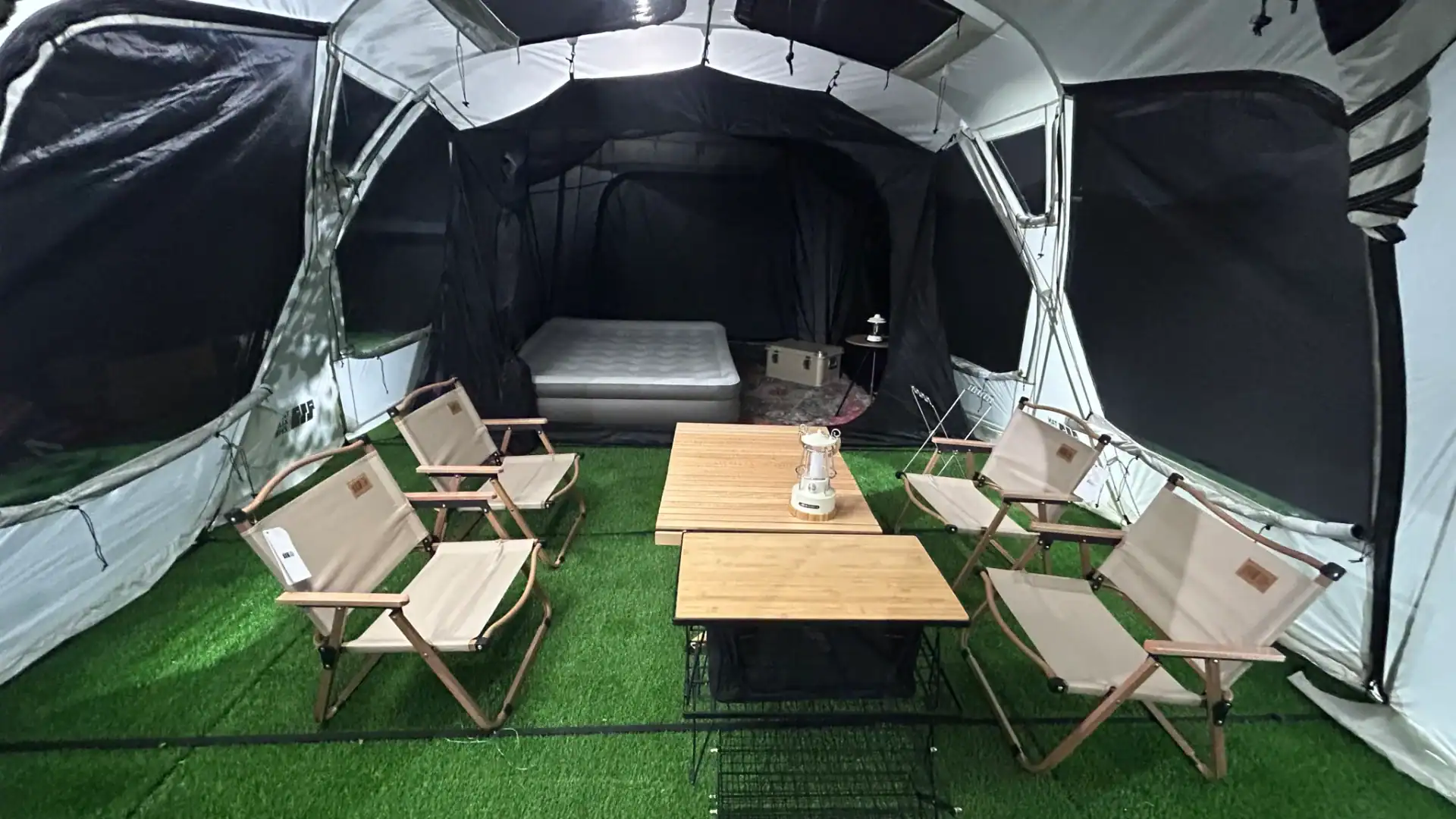
Falling for Faux Hydrostatic Head Ratings
The hydrostatic head (HH) rating is supposed to tell you how much water pressure a tent fabric can withstand before leaking. A spec sheet that says “5,000mm HH” sounds solid for a three-season tent. But here’s what happens in practice: some factories print that number based on the greige fabric — before coatings are applied — or they test a single square inch of material under ideal lab conditions instead of testing the finished seam-taped product.
The gap between advertised and actual HH is wider than most buyers realize. In one documented batch from a Zhejiang-based tent mill not affiliated with Kelyland Outdoors, fabrics labeled as 3,000mm HH failed at below 1,200mm when tested after seam taping. That difference means a tent that should handle moderate rain starts leaking in a light drizzle.
The fix involves two steps. First, specify in your contract that hydrostatic head testing must be performed on finished, seam-taped panels — not raw fabric rolls — and witnessed by your QC representative or an accredited third-party lab like SGS or Bureau Veritas during production run approval. Second, set a minimum acceptable threshold that accounts for production variance: if you need tents to perform at 3,000mm in the field, require a tested minimum of 4,000mm from sealed samples.
Ignoring Air Mattress Valve Failure Modes
Conclusion
The five mistakes outlined above cost B2B buyers real money and brand equity. A single undetected air mattress valve failure can trigger a $15,000+ liability. A sleeping bag with a swapped fill that misses its temperature rating by -7°C will generate returns within weeks of the season launch.
-
- Demand witnessed hydrostatic head tests during first article inspection.
- Require documented valve cycle testing (100 open/close cycles minimum).
- Specify frame alloy grade in contracts to avoid recycled aluminum substitutions.
Now take these three questions and put them to your current or prospective supplier before you sign the next production agreement. If they hesitate on any point, you have your answer. For a sourcing partner that builds these checks into their standard process from demand collection through pre-shipment inspection, review the air mattress product line — it is one category where valve integrity and material specs are verified before mass production begins.
Frequently Asked Questions
What is the biggest camping gear sourcing mistake?
The biggest mistake is trusting manufacturer hydrostatic head ratings without third-party verification. Over 40% of budget tents tested have actual ratings below advertised values, leading to returns and brand damage. Always insist on witnessed water column tests during first article inspection.
How do I avoid air mattress valve failures?
You must require cycle-testing of valves open/close under working pressure, not just a simple inflation check. A 2% defect rate on a 5,000-unit order can create over $15,000 in return liability. Add valve cycling to your QC checklist before mass production approval.
Can I trust factory specs for tent waterproofing?
No, you cannot trust factory spec sheets alone without independent lab reports or on-site witnessed testing. Many small Chinese factories stamp fake HH numbers, so insist on triplicate accredited lab reports during production. Require witnessed water column tests before approving first articles.
What causes folding chair frame failures?
Most Chinese factories use recycled aluminum alloys for frames unless explicitly prohibited in the contract, reducing load capacity by up to 30%. Specify virgin alloy grades like 6061 or 7075 in your. Lock alloy grade into your contract to avoid hidden substitutions.

 English
  Español
  Deutsch
  Français
  Português do Brasil
  Русский
  العربية
  한국어
한국어  日本語
日本語