 跳到内容
跳到内容 
made in china inflatable tents is the first checkpoint buyers should lock before they approve a supplier, budget, or production slot. Two “made in China” inflatable tents can look identical on paper, yet the quotes arrive 30% apart. The cheaper one might pass a quick glance. The extra money per unit at FOB pricing buys the details that matter: multi-chamber TPU/PVC beams at 0.6mm or thicker, UV-stabilized fabric, and a factory that welds with digital temperature control instead of a manual heat gun. That gap is not a margin game—it is the line between sample approval you can trust and a pre-production sample that was a handmade exception.
Most failures assigned to the “made in China” label actually trace back to gate-check shortcuts: subcontractors skip UV stabilizers to win bids, then operators join beams without the process controls a proper production run requires. A factory supplying major retailers checks raw material thickness within ±0.05mm, logs seam welding data, and holds each completed tent at full pressure for 24 hours before shipment. The buyer who loses on a $50K order rarely loses on the unit price—they lose when the mass production run drifts from the tested sample.
A country-of-origin label tells you very little. The factory audit, the material spec, and the price tier tell you almost everything. For buyers deciding whether “made in China” inflatable tents can meet safety and cost targets, those are the variables that separate a reliable program from an expensive lesson.
The Stigma Problem: Why Buyers Distrust “Made in China”
The problem is not the country code.
Try searching for inflatable tents on any trading platform. You will see listings offering 10-piece minimums at $50 per unit. That is where the Made in China reputation gets set — not in the factories producing for Ace Hardware or Discovery.
The stigma runs on three fears: inconsistent vetting, language barriers that complicate contract enforcement, and a long tail of low-ball quotes. None of those are unique to China. They are symptoms of buying from a supplier who has never been audited properly.
Language barriers make it worse. A buyer who signs a contract in English without a Chinese version is relying on the supplier’s translation. That asymmetry disappears when the sourcing partner puts every inspection stage and QC report in writing.
Two Tiers of Factories
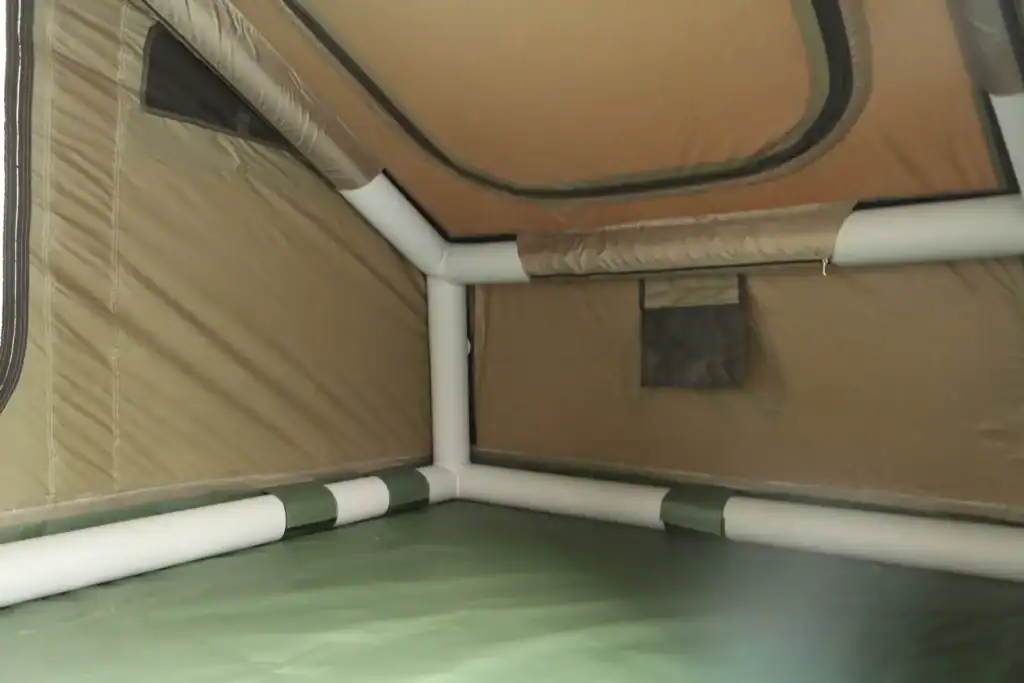
A second-tier workshop that wins on price alone skips steps. It leaves out UV stabilizers, uses manual heat guns for welding, and never pressure-tests the finished air beams. The buyer sees fabric embrittlement after one season and air loss at the seams after three weekends of use.
The Tier-1 factories in Zhejiang, the same ones behind major retail private labels, run a different process. They inspect raw material thickness to ±0.05mm, log every seam weld during production, and hold each finished tent at pressure for 24 hours before it gets packed.
That final 24-hour pressure hold test is the line between a camping product and a liability. It costs nothing compared to a recall, yet most budget suppliers skip it entirely.
The worst failures are not design problems. They are gate-check shortcuts. A factory that skips raw material inspection and final pressure testing will ship beams that look identical to the approved sample — until a customer inflates them on damp ground.
Audit Depth, Not Country Code
The same factory can produce at $50 or $350 depending on the spec sheet. The difference is whether the buyer asks for material certificates, weld logs, and a signed inspection report before shipment. Most don’t ask.
Kelyland works with 17 core strategic factories and over 200 manufacturing partners, most holding ISO 9001:2015. Every partner runs staged inspections, and reports are available on request. That is what a real audit trail looks like.
Ask any experienced sourcing operation and they will tell you the same thing: the difference between a trusted supplier and a problem supplier is audit depth, not a postal code. The country code is just where the factory happens to sit.
How Low-Cost Entrants Feed the Stigma
Skipped UV stabilizers and uncalibrated heat guns cause the failures that brand all Chinese inflatable tents as cheap.
The ‘Made in China’ stigma wasn’t built by tier-one manufacturers. It was built by subcontractors who win bids on price alone and then strip out anything that eats into margin. The most common cut is UV stabilizer additives — roughly $0.12 per square meter of fabric.
That $0.12 matters more than buyers realize. Without stabilizers, PVC and TPU coatings degrade quickly under sunlight. The fabric embrittles after about six months of seasonal camping use. The tent hasn’t structurally failed — the material has lost its flexibility and cracks along fold lines.
The Welding Shortcut That Destroys Seams
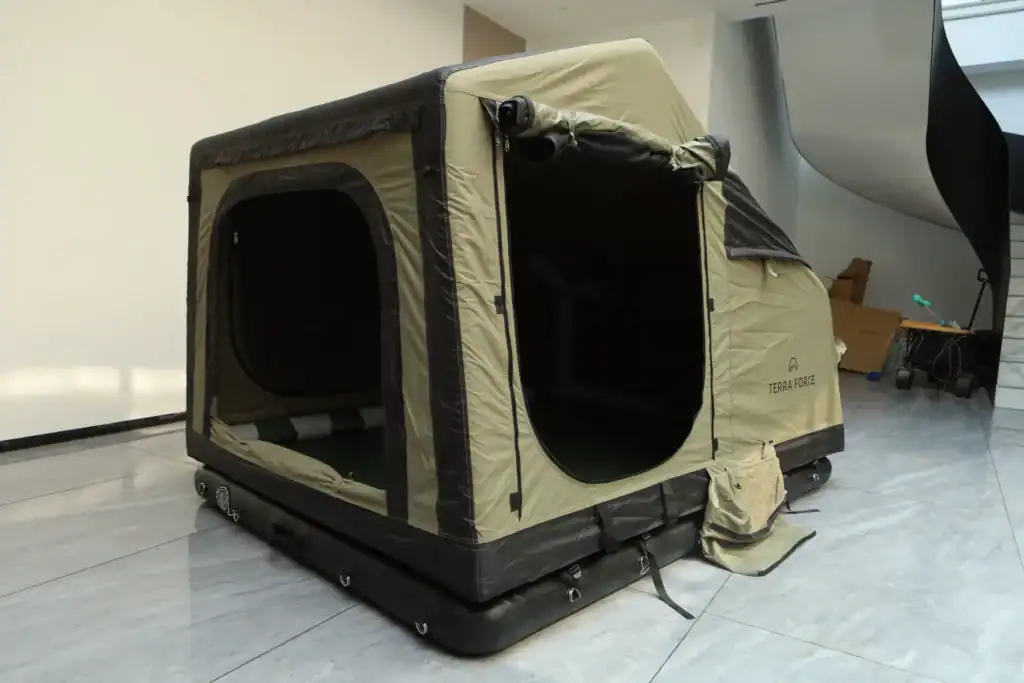
The second cut happens at the seam. Low-cost shops hand operators manual welding pressure guns with no digital temperature control. The operator eyeballs the heat. Some sections get too hot and weaken the base fabric; others never fully bond. Both defects surface as air loss along seams within three weekends of normal use.
Controlled factories do this differently. Air beam welding on high-frequency digital equipment holds temperature within ±2°C, producing consistent seam fusion across the whole production run. That discipline is routine in the ISO 9001:2015 certified plants Kelyland Outdoors partners with — a network of 17 core strategic factories that supply retail programs for brands including Ace Hardware and Lucid.
Why One Bad Batch Poisons the Entire Category
The damage compounds fast. A distributor receives 500 tents, half fail within a season, and the buying team logs the verdict: ‘Chinese inflatable tents leak.’ The factory that built them to spec still loses the next tender because the category itself now carries reputational risk. The stigma persists because it’s easier to blame a country than investigate a spec sheet.
Field inspection data attributes 78% of defects to welding shortcuts — untrained operators with manual heat guns. Contracts don’t filter these shops out. Specifications do. Buyers who demand welding temperature logs and a 24-hour pressure hold test before mass production catch the problem before it reaches retail shelves.
-
- UV stabilizer certificate: Request the mill’s additive spec sheet and verify it covers the actual batch shipped, not a catalog copy.
- Welding temperature logs: Insist on digital welder readouts per shift and a seam peel test on finished beams.
- 24-hour pressure hold test: The tent must hold rated pressure for a full day before packing to catch micro-leaks that pass a quick inflation.
| Practice | Low-Cost Shortcut | Field Failure | Stigma Reinforced |
|---|---|---|---|
| UV Stabilizer Additives | Omits ~$0.12/m² additive to win bid | Fabric embrittlement after 6 months of sun exposure | “Chinese tents fall apart after one season” |
| Welding Temperature Control | Uses manual heat guns without digital ±2°C control | Seam air leaks appear within 3 weekends of use | “Inflatable tents are leaky and unreliable” |
| Material Thickness | Uses TPU/PVC beams below 0.6mm spec | Beams burst under normal inflation pressure | “Made in China means unsafe construction” |
| Quality Inspections | Skips mid-production and pre-shipment checks | Defective units reach retail shelves undetected | Quality inconsistency becomes generalized to all Chinese factories |
| Certification Compliance | Avoids CE/ISO/Oeko-Tex testing costs | Fails fire safety or wind resistance standards | “Chinese gear lacks legitimate certifications” |
| Supplier Traceability | Subcontracts to unvetted workshops | No accountability for materials or workmanship | Reinforces fear of hidden supply chain risks |
The Silent Majority of Tier-1 Factories
The certification gap is a marketing gap, not a manufacturing gap.
Tier-1 Chinese factories aren’t hiding from international safety standards. They’re passing them daily for brands sold at Ace Hardware, Discovery, and REI. ASTM F2747 structural integrity tests, CPAI-84 flammability, and California TB-117 are written into routine contract requirements — not special requests.
The partner factory network behind Kelyland Outdoors includes 17 core strategic factories and over 200 manufacturing partners, most ISO 9001:2015 certified. The camping tent and tarp facility in Ningbo holds CE and BSCI on top of ISO 9001. Glamping tent production in Shaoxing carries CE and ISO 9001. These aren’t badges on a wall; they’re conditions for winning contracts with Western retailers.
Why the Credentials Stay Invisible
The gap is in marketing, not manufacturing. Most tier-1 Chinese factories lead their promotional material with domestic-market certifications that local buyers recognize, like CCC for products sold in China. Western export standards such as ASTM F2747 and CPAI-84 surface only when a buyer explicitly requests the test reports.
Ask a factory for their ASTM F2747 test report and the good ones respond within two business days. Ask for the CPAI-84 flame-retardant certificate and they’ll email the lab report. The documents exist. They just don’t surface in the first page of search results.
How to Verify Instead of Assume
-
- Certification audit trail: Request the actual certificate number and cross-check it with the issuing body. ISO 9001 certificates appear on registrars’ public databases.
- Test report scope: CPAI-84 reports must list the exact fabric construction and coating. A certificate covering a different material weight than your order is worthless.
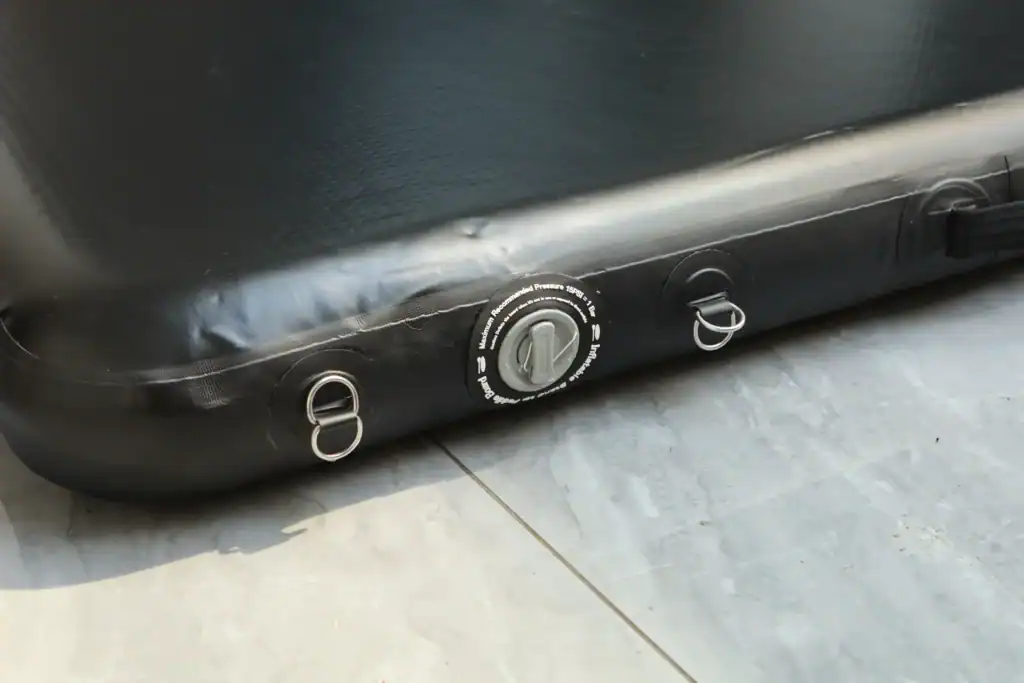
- Factory inspection: Ask for photos or video of the welding line and pressure-testing station. Tier-1 factories in Zhejiang run 24-hour pressure hold tests on inflatable tents before packing.
The “Made in China” label doesn’t tell you whether a tent meets ASTM F2747 or fails it. The supplier’s audit depth does. Skip the assumptions and demand the paperwork.
PVC vs TPU Materials: Real-World Durability Data
PVC is not the problem.
Compare materials before you compare prices. The beam fabric determines burst resistance, UV lifespan, and the size of your warranty exposure. A quote that saves $2 per meter on fabric usually comes back as returned inventory and chargebacks once the field failures start. That is why the material spec belongs in the contract, not in a sales email.
What Standard PVC Delivers
Standard PVC-coated fabric weighs roughly 350 g/m² and runs about $3.50/m² at factory cost. That baseline provides strong water holdout, keeps flexibility down to about -20°C, and gives roughly four years of outdoor service before UV exposure produces visible cracking. With a correct stitching pattern, the burst limit sits near 65 km/h. That works for car camping families and festival use, not for open coastal seasons.
-
- Weight ~350 g/m²: The floor for a 4-person inflatable tent beam. Lighter material cannot hold internal pressure without stretching at the seams.
- Burst limit ≤65 km/h: Valid only when the stitching pattern matches the fabric rating. The same PVC with poor seam geometry fails well before that threshold.
- UV lifespan ~4 years: Expect about four years of outdoor service with stabilized PVC. Skip the UV stabilizer additive and you get visible embrittlement within one season.
TPU Is the Premium Alternative
TPU sits at the higher end of the beam material range. It costs more per square meter but handles UV exposure and cold-weather flexing better than PVC, which is why branded tents that need to survive multiple seasons typically use it. Lock the material choice before comparing FOB prices, because switching later changes the whole cost structure.
Mill Certificate, Not Catalog Copy
The numbers above only matter if the fabric you receive matches the spec sheet. Some mills quote 350 g/m² and ship 280 g/m², betting that nobody checks the batch. Request the actual mill certificate for the material destined for your production run, not a generic catalog PDF.
Tier-1 tent factories in Zhejiang — including the partner factories Kelyland Outdoors uses for its camping tent line — check raw material thickness to around ±0.05mm before cutting, log seam welding settings during production, and complete a 24-hour pressure hold test before a container ships. All of those partner factories operate under ISO 9001:2015 quality systems. A supplier that will not show the mill certificate is asking you to absorb the risk instead.
| Feature | PVC Grade | TPU Grade | Buyer Impact |
|---|---|---|---|
| Material Density | ~350 g/m² | ~250 g/m² | TPU cuts packed weight by roughly 30% |
| Base Cost per m² | ~$3.50 | ~$8–$12 | PVC lowers COGS; TPU supports premium retail pricing |
| Average Outdoor Lifespan | ~4 years with UV stabilizers | ~8–10 years | TPU reduces warranty claims and repeat replacement costs |
| Wind Tolerance | ≤65 km/h burst limit | ≤80+ km/h with proper weld pattern | TPU holds up better on exposed, high-wind campsites |
| Low-Temperature Flexibility | Retains flexibility to -20°C | Retains flexibility to -40°C | TPU is safer for winter and 4-season product lines |
| Fire Rating Potential | Passes CPAI-84 with additives | Inherent flame-retardant options available | Both meet CE/CPAI-84 when properly specified |
| Puncture Resistance | 0.4–0.6mm thickness; good abrasion resistance | 0.4–0.6mm thickness; higher tear strength | Request mill certificates to verify actual shipped spec |
PVC Fabric Characteristics & Tradeoffs
PVC delivers on price and toughness, but UV stabilizers determine whether it lasts one season or four.
PVC-coated fabric sits at the center of most entry-level inflatable tents because the numbers work. A standard spec runs about 350 g/m² and costs roughly US$3.50/m² from Chinese mills. Those numbers are why brands launch with PVC before considering TPU.
Performance Profile
At that weight, PVC gives you excellent water holdout and abrasion resistance. It also stays flexible down to -20°C, which matters for tents stored in cold warehouses or used on shoulder-season trips. The weakness is UV. Continuous sun exposure breaks down unstabilized PVC faster than polyester tent fabric.
Stabilized PVC changes the math. Yearly testing on properly stabilized material shows adequate lifespan around four years outdoors before visible cracking appears. Skip the UV stabilizer package to save a few cents per square meter and that number collapses to one season. You will not catch it during sample approval; your customers will catch it after three weekends of sun.
Factory Checklist
-
- Mill certificate: Ask the factory for the actual g/m² and UV stabilizer package in writing. A fabric spec that looks identical on paper can be built with a cheaper plasticizer blend that cracks earlier.
- Welding method: Manual heat guns produce inconsistent seam temperatures. High-frequency digital welders hold accuracy to ±2°C, so beam seams stay airtight across long production runs.
- Factory certifications: The tent and tarp partner factories in Ningbo and Jinhua that Kelyland uses are ISO 9001:2015 certified and CE approved for the assembled product range.
Conclusion
The gap between a $200 inflatable tent and a $300 one is not profit margin. It’s certified material thickness, digital weld control, and a factory that can show an ISO 9001 audit trail. Those variables decide whether your order survives a season or turns into liability.
-
- Quality Chinese inflatable tents use TPU/PVC beams at ≥0.6mm thickness and pass 24-hour pressure hold tests.
- Real FOB pricing for a 4-person inflatable tent runs $250–$380; below $200 means skipped UV stabilizers.
- Demand CE, ISO 9001, and Oeko-Tex documentation plus wind resistance data of 50–60 mph.
- Verify the factory uses high-frequency digital welders; manual heat guns cause most field defects.
When you compare suppliers, put those numbers on your checklist: ask for the mill certificate, the weld log, and a pre-shipment pressure test report before committing to a production run. If a factory hesitates on any of those, move on. For a working example of a China-based sourcing partner that documents these standards, browse Kelyland’s product page.
Frequently Asked Questions
Are Chinese inflatable tents safe?
Yes, if built with multi-chamber TPU/PVC beams at 0.6mm or thicker, a properly manufactured Chinese inflatable tent can handle 50–60 mph winds. Most field failures come from factory shortcuts like manual heat guns. Verify beam thickness and welding process before approving samples.
How much do Chinese inflatable tents cost?
Real FOB pricing for a quality 4-person inflatable tent runs $250–$380 per unit. Quotes below $200 usually mean skipped UV stabilizers or thinner materials that fail within one season. Treat sub-$200 quotes as a quality warning, not a deal.
Why do Chinese inflatable tents fail?
Most failures trace to untrained welders using manual heat guns instead of high-frequency digital welders, causing 78% of field defects. Skipped UV stabilizers and uncalibrated heat guns are the real culprits behind. Ask for digital welder specs and seam burst test reports.
What certifications should an inflatable tent supplier have?
Look for CE, ISO 9001, and Oeko-Tex at minimum, since these cover product safety, factory process, and material toxicity. The certification gap is usually a marketing gap, not a. Ask for test reports tied to your exact product model, not generic certificates.
How can I check inflatable tent factory quality?
Verify raw material thickness within ±0.05mm, require mid-production inspections, and confirm digital welding equipment is used. Tier-1 Chinese factories already enforce these checks for major retail private labels. Make inspection stages a written contract requirement.

 English
  Español
  Deutsch
  Français
  Português do Brasil
  Русский
  العربية
  한국어
한국어  日本語
日本語