 跳到内容
跳到内容 
When you import camping tents from China, sourcing based on price alone leads to snapped fiberglass poles and leaking seams. This approach directly increases warranty claims and erodes profit margins, as poor product quality translates into costly returns and negative brand reputation.
This guide benchmarks suppliers against critical manufacturing standards, from heat-sealed seam taping to the use of 7001-grade aluminum frames. We analyze MOQ flexibility and customization options, like Black Coating technology, to help you secure a reliable factory partner.
The Rise of the Giant Air Tent
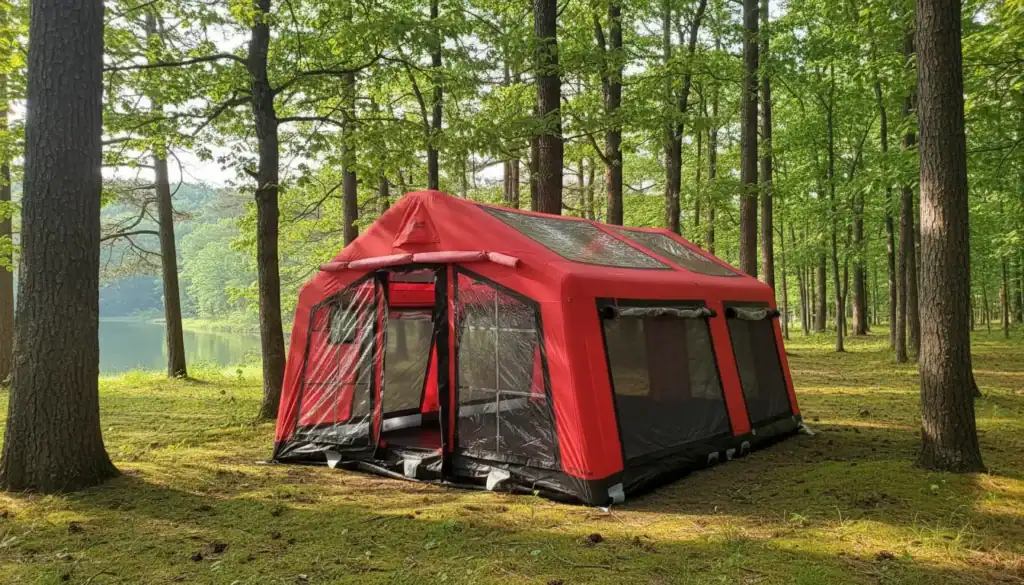
Giant air tents are gaining market share as rapid-deploy solutions for events and emergencies, using high-pressure TPU/PVC air beams instead of poles for fast, scalable shelter.
Market Drivers for Large-Scale Inflatable Structures
The demand for massive temporary infrastructure is growing fast. Traditional construction is slow and expensive for short-term needs. This has created a clear opening for large-scale inflatable structures, which offer a modular, reusable, and rapidly deployable alternative. We see this demand spike in two main areas: major public events and emergency response.
Key applications driving the market include:
- Global Events: Recent projects like the 30,000 sq m deployment for the 19th Hangzhou Asian Games and 15,000 sq m for the Beijing Winter Olympics show a clear preference for these structures.
- Emergency Infrastructure: The ability to deploy massive facilities quickly is critical. During the Shanghai COVID-19 response, 50,000 sq m of shelter were erected in just four days.
- Commercial Flexibility: Businesses are shifting away from permanent construction for temporary needs, preferring scalable solutions that can be easily moved, stored, or reconfigured.
Core Technology: TPU and PVC Air Beams
The structural integrity of these tents comes from high-pressure inflatable Air Beams. This system replaces the bulky and heavy steel or aluminum poles common in traditional marquee tents. Our manufacturing process utilizes durable TPU (thermoplastic polyurethane) or PVC (polyvinyl chloride) for these beams, creating a rigid frame that can withstand significant wind and weather loads once inflated.
The flooring is just as important for commercial use. Standard tent floors wouldn’t survive high-traffic events. That’s why we use a heavy-duty, 100% waterproof PVC or TPU mesh fabric, the same material trusted for industrial applications. This ensures the floor can handle foot traffic, equipment, and repeated deployments without failing.
Top 10 Large Air Tents to Watch in 2026
The large air tent market is moving beyond simple capacity. Key value now comes from rapid setup, multi-room privacy, and effective light-blocking bedroom technology.
Compiling a definitive “top 10” list is difficult, as detailed specs for upcoming models are limited. But a few key products currently on the market show exactly where things are headed. These tents represent the major segments: premium family glamping, four-season use, and value-focused car camping.
| Model | Primary Use Case | Floor Space | Capacity |
|---|---|---|---|
| Sonmez Outdoors LONDON MAXIA 480 | Premium / Glamping | 185.1 sq ft | Up to 14 people |
| Sonmez Outdoors LONDON 360 DISCOVER | Four-Season / Winter | Not specified | Not specified |
| RBM Outdoors Panda Air Large | Value / Family | 129.2 sq ft | Up to 6 people |
| RBM Outdoors Panda Air Medium | Compact / Four-Season | 71.0 sq ft | Up to 4 people |
Key Trends Shaping the Market
The focus on interior space is getting more sophisticated. Multi-room layouts are now standard for family tents because they provide actual privacy. Most use removable fabric dividers, allowing users to switch between a single large room and separate sleeping quarters. This flexibility is a major selling point for families or groups who need to create distinct living and sleeping zones.
“Blackout Bedroom Technology” is another feature with high demand. Using fabrics with a black coating blocks nearly all light, which helps regulate sleep cycles by preventing early morning sun from disrupting melatonin production. Research shows a modest but significant improvement in sleep quality, especially for campers sensitive to light.
Stability and Real-World Setup
Concerns about the stability of large inflatable tents are common, but unfounded with quality products. The durable TPU air beams are designed to flex under wind load and return to shape, unlike rigid poles that can snap. This design distributes force evenly across the structure, often giving air tents superior wind resistance compared to traditional pole tents.
Manufacturer setup times are optimistic. While brands claim 5-10 minute setups, user experience shows 15-30 minutes is more realistic for two people, especially the first time. The idea of a single person setting up a 12-person tent is impractical. The bulk and weight of the fabric require at least two people to manage effectively.
Privacy Matters: How Effective Are Multi-Room Designs?
Multi-room tents use fabric dividers to create separate sleeping and living zones. This improves privacy and comfort for families or groups sharing a single shelter.
Establishing Separate Living and Sleeping Zones
Room dividers create distinct visual barriers inside the tent. This gives people private space for changing clothes or sleeping without being in constant view of everyone else. It also helps organize gear by creating separate “rooms” for living and sleeping. While the fabric dampens sound, it doesn’t fully soundproof the space, so acoustic separation is only moderate.
The Advantage of Blackout Bedroom Technology
A key feature for enhancing privacy is what we call Blackout Bedroom Technology. This involves a specialized Black Coating applied to the bedroom fabric. It blocks 99% of UV and ambient light, creating a truly dark sleeping pod even during the day. This technology also lowers the internal temperature by 5-10°C, adding a significant comfort benefit.
Blackout Bedrooms: Do They Really Improve Sleep?
Yes, darkness improves sleep by boosting melatonin. Our tents use a specialized black coating to block nearly all sunlight, creating a true darkroom for better rest.
The idea of a “blackout” or “darkroom” tent is a popular feature, but it’s grounded in simple biology. Getting better sleep while camping isn’t about fancy features; it’s about controlling your environment. Light is the single biggest factor you need to manage.
How Light Disrupts Your Natural Sleep Cycle
Your body’s internal clock, or circadian rhythm, runs on light cues. When your eyes detect light, your brain stops producing melatonin. This hormone is the key signal that tells your body it’s time to sleep. Any light exposure, even from a small LED or early morning sun, can disrupt this process. This makes it harder to fall asleep and can pull you out of deep, restorative sleep cycles. A consistently dark environment ensures your body releases melatonin on a healthy, regular schedule.
The Role of Black Coating Technology in Tents
To create this optimal sleep environment, we use what we call “Blackout Bedroom Technology.” This is more than just dark-colored fabric. A specialized Black Coating, a vinyl or glue layer, is applied directly to the tent material. This process blocks over 99% of UV rays and visible light, creating a true darkroom interior. It allows you to sleep soundly past sunrise or take a nap during the day without interruption. The coating also reflects solar heat, which can lower the internal tent temperature by 5-10°C—a major benefit in warm climates.
Structural Integrity: Can Big Tents Stay Stable?
Yes. Large tents achieve stability through specific engineering, a complete load path, proper anchoring, and high-strength materials like steel or aluminum alloy frames.
Key Engineering Principles for Tent Stability
Stability isn’t accidental; it’s engineered. The core principles focus on managing and transferring environmental forces safely to the ground. This requires a system that works together, not just strong individual parts.
- A complete load path ensures forces from wind or snow travel from the fabric, through the frame, and down into the ground anchors without a weak link.
- Lateral bracing and correctly tensioned guy-lines are essential for managing horizontal wind forces and preventing the structure from swaying or deforming.
- The entire structure is designed to meet or exceed minimum design loads for specific environmental stresses, ensuring it can handle expected conditions.
Frame Materials and Reinforcement Techniques
The materials used for the frame and the methods for reinforcing stress points are critical. The right combination provides the strength needed to withstand years of use in varied conditions.
- Steel Poles: Used for maximum strength and creating near-vertical walls, making them ideal for large family cabin and glamping tents where interior space is a priority.
- Aerospace Grade Aluminum (7001/7075): Offers a superior strength-to-weight ratio. This high load-bearing alloy is the standard for professional-use and trekking tents that require durability without excess weight.
- Bar-Tack Stitching: This reinforcement technique is applied to all guy-out points, webbing loops, and corners. It distributes force across a wider area to prevent fabric from tearing under high tension.
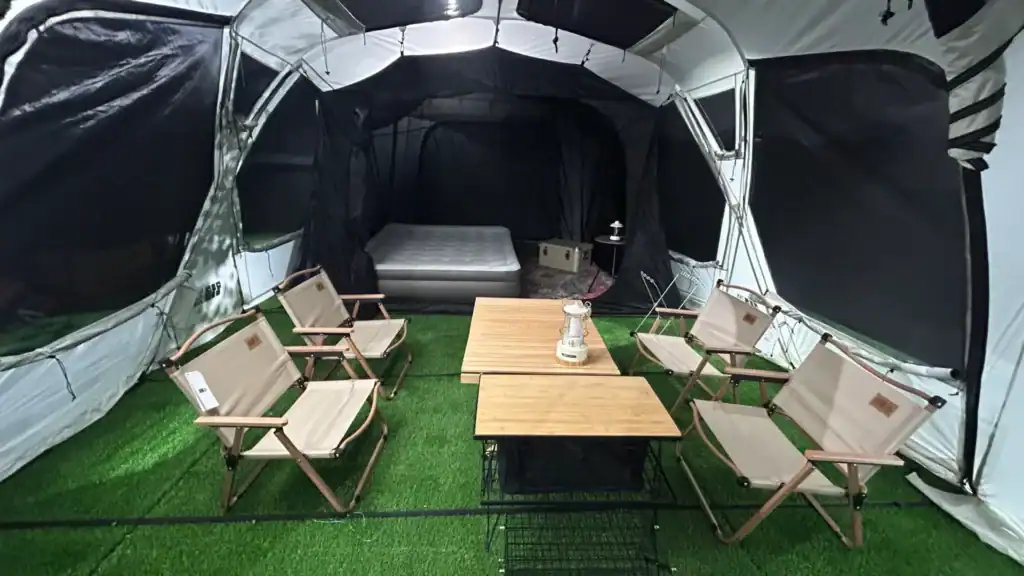
A well-furnished camping tent with comfortable furniture and mattress, perfect for outdoor adventures.
Tunnel vs. Pod: Which Layout Suits Families Best?
Tunnel tents provide a large, open living area ideal for communal activities. Pod tents use a central hub with separate sleeping rooms for greater privacy.
Defining the Layouts: Open Space vs. Private Rooms
The fundamental difference between these layouts comes down to how they manage shared and private space. One prioritizes a large, open-plan feel, while the other creates distinct zones for sleeping and living.
- Tunnel Tents create a long, linear living area under a series of arched poles. This design maximizes usable space for dining and group activities, making the entire tent feel like one large room.
- Pod Tents are designed with a central common area connected to multiple, separate sleeping compartments. This offers enhanced privacy for parents and children, much like a multi-room cabin.
Matching Frame Technology to Family Needs
The layout you choose often dictates the frame technology supporting it. The structural needs for an open-span tunnel are very different from a multi-room pod with vertical walls.
- Steel Frames: Heavy-duty Steel pole frames support the vertical walls and high ceilings common in large, cabin-style pod tents. This strength ensures maximum stability for the multi-room structure.
- TPU Air Beams: Modern TPU Air Beams enable a rapid, ‘no-pole’ setup for expansive tunnel tents. This system simplifies the pitching process, a clear advantage for family campers.
Equip Your Brand with Superior Tents

Final Thoughts
While generic tents offer lower upfront costs, relying on factory standards like heat-sealed seams and reinforced stress points is the only way to protect your brand from costly returns. This manufacturing discipline prevents the leaks and pole failures that destroy customer trust. Quality sourcing is a direct investment in your long-term market reputation.
The specifications on paper are just a starting point. We recommend ordering a sample to personally test our fabric coatings, stitching, and overall build quality firsthand. Contact our team to get the process started and discuss your private label requirements.
Frequently Asked Questions
What is your Minimum Order Quantity (MOQ) for custom tents?
Our standard MOQ for a fully custom production run is between 300 and 1,000 pieces, depending on the specific fabric and color. We also support startups and smaller businesses with a flexible MOQ of 50 to 100 units for orders using our ready-stock materials.
What is the typical production lead time for a bulk order?
After sample approval, bulk production generally takes 30 to 45 days. This timeline can vary based on order complexity and seasonal demand. Our peak production season is from October to January.
What kind of customization services do you provide?
We offer complete one-stop customization. You can choose specific tent fabrics, floor materials, pole systems like aluminum or fiberglass, and specialized coatings such as our ‘Blackout Bedroom’ technology. We also handle custom logos, colors, and branded packaging.
How do you ensure the quality of your tents?
Our quality control includes multiple stages, from initial fabric inspection to automated precision cutting. We use double-needle stitching, apply heat-sealed tape to all seams for waterproofing, and reinforce stress points. Every product is backed by a 1-year warranty against manufacturing defects.
What are your standard payment terms?
Our standard payment terms are a 30% deposit to start production and the remaining 70% balance paid before shipment. You are welcome to conduct a final inspection before the balance payment. Sample fees are paid upfront and are refundable when you place a bulk order.
Can one person set up a large 12-person air tent alone?
Yes, one person can set up a large 12-person tent, especially if it is an ‘instant’ or ‘inflatable’ model. Tents with air frame technology or pre-attached poles are designed for quick, solo assembly. While having help is always faster, it’s not required for these modern designs. Traditional pole tents are much more difficult to set up alone.
Do large inflatable tents fit on standard campsite plots?
Frequently, no. Many standard campsite plots are sized for smaller 4-person tents. A large 8 to 12-person tent can easily exceed the designated space. You will often need to book a larger, family-sized site to accommodate the tent’s footprint and the necessary space around it for guy lines and movement. It’s best to check the campsite’s dimensions before booking.
How heavy is a typical 10-person tent in its carry bag?
A 10-person tent typically weighs between 22 and 32 pounds (about 10-14.5 kg) in its carry bag. The final weight depends on the tent’s materials, like the fabric thickness and whether the poles are fiberglass or steel. These tents are intended for car camping where weight is less of a concern.
Is ventilation a problem in large inflatable tents?
It can be if the tent lacks proper design features. The waterproof materials used in inflatable tents don’t breathe well, which can trap moisture and cause condensation. Look for models with plenty of mesh windows, ground-level vents, and roof vents to ensure good airflow and a comfortable interior.
Are the room dividers in multi-room tents removable?
Yes, the dividers in most multi-room tents are designed to be removable. They usually connect to the tent’s interior with simple toggles or clips. This feature provides flexibility, allowing you to create separate sleeping areas for privacy or remove the divider to form one large, open space.

 English
  Español
  Deutsch
  Français
  Português do Brasil
  Русский
  العربية
  한국어
한국어  日本語
日本語