 跳到内容
跳到内容 
Effective Troubleshooting & Repair(Support) for inflatable tents is the primary defense against escalating warranty claims and negative reviews. A slow or inaccurate diagnosis of a common valve leak often leads to costly full-unit replacements, eroding profit margins on every tent sold.
This guide provides a standardized protocol for diagnosing issues in TPU/PVC air beams. We detail patch application for PVC floors and valve core replacement, using the components from a standard repair kit, to reduce customer service resolution time and operational costs.
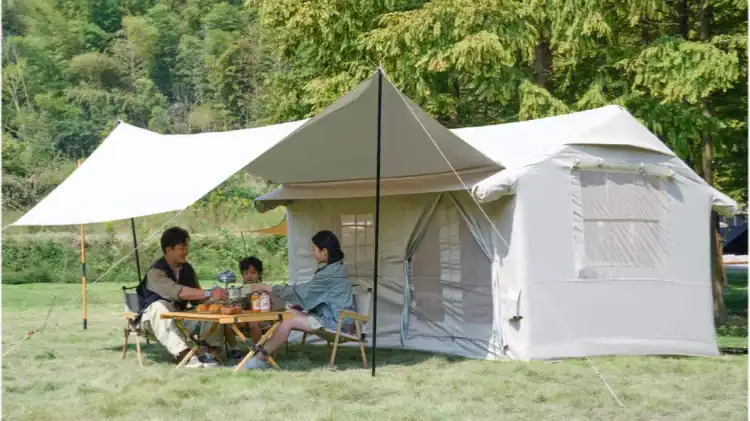
Market Dominance: Who Are the “Big 3” Global Leaders?
The inflatable tent market is led by Heimplanet, Zempire, and Vango. These Tier 1 players dominate through design innovation and strong global distribution networks.
The global market for inflatable tents is concentrated around three key companies that have secured significant market share. These brands compete on design, material quality, and distribution reach rather than just price. Their positioning sets the standard for the rest of the industry.
| Brand | Headquarters | Market Position & Key Differentiator |
|---|---|---|
| Heimplanet | Germany | Recognized as a leading innovator, focusing on cutting-edge designs and eco-friendly materials with robust global distribution. |
| Zempire | New Zealand | A top-tier competitor holding substantial market share through consistent product innovation and strong regional reach. |
| Vango | United Kingdom | An established market leader known for product quality and strategic partnerships that maintain significant industry influence. |
Market Context
These three leaders operate in a market expected to hit USD 2.5 billion by 2035. Family camping tents are the largest segment, making up 45% of sales. North America currently represents the largest regional market, but the fastest growth is coming from the Asia-Pacific region.
Disruptors: Emerging US Brands You Need to Watch
The US inflatable tent scene is dominated by established names and international players. Truly new, domestic disruptors are difficult to track without inside data.
While the global inflatable tent market is led by giants like Heimplanet (Germany), Zempire (New Zealand), and Vango (UK), the US domestic market presents a different picture. It’s a mix of established American companies adapting to new tech and international brands establishing a strong foothold. Identifying genuinely “emerging” US-native brands is tough, as most manufacturing, even for US-based companies, is sourced from experienced hubs in China, like Zhejiang and Guangdong.
Here’s a breakdown of the players making moves in the US market. The term “US Brand” here refers to brands with a significant US market focus, not necessarily US manufacturing.
| Brand | Origin / HQ | Market Position & Focus |
|---|---|---|
| Coody | Korean Design, US Market Focus | Actively targets the US market with a focus on modular design, TPU air beams, and configurations for up to 10 people. They are a visible competitor online. |
| Coleman | USA (Established) | A legacy American manufacturer that has entered the inflatable space with its Weathermaster series. Competes on brand trust and features like blackout technology. |
| Good inTents | USA (Apparent) | Positions itself as a competitor focused on sustainability and comfort. Less is known about their market share, but they are on the radar. |
The market clearly splits between budget and premium tiers. Budget brands often compete on value by leveraging large-scale manufacturing efficiencies, while premium brands focus on heavy-duty materials for specialized use cases like overlanding. For any brand, new or old, the supply chain is key. Most rely on OEM/ODM partners to handle production, allowing them to focus on design and marketing. This is the standard playbook, whether you’re a startup or an established name like REI or Big Agnes.
Source Premium, Fully Customizable Camping Tents

Positioning Strategy: Budget vs. Premium Brand Analysis
Positioning is perception. Budget brands win on transparent costs and feature comparisons. Premium brands build value with craftsmanship stories. Your material choices must support your brand’s promise.
Defining Value for Different Target Personas
A budget position works when you are transparent about where the savings come from. Showing a direct-to-consumer model or using simple feature comparison charts helps customers see tangible value. They aren’t looking for a story; they’re looking for a smart, functional purchase justified by clear data.
Premium positioning justifies a higher price by creating emotional value. This isn’t about specs, it’s about the story of craftsmanship, the feel of the materials, and the experience of personalized service. A curated visual identity across the product and marketing ties it all together, making the customer feel they are buying more than just a product.
Executing Your Position with Material Choices
To build a strong budget-focused brand, you need to deliver reliable performance at an accessible price. Combining cost-effective materials like 190T Polyester fabric with durable Fiberglass poles achieves this. The final product is dependable and functional, meeting customer expectations without expensive add-ons.

To build a premium brand, the physical product must feel superior. Selecting high-performance options is non-negotiable. You can combine breathable Poly-Cotton fabric with “Aerospace Grade Aluminum” poles and integrate features like our “Blackout Bedroom Technology.” These material choices create a user experience that justifies the premium price point.
Supply Chain Map: Where Are These Tents Actually Made?
Most tent production is centered in China. Kelyland Outdoors partners with specialized factories in Zhejiang province—in cities like Ningbo, Shaoxing, and Jinhua—to produce its diverse tent range.
China’s Role as a Manufacturing Hub
The vast majority of outdoor equipment, including camping tents, is produced within highly specialized manufacturing zones in China. This isn’t random; provinces like Zhejiang are central to the industry because they contain complete supply chains. All the necessary textiles, waterproof coatings, and hardware components are sourced and assembled within a concentrated region, which creates massive efficiency.
Kelyland’s Partner Factory Locations
We don’t use a single, massive factory for everything. Instead, we partner with a network of factories, each with specific expertise. Our main production hubs are all located within Zhejiang province.
- Camping Tents and Tarps: Our main partners for standard recreational and trekking tents are based in Ningbo.
- Glamping Tents: The dedicated production lines for heavier poly-cotton and canvas bell tents are located in Shaoxing.
- Roof Top Tents: Manufacturing for our vehicle-based hard-shell and soft-shell tents is handled by our partners in Jinhua.
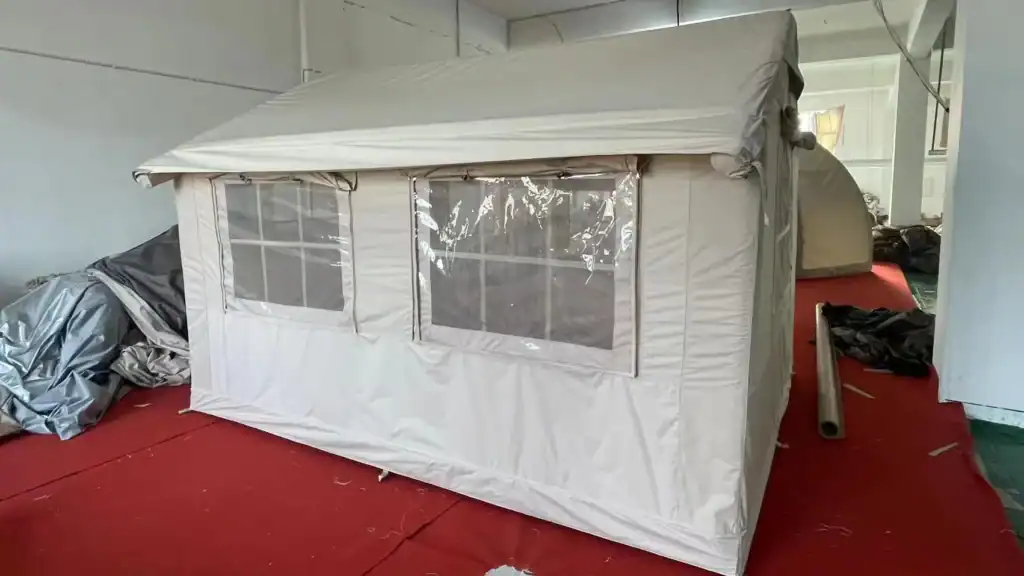
A camping tent in the process of being assembled in a production facility, demonstrating Kelyland Outdoors’ manufacturing capabilities.
B2B Opportunities: OEM and Private Label Strategies
Private label offers fast market entry with low risk. OEM provides full control for custom products. Kelyland supports both paths with flexible MOQs for any brand stage.
Choosing Your Path: Speed-to-Market vs. Full Customization
Private label is the fastest way to test a market. You select from existing, proven designs, add your branding, and can be ready in about four weeks. This route keeps financial risk low and is perfect for validating a new product line before committing to larger investments.
OEM manufacturing is for building a unique brand from the ground up. You control every detail—design, materials, and functionality. This path requires more time for development and tooling investment, but the result is a proprietary product that no one else can sell.
Flexible MOQs for Market Entry and Scaling
We structure our commercial terms to fit your business stage, whether you’re just testing an idea or scaling an established product line.
Our Startup Support program is built for market validation. For specific models using ready-stock fabrics, we can start production with Minimum Order Quantities as low as 50-100 pieces. This lets you get real customer feedback without over-investing in inventory.
Once your brand gains traction, you can scale to full OEM production. Standard MOQs for deeply customized tent designs range from 300 to 1,000 pieces, giving you the volume needed to build a competitive and unique product in the market.
Frequently Asked Questions
What are the benefits of sourcing tents directly from a manufacturing partner?
Sourcing directly offers significant cost savings by avoiding distributor markups. It gives you direct control over quality and allows for detailed product customization. You also benefit from faster lead times and a more transparent relationship with the production team.
What are your Minimum Order Quantities (MOQs)?
Our standard MOQ for custom production is typically between 300 and 1,000 units. To support emerging brands, we also offer smaller runs of 50 to 100 units for specific designs that use our in-stock fabrics.
Can you explain your ‘Blackout Bedroom Technology’?
This technology uses a special black coating on the tent’s inner fabric to block over 99% of sunlight. This creates a darker, cooler interior that can lower the temperature by 5-10°C, making it ideal for sleeping in during bright mornings.
What does your product warranty cover?
We provide a 1-year warranty that covers any manufacturing defects. This includes issues such as seam tape failure, zipper breakage, or pole snapping under normal use.
Final Thoughts
While generic inflatable tents tempt with lower costs, our mandatory heat-sealed seams and TPU air beams safeguard your brand against leaks and structural failures. This manufacturing standard protects your reputation from costly returns and negative reviews. Quality inventory is the foundation for dealer trust and repeat business.
Don’t guess on manufacturing quality—verify it. Start with our low-MOQ trial program to test our materials and construction firsthand. Contact our team to spec out your private label design and lock in your production slot.

 English
  Español
  Deutsch
  Français
  Português do Brasil
  Русский
  العربية
  한국어
한국어  日本語
日本語