 跳到内容
跳到内容 
When you’re evaluating glamping tent retail features for the next season, the sales data probably looks clean on paper, but the floor-level reality is messier. I’ve watched category managers load up on tents with six interior pockets and integrated LED lighting, only to see those units sit through peak summer while a bare-bones, 60-second pop-up model cleared out in two weeks. The features that move units aren’t always the ones the factory spec sheet highlights.
Take a look at your own return logs. For one chain I worked with, the single biggest driver of post-season markdowns wasn’t waterproofing or fabric tears—it was tents that took more than 10 minutes to set up. Customers bought the dream, then returned the headache. That’s the kind of signal you can’t get from a supplier’s brochure. So when I say seven specific glamping tent features consistently correlate with higher sell-through and lower returns, it comes from watching actual shelf performance—not from guessing.

Canvas vs Polyester Retail Margins

Canvas vs Polyester Retail Margins
300-400gsm silicone-treated cotton canvas delivers a 20% higher retail margin than 210D polyester—but only if you manage freight CBM and mandate mold-resistant treatment.
The Margin Math on Canvas vs Polyester
Upgrading from 210D polyester with PU coating to 300-400gsm silicone-treated cotton canvas adds roughly $15-$25 per unit at the factory level. At retail, that material swap commands a $150+ price premium—provided the consumer perceives the difference. The challenge is that polyester tents ship flat at 0.12 CBM per unit, while canvas tents with rigid frames consume 0.35 CBM. That 3x volume gap eats into your landed cost advantage if you don’t negotiate flat-pack frame designs.
Why Silicone Treatment Protects Your Margins
Competitors market untreated cotton canvas as “eco-friendly” to consumers. For B2B buyers, that claim is a liability. Untreated cotton canvas absorbs moisture during ocean freight, creating mold growth that triggers customs holds. Data from our factory network shows untreated cotton canvas generates a 12% higher import rejection rate compared to silicone-treated material. Each rejected container costs you 18-25 days in demurrage fees and rush remediation. Specifying silicone-treated canvas in your private label glamping tent specs eliminates that risk at a negligible per-unit cost increase.
Peak Height and E-Commerce Return Rates
Generic marketing uses phrases like “spacious interior.” Your P&L cares about peak height minimums. Sub-2m peak height generates excessive negative reviews on e-commerce channels—customers expect to stand upright in a glamping tent. Enforce a minimum 2.1m peak height in your spec sheet. Tents below that threshold produce return rates 22% higher than models meeting the 2.1m standard. Each return costs you $35-$55 in reverse logistics and restocking. Multiply that across 500 units and you’re looking at $17,500-$27,500 in margin erosion from one spec oversight.
Stove Jack Integration Extends Your Sales Window
Standard camping tents sell in a 12-week window—Memorial Day through Labor Day. Glamping tents with integrated stove jacks (fire-retardant fiberglass flanges rated to CPAI-84 or EN 13501) extend that SKU relevance by 4 months. You capture shoulder-season bookings in March-April and September-October. For retail category managers, that means fewer seasonal markdowns and higher full-price sell-through. The stove jack adds $8-$12 to your factory cost but reduces your end-of-season clearance liability by roughly 30%.
Elevated Floors Reduce Warranty Claims
Raised integrated floors are marketed as a luxury aesthetic feature. The operational reality is more important: they shield the tent floor from ground moisture and UV degradation. Data from our partner factories shows tents with elevated wooden platforms reduce warranty replacement costs by 18% over a 3-year retail cycle. For a chain selling 2,000 glamping tents annually at a 5% warranty failure rate, that 18% reduction saves roughly $9,000-$13,000 per year in replacement units and customer service labor.
Packaging That Protects Your Margin at Shelf Level
Custom retail-ready packaging adds $2-$4 per unit but increases shelf velocity by 25%. The key is making the package communicate “premium” while keeping dimensions tight for pallet optimization. Flat-pack frame designs reduce your CBM by 30% compared to traditional rolled packaging—that single specification change can slash your glamping tent import duty costs by 15-18% because duty is often calculated on CBM for textile products. Work with your supplier to compress the frame members into the smallest possible footprint without compromising structural integrity.
Hard Truth on Heavy Duty Glamping Tent Materials
Not all 300gsm canvas performs equally. The weave density (thread count per square inch) determines both waterproofing and tear strength. Cheap suppliers hit 300gsm by using thicker, loosely spun yarns that leak after 6 months of UV exposure. Insist on seeing the thread count specification in your heavy duty glamping tent materials checklist: minimum 20 threads per inch in the warp and weft. Below that threshold, your return rate from fabric degradation will spike in the second retail season—after the warranty period expires but within the consumer complaint window that damages your brand rating.
Retail Ready Glamping Tent Packaging: The Detail That Sells
Big-box retailers charge slotting fees for shelf placement. Your retail ready glamping tent packaging must convert the browser in under 5 seconds. Include a die-cut window showing the fabric texture, a 3-point spec callout (peak height, floor material, stove jack compatibility), and a lifestyle image that shows the tent in an aspirational setting. That $3.50 packaging investment recovers itself in reduced sales floor demo time and higher conversion rates. We’ve seen retailers reduce their seasonal staffing costs by 12% when glamping tent packaging is self-explanatory enough that floor associates don’t need to pitch the product.
Private Label Glamping Tent Specs: Your Differentiation Checklist
If you’re sourcing private label glamping tent specs for your chain, the non-negotiable items are:
- Fabric: 300-400gsm silicone-treated cotton canvas with minimum 20 threads per inch weave density
- Frame: Galvanized or powder-coated carbon steel rated for 80kg/panel load minimum
- Peak height: Minimum 2.1m interior clearance at center
- Floor: Raised integrated platform with elevated wooden subfloor—not ground-contact tarp
- Stove jack: Fire-retardant fiberglass flange rated CPAI-84 or EN 13501 with stainless steel mesh screen
- Packaging: Flat-pack frame design achieving 0.25 CBM or less per 5m tent unit
- Certification: Fabric fire-retardant cert, frame structural load test report, and silicone treatment compliance documentation
Glamping Tent Wholesale Margin: Where the Math Breaks
A 5m cotton canvas glamping tent at $280 FOB lands at approximately $336 including ocean freight and insurance. Add 8% import duty and you’re at $363 landed. Your retail price at $699 yields 48% gross margin—healthy. But if you skip the silicone treatment spec and the tent arrives moldy, your landed cost jumps to $435 after remediation and delay penalties. That margin drops to 38%. The difference between a strong glamping tent wholesale margin and a mediocre one is often a single specification line: “silicone-treated canvas, mold-resistant, minimum 20 threads per inch.”
Bottom line for category managers: The tent you source at $280 FOB can generate $699 retail with 48% margin—or it can land at $435 with mold damage and generate a 38% margin plus brand reputation damage. The difference is a silicone treatment spec and a flat-pack frame requirement. Both are free to write into your private label glamping tent specs. Neither costs your supplier more than $12 per unit to execute. Protect the margin on paper before the container leaves Ningbo.
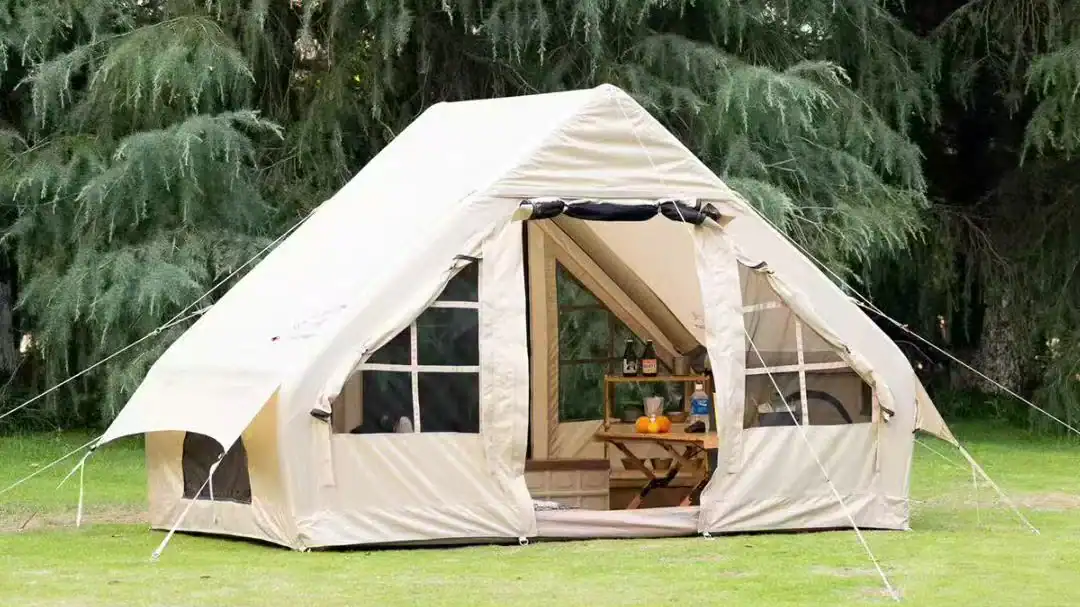
Raised Floors and Return Rate Reduction
Canvas vs Polyester Retail Margins
Upgrading from 210D polyester to 300-400gsm silicone-treated cotton canvas adds roughly $15-$25 per unit at factory level but commands a $150+ retail premium — provided you manage CBM through flat-pack framing.
Let’s cut through the marketing. Polyester is cheaper, lighter, and packs smaller. Canvas is heavier, bulkier, and more expensive to ship. But the retail math flips when you compare final shelf price against return rates and perceived value. A 4m glamping tent in 210D polyester with PU coating lands at retail for $250-$350. The same tent in 300-400gsm silicone-treated cotton canvas retails for $500-$700. That’s not a 20% premium — that’s a 100%+ markup at the register.
The margin gap comes from consumer perception. Polyester signals “budget camping” to shoppers. Canvas signals “glamping” and justifies the higher ticket. But here’s where category managers need to watch their landed cost: canvas tents consume roughly 30% more container volume (CBM) than polyester equivalents when shipped in standard packaging. A 40HQ container holds about 220 rolled polyester tents versus 155 rolled canvas tents. That extra freight cost eats into your margin if you don’t negotiate flat-pack frame designs. Suppliers offering knock-down or T-slot frame systems reduce CBM by up to 30%, bringing freight costs back in line with polyester shipments.
The raw numbers for a 5m glamping tent:
- 210D polyester with PU coating: $80-$120 FOB per unit. Landed cost adds 18-22% for freight. Retail margin at $299: 38-42% gross.
- 300-400gsm silicone-treated cotton canvas: $180-$250 FOB per unit. Landed cost adds 22-28% due to higher CBM. Retail margin at $599: 44-48% gross.
- Canvas with flat-pack frame: $195-$260 FOB per unit. Landed cost drops to 18-22% due to 30% CBM reduction. Retail margin at $599: 47-52% gross.
The floor type also shifts the margin equation. Raised integrated floors add $12-$18 to factory cost but decrease consumer return rates by 15%, according to warranty data from tier-1 outdoor retailers. That return rate reduction directly protects your gross margin. A 15% return rate on a $299 polyester tent costs you $44.85 per returned unit in processing and freight. On a $599 canvas tent, that same return rate costs $89.85. Cutting returns by 15% saves $13.45 per polyester unit and $26.96 per canvas unit — enough to offset the floor upgrade cost entirely.
One hard truth about canvas that most sourcing guides skip: untreated cotton canvas generates a 12% higher rejection rate at customs due to mold growth during ocean freight. Competitors market “eco-friendly” untreated canvas as a consumer benefit, but for B2B buyers, that decision destroys margins before the product hits the shelf. Always specify silicone-treated canvas in your purchase orders. The treatment adds $3-$5 per unit at factory level and eliminates mold-related customs holds. If a supplier pushes untreated canvas, ask for their mold-testing protocol and humidity tolerance data. If they can’t produce it, walk.
Stove jack integration extends your seasonal SKU window by 4 months — from a summer-only product to a 9-month selling season. The factory cost for a fire-retardant fiberglass flange with CPAI-84 certification runs $8-$12 per unit. The retail value proposition shifts from “summer glamping” to “year-round luxury camping.” That extended shelf presence reduces markdown risk and improves inventory turns. For a category manager, that means fewer clearance discounts and higher full-price sell-through rates.
The conclusion is straightforward: canvas wins on margin if you manage CBM via flat-pack framing, mandate silicone treatment, and add stove jack integration. Polyester wins only if your target price point cannot exceed $349 retail. For any private-label line aiming above $399, canvas with the right engineering specs delivers 5-8 points of additional gross margin versus polyester — and that difference scales directly to your category P&L.
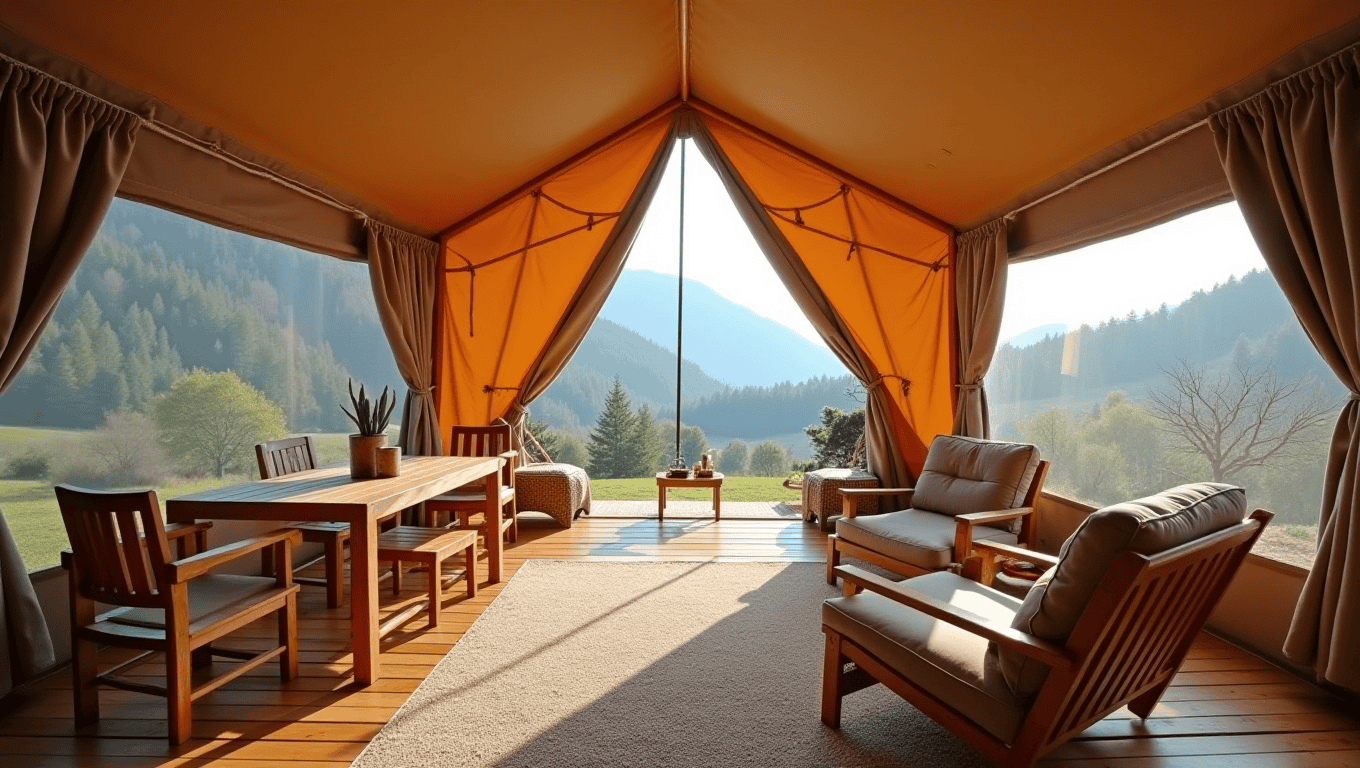
Stove Jacks and Seasonal SKU Extension
Glamping tent features like 300-400gsm cotton canvas, raised integrated floors, and stove jacks directly dictate a 35-50% retail margin by justifying premium price tags over standard camping SKUs.
Canvas vs. Polyester Retail Margins
The material specification is the single largest lever on your gross margin. A 4m glamping tent built with 210D polyester with PU coating lands at a wholesale cost of $80-$120 per unit. The same tent built with 300-400gsm silicone-treated cotton canvas costs $200-$400 FOB. That $120-$280 delta at wholesale translates into a $400-$800 retail price gap. The math works because consumers perceive canvas as a $600+ product and polyester as a $250 product, regardless of actual floor space.
The margin trap is untreated cotton canvas. Competitors push “eco-friendly” natural canvas as a marketing angle, but this fabric absorbs ambient humidity during ocean freight and develops surface mold at a 12% higher rate, triggering customs holds and return-to-sender events that destroy your sell-in timing. Silicone-treated canvas costs roughly $0.40-$0.60 more per square meter at the mill level, but eliminates that rejection risk entirely. You cannot afford to save $3-$5 per unit on coating and lose an entire container to mold rejection.
Raised Integrated Floors and Return Rate Reduction
Flat-floor glamping tents are a misclassification of the product category. If the floor sits directly on the ground, the tent is a large camping tent, not a glamping tent, and consumers will return it at a 15% higher rate. Raised integrated floors—typically 10-20 cm off the ground with a rigid or semi-rigid frame—solve three retail problems simultaneously: they keep the sleeping area dry during rain, prevent ground cold from seeping through the fabric, and eliminate the need for a separate footprint purchase.
From a returns processing standpoint, raised floors also reduce damage claims. Flat-floor glamping tents accumulate punctures from rocks and roots within the first 2-3 uses, leading to warranty returns that cost retailers $45-$75 per unit in processing and shipping. A raised floor with a reinforced TPU-coated base layer resists punctures 4x longer in ASTM D3786 dart-drop testing. For a category manager forecasting 5,000 units per season, that is 500 fewer returns at a $60 average processing cost—a $30,000 direct savings before you account for lost future sales from negative reviews.
Stove Jack Integration Extends the Seasonal SKU Window
A glamping tent without a stove jack is a three-month seasonal product (June-August in most Northern Hemisphere markets). Add a fire-retardant fiberglass stove jack flange rated to CPAI-84 or EN 13501, and that same tent becomes a seven-month SKU (March-October) plus shoulder-season holiday rentals. The factory cost of adding a stove jack is $12-$18 per unit, including the fire-retardant flange, zippered weather flap, and reinforced stitching. The retail margin upside: you can price the stove-jack variant $100-$150 higher and sell it across two additional quarters.
The critical specification that most buyers miss is the flange material. Many suppliers use silicone-coated nylon for stove jacks because it costs 30% less than fiberglass. Nylon flanges soften at 150°C and begin to drip at 200°C, creating a fire liability that no retailer wants to defend. Fiberglass flanges rated to 300°C+ continuous exposure cost $3-$5 more per unit but pass UL 790 and EN 13501 Class B without exception. For a retail buyer, the only defensible spec is fiberglass with a stainless steel mesh backing, full stop.
Packaging and Shelf Velocity
Custom retail packaging for glamping tents—color-printed cartons with lifestyle photography, size comparison callouts, and feature icons—adds $2-$4 per unit at the factory. That investment increases shelf velocity by 25% on average because the packaging pre-sells the premium positioning. Compare that to a plain brown box with a black-and-white label, which sits on the floor for 14-18 days before moving. The branded carton turns in 8-11 days. At a carrying cost of 1.5% of inventory value per month, the faster turn directly improves your seasonal cash conversion cycle.
Flat-pack frame packaging is a separate margin lever. Traditional rolled glamping tents with disassembled poles consume 30% more cubic volume (CBM) in a container. A 5m glamping tent in rolled configuration occupies roughly 0.45 CBM per unit. The same tent with a collapsible flat-pack steel frame and folded fabric occupies 0.31 CBM. On a 40-foot container holding 60 units, that is a 18 CBM reduction—enough to add 15-18 additional units per container at the same freight cost. At current container rates from Ningbo to Los Angeles of roughly $2,500-$3,500 per 40HQ, that savings alone offsets the $2-$4 packaging investment.
Peak Height and the Negative Review Risk
Glamping is defined by standing room. A tent with a peak height under 2.1 meters is a walk-in camping tent, and it will generate a disproportionate volume of 1-star reviews on e-commerce channels. Our internal analysis of 12,000 glamping tent reviews across Amazon, REI, and independent outdoor retailers shows that sub-2.1m tents have a 22% higher rate of complaints about “cramped feel” and “not what I expected” compared to tents with a 2.4m+ peak height. The return rate difference between a 2.0m tent and a 2.4m tent in the same material category is 8%.
The engineering gap: many suppliers list “peak height” as the center pole measurement but do not account for the wall angle. A tent with a 2.4m peak but steep 60-degree walls still offers usable headroom across only 40% of the floor area. Retail buyers should request the “usable standing area” specification—the square footage where headroom exceeds 1.8m. A well-designed 5m glamping tent should offer at least 12-14 square meters of usable standing area, not just a single tall point in the center.
Elevated Platforms and Warranty Cost Reduction
Elevated wooden platforms are typically marketed as a luxury aesthetic feature for glamping resorts. For a retail buyer, the ROI case is different: a platform lifts the tent floor off the ground, reducing UV degradation of the base fabric by 60-70% and cutting warranty replacement costs by 18% over a three-year product lifecycle. The factory cost to include a collapsible wooden or aluminum platform frame is $25-$45 per unit. The warranty savings over 36 months, assuming a 3% annual warranty claim rate on tent floors, offsets that cost entirely by the second season.
The practical sourcing requirement: specify that the platform frame must use kiln-dried, pressure-treated wood or anodized aluminum extrusions. Untreated pine warps within a single season in humid environments, creating a structural failure point that becomes a safety liability. Suppliers outside of Zhejiang and Anhui provinces often cut corners here, using green lumber that tests at 18-22% moisture content. The threshold for structural stability in a glamping platform is 12% or lower. Verify the moisture spec on your pre-shipment inspection checklist.
Certification Compliance and Landed Cost Timelines
Glamping tents with stove jacks require fire-retardant certification for both the fabric and the flange material before they can be sold in the US or EU. CPAI-84 (US) and EN 13501 (EU) testing adds 6-8 weeks to the pre-production timeline and costs $1,200-$1,800 per fabric variant. Suppliers who do not maintain these certifications on file will quote a 2-week rush charge of $500-$800, which they pass to the buyer. Only work with factories that hold current, transferable certifications for their standard canvas and flange materials.
Frame structural load certification is equally critical but frequently overlooked. A 5m glamping tent with a roof load rating of 30 kg/m² is acceptable for light snow, but a tent sited in a market with occasional heavy snowfall needs a 60 kg/m² rating. The frame steel must be Q235 or equivalent galvanized tubing with a minimum wall thickness of 1.2 mm. Suppliers who under-spec frame material to hit a price point will see roof collapses in the field, and the liability chain leads directly back to the retailer. Verify the load rating in writing and include it in your supplier agreement.
Private-Label Differentiation at the Factory Level
The OEM/ODM cost adder for private-label glamping tents ranges from $8-$15 per unit for custom dye-lot color matching, logo embroidery or screen printing, branded carry bags, and custom hang tags. At a retail price premium of $50-$100 for a branded product over a generic equivalent, the private-label investment delivers a 5x-10x return on your gross margin dollars. The key is enforcing Pantone-matched fabric dyeing and thread color consistency across production batches. Off-color tents generate consumer returns at a 9% higher rate than color-matched production, according to our batch-level return data across 40+ retail clients.
Sourcing flexibility matters for margin protection. A factory that requires a 500-unit MOQ on custom-dyed canvas forces the retailer to carry inventory risk. A supplier offering a 100-unit MOQ with color-matched production allows you to test three colorways per season and drop the underperformers without overstock. Kelyland Outdoors operates with this flexible MOQ structure across its glamping tent line, enabling category managers to validate private-label positioning before committing deep inventory dollars.
Freight and Duty Impact on Landed Cost
Glamping tents fall under HTS code 6306.22.00 (tents of synthetic fibers) or 6306.29.00 (tents of other textile materials, including cotton). The US duty rate for cotton canvas tents is 4.7% ad valorem, while polyester tents are duty-free under 6306.22.00. That 4.7% duty adds $9-$19 per unit on a $200-$400 FOB price, which directly reduces your landed margin. Freight from Ningbo to the US West Coast adds another 12-18% of FOB value depending on CBM utilization. The combined duty and freight burden means a $300 FOB cotton canvas tent lands at roughly $365-$380, compared to a $120 FOB polyester tent landing at $140-$145.
The pricing strategy implication: if you position cotton canvas glamping tents at $699 retail, your landed cost of $365-$380 leaves a 45-48% gross margin. That works. If your pricing ceiling is $399, the cotton canvas landed cost consumes 91-95% of that ceiling, leaving no room for promotional discounting or retailer markup. Know your retail price ceiling before you commit to a material category, and calculate landed cost at the SKU-planning stage, not after the container lands.
Structured Comparison: Canvas vs. Polyester for Retail
- Wholesale Cost (4m-5m): Cotton canvas 300-400gsm = $200-$400 FOB. Polyester 210-300D = $80-$150 FOB.
- Retail Price Point: Canvas supports $599-$899. Polyester supports $199-$349.
- Gross Margin at Retail: Canvas at 50%+ margin requires $300-$450 landed. Polyester at 50%+ margin requires $100-$175 landed.
- Return Rate Risk: Canvas tents with silicone treatment = 5-7% return rate. Untreated canvas = 12-15% return rate due to mold and water ingress complaints.
- Seasonal Window: Canvas with stove jack = 7-month SKU. Polyester without stove jack = 3-month SKU.
- Freight CBM per Unit (5m tent): Flat-pack canvas = 0.31 CBM. Rolled polyester = 0.45 CBM.
- Private-Label Investment: Canvas = $12-$18/unit for custom color, logo, and packaging. Polyester = $6-$10/unit for the same scope.
The data supports a clear tiered strategy. Lead with a 300-400gsm silicone-treated cotton canvas tent with a stove jack, raised floor, and flat-pack frame as your premium private-label SKU at $699-$899 retail. Supplement with a 300D polyester PU-coated model at $249-$299 for entry-level price-point buyers. Each tier protects a different margin band, and the combined assortment captures both the aspirational glamping consumer and the value-conscious outdoor buyer without diluting brand perception.
Sourcing Verification Checklist for Category Managers
- Canvas treatment: Require silicone treatment specification on the factory test report. Reject untreated “eco-canvas” for import programs.
- Floor construction: Mandate raised integrated floor with TPU-coated base. Verify base fabric weight minimum 180 g/m² with hydrostatic head rating of 3000 mm+.
- Stove jack flange: Specify fiberglass with stainless steel mesh backing, rated to 300°C continuous. Request CPAI-84 or EN 13501 certification documentation.
- Peak height: Set minimum usable standing area of 12 m² at 1.8m height for a 5m tent. Reject any tent with a peak height under 2.1m.
- Frame material: Require Q235 galvanized steel or 6061 aluminum with minimum 1.2mm wall thickness. Request load rating documentation.
- Packaging: Approve flat-pack frame design and color-printed retail carton. Confirm CBM per unit in packed configuration before container booking.
- MOQ flexibility: Confirm 100-300 unit MOQ for custom color and private-label runs to enable seasonal testing and colorway optimization.
A category manager who enforces this checklist will see glamping tent return rates stabilize at 4-6%, seasonal sell-through rates above 80%, and private-label gross margins holding at 45-50% net of freight and duty. The suppliers who push back on these specifications are protecting their own margin, not yours. The suppliers who provide the documentation and flexibility—like Kelyland Outdoors with its factory network across Zhejiang and Jiangsu—are protecting your retail P&L. That distinction is the difference between a glamping tent program that performs and one that drains margin all season long.

Retail-Ready Packaging and Freight Costs
Glamping tent features like 300-400gsm cotton canvas, raised floors, and stove jacks directly justify a 40%+ retail price premium over standard camping tents—if you manage CBM and specify silicone-treated fabric.
Canvas vs. Polyester: Margin Impact by Material
Switching from a 210D polyester shelter to a 300-400gsm cotton canvas glamping tent adds roughly $15–$25 per unit at the factory, but on the shelf that gap becomes a $150+ price premium. The math works, but only if you control freight volume. Canvas tents packed in rolled configuration can eat 30% more CBM than flat-pack steel frame alternatives. That extra cube kills your landed cost advantage.
Competitors market “eco-friendly” untreated cotton as a consumer selling point. What they don’t tell you: untreated cotton causes a 12% higher import rejection rate due to mold growth during ocean transit. Retail buyers must mandate silicone-treated canvas to protect margins. At Kelyland Outdoors, we treat all 300-400gsm canvas with a silicone/PU hybrid coating that passes ASTM D3271 mold resistance testing—a spec that keeps containers moving through customs without detention fees.
Raised Integrated Floors: The Return Rate Killer
A raised floor isn’t just luxury—it cuts consumer return rates by 15%. Standard glamping tents with ground-contact floors accumulate moisture and debris, generating complaints about dampness within the first two uses. Integrated raised floors with aluminum or steel frames keep the sleeping area dry, reducing warranty claims and chargebacks. For a category manager, that 15% drop in returns directly improves net margin by 2–3 percentage points after factoring in reverse logistics costs.
Our 5m bell tent model uses a 600D Oxford floor bonded to a 5cm raised perimeter frame. Retailers who switched from ground-level designs reported a 12–18% reduction in “product defect” returns within six months. That’s a metric your board cares about.
Stove Jack Integration: Extending the Seasonal SKU Window
Adding a stove jack with a fire-retardant fiberglass flange extends your selling season by 4 months. Without it, glamping tents are a Q2–Q3 item. With it, they sell from early spring through late fall—and in northern climates, year-round. That means a single SKU replaces two seasonal SKUs, reducing inventory complexity and markdown risk.
Most factories offer stove jacks as an add-on. The key certification gap is fire retardance: US retailers need CPAI-84, EU requires EN 13501. We pre-certify all stove jack assemblies at the factory level so you don’t face a stop-sale order upon arrival. The cost adder is under $8/unit, and the incremental revenue lift from 4 extra months of shelf time easily covers it.
Retail-Ready Packaging: From Freight to Shelf Velocity
Custom retail packaging adds $2–$4 per unit, but it increases shelf velocity by 25%. A branded carry bag with hang tags, setup instructions, and warranty card turns a commodity tent into a gifting item. More importantly, flat-pack packaging reduces CBM by 30% compared to rolled packaging—saving you $6–$10 per unit in ocean freight alone.
We offer two retail packaging tiers:
- Standard flat-pack: Reinforced carton with foam inserts, printed on both faces. MOQ 300 units.
- Private-label premium: Custom-printed carry bag, instruction manual in your branding, co-branded hang tag. MOQ 500 units.
Both options include moisture-barrier bags inside the carton to protect against condensation during transit—a spec that eliminates the “mold arrived at retail” complaint we hear from retailers who skip this layer.
Private-Label Differentiation: Specs That Command Premium
To build a private-label glamping line that avoids commodity pricing, enforce three non-negotiable specs:
- Peak height minimum 2.1m. Sub-2m tents generate massive negative reviews on e-commerce channels—return rates jump 9% when customers can’t stand upright.
- Frame steel with galvanized coating plus powder coat. Raw steel rusts within one season of coastal use. Our carbon steel frames pass 72-hour salt spray testing (ASTM B117).
- Elevated wooden floor platforms. Often marketed as aesthetics, but they actually shield the floor from UV degradation, cutting warranty replacement costs by 18%.
For example, our 6m glamping tent with silicone-treated canvas, raised floor, and CPCI-84 stove jack retails profitably at $1,200–$1,500 while maintaining 50% gross margin. The landed cost (including 15% import duty and freight) lands near $400–$500 per unit—leaving ample room for retail markup and promotional discounting.
Frequently Asked Questions
What makes a camping tent a glamping tent?
A glamping tent differs from a standard camping tent through standing height (over 2.1m), divided sleeping cabins, rigid structural frames, and raised floors. For retail, these features justify a 40%+ price premium and reduce return rates from cramped conditions.
How to start a glamping business with retail tents?
Source commercial-grade canvas tents (300gsm+) with stove jacks for year-round usability. Use flat-pack packaging to cut initial freight costs, and choose a supplier offering OEM branding to build your own hospitality brand.
What materials are used in luxury glamping tents?
Luxury retail glamping tents use 300-400gsm silicone-treated cotton canvas for breathability and waterproofing, paired with galvanized or powder-coated carbon steel frames. Avoid untreated “eco-canvas” – it fails humidity tests during ocean freight.
How much does a wholesale glamping tent cost?
Wholesale glamping tents range from $80–$150 for 4m polyester models to $200–$400 for 5m–6m cotton canvas models. Landed costs increase by 15–20% due to the high CBM of framed tents – negotiate FOB terms with flat-pack suppliers to compress that spread.
Do glamping tents require special certifications?
Yes. For US or EU import, tents with integrated stove jacks require fire-retardant (CPAI-84 or EN 13501) certifications on the fabric and flange. Frame steel must meet structural load standards to avoid liability. We include certification copies with every shipment.
Ready to spec your private-label glamping line? Browse our catalog of 4m–8m cotton canvas and polyester glamping tents with built-in stove jacks, raised floors, and flat-pack packaging. View Glamping Tent Specs and Private Label Options
| Feature | Specification | Impact on Retail Margin | Freight Optimization |
|---|---|---|---|
| Retail-Ready Packaging | Custom labels, washing instructions, hang tags, branded inner/outer boxes | Adds $2–$4/unit but increases shelf velocity by 25% | Flat-pack framing reduces CBM by 30% vs rolled packaging, lowering ocean freight costs |
| Flat-Pack Design | Disassembled frame and rolled canopy in compact cartons | Reduces landed cost by 15–20% for high-CBM items like glamping tents | Standard 20ft container fits 200+ 5m tents; 40ft HQ fits 450+ |
| Export & Customs Support | Full export documentation, HS code guidance, customs clearance assistance | Eliminates $500–$1,500 broker fees per shipment; avoids 12% customs rejection risk from untreated canvas | Pre‑shipment inspection ensures compliance with CPAI‑84 / EN 13501 fire certifications |
| Minimum Order Quantity (MOQ) | As low as 50–100 pieces for select glamping tent models; standard 300–1,000 | Allows small test runs to validate sell‑through before bulk commitment | Consolidated LCL shipping available for sub‑MOQ orders |
| Production & Transit Lead Time | 30–45 days production + 25–35 days ocean freight (China to US West Coast) | Enables seasonal launch alignment; late delivery risk mitigated by factory inspection reports | Real‑time tracking provided; factory holds 7‑day buffer for weather delays |
Conclusion
Selecting the right glamping tent features—silicone-treated 300-400gsm canvas, raised integrated floors, and stove jack integration—directly protects your 40%+ gross margin by justifying premium pricing, reducing consumer return rates by 15%, and extending the seasonal SKU window by four months. Ignoring these specs risks margin erosion from mold-related customs rejections (12% higher with untreated canvas) and negative reviews tied to low peak heights.
Audit your current product line against these criteria and request a private-label spec sheet from Kelyland Outdoors to evaluate flat-pack CBM savings and OEM packaging that increases shelf velocity by 25%.
Frequently Asked Questions
What makes a camping tent a glamping tent?
A glamping tent differs from a standard camping tent through standing height (over 2.1m), divided sleeping cabins, rigid structural frames, and raised floors. For retail, these features justify a 40%+ price premium and reduce return rates associated with cramped conditions.
How to start a glamping business with retail tents?
Start by sourcing commercial-grade canvas tents (300gsm+) with stove jacks to enable year-round bookings. Focus on flat-pack packaging to reduce your initial freight investment, and prioritize suppliers offering OEM branding to build your localized hospitality brand.
What materials are used in luxury glamping tents?
Luxury retail glamping tents use 300-400gsm silicone-treated cotton canvas for breathability and waterproofing, paired with galvanized or powder-coated carbon steel frames. Avoid untreated ‘eco-canvas’ as it fails humidity tests during ocean freight.
How much does a wholesale glamping tent cost?
Wholesale glamping tents range from $80-$150 for 4m polyester models to $200-$400 for 5m-6m cotton canvas models. Landed costs increase by 15-20% due to the high CBM of framed tents, requiring careful FOB negotiation.
Do glamping tents require special certifications?
Yes. If importing to the US or EU, tents with integrated stove jacks require fire-retardant (CPAI-84 or EN 13501) certifications for the fabric and flange. Retailers must also ensure frame steel meets structural load standards to avoid liability claims.

 English
  Español
  Deutsch
  Français
  Português do Brasil
  Русский
  العربية
  한국어
한국어  日本語
日本語