 跳到内容
跳到内容 
oem vs odm cost is the first checkpoint buyers should lock before they approve a supplier, budget, or production slot. The moment of discovery hits when the container lands at your warehouse, not at the factory gate. A brand manager I know unboxed 500 branded sleeping bags in his Chicago facility three months after placing the order — the fabric felt different from the sample he’d signed off on. The denier was off by 20, the coating felt thinner, and the zippers caught on the shell. That was a $50K order tied up in a dispute over sample approval vs. mass production run consistency, with no clear clause in the contract for that exact gap. He’d chosen an ODM route to save upfront tooling costs, assuming the base design was proven. The FOB pricing looked clean on paper, but the real cost came later, buried in quality tolerance issues that no one had documented.
This is the kind of scenario that separates a good sourcing decision from an expensive lesson. The OEM vs ODM cost question isn’t just about the unit price or the tooling investment — it’s about understanding where the hidden variables live and how they compound over multiple orders. Many competitor articles will tell you ODM is cheaper for low volumes, and they’re right on the surface. But they rarely map out what happens when you run a second batch, or a third, and the factory adjusts its material sourcing to protect its margin. That’s when the real cost comparison emerges, not from the initial quote but from the supply chain behavior baked into each model.
After managing supplier audits across a dozen countries, I’ve seen the same pattern repeat: brands who skip the total cost analysis on tooling amortization end up overpaying by 15-20% per unit by the time they hit 1,000 pieces. The answer isn’t automatically one model over the other — it’s about knowing which levers to pull in your RFQ and which factory capabilities to verify early. A partner like Kelyland Outdoors, with a network of 17 core ISO 9001:2015 factories and the ability to start some ODM items at 50-100 units, builds that flexibility into the process from day one. The goal is to eliminate the surprise when the container door swings open.
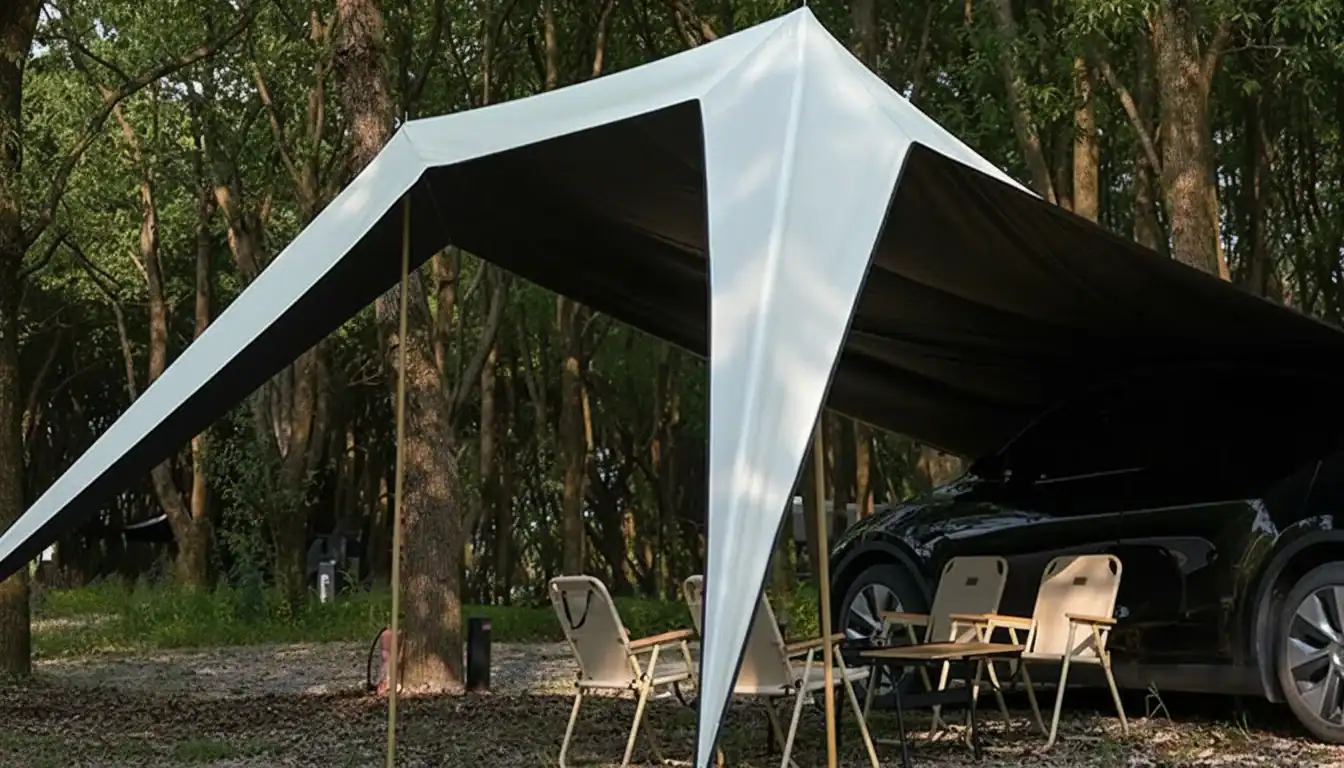
Why Most Camping Gear Sourcing Fails: Hidden Cost Traps
Most brand managers discover hidden tooling costs only after signing the PO.
The budget blowout usually starts with non-recurring engineering (NRE). A custom tent frame mold runs $8,000–$15,000. A chair welding jig is $3,000–$6,000. Then you hit sample rounds – two to four iterations at $200–$800 each. Compliance testing adds $1,000–$5,000 per SKU depending on your target market (CE for Europe, CPSIA for the US). Packaging design? Another $500–$2,000 if you need branded boxes and hang tags. Most RFQs bundle these into the unit price only if you ask – otherwise they land as separate invoices after the first order.
-
- Tooling (molds/jigs): Typically $5,000–$20,000 per custom part. Not amortized in unit price unless you negotiate it upfront.
- Sample iterations: Each round costs $200–$800. OEM projects often need 2–4 revisions before final approval.
- Compliance testing: CE, REACH, CPSIA, or CA Prop 65 can cost $1,000–$5,000 per SKU. Ignoring it means cargo stops at customs.
- Packaging design: Custom packaging with brand graphics runs $500–$2,000 in setup fees. Some factories charge a separate ‘artwork preparation’ line item.
The IP versus cost trade-off is where most brand managers miscalculate. With OEM you own the design and the tooling, but you carry that upfront load and the risk of filling minimum order quantities. With ODM the manufacturer owns the design – you skip tooling cost but lose exclusivity. What few guides mention: ODM unit prices already include a 3–5% margin to cover the manufacturer’s design risk. After you amortise OEM tooling over three orders, the per-unit cost drops 15–30% below ODM. Also, you can negotiate mold re-use royalties – some factories will license your OEM tooling back for non-competing products, turning a sunk cost into a revenue stream.
| Cost Category | Hidden Trap | Typical Cost Impact | Mitigation Strategy |
|---|---|---|---|
| Tooling & Mold Development | Quoted tooling cost excludes mold lifespan or amortization; unexpected re-tooling for design changes. | $5,000–$20,000 per mold; redesign adds 30–50% more. | Request amortization over multiple orders; sign off on design before mold cutting. |
| Sample Iterations | Multiple sample rounds charged per iteration; no fee refund upon bulk order. | $200–$800 per round; 2–4 rounds common for OEM. | Set clear specs and sample approval criteria; negotiate refund policy upfront. |
| Compliance & Testing | Suppliers omit CE, CPSIA, or REACH testing from quote; added later as change order. | $1,000–$5,000 per SKU depending on market. | Request full compliance cost breakdown in RFQ; use ISO 9001‑certified partners. |
| Material Upgrades | Base quote uses lower-grade fabric (e.g., 190T vs 210T); upcharge for desired spec not transparent. | 15–25% higher unit cost after material substitution. | Specify exact denier, coating, and weight in contract; ask for tiered pricing by material. |
| IP & Design Ownership | ODM designs reused across clients; OEM tooling rights not contractually secured. | Loss of exclusivity; future royalty fees or competitor copies. | Negotiate IP transfer or exclusive use clause; document mold ownership in agreement. |
Real Cost Breakdown of OEM vs ODM in 2026
Most sourcing guides ignore tooling amortization — that’s where real savings live for repeat buyers.
Tooling is the first line item that separates OEM from ODM. For a custom tent frame mold, expect $8,000 to $15,000. A chair welding jig runs $3,000 to $6,000. ODM sidesteps this entirely by using existing molds — zero upfront tooling investment. But that saving comes with a catch: ODM unit prices include a 3–5% margin for the factory’s design risk, which most brand managers miss when comparing quotes side by side.
-
- OEM tooling range: $5,000–$20,000 for tent or furniture molds, depending on complexity and number of cavities.
- ODM unit price premium: At order volumes above 1,000 units, ODM per-unit cost is 10–20% higher than OEM after tooling is paid off, because the factory amortizes design and mold maintenance into every piece.
- Sample costs: Each prototype round runs $200–$800. OEM can require 2–4 rounds before approval. ODM typically needs 1–2 rounds, but branding setup fees ($500–$2,000) may apply.
- MOQ thresholds: For select ODM items, MOQ can be as low as 50–100 units. OEM custom projects usually require 300–1,000 units. Kelyland’s network of 17 ISO 9001 factories offers flexible amortization of tooling across multiple orders, reducing the per-unit impact for repeat clients.
One hidden negotiation lever: some factories will let you license your OEM tooling back to them for non-competing products, generating royalty income that offsets your net cost. Most articles skip this because they treat tooling as a one-time expense. In practice, if you plan three production runs over 18 months, the tooling cost per run drops by one-third — and your total cost of ownership flips the OEM vs ODM math decisively in OEM’s favor.
| Cost Component | OEM (2026) | ODM (2026) | Insights |
|---|---|---|---|
| Tooling & Molds | $5,000 – $20,000 (custom) | $0 (existing molds) | Amortize tooling across multiple orders. Kelyland offers flexible payment terms for repeat clients. |
| Unit Price (per unit) | $35 – $55 (after tooling) | $45 – $65 (includes design risk margin) | At >1,000 units, OEM becomes 10-20% cheaper per piece. ODM unit price is higher due to R&D amortization. |
| Sample Rounds | $200 – $800 per round (2-4 rounds) | $200 – $800 per round (1-2 rounds) | OEM often needs more iterations. Kelyland refunds sample fees on confirmed bulk orders. |
| Compliance Testing | $1,000 – $5,000 per SKU | $1,000 – $5,000 per SKU | Both models require CE, CPSIA. Kelyland pre-vets factory certifications to reduce redundant testing. |
| Minimum Order Quantity | 300 – 1,000 units | 50 – 100 units | ODM enables low-volume pilot runs. Kelyland’s flexible MOQs help validate market demand. |
| Lead Time to Market | 90 – 150 days | 45 – 90 days | OEM includes design and tooling phase. ODM is faster for seasonal product launches. |
OEM vs ODM vs JDM: Which Outsourcing Model Fits Your Brand?
OEM gives you IP control and lower per-unit cost at scale; ODM gets you to market faster with zero tooling risk.
The three models—OEM, ODM, and Joint Design Manufacturing (JDM)—sit on a spectrum of control vs speed. Your choice determines tooling investment, time to market, and who owns the design. Here’s how they break down for outdoor gear.
-
- IP ownership: OEM: You own the design. ODM: Factory owns the design. JDM: Shared—you contribute specs, factory engineers the rest.
- Upfront cost: OEM: $5,000–$20,000 tooling (tent molds, chair jigs). ODM: $0 tooling. JDM: $2,000–$8,000 for joint engineering.
- Time to market: ODM: 30–45 days from sample approval. OEM: 90–150 days including tooling and prototyping. JDM: 60–120 days.
- Customization level: OEM: Full control over fabric denier, coating thickness, frame alloy. ODM: Limited to factory catalog options (e.g., choose from 4 colors, 2 fabrics). JDM: High—you define performance targets, factory solves how.
- Unit price (1,000+ units): OEM: 15–30% lower than ODM after tooling amortized. ODM: 10–20% higher because factory includes design overhead. JDM: Between OEM and ODM, depending on exclusivity terms.
Pick OEM for your flagship product—say, a pop-up tent with a proprietary hub mechanism. The $12,000 mold pays off over 3,000 units, and you lock out competitors. Choose ODM for commodity SKUs like camping stools or basic lanterns where speed to shelf matters more than uniqueness. With Kelyland’s network, ODM MOQs start at 50–100 pieces, ideal for pilot runs under private label camping gear pricing.
JDM fits hybrids: you know you need a sleeping bag with a specific fill blend for cold markets but lack in-house R&D. You provide the specs and target price; the factory builds the prototype. The shared IP clause must be written upfront—typically you get exclusivity for 18 months, then the factory can offer it elsewhere. Negotiate mold re-use royalties if you plan multiple seasons.
One insider trap: ODM unit pricing often includes a 3–5% “design risk” buffer that OEM quotes skip. Always request a line-item breakdown. If your volume exceeds 1,000 units per year, run the total cost including tooling amortization across three years—ODM almost always ends up more expensive. Use a camping chair OEM unit price calculator to compare at your actual order size.
How to Source OEM/ODM Without Hidden Fee Surprises
Most fee surprises come from sample revisions and unamortized tooling.
Brand managers routinely get burned by costs that don’t appear on the initial quote: sample revision rounds at $200–$800 each, tooling molds that need replacement after a fixed number of shots, compliance testing per SKU ($1,000–$5,000 for CE or CPSIA), and packaging design fees. These add up fast. You need to explicitly request a full cost breakdown before signing any agreement.
-
- Tooling amortization: Ask how many production shots the mold is rated for and whether the tooling cost can be spread across repeat orders. A tent pole mold costing $12,000 that lasts 20,000 shots adds $0.60 per unit – but only if you plan to run multiple batches.
- Sample fee refund policy: Some suppliers refund sample fees upon bulk order confirmation. Others don’t. Clarify this upfront to avoid paying $800 for a prototype that never goes into production.
- Unit price at 3 volume tiers: Request pricing at 300, 500, and 1,000 units. If the variance exceeds 20%, ask why. Often the tier break is tied to material procurement – you can negotiate by pre-committing to a volume.
- Packaging design cost: Custom packaging (labels, barcodes, hang tags) can add $500–$2,000 in setup fees. Get this itemised separately so it doesn’t get buried in the unit price.
- Compliance testing cost per SKU: CE, REACH, CPSIA, or CA Prop 65 testing costs $1,000–$5,000 per SKU. Many factories pass this to you as a surprise line item. Request a pre-agreed cap.
Partnering with a dedicated sourcing service eliminates most of these surprises. At Kelyland Outdoors, we provide transparent cost sheets that break down tooling amortisation, sample fees, and compliance costs before you commit a cent. Through our network of 17 ISO 9001:2015 certified factories, we can offer MOQs as low as 50–100 units for select ODM items and standard lead times of 30–45 days. We also pre-negotiate mould re-use royalties – meaning if you invest in OEM tooling, you can license that mould back to the factory for non-competing products, reducing your net cost across multiple seasons. That’s a saving most brand managers never know exists.

Red Flags: When OEM/ODM Costs Spiral Out of Control
A vague “management fee” over 5% of order value signals cost spiral risk.
Most brand managers discover cost overruns only after tooling is cut and samples are approved. The typical OEM project hides $5,000–$20,000 in mold costs, $200–$800 per sample round, and $1,000–$5,000 in compliance testing per SKU. ODM looks cheaper upfront because tooling is zero, but unit prices carry a built-in 3–5% margin for design risk that OEM quotes don’t show. The real trap? Neither quote includes the cost of rework when material substitutions drop below spec.
-
- Vague management fee: If the quote lists a ‘management fee’ above 5% of the total order value, that’s a red flag. It often covers nothing specific and hides margins that should be in the unit price.
- Separate tooling without amortization: Quotes that list tooling cost as a one-time line item—without offering amortization across repeat orders—force you to absorb the full cost upfront. A supplier who can spread tooling over 3–4 batches signals long-term partnership intent.
- Unit price swings over 20% between MOQ tiers: A 500-unit price that is 30% higher per piece than a 1,000-unit price might look normal, but the delta should narrow to under 15% once tooling is paid. Request unit prices at three tiers: 300, 500, and 1,000 units.
- No material-grade breakdown: Switching from 210T to 190T polyester saves the supplier roughly $0.30–$0.50 per tent. If the quote doesn’t specify fabric denier, coating thickness (PU vs. silicone), or frame alloy grade, you’re paying for an unknown spec that may fail at retail.
To avoid excess charges, treat the RFQ like a contract. Request a full NRE (non-recurring engineering) breakdown: tooling cost per mold (with expected shot life), sample fee refund policy (some factories refund upon bulk order), and compliance testing fees itemized by test standard (CE, CPSIA, REACH). Then ask the supplier to certify material grades in writing. Our network of 17 ISO 9001:2015 factories provides transparent cost sheets and pre-shipment inspection reports with photo evidence—no hidden line items.
| Red Flag | What to Look For | How to Avoid |
|---|---|---|
| Vague ‘Management Fee’ | A percentage fee above 5% of the total order value, often buried in the fine print. | Request a full cost breakdown and cap any management or service fee at 5%. |
| Tooling Cost Quoted Without Amortization Options | Tooling/mold costs presented as a one-time lump sum with no offer to spread across multiple orders. | Negotiate amortization of tooling costs over the first 2–3 production runs to reduce upfront burden. |
| Unit Price Variation >20% Across MOQ Tiers | The price per unit drops sharply when moving from 500 to 1,000 units, indicating inflated small-order pricing. | Benchmark unit costs at three volume tiers (e.g., 500, 1,000, 5,000) and ask for transparent pricing formulas. |
| No Breakdown for Material Grade Upcharges | Supplier lumps all material options into a single price without itemizing upgrades (e.g., 210T vs 190T polyester). | Insist on line-item pricing for each material grade and coating option before sample approval. |
Conclusion
The choice between OEM and ODM comes down to three variables: upfront tooling, per-unit price, and order volume. OEM demands a heavier initial investment but delivers lower unit costs once you pass the break-even point. ODM gets you to market faster with zero tooling fees, but you pay a 10–20% premium per piece and forfeit design ownership. That trade-off is rare in a single order — it compounds over repeat runs.
Here is a number to write down for your next supplier call: for outdoor gear like tents or chairs, the break-even volume where OEM becomes cheaper than ODM is typically between 600 and 800 units. Below that threshold, ODM wins on total cost. Above it, OEM delivers better long-term economics. Review your product roadmap against that benchmark, then check Kelyland’s tent lineup — we offer both OEM custom engineering and ODM rebranding with transparent cost sheets, no hidden fees.
Frequently Asked Questions
What is the difference between OEM and ODM?
OEM means you provide the design and pay for custom tooling, so you own the IP and get lower per-unit cost at scale. ODM uses the manufacturer’s existing designs with. Choose OEM for full control, ODM for speed and lower upfront cost.
Which is cheaper OEM or ODM?
ODM is cheaper upfront because there are no tooling costs, but per-unit prices are typically 10–20% higher. OEM can be 15–30% cheaper per unit at scale once tooling is. Estimate total cost over your full production run, not just the first order.
What are the upfront costs for OEM camping gear?
OEM upfront costs include tooling like tent pole molds ($8k–$15k) and chair frame jigs ($3k–$6k), plus 2–4 prototype rounds at $200–$800 each. Compliance testing (CE, REACH) and packaging design add. Budget $10k–$25k in NRE for a typical custom tent or chair project.
How long does ODM take to market?
ODM skips tooling and custom R&D, so it typically fits within Kelyland’s standard 30–45 day production lead time. Sample approval and branding setup ($500–$2k) may add 1–2 weeks, but total. Plan 6–8 weeks from order to shipment for most ODM camping gear.
Can I own the IP in an ODM arrangement?
No, in standard ODM the manufacturer owns the design—you only get a license to sell it. You can negotiate exclusive rights or pay for minor modifications to. If IP is critical, go OEM; for fast seasonal lines, ODM exclusivity is often negotiable.

 English
  Español
  Deutsch
  Français
  Português do Brasil
  Русский
  العربية
  한국어
한국어  日本語
日本語