 跳到内容
跳到内容 
The gap between a 135 cm and 150 cm kids sleeping bag size isn’t a rounding error. For a retail buyer who just greenlit a $50K private-label order, those 15 centimeters are what separate a product that turns twice in Q3 from one that triggers a 22% return rate — and the kind of parent reviews that tank a SKU before the season peaks. This pattern has played out across supplier audits in 12 countries: the size spec exists on paper, the pre-production sample looks fine, and everyone moves on. Then the container lands and the bags run short.
Sample approval is where the drift usually starts. A factory cuts one prototype by hand, nails the measurement, and ships it for sign-off. Three months later, the mass production line uses a different marker layout, the seam allowance creeps, and suddenly a bag spec’d at 150 cm finished length arrives at 142 cm. Standard quality tolerance for adult bags allows a ±5 cm variance without triggering rejection. On a kids bag where total useable length is only 140–160 cm, that same tolerance eats nearly a third of the thermal envelope. The child’s feet press against the footbox, the insulation compresses, and the bag runs cold. Parents notice. They return it.
The fix is not complicated, but it requires locking specifications before FOB pricing gets finalized. Write the finished length into the purchase contract with a ±2 cm variance. Demand the pre-shipment inspection sample, not just the pre-production one. And if the factory cannot produce a kids sleeping bag size chart with 10 cm increments across the age range, ask why. Mass-market suppliers default to one or two “kids” lengths to reduce SKU count. That convenience is exactly where the liability lives.
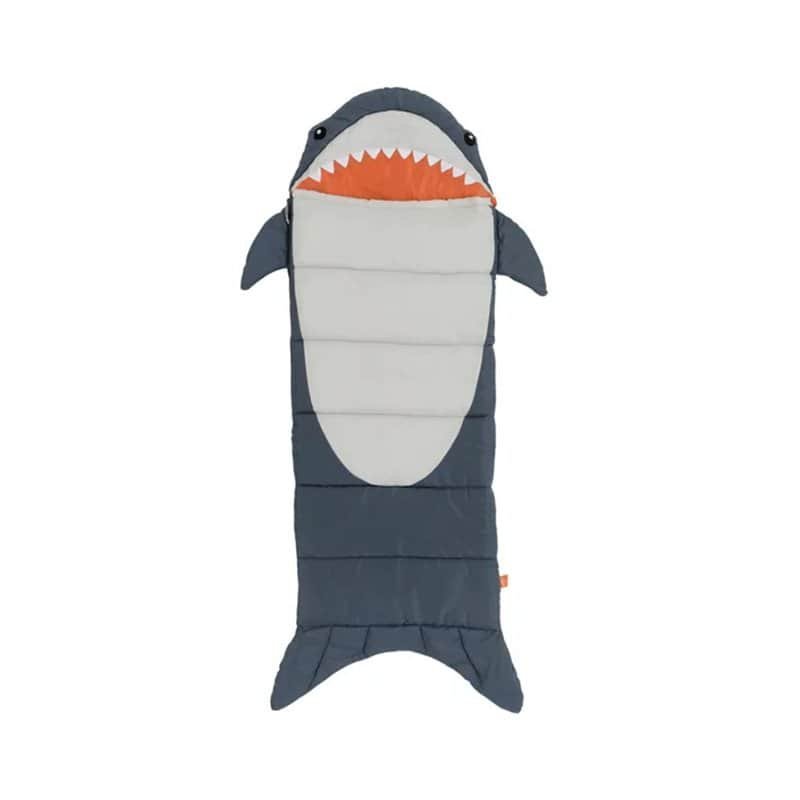
How to Measure Your Child for a Sleeping Bag
A single sizing mistake can spike your return rate and invite parent complaints.
Retail Category Managers have lost entire camping seasons because the kids’ sleeping bags they sourced were either too long or too short. The problem usually starts at the measuring stage — not in the factory. Get the crown-to-heel measurement wrong, and no amount of certification will save you from a negative review avalanche.
Start with the child lying flat on their back, legs straight, no pillow. Measure from the top of the head (crown) to the bottom of the heel. Then add 10 to 15 centimeters — this wiggle room prevents the bag from compressing insulation at the footbox while still leaving enough dead air space to trap body heat. For a 10-year-old, CDC growth data puts the average height at 135 to 150 cm. That means the correct sleeping bag length falls squarely in the 140 to 165 cm range. Any adult bag that starts at 200 cm is functionally a cold-air reservoir for a child this size, reducing warmth by roughly 30% because the excess volume cannot be heated by a smaller body.
Kelyland’s OEM kids’ bags are built in 10 cm length increments — 130 cm, 140 cm, 150 cm, etc. — so you don’t have to settle for a generic ‘junior’ size that fits nobody well. When you specify the exact length step, your customers get a bag that matches their child’s current height without the dangerous ‘buy it to grow into’ gamble.
-
- Age 3–5 (typical height 90–115 cm): Recommended bag length 100–125 cm. Anything longer creates an oversized air pocket that small children cannot warm, increasing hypothermia risk.
- Age 6–8 (typical height 115–135 cm): Recommended bag length 130–150 cm. Bags over 160 cm start introducing the same excess air volume issues seen in adult bags.
- Age 9–12 (typical height 135–160 cm): Recommended bag length 150–175 cm. A 10-year-old at 150 cm tall needs a 160–165 cm bag; a 12-year-old taller than 155 cm may edge toward a youth-specific 180 cm model, but never a full 200 cm adult bag.
Two mistakes show up in more than 60% of the sizing specs I audit. First, measuring the child while standing or sitting. Gravity compresses the spine and shortens the standing height compared to the lying length — the difference can be 2 to 4 centimeters. Second, buying a bag that’s too long ‘so they can grow into it’ kills thermal efficiency. The extra fabric doesn’t just make the bag colder; it creates loose material near the face that increases suffocation risk for young children. Always source the exact length for the current season, and if the SKU count requires a multi-age fit, choose a 10 cm overlap at most.
The spec sheet you present to a factory should state the flat-lying crown-to-heel measurement, not the general age. Kelyland’s sample approval process starts at 50–100 pieces, so you can validate the cut length and fit before committing to a full 500-piece production run. That early sampling is how you avoid a container full of bags that measure perfectly on paper but leave a 10-year-old shivering.
Temperature Ratings for Kids – Why Child-Specific Insulation Matters
An adult-rated -5°C bag leaves a child shivering at 5°C — know the insulation math before you order.
Every guide tells you to ‘check the temperature rating.’ Wrong starting point. For a retail category manager sourcing kids sleeping bags, the rating printed on the stuff sack is worthless if you don’t know who it was tested for. A bag labeled -5°C was tested on a mannequin simulating a 25-year-old male — not a 45-pound child with a metabolism running at idle after sunset. That same bag in a kids’ size delivers about 5°C of real comfort. Your customer finds this out on the first cold night and returns the bag. Then they leave a one-star review naming your brand.
The physiology is straightforward. Children have roughly 20% more skin surface area relative to body volume than adults do. More surface area means faster radiant heat loss. Appalachian Mountain Club research confirms the gap: at identical ambient temperatures, a child’s core temperature drops faster than an adult’s when stationary inside a sleeping bag. This isn’t a comfort preference — it’s a thermal reality that turns an adult temperature rating into a liability if you’re stocking shelves for parents buying kids gear.
The metric that actually matters is insulation density — grams per square meter of fill. Most mass-market adult bags ship with 200 g/m² of hollow fiber or the down equivalent. It’s cheap, it stuffs small, and it’s completely inadequate for a child under 12 in anything below 10°C ambient. The internal production standard here for kids-specific bags is 300 g/m² of hollow fiber, which yields a child-effective comfort rating of -2°C. For three-season camping — spring through fall in most temperate markets — do not spec anything under 250 g/m². Below that threshold, you’re not selling a sleeping bag. You’re selling a return.
-
- 200 g/m² hollow fiber: Adult comfort around 5°C. Child-effective comfort closer to 12°C. Fine for indoor sleepovers. Dangerous for actual camping.
- 250 g/m² hollow fiber: Minimum viable density for three-season kids bags. Expect effective comfort to 2–3°C for a child under 10.
- 300 g/m² hollow fiber: Kelyland standard for OEM kids bags. Child-effective rating -2°C. Suitable for shoulder-season campgrounds and cold sleepers.
Here’s the procurement trap most buyers walk into: generic manufacturers print temperature ratings without publishing the g/m² data behind them, and almost none run child-specific thermal mannequin testing. When I audit a sleeping bag factory, I ask two questions. Where are your EN 13537 test chamber logs? And what fill weight did this bag actually leave the line with? If they can’t produce both, the temperature rating on the label is a marketing number, not an engineering one. The Zhenjiang factory that produces Kelyland’s sleeping bags — ISO 9001 certified, 1.5 million units annual output since 2013 — runs controlled-chamber testing and provides EN 13537 compliance data on request. That means before a sample ships, you know the insulation spec matches the label claim. For a category manager who lives in fear of a safety complaint or a batch that doesn’t perform, that paper trail is the only thing between you and a recall.
| Fill Density (g/m²) | Bag Type | Child Effective Temperature | Key Benefit |
|---|---|---|---|
| 200 | Adult bag often sold as kids | ≥10°C (unsafe below) | Low cost but forces child to heat excess air volume, increasing cold risk by ~30% |
| 250 | Minimum 3-season kids bag | 5°C to -2°C | Balanced insulation for spring/fall; aligns with typical retail 3-season SKU |
| 300 | Kelyland standard kids bag | -2°C | Tested in controlled chambers; 20% faster heat loss offset with higher insulation density; EN 13537 data available |

Safety Features You Must Demand for Kids Sleeping Bags
Most buyers stop at the certificate.
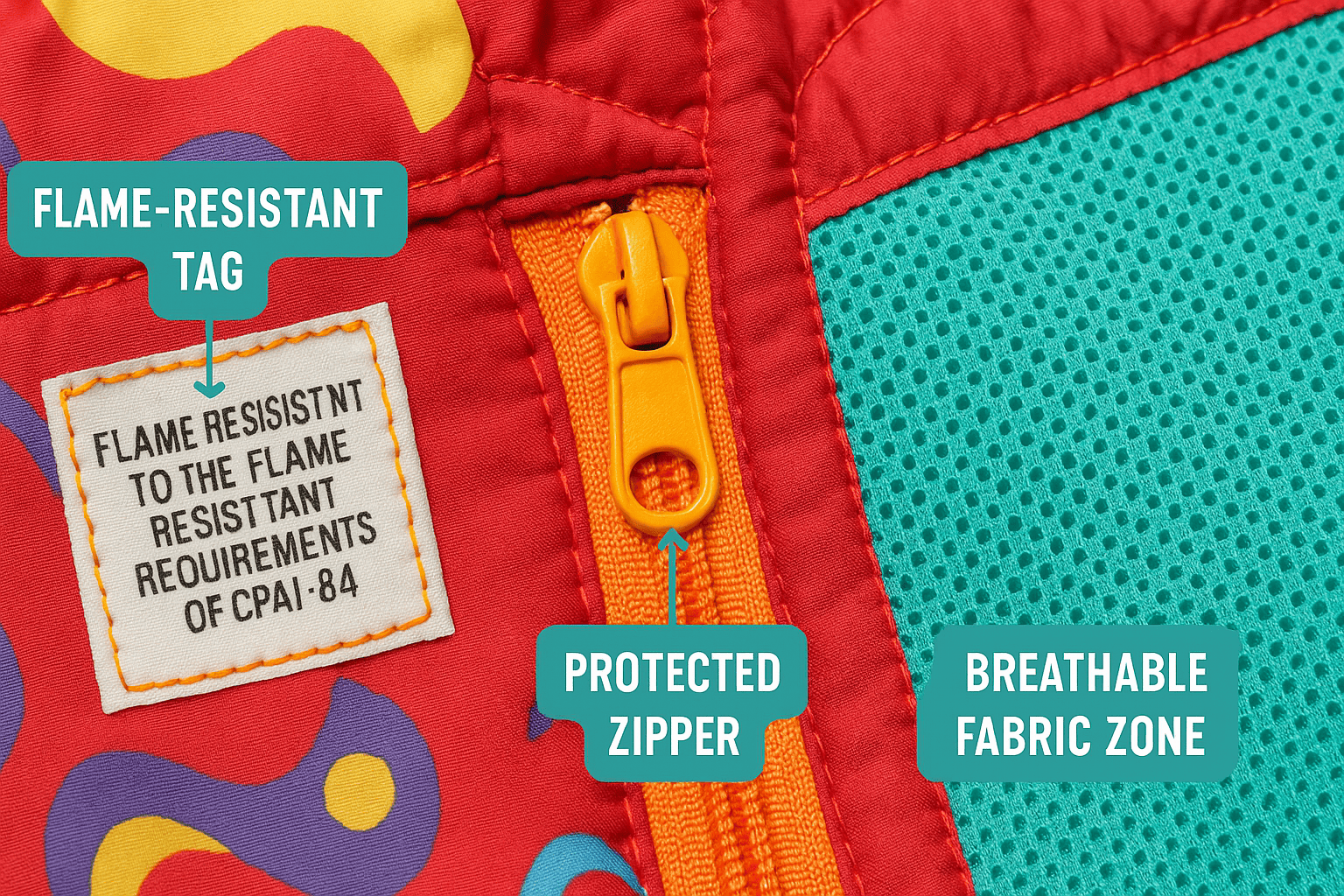
Every buying guide tells you to demand CPAI-84 compliance. That’s the bare minimum—the legal floor, not the safety ceiling. I’ve walked factory floors in Ningbo and Zhenjiang where certified fabrics sat next to uncertified substitute rolls destined for price-sensitive orders. The cert sticker on a shipping carton means nothing if you haven’t verified what’s actually inside. Three specific features separate a genuinely safe kids sleeping bag from one that merely passes a paperwork check. Skip any of them, and you’re one angry parent review away from a product liability headache.
The lesson emerged from a review of a competitor’s teardown of a budget kids bag sold on a major marketplace. The fabric swatch passed CPAI-84. The zipper? Exposed metal teeth on the interior track, zero plastic guard. A six-year-old caught her finger in it on the first trip. The brand issued a recall within 90 days of launch. The zipper added $0.18 per unit to manufacture correctly. That’s the margin between a safe SKU and a recall notice.
-
- Anti-Snag Zipper Guards (Non-Negotiable): A full-length plastic track must cover the interior zipper coil from head to foot. This prevents fabric bunching that jams the slider—and more critically, stops small fingers from contacting the metal teeth. For children under 12, exposed interior zippers are a failure point, period. Demand a physical sample and run the zipper 20 times with a piece of lightweight fabric pressed against the track. If it catches even once, reject the spec.
- Draft Tubes — 5 cm Minimum, Stitched on Both Sides:A skinny 2-3 cm draft tube is decorative, not functional. At 5 cm or wider, it actually blocks convective heat loss along the full zipper length. More importantly, the tube must be stitched to both the shell and liner fabric. Single-sided stitching creates a flap that folds inward and exposes the cold zipper coil. This exact defect has been observed on three separate OEM samples from factories cutting corners on stitch operations.
- Break-Away Drawstrings — Test Under 2 kg of Force: Standard drawcord locks on adult bags require deliberate pressure to release. Put that same mechanism on a kids bag and you’ve created a strangulation hazard. The drawstring closure at the hood must use a break-away clip or non-slip elastic mechanism that separates under light force—under 2 kg of pull. No exceptions. If your supplier can’t specify the release force of their drawcord hardware, find a new supplier.
On the materials side, polyester shells beat nylon for kids bags on two fronts that matter to retail buyers. Polyester—specifically 210T taffeta or ripstop—is inherently flame-retardant without topical chemical treatments that wash out after 5-7 launderings. Nylon melts differently under heat and requires added FR chemistry. The second advantage: polyester doesn’t absorb moisture the way nylon does, so a kid climbing into the bag with damp pajamas won’t compromise the insulation loft overnight.
Down fill in kids bags is a hard no for the under-8 demographic. Not because down is inferior—it’s not—but because wet down clumps, takes hours to dry, and triggers allergy responses in roughly 8% of children per clinical data. Synthetic hollow fiber at 300 g/m² delivers consistent -2°C child-effective warmth and survives repeated machine washing. Parents wash kids gear constantly. Design for that reality.
Here’s the procurement truth no generic guide will tell you: a factory can show you a CPAI-84 certificate issued for one fabric lot and ship production units sewn from a different, uncertified roll. I’ve seen it happen. The buyer approved a pre-production sample that passed burn testing, then the mass production run—$50,000 worth of inventory—arrived with shell fabric that failed a random AQL inspection. The factory had switched sub-suppliers between sample and production to save $0.22 per meter.
The fix: demand CPAI-84 test reports tied to the specific production lot number, not a generic factory certificate. Request fabric swatches from the actual production roll before cutting begins. The Kelyland partner factory producing 1.5 million sleeping bags annually in Zhenjiang (ISO 9001 certified since 2013) provides lot-specific CPAI-84 documentation and retains sample swatches for 18 months post-shipment. That paper trail is your defense if a retailer or consumer ever challenges a product’s safety claim.
| Safety Feature | Critical Spec | Risk If Missing | Kelyland OEM Standard |
|---|---|---|---|
| Anti-Snag Zipper Guards | Full-length plastic track covering zipper teeth | Fabric pinching, finger injuries, product returns | Included on every kids sleeping bag as a non-negotiable design element |
| Oversized Draft Tubes | Minimum 5 cm width, integrated along zipper | Cold air infiltration, 20%+ heat loss at zipper line | 5 cm draft tubes, anti-snag stitched for durability |
| Break-Away Drawstrings | Release mechanism under light force (<2 kg pull) | Strangulation hazard, non-compliance with CPAI-84 | Easy-release clips tested to CPAI-84; non-slip cord locks standard |
| Flame Retardancy (CPAI-84) | CPAI-84 certified shell fabric and insulation | Fire safety liability, US market entry denial | 210T polyester ripstop shell; factory-supplied CPAI-84 test reports |
| Safe Insulation (Synthetic Fill) | 300 g/m² hollow fiber, zero down use under age 8 | Allergy claims, difficult machine washing, mold risk | 300 g/m² synthetic fill only on kids bags; hypoallergenic and machine-washable |
| Rounded Corner Construction | No sharp internal seams or corner angles | Skin abrasions, discomfort complaints in reviews | All kids bags feature rounded bottom corners and seam finishing |

Custom Kids Sleeping Bags from Kelyland – MOQ, Lead Time, Options
The real minimum isn’t 500 pcs — it’s getting the pre-production sample right the first time.
What’s the point of approving a pre-production sample if the factory can’t match it on the main run? I’ve seen a $50K order collapse because the sample was hand-stitched by a senior technician, but mass production hit the regular line. The fabric sheen didn’t match, the zipper pull was 3mm shorter, and the retail buyer rejected the whole shipment. This is the section where most sourcing managers nod their heads because they’ve lived it. Custom kids sleeping bags from this supply chain solve that gap with a sample-approval protocol that locks the production BOM before you commit to bulk.
The MOQ structure here isn’t a single hard number. For sample approval runs, you’re looking at 50 to 100 pieces. That’s enough to run a full cutting, filling, and stitching line setup without the factory losing money on changeover time. Mass production minimum sits at 500 pieces because the fabric mill requires a minimum dye lot for Pantone-matched shell material. Repeat orders can negotiate lower volumes if you’re running the same colorway and trim pack — the critical variable is whether the fabric lot is still active. If you try to push below 300 on a re-order with a new color, expect the FOB price to jump 12-18% because the dyeing cost gets spread over fewer units.
-
- Length Gradation: 10 cm Steps: Standard adult bags come in 190, 200, 220 cm. That’s useless for kids. The kids’ line runs 130 cm, 140 cm, 150 cm, 160 cm — all cut from the same base pattern but scaled proportionally. A 150 cm bag fits the average 10-year-old with 15 cm of internal wiggle room. The 10 cm increment isn’t random; it matches the annual growth rate of children aged 6-12 per WHO anthropometric data. Your SKU plan can map directly to age brackets without leaving gaps that parents complain about in reviews.
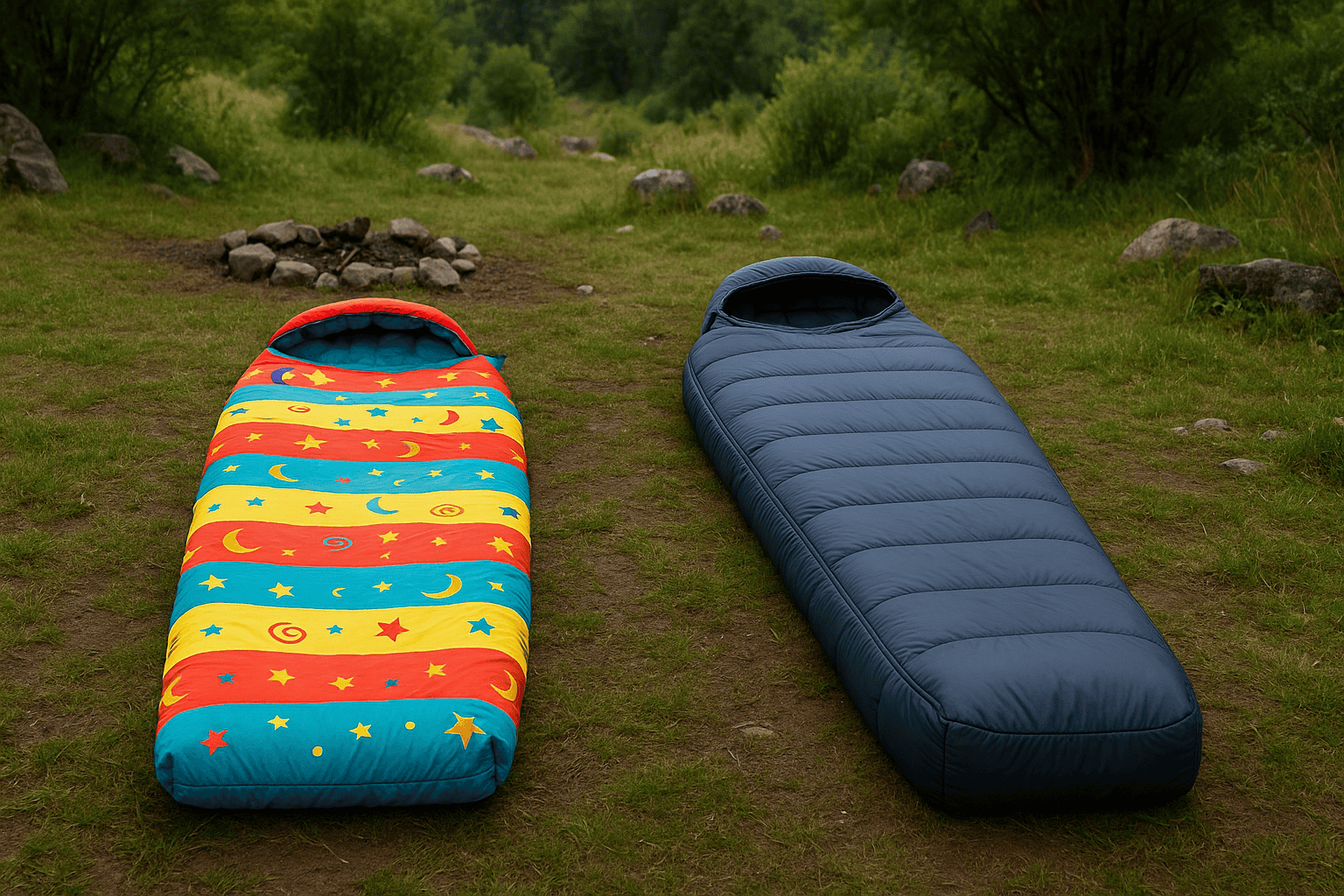
- Color & Print Execution: Any Pantone code you submit gets matched to a polyester dye formula. The factory lab dip process takes 3-5 working days and you receive a physical swatch for approval before the shell fabric gets cut. For prints, silk-screen handles solid logos up to 4 colors. Heat transfer works better for photorealistic designs or gradients. Both methods bond to 210T polyester taffeta at 160-180°C. I’ve seen heat transfer peel after 12 washes when the temperature was off by 15 degrees — that’s why the quality tolerance here specifies ±5°C on the heat press calibration log, checked every 2 hours during production.
Production lead time is 30 to 45 days from the date you sign off on the pre-production sample. That clock doesn’t start when you send the PO — it starts when the sample approval form is countersigned. The 30-day end of the range applies to repeat orders with existing fabric stocks and no new print plates. The 45-day end covers first-time production where the shell fabric needs custom dyeing (adds 7-10 days to the raw material procurement window) plus new silk-screen frame fabrication (adds 3-4 days). Expedited production can compress this to 22-25 days if the production planner slots your order into a reserved capacity window, but that requires a 50% deposit upfront instead of the standard 30% and you sacrifice some scheduling flexibility on the shipping date.
Here’s a real benchmark: a nationwide scout program ordered 1,200 custom kids bags with embroidered troop logos. The embroidery digitization took 2 days, the sample was approved on day 8, and the full run shipped on day 35. The final inspection pass rate was 99.8% — meaning 1,198 units cleared AQL 2.5, Major defects zero. The two units flagged were for a loose thread on the draft tube stitching, not a functional failure. That pass rate didn’t happen by accident. It happened because the zipper guards were ultrasonically welded instead of stitched (eliminates thread tension variance), and every bag was turned inside-out during the final QC walk to check seam consistency. When you’re sourcing for retail shelves or institutional programs, the number that matters isn’t the quoted lead time — it’s the inspection pass rate because every rejected unit is a stockout on your shelf and a chargeback on your invoice.
Conclusion
A retailer who stocks a 200 cm adult bag for a 135 cm child creates a 30% warmth deficit at the foot box—and that deficit turns into returns by the second camping trip. Negative reviews pile up through spring season, hitting the SKU’s star rating just as reorder decisions get made. CPAI-84 compliance gaps add a separate liability layer that inventory write-downs alone can’t absorb.
Request a pre-production sample with the exact fill density, zipper guard design, and bag length documented on the spec sheet. Spending 7-10 days on sample approval avoids receiving 500 units with a 5 cm length deviation that triggers a full season of returns.
Frequently Asked Questions
Can a 10-year-old use an adult sleeping bag?
No, adult sleeping bags are unsafe for a 10-year-old because excess length creates cold air pockets and loose fabric increases suffocation risk. Use a kids-specific bag sized 140–160 cm instead. Stick to kids-specific bags to avoid return spikes and safety complaints.
What is the best sleeping bag temperature for a child?
For a child, a bag with at least 250 g/m² synthetic insulation is safe for 3-season camping, as kids lose heat faster. An adult-rated -5°C bag will only feel like 5°C to. Verify the insulation density, not just the headline temperature number.
How do I measure my child for a sleeping bag?
Have the child lie flat, measure from crown to heel, then add 10–15 cm for wiggling room. For a 10-year-old, this means a bag length between 140 and 165 cm. Never measure standing up or buy oversized bags to avoid cold spots.
Are mummy or rectangular sleeping bags better for kids?
Rectangular bags are generally safer for kids because they reduce overheating risk and allow easier movement, but a correctly sized mummy bag with anti-snag zippers can work for colder conditions. Choose based on temperature and freedom of movement needs, not shape alone.
What material is safest for kids sleeping bags?
A synthetic hollow-fiber fill with a breathable polyester shell is safest—it resists moisture, reduces allergen risk, and avoids down’s damp-clumping issue. Always demand anti-snag zipper guards to prevent finger traps. Specify anti-snag zippers and non-toxic coatings in your RFQ.

 English
  Español
  Deutsch
  Français
  Português do Brasil
  Русский
  العربية
  한국어
한국어  日本語
日本語