 跳到内容
跳到内容 
Why do some private-label folding wagons sell through in two weeks while an identical-looking competitor SKU collects dust for six months? Most folding wagon market trends 2026 forecasts will point to colorways or wheel diameter. Ask any category manager who just ate a $50,000 return batch, and they’ll point to something less photogenic: the sample approval process that passed a prototype with 1.2mm steel tube walls, while the mass production run shipped with 0.8mm. The spec sheet looked identical. The quality tolerance sheet got ignored. That gap is where margins go to die.
The market is heading toward USD 403 million in 2026 at a 6.5% CAGR, but the real story sits underneath that headline number. Heavy-duty wagons rated 200kg and above are growing 30% year over year. Multipurpose designs—the wagon that folds into a camp cot or bench—convert 22% higher on Amazon than single-function units. Here’s what that means for a brand manager planning a 2026 line: if your private-label wagon spec sheet still mirrors a 2023 budget model, you’re not competing for shelf space. You’re competing for the clearance rack. A realistic landed FOB cost for a properly spec’d 200kg all-terrain wagon with basic OEM branding runs USD 18–35 per unit, depending on volume and accessories. The math works. But only if the sample approval step catches the frame gauge swap before the container leaves the factory.
Top 5 Wagon Trends Driving Sales
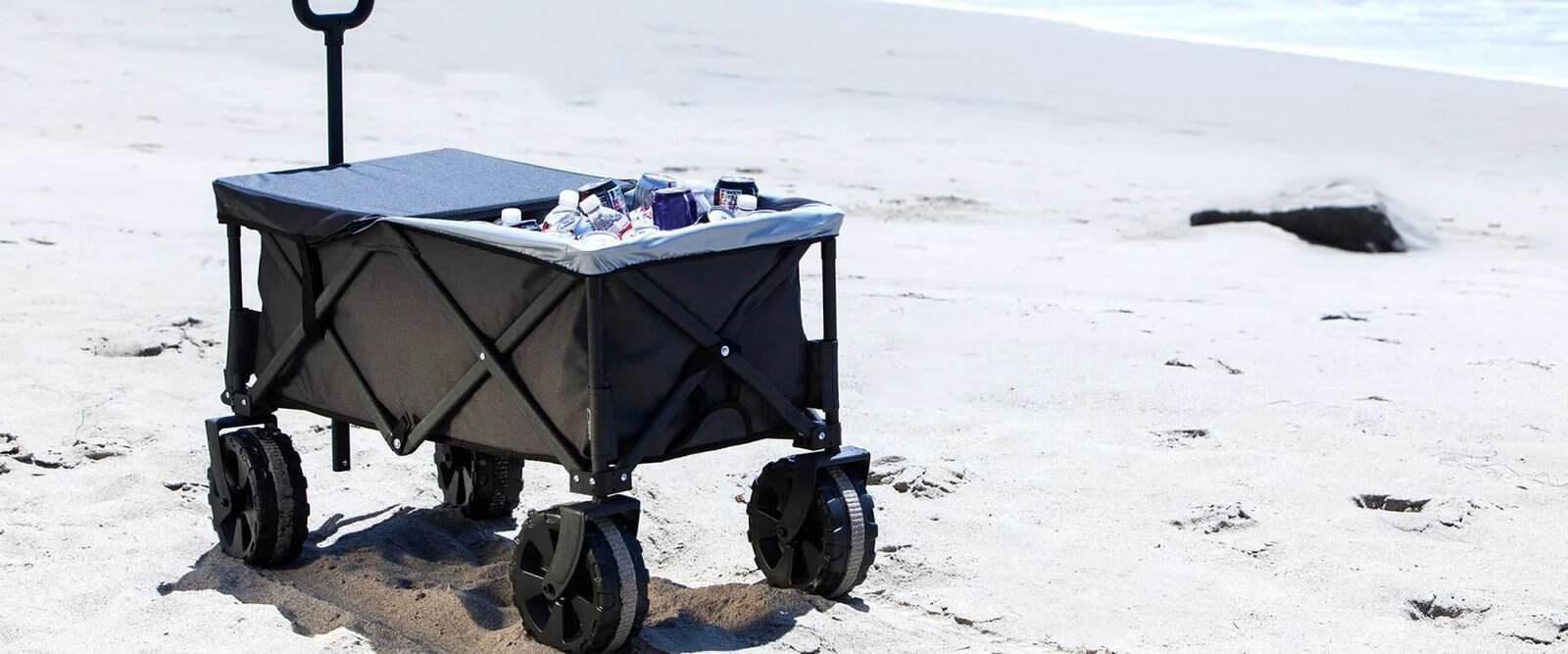
200kg wagons are the new entry point – stock anything lighter and you’re competing on price alone.
Most retailers still treat wagons as a low-effort beach accessory. That habit misses the three‑digit growth happening when a wagon solves actual logistics: hauling multiple kids, commercial gear, or doubling as a campsite sleep system. The SKUs that sell out in 2026 aren’t the generic imports with flimsy frames – they’re the ones engineered for load, terrain, and space efficiency.
-
- 1. Heavy‑Duty Capacity (200kg+): Year‑on‑year demand for wagons rated at 200kg and above is up 30%. The structural difference is in the frame: 1.2–1.5 mm carbon steel tubes versus 0.8 mm tubes in budget models. A frame that buckles under a full cooler earns more than a one‑star review – it kills your brand’s safety authority. Request the wall‑thickness measurement report before you lock the spec. That single data point predicts warranty claims better than any pitch.
- 2. All‑Terrain Wheels with Brakes: PU and EVA wheels are replacing PVC across the board, not just for smoothness but for reliability. In‑factory wheel assembly drops failure rates by 8% over generic outsourced wheels. Add a foot brake and the wagon stops being a runaway risk on slopes. For a private label, speccing 360° swivel fronts with lockable rear wheels makes it easy to justify a $10 retail premium. The customer feels the difference the first time they pull it through sand.
- 3. Multipurpose Camp Cot Convertible: The wagon that transforms into a flat sleeping platform shows 22% higher Amazon conversion rates than a standard single‑function unit. That’s not a gimmick – it solves two storage problems for a family with one SKU. OEM customization can integrate a padded mattress insert and a removable canopy. For a brand manager, this design earns two spots in the catalog without doubling inventory.
- 4. Extended & Double‑Decker Family Units: Families with multiple children are driving extended‑body and double‑decker wagons. A longer 120L+ tub or a split‑level layout lets parents carry a car seat below and gear above, using integrated harness anchors. Reputable factories supply 1.5x rated‑capacity dynamic stability test videos. If your supplier can’t produce that footage, it’s a hard stop.
- 5. Compact Scissor‑Fold Storage: Container space is margin. A scissor‑fold mechanism shrinks folded volume enough to cut per‑unit ocean freight cost by up to 15%. It also means the wagon fits in a sedan trunk, which widens your retail footfall. Aim for a folded height under 30 cm – cross that threshold and storage complaints drop sharply.
Regional Demand Differences (US vs Europe vs Australia)
A 0.5mm frame thickness gap between a US-grade and EU-compliant wagon can impound a full container.
A US buyer lost $50K on a 2,000-unit order three years ago. The pre-production sample passed a static 200kg load with 1.5mm carbon steel tubes.
When I audit factories across 12 countries, I see three distinct buyer profiles that map directly to physical wagon specs. North American retailers demand 200kg+ load ratings, all-terrain wheels, and 900D Oxford fabric because their end-users haul firewood, two toddlers, and a cooler across gravel and beach sand. Europe wants sub-75 cm folded length, EN71-3 compliance on every plastic buckle, and a 100–120kg rating for sidewalk-to-park use. Australia won’t touch a wagon without UV-stabilized polyester and sealed bearings that survive 200 sand-load cycles. Ignore these and your Amazon reviews will tell you exactly where you failed.
-
- US: 200kg capacity & PU wheels: Demand grows 30% YoY for heavy-duty wagons. The frame must be 1.2–1.5 mm carbon steel; thinner tubes fail under dynamic load and generate returns. All-terrain PU wheels with foot brakes reduce defect rates by 8% when manufactured in-house versus third-party, because wheel hub tolerances stay tight.
- Europe: EN71-3 & compact scissor-fold: 85% of European retail RFQs I see require chemical migration test reports. Without them, customs holds the shipment. Compact scissor-fold mechanisms matter: a 15% per-unit ocean freight saving from reduced container volume can make or break your landed FOB at 500-unit batches.
- Australia: UV inhibitors & sand-resistant bearings: Standard polyester fabric fades and tears within a single season under Queensland UV. Order runs that omit UV stabilizer additive in the dyeing stage will fail quality tolerance checks. Sealed EVA bearings are non-negotiable — sand ingress seizes wheels and triggers mass returns.
Multipurpose wagon-cot combos, which show a 22% higher Amazon conversion rate than single-function units, skew heavily toward US and Australian markets where consumers value dual-use gear. Europe’s smaller living spaces push interest toward bench-conversion designs that serve urban picnics, but load rating still must not exceed 120kg to match local safety norms. If a brand manager tries to sell the same SKU across all three regions, they either over-engineer for Europe and lose margin or under-spec for the US and drown in returns.
Three questions to ask your supplier before you lock a regional SKU: (1) Can you provide EN71-3 test reports for all fabric, buckle, and paint materials? (2) Will you supply caliper-verification photos for every 500 units to confirm frame wall thickness? (3) Have the wheels been cycle-tested in sand for 200 runs without bearing failure, and can you share the inspection log? Answering ‘no’ to any of these means you’re carrying the risk that the PP sample won’t match mass production—and your container will tell the story.
How to Capitalize on Trends with OEM Customization
Most brands spot the trend.
You have the same market data every other brand manager has. Heavy-duty wagons rated 200kg and above are growing 30% year-over-year. Multipurpose wagon-cot combos convert 22% higher on Amazon than standard single-function units. Knowing the trend is not the advantage. Acting on it before your competitors do—that is the only edge that matters. Off-the-shelf buying from a distributor locks you into someone else’s SKU catalog and someone else’s margin structure. OEM customization puts the trend data in your hands and lets you build product around it.
Speed separates the brands that lead a category from the ones that chase it. A dedicated folding wagon factory producing 1 million units annually—like the Jinhua facility behind Kelyland’s wagon program—can lock a design and deliver a pre-production sample in 10-15 days. Mass production runs 30-45 days from sample approval. Spot a trend in January, place the order in February, and your branded inventory lands by April. Distributor lead times routinely stretch past 90 days, and you get zero design control for the wait.
The cost structure rewards brands that source direct. Landed FOB for a 200kg-capacity all-terrain wagon with PU/EVA wheels, foot brakes, and basic OEM branding runs USD 18-35 per unit, depending on volume and accessory count. That lands 15-20% below wholesale distributor pricing for a comparable unit—and the unit carries your logo, your colorway, your packaging. Competing on price against 40 other retailers stocking the same generic wagon is a race to zero margin. Competing with a branded product that matches a verified demand trend is a different business entirely.
Quality tolerance is where OEM sourcing earns its keep. A heavy-duty wagon built on 1.2-1.5mm carbon steel tubing holds 200kg without frame deformation. Budget models running 0.8-1.0mm tubing fail under that load—as observed during sample approval inspections. All-terrain PU/EVA wheels manufactured in-house show defect rates 8% lower than wheels outsourced from generic third-party suppliers. These are not marketing claims. These are the differences a customer feels when they pull a loaded wagon across sand or gravel, and they determine whether that customer writes a
-
- Frame integrity: 1.2-1.5mm carbon steel tubing holds rated loads; 0.8mm budget frames do not.
- Wheel reliability: In-house PU/EVA manufacturing yields 8% lower defect rates than outsourced alternatives.
- Design exclusivity: Convertible cot/bench combos, double-decker configurations, extended family models.
- Freight efficiency: Scissor-fold designs reduce container volume, cutting per-unit ocean freight by up to 15%.
- Brand ownership: Your logo, Pantone-matched fabric, custom packaging—not a catalog number shared by 50 other retailers.

Kelyland Custom Cases-DOD Folding Wagon
Skip OEM customization on folding wagons in 2026 and the math works against you. By Q3, when heavy-duty 200kg+ models are the baseline consumer expectation and multipurpose designs are the conversion driver on Amazon, you will be sitting on generic 150kg inventory that needs a discount to move. Brands that locked their OEM orders in Q1 are already planning their next seasonal refresh. The cost is not just the margin you leave on the table this season. It is the shelf space and brand relevance you lose to competitors who acted on the same trend data you had.
Conclusion
The folding wagon market heads toward USD 403 million in 2026 with a 7.94% CAGR in the camping segment, and the margin sits in the features retailers choose to skip. A 200kg heavy-duty frame with 1.2–1.5 mm steel tube walls cuts return rates from structural failures that plague the 0.8 mm budget builds. A multipurpose cot-combo design converts at 22% higher rates on Amazon than a standard single-function wagon. Doing nothing means stocking the commodity version, fighting a race to the bottom on price while competitors lock in the differentiated SKUs that command the FOB range above USD 30.
The next move is straightforward. A factory platform with 1 million units of annual capacity, all-terrain PU/EVA wheel testing, and a 50-unit MOQ lets you trial a trend-forward design inside a single season without overcommitting inventory. Review the private-label-ready heavy-duty, double-decker, and convertible platforms to build a 2026 assortment that captures the growth other retailers leave on the table.
Frequently Asked Questions
What is the market size of folding wagons in 2026?
The global folding wagon market is projected to reach roughly USD 337–403 million in 2026, driven by the shift to heavy-duty and multipurpose designs. North America accounts for the largest share. Factor regional demand into your stocking plan for more accurate forecasting.
Which type of folding wagon is trending the most for retail?
Heavy-duty wagons with 200kg+ capacity and all-terrain wheels are the top retail trend, witnessing roughly 30% year-over-year growth. Multipurpose designs that convert to a cot or bench follow closely. Prioritize heavy-duty stock to capture the fastest-growing segment.
How much does a heavy-duty folding wagon cost at wholesale?
A 200kg-capacity heavy-duty wagon with all-terrain wheels and standard branding typically lands between $35 and $55 per unit at wholesale. Cost can shift by $8–$12 for custom. Request a quote from your supplier with the exact spec sheet to lock in pricing.
Are double-decker wagons safe for carrying children?
Yes, double-decker wagons are safe for children when the lower deck is load-tested to 150kg+ and the upper deck uses a five-point harness system. Always verify the frame’s side-roll stability test. Request the test report before adding it to your family-oriented line.
Can I order a small batch of customized folding wagons for my brand?
Yes, many OEM-focused manufacturers now accept MOQs as low as 50 pieces for private-label folding wagon orders. Expect a longer lead time for small batches, as material sourcing and color matching still require. Discuss your small-batch needs early to align production schedules.

 English
  Español
  Deutsch
  Français
  Português do Brasil
  Русский
  العربية
  한국어
한국어  日本語
日本語