 跳到内容
跳到内容 
When you run an inflatable tent fabric test, 300D polyester Oxford with a 3000mm water column will handle most family camping tents. But a 600D marketing spec can hide a coated fabric that only passes 800mm. The gap between those two numbers is the difference between a rainproof weekend and a flooded floor. So test the coated composite, not the base cloth; most cheap imports fail at this stage.
Sample approval only covers a 50cm swatch. It does not cover seam integrity, coating adhesion, or what happens when the production line runs at speed. Request a 3-meter sample roll and run a 24-hour pressurized seam test at 1.0 PSI. The seam should hold without visible bubbling or delamination. If a supplier hesitates at that request, treat it as a red flag. Also compare FOB pricing against the stated water column after coating — that is where the real spec gap shows up.
Air beam material changes the whole welding equation. High-frequency welding works best with PVC-coated fabrics; TPU air beams require hot-air welding and a different lamination. Asking a factory to switch from PVC to TPU without adjusting the welding line creates leaks. Make the welding method part of your inflatable tent fabric quality checklist. Set the quality tolerance for both hydrostatic head and seam strength in the production agreement, then test units from the actual production batch — not just the pre-production sample.
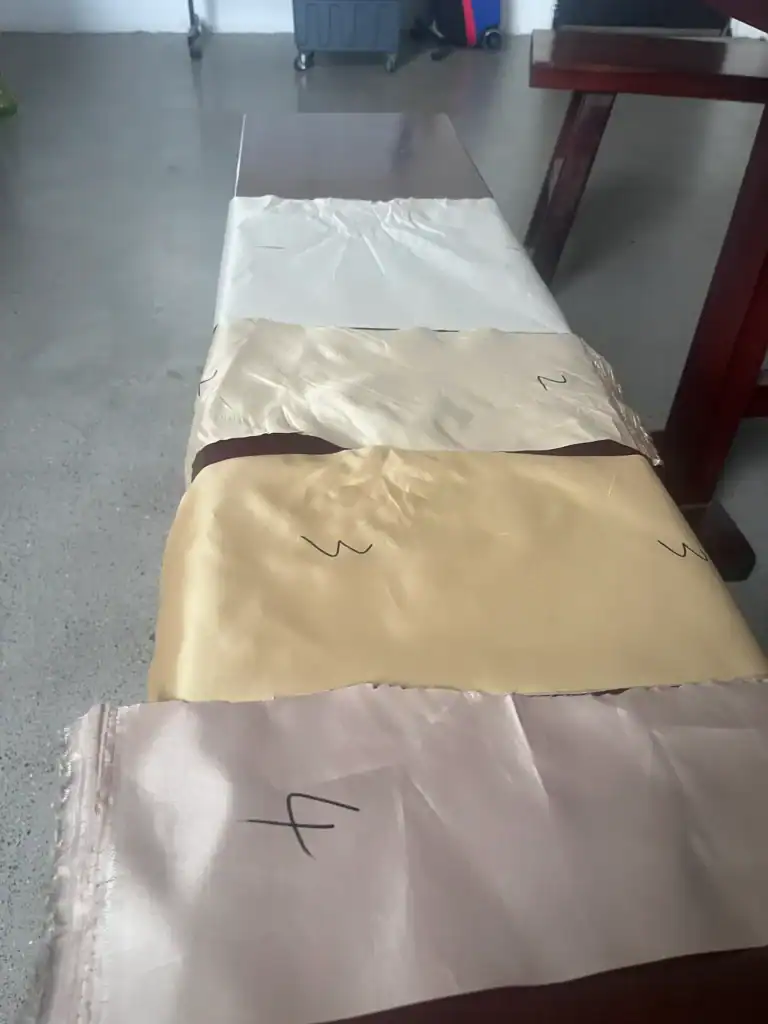
Why Fabric Choice Drives Inflatable Tent Performance
A 600D marketing spec can fail at 800mm waterproofing when the coated composite is tested.
Most inflatable tent failures trace back to one of two things: the base fabric or the air beam lamination. The base fabric determines tear resistance and UV stability. The coating determines waterproofing and weldability. A supply chain manager evaluating a new factory should treat these as separate test items, because a fabric that looks great on a spec sheet can still delaminate or leak at the seams under pressure.
Polyester, Oxford nylon, and TC blends: what each brings
Polyester Oxford is the workhorse of the inflatable tent category. It handles UV exposure better than nylon, resists water absorption, and takes coatings like PU, silicone, or PVC without stretching. Oxford nylon is lighter and stronger per gram, but it absorbs water, sags under rain, and loses up to 20% of its strength when wet. TC fabric — a polyester-cotton blend — gives a premium feel and breathability for glamping tents, but it demands a separate coating line and adds cost. For most retail programs and family camping products, a 300D polyester Oxford with a 3000mm water column delivers the right balance of durability, weight, and price.
-
- Polyester Oxford: Best all-rounder. Holds coatings well, resists UV, no water absorption. Specify 150D-300D for shelters, 600D for floors and heavy-use areas.
- Oxford nylon: Higher strength-to-weight ratio but needs a waterproof coating on both faces for inflatable structures. More expensive, and the wet-strength loss is a real concern in monsoon climates.
- TC blend: Good for glamping and luxury tents where breathability matters. Requires different welding parameters; not every factory can run it without tuning the lamination process.
From 200D to 900D: what denier actually tells you
Denier measures the linear mass of the yarn — higher denier means thicker yarn, not necessarily stronger fabric. A 300D ripstop polyester can outperform a 600D plain weave in tear tests because the ripstop grid stops tear propagation. Do not compare fabrics on denier alone. Always ask for the fabric construction (plain, twill, ripstop), the yarn type (polyester, nylon), and the finished weight in g/m². A 300D Oxford at 190g/m² is a completely different material from a 300D Oxford at 240g/m², and the heavier version will hold a coating better.
Inflatable air beam tents put stress on the fabric at the weld lines, not just the panel faces. A 600D floor with a 300D fly is a common combination. The floor needs puncture resistance, while the fly needs UV stability and water column. Asking for a single fabric for the whole tent adds cost without improving performance. The factory should specify which denier goes where, and the test plan should cover each zone separately.
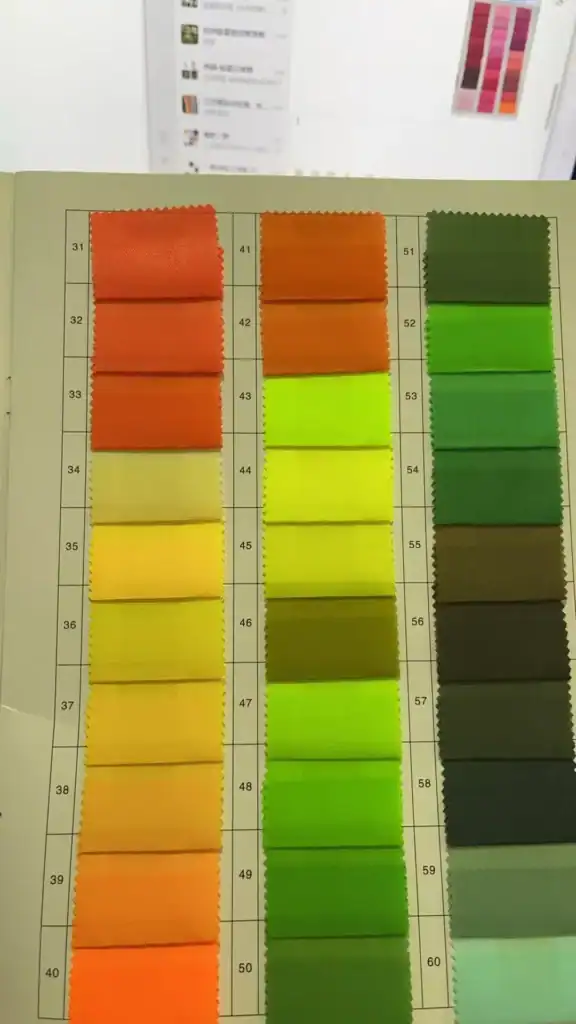
Physical Tests You Can Do with a Swatch
A swatch test on the coated composite beats any spec sheet.
The fabric swatch in your hand is the cheapest insurance you’ll get in the whole sourcing process. But only if you test the coated composite, not the base fabric. A 600D polyester Oxford marketing spec can still fail at 800mm hydrostatic head once coated. The test that matters is on the finished laminate. At the ISO 9001:2015-certified tent factory Kelyland works with in Ningbo, which produces 800,000 tents and tarps a year, buyers still run these same swatch tests before approving production.
Tear strength and scratch test
You don’t need a lab for a first-pass tear check. Clip a small notch in the swatch and pull with both hands. If the tear runs easily across the weave, the yarn count or coating is weak. The scratch test matters for TPU/PVC-coated fabrics: run a fingernail across the surface. A coating that peels off has poor adhesion, and it will separate from the fabric after a season of folding and inflation.
Water column / hydrostatic head check
This is the number that separates rainproof from marketing. Many cheap imports cite 600D fabric but the actual coated composite only passes 800mm. A 300D polyester Oxford with a 3000mm water column is a legitimate family camping tent fabric. The test must be done on the coated composite — the base fabric will always look better than the finished product.
For a quick pass/fail, clamp the swatch over a jar, fill it with water, and leave it on a paper towel overnight. Water on the towel means the coating has pinholes. A real hydrostatic head test measures the pressure at which water penetrates, and that number goes into your spec sheet.
UV exposure and color fading
Color fading shows up after 30 days, not in a product photo. Put the swatch on a windowsill for three weeks in direct sun. Fold half under a paper so you have a control. If the exposed side visibly fades, expect customer complaints within one season. Kelyland’s fabric options include black coating for UV block and silver coating; these layers also protect the base fabric from UV degradation.
Weld peel test for TPU and PVC beams
Air beams are the structural skeleton. If the weld line leaks, the entire tent collapses. High-frequency welding works with PVC-coated fabrics; TPU requires hot-air welding and a different fabric lamination. Asking a factory to switch from PVC to TPU without adjusting their welding line will create leaks. The most reliable way to compare is to request a 3-meter minimum sample roll and run a 24-hour pressurized seam test. The seam should hold at 1.0 PSI without visible bubbling or delamination.
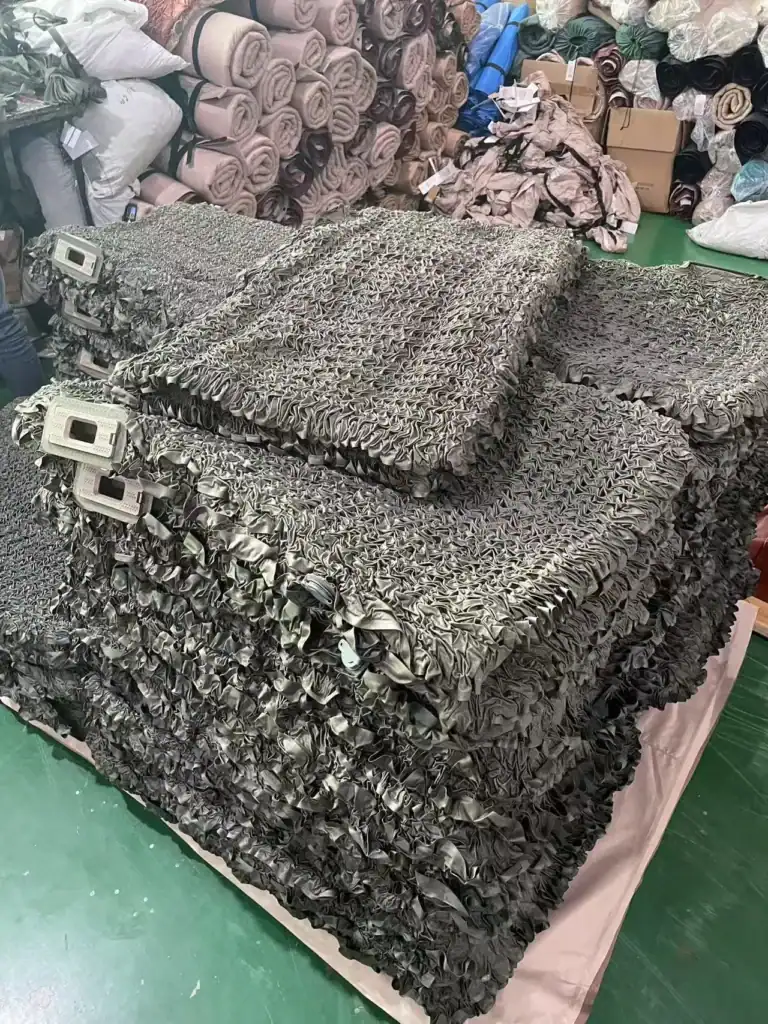
Lab Tests to Request from the Factory
Hydrostatic head means nothing if tested on base fabric.
Here is how to test inflatable tent fabric before you trust the spec sheet. Hydrostatic head is the first number a buyer asks for, and the most abused. ISO 811 measures water penetration pressure in millimeters. The test only counts when it is run on the coated composite, not the base cloth. Testing the greige fabric gives you a great number and a tent that leaks.
Hydrostatic head: minimums that survive contact with rain
For family camping tents, 300D polyester Oxford with at least 3000mm on the finished laminate is a practical baseline. Budget imports quote 600D on the spec sheet, but the coated composite only passes 800mm. Specify the hydrostatic head report on the coated fabric during sample approval, not after mass production starts.
Inflatable tents treat the fabric as a structural membrane. A failure at a seam or air beam sleeve doesn’t just leak — the tent collapses. Pair the hydrostatic head test with a 24-hour pressurized seam test at 1.0 PSI. No bubbling, no delamination. Request a 3-meter sample roll to run it properly.
-
- Hydrostatic head (ISO 811): Run on the coated laminate. Minimum 3000mm for rainproof tent bodies.
- Accelerated weathering: Confirms UV color retention and coating adhesion after exposure.
- Pressurized seam hold: 24 hours at 1.0 PSI on an inflated air beam; no bubbling or delamination.
- REACH restricted substances: Covers coated fabric, inks, and adhesives. Name formaldehyde explicitly.
UV resistance and coating adhesion
UV resistance needs accelerated weathering data, not a sales pitch. Check color retention and coating adhesion after exposure. Black coating blocks UV, but a weak bond flakes at fold lines after repeated packing. Ask the factory to bend a coated sample at the crease and inspect it under magnification.
Cold cracking for TPU and PVC
TPU and PVC handle cold differently. PVC stiffens and can crack under inflation pressure in low temperatures; TPU stays flexible. The catch: TPU needs hot-air welding and a different lamination, while PVC-coated fabric runs on high-frequency welding. Switching material without changing the line creates leaks.
Formaldehyde and REACH basics
EU retail requires REACH compliance. The third-party report must cover coated fabric, adhesives, and printed inks. Formaldehyde is a separate restricted substance in several frameworks, so name it explicitly in the contract. Kelyland partner factories are ISO 9001:2015 certified and every stage is inspected, but a management certificate doesn’t replace lab reports.
Reading a Fabric Specification Sheet
Ask for test results from the coated composite, not the base fabric spec sheet.
A fabric spec sheet usually lists three numbers: denier, thread count, and coating weight. Denier tells you the yarn thickness. Thread count tells you how tightly the base fabric is woven. Coating weight tells you how much waterproofing was applied to the finished composite. Read all three together — a heavy denier with a thin coating will leak at the seam lines faster than a lighter fabric with proper lamination.
Denier and thread count: the numbers buyers over-trust
Denier measures the weight of 9,000 meters of a single yarn strand. A 300D polyester Oxford fabric with a 3000mm water column is often enough for a family camping tent. Cheap imports get listed as 600D because the marketing sheet looks stronger, but the real pass/fail number comes from testing the coated composite — not the base fabric.
-
- 300D polyester Oxford: Good balance of pack weight and tear strength for standard tent bodies.
- 600D marketing label: Means little without a coated composite water column result to back it up.
Coating types: black coating, silver coating, PU, silicone
Black coating blocks UV light inside the tent and extends fabric life under direct sun. Silver coating reflects heat, which helps in summer conditions. PU is the standard waterproof layer on the inside face. Silicone gives excellent durable water repellency but is harder to seam-seal. The coating type should match your target market’s climate — a coastal buyer needs different UV protection than an alpine buyer.
How to spot inflated claims
The most common inflated claim: a high denier number backed by a coating that barely passes an 800mm hydrostatic head test. Buyers see 600D and assume quality, but the waterproof layer starts breaking down at stress points. Insist that the water column test is performed on the finished coated composite, not the base fabric. Also ask for coating weight in grams per square meter — a low coating weight wears away at the folds.
For inflatable tents, add the weld seam to the check. High-frequency welding works best with PVC-coated fabrics; TPU air beams require hot-air welding and a different lamination structure. Those two processes are not interchangeable. Ask the supplier which welding line the factory runs before you compare pricing.
Kelyland Outdoors coordinates 17 core strategic factories and over 200 manufacturing partners, with most partner sites holding ISO 9001:2015 certification. That structure lets buyers compare coated composite test data across production lines before placing an order. If a supplier cannot document the coating weight, hydrostatic head, and weld method on a single sheet, set a quality tolerance in the order contract and test the production sample — not just the pre-production one.
| Feature | What to Check | Typical Range / Standard | Why It Matters | Red Flag |
|---|---|---|---|---|
| Denier (D) | Fabric yarn weight; base fabric spec vs coated composite spec | 200D–900D; 300D polyester Oxford with 3000mm water column is often enough for family camping tents | Higher denier alone does not guarantee waterproofing; coating and construction drive real performance | A ‘600D’ marketing spec where the coated fabric only passes 800mm in a water column test |
| Thread Count | Threads per inch or cm; weave density of Oxford or nylon fabric | Dense, tight weave; count should match the intended tent category | Tighter weaves improve tear strength and give the coating a stable base to bond to | High D number but visibly loose weave that snags or shifts under light tension |
| Coating Weight | gsm of PU, silicone, or PVC coating; coating thickness on the finished fabric | Varies by chemistry; PU and silicone coatings must fully seal the weave without cracking | Coating weight determines waterproofing, weldability, and long-term durability in UV and cold | Shiny coating that flakes, whitens on flex, or has visible pinholes under backlight |
| Hydrostatic Head (Water Column) | Water column test on the coated composite, not the base fabric | 3000mm minimum for family camping; 5000mm+ for storm-rated inflatable tents | The coated composite is what actually sheds rain; base fabric numbers are meaningless in real use | Supplier provides test data for greige fabric only, or refuses to test the finished laminate |
| Coating Type | Black coating, silver coating, PU, silicone, or PVC; match to tent use case | Black coating for UV block; PU/silicone for waterproofing; PVC for air beam weldability | Coating chemistry dictates performance trade-offs and the correct welding process for seams and beams | Factory offers a coating substitution without re-qualifying the welding line or seam tape |
| TPU vs PVC Air Beam Weld | High-frequency welding for PVC; hot-air welding for TPU; different fabric lamination required | 24-hour pressurized seam test at 1.0 PSI with no bubbling or delamination | Welding process and fabric lamination must match the polymer; mismatched systems create leaks at the beam | Supplier claims a simple swap between PVC and TPU with no change to their welding process |
| Sample Testing Protocol | Request a 3-meter minimum sample roll; run a 24-hour pressurized seam test | Seam holds at 1.0 PSI with no visible bubbling, peeling, or delamination | Full-roll testing verifies consistency and gives you data to set pass/fail thresholds for production | Supplier only offers a small swatch and refuses to provide cut-yardage for pressurized testing |

How to Turn Fabric Testing Into an Order Requirement
Test the coated composite, not the base fabric.
The pre-production sample is a sales tool. It gets sewn by the most careful operator on the floor. Mass production is a different animal. A 600D polyester marketing spec can still ship as coated fabric that only passes an 800mm water column — far below what a family camping tent needs to stay dry. That’s why every test threshold has to be signed into the production agreement, and the test has to be run on the coated composite rather than the base fabric.
Set pass/fail thresholds in the production agreement
Before you approve a quote, define both the test method and the minimum result. For a family camping tent, a 300D polyester Oxford fabric with a 3000mm water column is a realistic benchmark. The contract should state that the hydrostatic head is measured on the coated composite, not the uncoated base. If a supplier can’t put that in writing, you’re accepting the risk on a handshake.
-
- Hydrostatic head: Minimum 3000mm on the coated composite for rainproof family tents. Reject reports that reference only the base fabric.
- Seam integrity: Request a 3-meter minimum sample roll and run a 24-hour pressurized seam test at 1.0 PSI. No bubbling, no delamination.
- Welding compatibility: PVC-coated fabric suits high-frequency welding; TPU air beams need hot-air welding with a different lamination. Confirm the factory’s line matches your material.
Pull test units from the production line
Container-level failures usually trace back to a seam, not a tear. The coated fabric tests fine on the swatch, but the production run’s coating delaminates at the welded joint. That’s why the seam test belongs in the same paragraph as the water-column requirement. Build this into the agreement: units get pulled from the production line partway through mass production and tested against the same hydrostatic head and seam thresholds as the approved sample.
Partner factories in the Kelyland network are ISO 9001:2015 certified, and checks happen at every production stage with inspection reports available on request. That is the detail to look for in a supplier: not just a beautiful first article, but a documented process for checking repeat units. Sample approval is the start. Production testing is the contract.
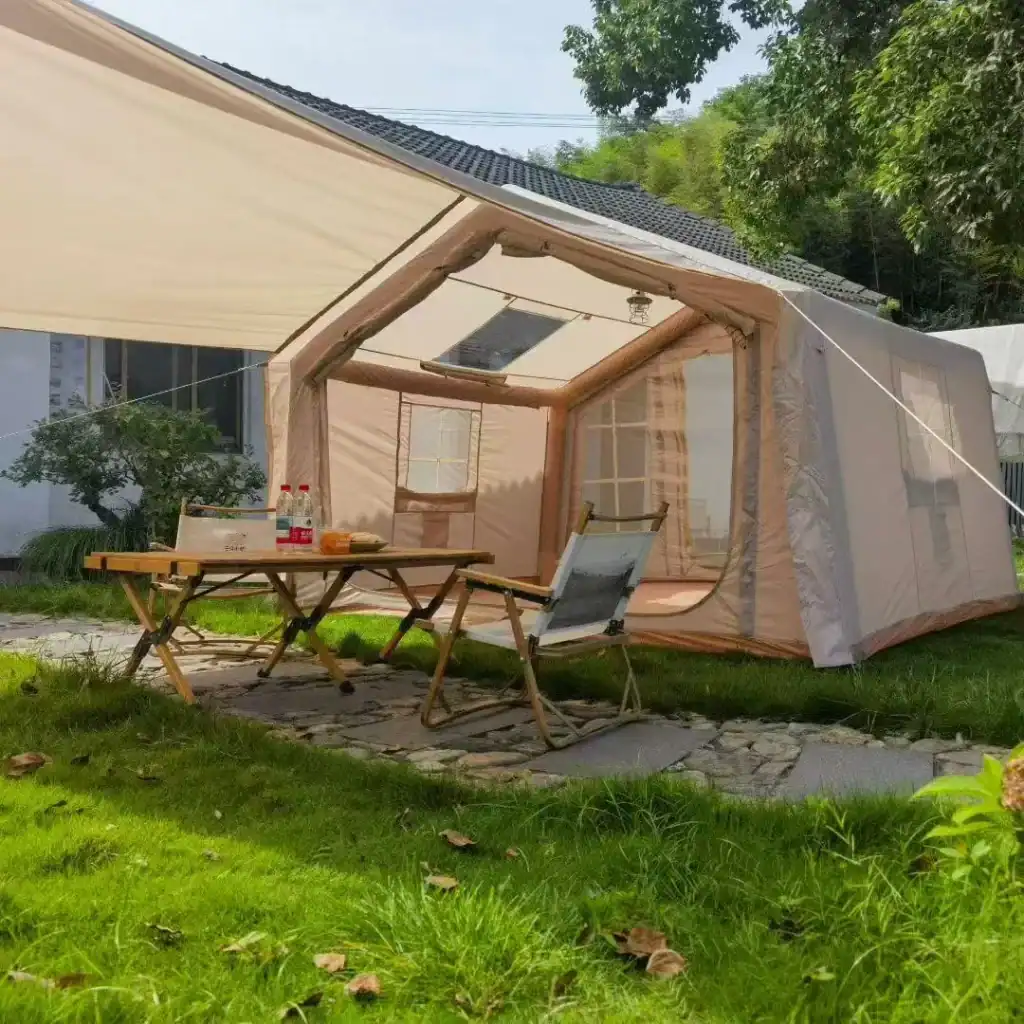
Conclusion
A fabric test isn’t a checkbox — it’s the difference between a tent that holds 3000mm water column and one that leaks at 800mm on the coated composite. Skip this step and the failure surfaces on retail shelves within the first season, not in your quality report. A 1,000-unit return cycle will cost you more than the entire sample-approval budget.
-
- Test the coated composite, not the base fabric; a 600D marketing spec can fail at 800mm water column.
- Request a 3-meter sample roll and run a 24-hour pressurized seam test at 1.0 PSI.
- PVC air beams need high-frequency welding; TPU requires hot-air welding with different lamination.
- Lock hydrostatic head minimums and sample-approval terms into the production agreement before mass production.
Take the inflated fabric claims you received from suppliers and run them through the pass/fail thresholds in this guide before you approve a sample. Compare hydrostatic head numbers, welding compatibility, and cold-crack test reports across your shortlist. If you need a reference point, review the air tent and inflatable product specifications on the Kelyland Outdoors product page to see what a documented quality-control process looks like.
Frequently Asked Questions
What fabric is best for inflatable tents?
300D polyester Oxford with a 3000mm water column is a solid baseline for family inflatable tents. Higher denier alone doesn’t guarantee waterproofing, so verify the coated composite rather than the base fabric. Always test the finished composite, not just the fabric spec.
How can I test inflatable tent fabric samples?
Run a swatch test covering tear strength, scratch resistance, and a water column check on the coated side. A simple swatch test on the coated composite beats any spec sheet. Request a swatch before committing to bulk production.
What hydrostatic head is rainproof for tents?
For rainproof inflatable tents, request a hydrostatic head of at least 3000mm on the coated composite. Be aware that hydrostatic head means nothing if tested only on the base fabric. Ask the factory for test results on the finished coated fabric.
How do I check TPU or PVC weld seams?
Perform a peel test on TPU or PVC beam welds to see if the weld separates under pressure. This catches weak seams that can fail in the field. Include weld peel testing in your pre-production sample approval.
How do I verify supplier fabric claims before ordering?
Compare the spec sheet against independent swatch and lab tests, especially coating weight and water column results. Look out for inflated denier specs that hide low waterproofing performance. Make tested thresholds part of your production agreement.

 English
  Español
  Deutsch
  Français
  Português do Brasil
  Русский
  العربية
  한국어
한국어  日本語
日本語