 跳到内容
跳到内容 
Your factory vetting checklist for outdoor gear must go beyond standard ISO certificates to address the specific failure modes that destroy retail margins, such as seam leaks in rain or zipper failures in cold weather. When sourcing from China, you are not just buying product; you are buying the factory’s quality infrastructure, and 73% of suppliers display sample rooms stocked with products from other manufacturers to mask their true capabilities.
A professional audit costs $300-800, but a bad first order can cost $15,000-50,000 in returns and chargebacks, meaning skipping pre-production vetting costs retail buyers an average of 15-20% of order value. To protect your category reputation and hit seasonal windows, you need to verify material traceability, testing equipment calibration, and retail packaging compliance before any PO is signed.

Why Generic Checklists Fail Retail Buyers

Business Legitimacy: Beyond Business Licenses
Factories routinely overstate their production capacity by 2-3x on online directories. To verify if a Chinese company is legit, you must cross-check three independent sources: the National Enterprise Credit Information System (qcc.com), customs export records, and a live video call walkthrough.
If the registered address on their license is a commercial office tower rather than an industrial zone, you are dealing with a trading company. Use the “video call technical probe” technique: ask a line manager about the seam sealing temperature settings for polyurethane tape. The correct answer is 380-420°C. A trading company cannot provide a line manager who knows this detail.
- 🏷️ Category: Vendor Verification
- 🎯 Core Outcome: Eliminate trading company risks and hidden markups
Analysis:
| ✅ Advantages | ⚠️ Considerations |
|---|---|
|
|

Material Traceability for Outdoor Products
Poor supplier quality consumes up to 15% of company revenue if left unaddressed. This is often caused by accepting “equivalent” material substitutes without proper verification. For outdoor gear, material traceability is non-negotiable. You must verify YKK zipper authenticity by checking packaging batch codes against YKK’s regional distributor lists.
For aluminum components, request 7075-T6 aluminum mill certificates. For fabrics, demand hydrostatic head test reports. Retail-grade tents require ≥3000mm HH, while sleeping bags need ≥2000mm HH. Accepting lower-rated fabric without verification causes 30%+ field failure rates.
- 🏷️ Category: Supply Chain Integrity
- 🎯 Core Outcome: Prevent 30%+ field failure rates and warranty claims
Analysis:
| ✅ Advantages | ⚠️ Considerations |
|---|---|
|
|

Quality Testing Infrastructure: What to Verify On-Site
Elite Global Trade’s 30-point checklist includes “check ISO 9001 certificate,” but it never tells buyers to verify the certificate covers the specific PRODUCT CATEGORY. A factory with ISO 9001 for plastic injection molding is not certified for sewn textile production. This is the #1 credential fraud in outdoor gear sourcing.
During a factory walk, physically locate the hydrostatic head tester, tensile strength machine (minimum 500N capacity), and UV aging chamber (minimum 500-hour cycle). If the testing room is pristine but lacks calibration dates or has dust on the equipment, it is a prop. A properly vetted factory will have these tools in active use.
- 🏷️ Category: Quality Assurance Verification
- 🎯 Core Outcome: Identify fake testing labs and ensure product reliability
Analysis:
| ✅ Advantages | ⚠️ Considerations |
|---|---|
|
|

5 Red Flags That Signal a Trading Company
Four immediate red flags indicate a scam or trading company: (1) they refuse video calls or only show a pre-recorded tour, (2) their quoted price is 30-50% below verified competitors for identical specs, (3) they demand full payment via Western Union or personal bank account, (4) they cannot provide third-party test reports with your specific product model listed.
Additionally, check the sample room. If products have other brands’ labels still visible on the reverse side, they are reselling. If the sales rep cannot connect you directly with a production line manager during a video call, they are a middleman. A true factory will have a warehouse of raw materials visible during a walkthrough.
- 🏷️ Category: Risk Mitigation
- 🎯 Core Outcome: Avoid 15-20% order value loss from bad sourcing
Analysis:
| ✅ Advantages | ⚠️ Considerations |
|---|---|
|
|
Retail Packaging Compliance Checks
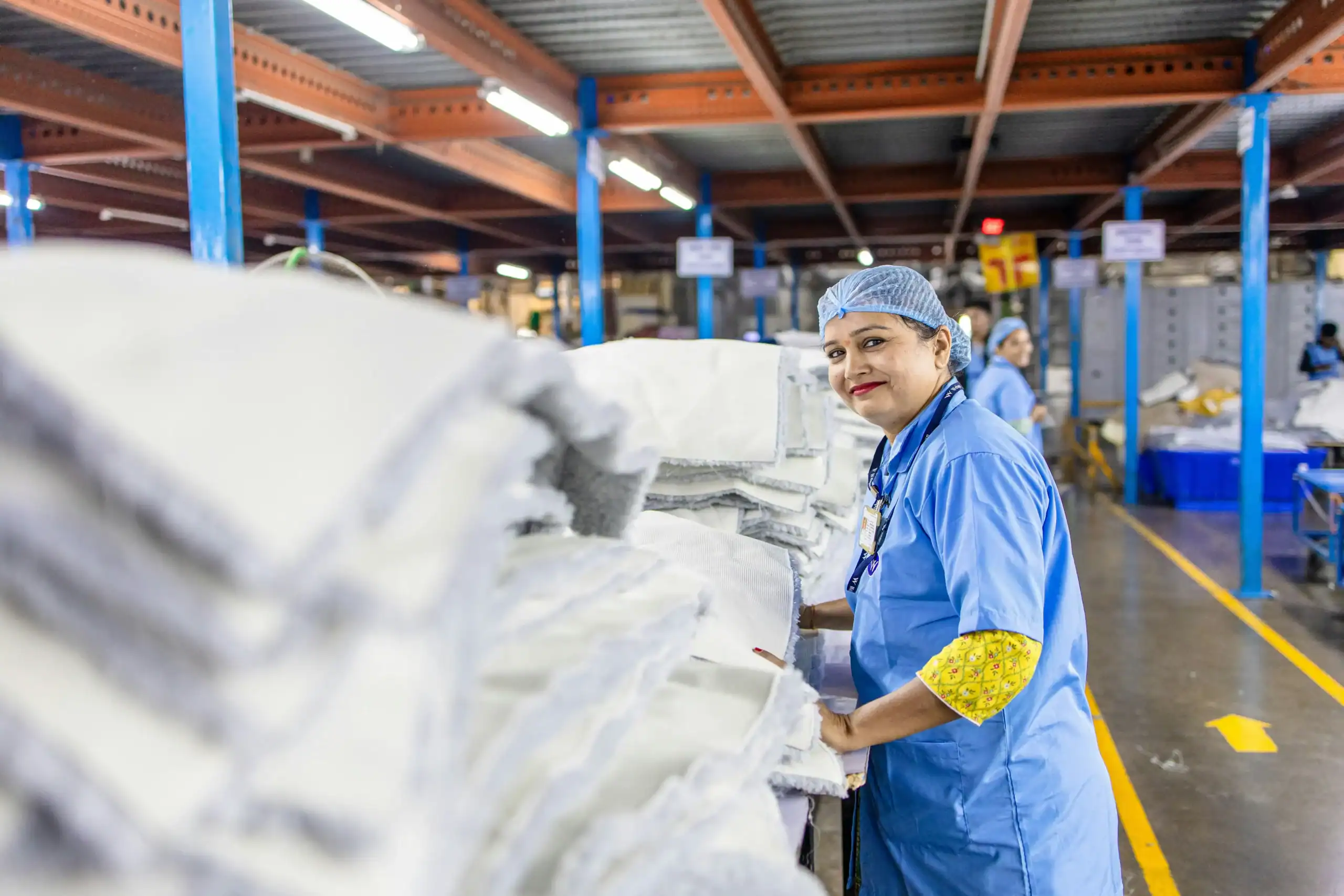
A proper factory vetting checklist for outdoor gear must verify retail packaging compliance before any PO is signed. Polybagging thickness must be ≥2.5mil with ASTM F963 suffocation warnings. Hangtag cardstock must be 350gsm minimum. GS1 barcode registration must match the factory’s registered company name.
Master carton ISTA 1A drop test requirements are critical for preventing in-store damage. If your packaging fails these standards, major retailers will issue chargebacks that erode your margin. Ensure the factory has a color box print resolution of 300 DPI to prevent blurry barcodes at checkout.
- 🏷️ Category: Retail Compliance
- 🎯 Core Outcome: Eliminate chargebacks and ensure shelf-ready products
Analysis:
| ✅ Advantages | ⚠️ Considerations |
|---|---|
|
|
FAQ: Factory Vetting Checklist
Q: What are the factory compliance checklist?
A: A factory compliance checklist covers five mandatory areas: fire safety (exits, extinguishers, alarms), worker health (ventilation, lighting, PPE), sanitation (clean washrooms, drinking water), hazardous material handling (storage, MSDS sheets), and labor law compliance (working hours, minimum wage, no child labor). For outdoor gear factories, add environmental compliance for wastewater from dyeing and coating processes.
Q: How to verify if a Chinese company is legit?
A: Cross-check three independent sources: (1) China’s National Enterprise Credit Information System (qcc.com) for registered address, legal representative, and operating status, (2) customs export records to verify they actually ship the product categories they claim, (3) request a live video call walkthrough showing the factory nameplate at the gate matching the business license address. If the registered address is a commercial office tower, not an industrial zone, you are dealing with a trading company.
Q: How to check if a company is scamming?
A: Four immediate red flags: (1) they refuse video calls or only show a pre-recorded factory tour, (2) their quoted price is 30-50% below verified competitors for identical specs, (3) they demand full payment via Western Union or personal bank account instead of a corporate TT account, (4) they cannot provide third-party test reports with your specific product model listed—only generic certificates with no model numbers.
Q: What are compliance checklists?
A: Compliance checklists are structured verification tools that translate regulatory requirements into observable, pass/fail items for on-site auditing. Unlike capability audits that assess production capacity, compliance checklists verify the factory meets legal, safety, and environmental standards required by the buyer’s destination market—such as CE/RoHS for EU, SONCAP for Nigeria, or CPSIA for the US.
Q: What are the 5 key areas of compliance?
A: (1) Product safety compliance—certifications valid for your specific SKU and destination market, (2) labor compliance—working hours, wages, age verification, and freedom of association, (3) environmental compliance—wastewater treatment, emissions controls, hazardous waste disposal, (4) facility safety compliance—fire systems, electrical safety, emergency exits, and (5) documentation compliance—traceability records, material certificates, and test reports archived and accessible.
Browse Kelyland’s Custom Outdoor Product Capabilities
Buyers land on a product category overview page showing Kelyland’s four core outdoor product lines (sleeping bags, tents, chairs, tables) with specific manufacturing capabilities, material options, MOQ ranges, and customization depths for each category. The page includes factory infrastructure photos and a portfolio of brand partnerships.
Learn More →Conclusion
A rigorous factory vetting checklist for outdoor gear protects your category reputation and margin by exposing trading companies, verifying material traceability, and confirming quality infrastructure before you sign a purchase order. Skipping these critical verification steps—such as checking calibration stickers on testing equipment or demanding live seam-sealing demos—exposes you to the 15-20% order value losses that erode profitability and trigger costly retailer chargebacks.
To see how a properly vetted manufacturer operates, browse Kelyland’s Custom Outdoor Product Capabilities to review our manufacturing infrastructure, material options, and brand partnerships.
Frequently Asked Questions
What are the factory compliance checklist?
A factory compliance checklist covers five mandatory areas: fire safety, worker conditions, environmental permits, product safety certifications, and quality control systems. You must verify these against ISO 9001:2015 standards and specific retail. Verify all five areas against ISO 9001:2015 standards before signing.
How to verify if a Chinese company is legit?
Cross-check three independent sources: China’s National Enterprise Credit Information System, export license records, and physical address verification against industrial zone maps. This confirms whether they are a genuine manufacturer or a trading company. Cross-check credit systems, export licenses, and physical addresses.
How to check if a company is scamming?
Four immediate red flags include refusing video calls, showing only pre-recorded tours, quoting prices significantly below market, or lacking verifiable ISO certifications. These behaviors often indicate a non-existent or fraudulent operation. Watch for refusal of video calls and unrealistic pricing.
What are compliance checklists?
Compliance checklists are structured verification tools that translate regulatory requirements into observable, pass/fail criteria for manufacturing processes. They ensure products meet destination market safety and labor standards before shipment. Use checklists to translate regulations into observable pass/fail criteria.
What are the 5 key areas of compliance?
The five key areas are product safety compliance, labor compliance, environmental compliance, quality control systems, and business legitimacy. Each area requires specific documentation and on-site verification to ensure retail readiness. Verify product safety, labor, environment, QC, and legitimacy.

 English
  Español
  Deutsch
  Français
  Português do Brasil
  Русский
  العربية
  한국어
한국어  日本語
日本語