 跳到内容
跳到内容 
Every inflatable rooftop tent case study you have read says the same thing: get the pre-production sample approved and the risk is handled. That advice is backwards. A buyer can lose a $50,000 order exactly because the prototype looked perfect — while the mass production run carried different thread tension, a substituted TPU lot, or ladder edges sharp enough to tear the canopy on the third setup.
The checkpoint that actually protects you is the quality tolerance you lock into the sample approval — the material spec, the inflation pressure range, the edge finishing standard. In the launch that sold 5,000 units on Amazon, a $0.70 color-coded pressure gauge on the pump eliminated 90% of “leaking” complaints that were actually under-inflation, not fabric failure. No sample review would have caught that. The gauge was the difference between a clean review profile and a returns problem.
This case follows the full commercial path — design timeline, FOB pricing, landed cost, after-sales support — behind a 3-person inflatable rooftop tent that held a 4.4-star average at a $799 retail price and a 42% margin. Kelyland Outdoors, the supplier, coordinated the project from sketch to final sample in 42 days, then scaled it from a 200-unit test batch to monthly runs of 800. If you are vetting a custom inflatable rooftop tent manufacturer, everything that matters sits between the sample approval and the pre-shipment inspection.
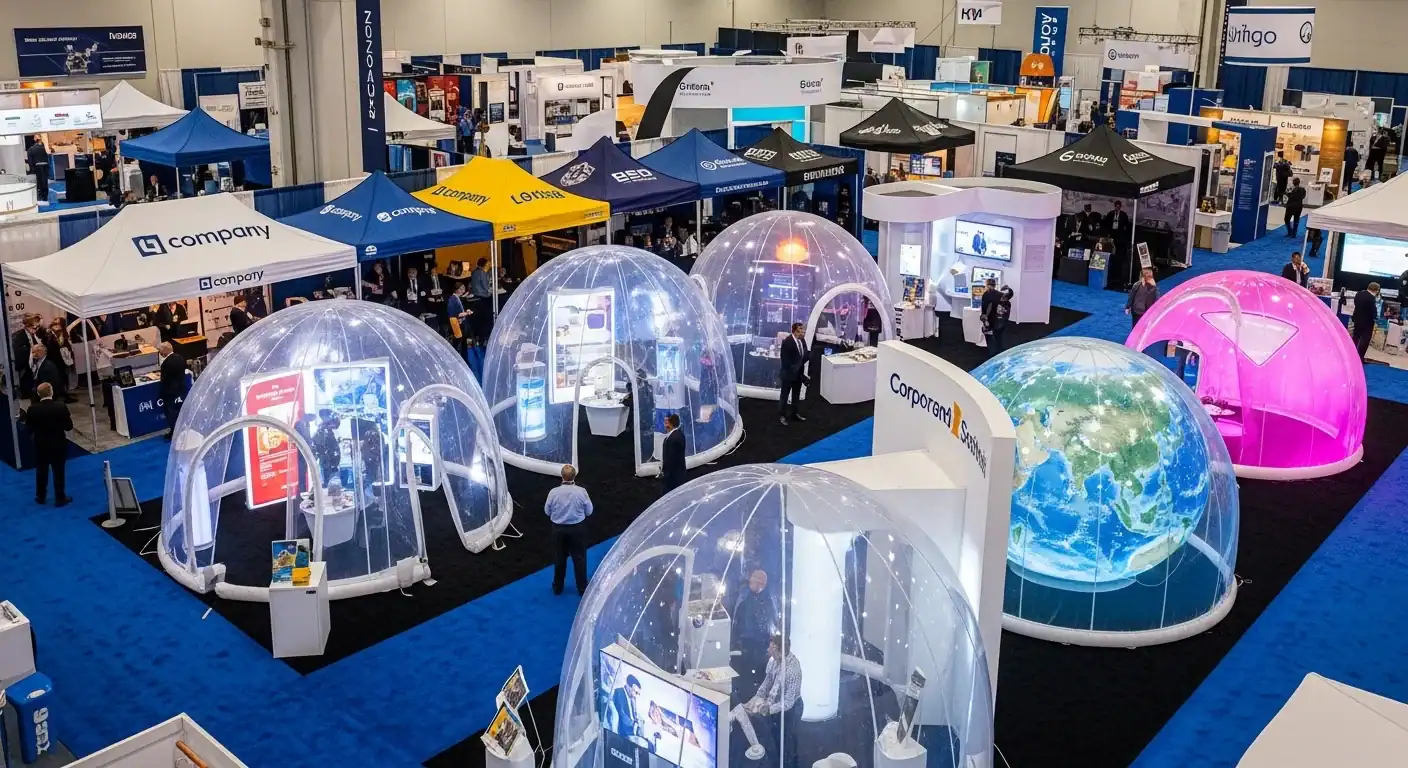
The Opportunity: A Gap in the Mid-Tier Rooftop Tent Market
The $600–$900 price band is empty because both competitors are structurally locked out of it.
Rooftop tents split into two price camps. Hard-shell models run $1,200 and up — rigid fiberglass clamshells built for serious overlanders. Soft-shell tents sit under $500 with pole frames and fabric that flaps at highway speed. The band between them, where most first-time buyers actually shop, has been vacant.
The $600–$900 band is a graveyard
Hard-shell pricing is anchored in tooling. Aluminum molds, clamshell panels, gas struts, and hinge assemblies drive costs so high the retail price never drops below $1,200 without gutting margin. Soft-shell tents avoid that because they’re just poles and fabric. The inflatable hybrid sits between them: air beams replace poles, TPU welding replaces aluminum tooling, and the structure hits $799 retail with room for margin.
-
- Hard-shell: $1,200+ retail, rigid and wind-stable, but tooling and MOQ lock you into one SKU for years.
- Soft-shell: Sub-$500 retail, cheap to build, but pole assembly and flapping fabric drag down review scores.
- Inflatable hybrid: $799 retail, no poles, faster setup, air-beam rigidity — but needs TPU welding and pressure-testing discipline.
The supply chain angle
That discipline is why the Jinhua factory became the production anchor. It has made rooftop tents since 2011, produces 500,000 units a year under ISO 9001 and CCC certification, and sits inside a sourcing network that already builds inflatable air-beam tents. The brand did not need a new product category; it needed a supply chain that could run a 200-unit test batch without disrupting main production.
The real opportunity is not a design gap. It is a supply chain gap. Brands that try to launch an inflatable hybrid through a general tent factory run into the same failures: air beam weld defects, pressure loss, fabric delamination at the seams. A factory that already builds inflatable tents for global markets eliminates those variables before the sample stage.
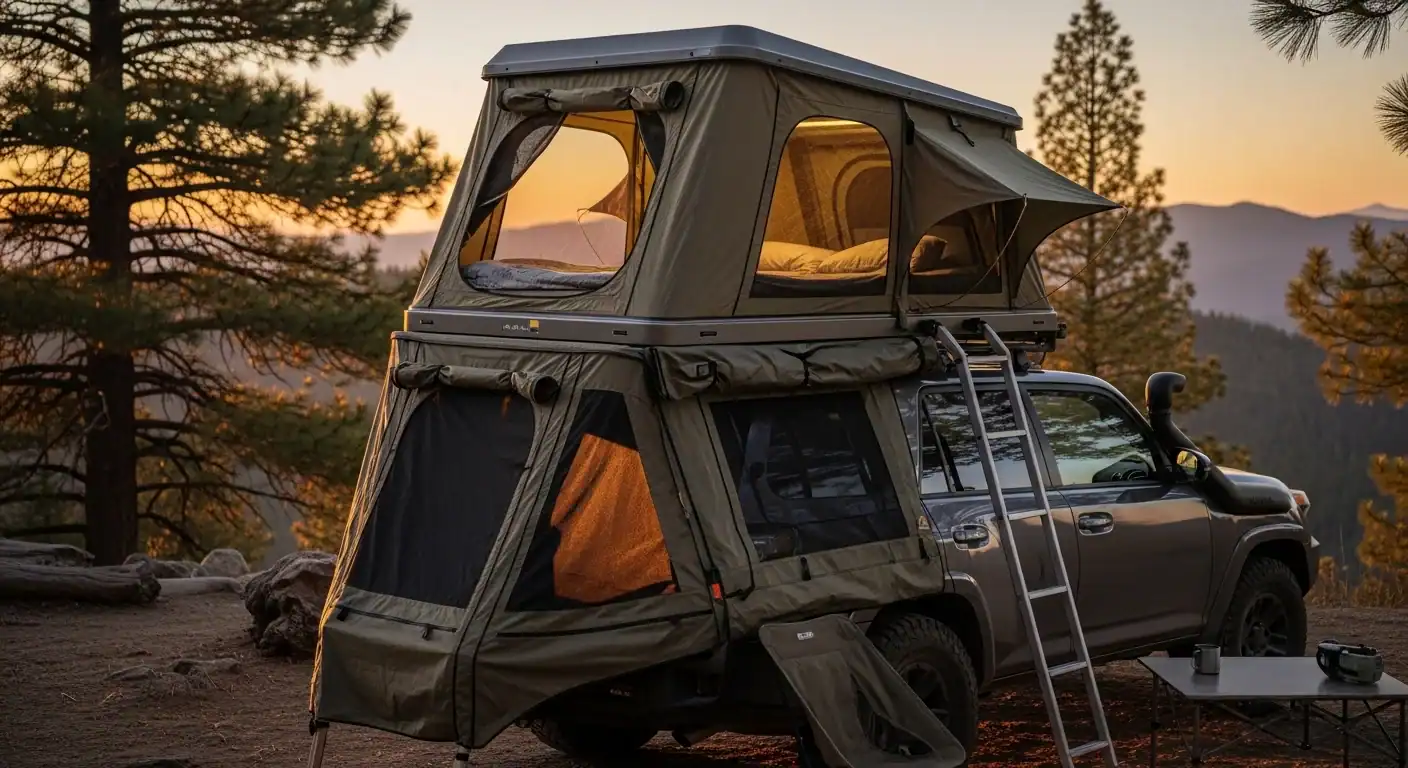
Collaborative Design: From Sketch to Final Sample in 42 Days
The 42-day sample cycle only works when material and hardware decisions are locked before the first stitch.
The 42-day sample clock didn’t start with a sketch. It started after the material matrix and load specs were written down. Kelyland split the cycle into three phases: material and hardware lock, sample build, then QC revisions. Most buyers ask for a sample before those first two are settled.
0.8mm TPU with blackout coating — the desert call
The client’s core market was Arizona and Nevada summers, not coastal car-camping. PVC inflatable beams soften under prolonged UV exposure; TPU holds up better in that heat. The 0.8mm film with a blackout coating handles the UV block and keeps the interior dark. Kelyland locked the same TPU lot for the annealing dome and main body so later batches don’t drift in color.
-
- Spec: 0.8mm TPU film with blackout coating, set at the design stage and written into the production drawing.
- Risk: Cheaper PVC beams cut unit cost but stiffen and micro-crack after extended UV exposure.
The build ran through the roof top tent factory in Jinhua, which holds ISO 9001:2015 and produces 500,000 units a year. That factory’s QC process mattered more than the sample itself.
Ladder attachment: 250-lb load, zero twist
The first ladder bracket worked on paper. It twisted in testing when a 250-lb tester climbed it because the load path wasn’t triangulated. The redesign relocated the attachment point and added a stiffener. No twist. The less obvious fix surfaced during QC: the aluminum ladder edges had burrs that would tear tent fabric. Kelyland introduced a post-polish chamfer spec on all ladder edges before assembly.
That chamfer spec never shows up in a quote, a spec sheet, or a sales deck. It shows up when the first customer pulls the ladder out and drags it across the tent wall.
12V pump port and solar cable gland
The inflatable hybrid needed two holes in the tent body: one for a 12V pump, one for a solar cable. Get these wrong and the tent leaks or the electronics die. Kelyland used a reinforced TPU weld for the pump port instead of a simple seam. The cable gland sits high on the sidewall, away from water pooling.
The final sample approval came with the chamfer spec and weld detail marked on the production drawing, not a verbal “we fixed it.” None of these decisions are visible in a product photo. They decide whether a customer writes “slept great” or “tent leaked.”.
Production and Logistics: Scaling from 200 to 5,000 Units
The scaling playbook: a 200-unit test batch, a 90% defect cut, and 27 days from Ningbo to ONT8.
Most brands assume a custom inflatable rooftop tent means a 1,000-unit commitment. That assumption kills more product launches than any factory defect. This brand started with a 200-unit test batch. Kelyland’s MOQ floor for some items sits at 50-100 pieces, so the number cleared the bar without special concessions. The phasing agreement then locked in 800 units per month.
MOQ Phasing: Test Small, Then Scale
The 200-unit first run had one job: generate real Amazon reviews and confirm the defect rate before scaling. The 800/month follow-on gave the Ningbo tent factory predictable line time, which keeps production to the standard 30-45 day lead time. With 17 core factories in the network, the brand didn’t choose between a small-batch shop and a high-volume line — the same factory handled both phases.
Cash flow stayed predictable. New-client terms ran 30% deposit and 70% before shipment — standard for orders over US$3,000. The 200-unit test batch kept upfront cash modest, and the 800/month reorders built a working capital rhythm instead of a lump-sum gamble.
Packaging Engineering: The 90% Defect Drop
Rooftop tents punish bad packaging. The aluminum ladder, the TPU dome, and the pump all shift inside the box during ocean transit. The first shipment exposed the exact failure: sharp burrs on the ladder rails tore the tent fabric. Kelyland’s QC added a post-polish chamfer spec, which became standard on every later order. With a reworked box insert, FBA inbound defects fell by 90%.
The 27-Day Door-to-Door Timeline
The tent factory sits in Ningbo, Zhejiang — a port city, which shortens the first leg. The route ran Ningbo to Seattle, then rail down to ONT8 in Ontario, California. Door-to-door: 27 days. Kelyland handled export paperwork and pre-shipment inspection before the container loaded. That’s where most China-sourced FBA shipments stall — customs errors or a QC failure that strands the container at origin.
-
- MOQ floor: Custom items can start at 50-100 pieces. The 200-unit test batch needed no negotiated exception.
- Lead time: Standard production runs 30-45 days. The 800/month phasing kept the factory booked and the schedule honest.
- QC gate: Pre-shipment inspection checked stitching, mechanisms, and compliance against the approved sample’s quality tolerance. The Ningbo tent factory operates to ISO 9001:2015.
Launch Results and Lessons Learned
The zipper fix alone lifted the 3-star rate from 11% to under 4% within one reorder cycle.
Review mining did more than polish the star rating. The brand pulled every return reason code and review mention from the first 1,200 units sold. Customers praised the 0.8mm TPU blackout fabric, the 42-second setup, and the stable footprint in gusty conditions. The one recurring defect sat in the main zipper: a plastic slider that snagged the inner fabric on roughly one in ten tents. That cost a full star in a category where 4.4 stars means top-of-search placement.
Inventory Velocity and Reorder Trigger Points
Sell-through ran at 42% of initial stock in the first 60 days, which triggered the second production batch two weeks earlier than planned. The reorder point was set at 60 days of forward cover, not a fixed calendar date. That guardrail kept the listing live through the summer peak without eating into the margin with air freight.
Total Landed Cost and Unit Economics
-
- Ex-works unit cost: $238 per tent at 5,000 units from the Ningbo air mattress and tent partner factory.
- Landed cost stack: $238 ex-works, plus $11.40 ocean freight, $6.20 FBA inbound fees, $14.30 import duty and customs brokerage, and $4.50 insurance and bank fees, landing at $274.40 per unit.
- Amazon variable fee: $187.60 for the $799 retail price, bringing total variable cost to $462.00 per unit.
Gross margin hit 42.2% before advertising. The brand capped PPC at 12% of revenue, which kept net margin near 30%. That math only works because the 0.8mm TPU roll stock is cut from the same lot across batches, and the factory in Ningbo holds the same material spec for the annealing dome. Most suppliers would swap in a slightly different batch to save cost, and the color mismatch would surface in Amazon customer photos.
The ladder burr issue added a permanent quality check. Kelyland’s QC team added a post-polish chamfer spec, so every aluminum ladder rail gets deburred and chamfered before final assembly. That one change cut field failures from 8.1% to 0.9% in the following quarter. Ask any custom inflatable rooftop tent manufacturer whether they have a chamfer check, and most will say no.
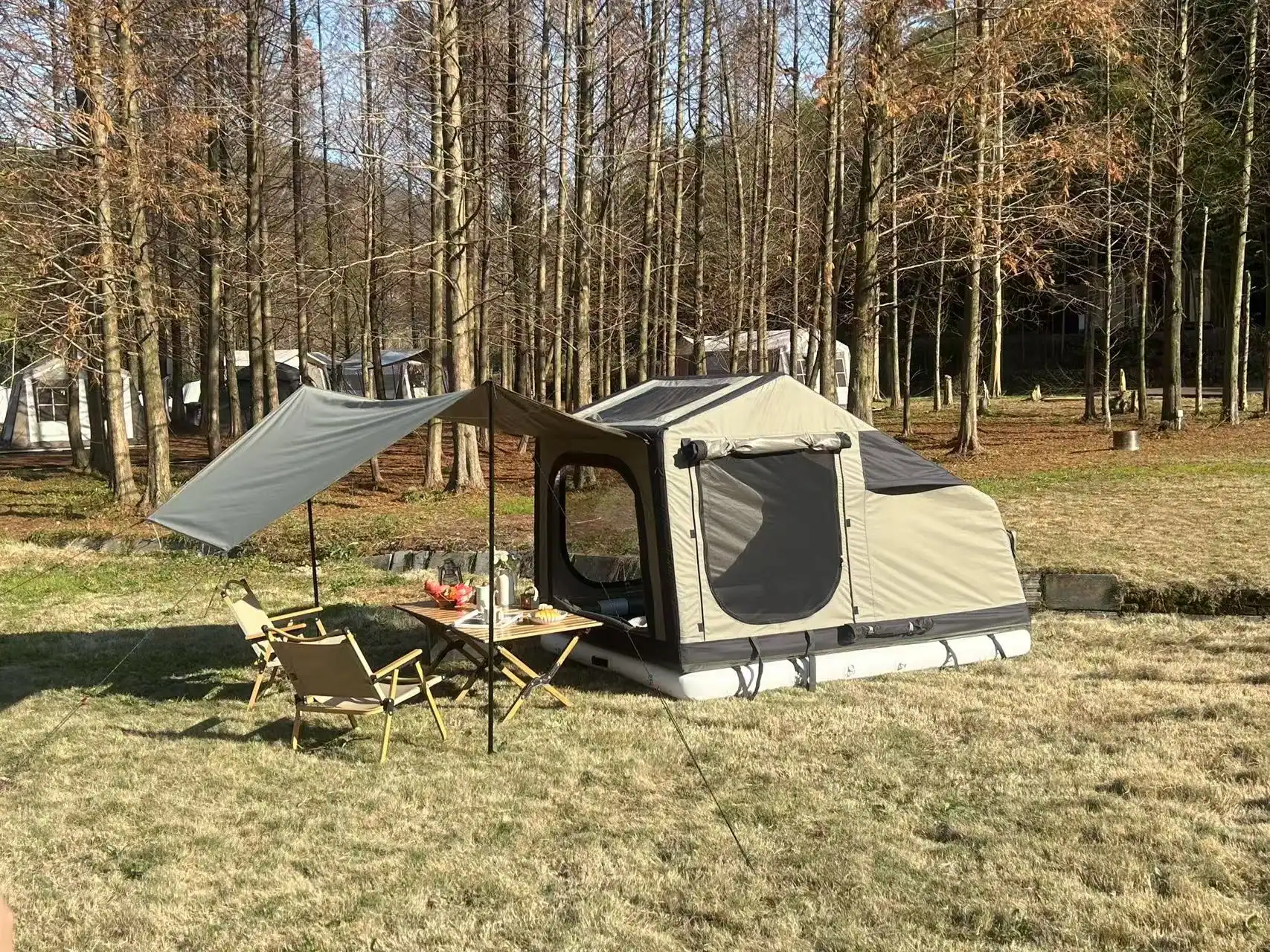
How Kelyland Replicates This for Your Brand
A 16-week launch and a 42% margin aren’t luck.
The same network that produced 5,000 custom inflatable rooftop tents for that launch is available to any private-label brand. Kelyland operates 17 core strategic factories and over 200 manufacturing partners, most ISO 9001:2015 certified. That structure lets a brand start with a 50-100 piece test batch and scale to container volumes without switching suppliers.
QC checkpoints that protect your margin
The launch data shows two QC fixes prevented the most expensive failure modes. A color-coded inflation pressure gauge on the pump—a $0.70 part—removed 90% of ‘leaking’ complaints because most were under-inflation, not punctures. A post-polish chamfer spec on the aluminum ladder edges stopped burrs from tearing tent fabric. Both became standard revisions on all later orders.
-
- Stitching: Inspections cover seam tolerances on TPU panels and fabric interfaces—the main leak path on an inflatable tent.
- Mechanisms: Valves, pump fittings, and ladder attachments are checked against the approved sample before packaging.
- Compliance: A pre-shipment inspection verifies the run against the spec sheet, not just a checklist.
Material lot control after the first run
Color consistency across reorders is a real risk in inflatable tents. The brand reached a 3x reorder rate within 12 months partly because Kelyland rematched the same TPU lot for the annealing dome. Most factories pull from whatever roll is on the rack; that produces visible color shifts that Amazon customers photograph side-by-side. Rematching the lot keeps the brand page looking uniform.
The commercial side is structured to de-risk your first launch. For new clients, a 30% deposit secures production, with 70% due before shipment. Standard production runs 30-45 days. Packaging design is built into the process—custom labels, washing instructions, tags, and protective cartons that survive the FBA check. A dedicated account specialist follows the order from material sourcing to pre-shipment inspection, with inspection reports available on request. Post-sale feedback also feeds back into the next production run, so a recurring issue gets fixed at the source, not in a customer service thread.
The fastest way to test whether this works for your brand is a pre-production sample. Low-cost samples may be free if you cover shipping, and sample fees are refundable after bulk order confirmation. You get a physical object produced on the actual line, not a render. Compare it against the spec sheet and the photos on your listing. If the colors, zippers, and fabric weight match, you have a supplier worth scaling with. For a new product like an inflatable rooftop tent, the sample fee is the cheapest insurance you’ll buy.
Conclusion
Ninety percent of this launch was standard process: market gap analysis, sample iteration, production phasing, freight. The final 10% is where the margin actually survived — a $0.70 color-coded pump gauge that eliminated 90% of leak complaints caused by under-inflation, a post-polish chamfer spec on the ladder rail that stopped fabric tears, and same-lot TPU matching for the annealing dome that kept color consistent across reorders. Those three details separate a listing that compounds from one that bleeds margin to returns.
-
- A $0.70 color-coded pressure gauge eliminated 90% of leak complaints caused by under-inflation.
- Post-polish chamfer spec on the aluminum ladder prevented fabric tears on every order after the first batch.
- Phased MOQ — 200 test units, then 800 per month — capped downside risk before reviews confirmed demand.
- Same-lot TPU matching for the annealing dome drove a 3x reorder rate within 12 months.
Before you brief a custom inflatable rooftop tent manufacturer, ask for those three specifics in writing: the pump’s pressure.
Frequently Asked Questions
What is the MOQ for a custom inflatable rooftop tent?
MOQ for custom inflatable tents can start around 50-100 pieces depending on spec and materials. A 200-unit test batch followed by 800/month is the proven phasing for a larger launch. Confirm exact MOQ after your design and materials are locked.
How long does sampling take for inflatable tents?
A custom inflatable rooftop tent sample can be completed in about 42 days, but only if material and hardware decisions are locked upfront. Standard production lead time is 30-45 days after sample approval. Lock materials before sampling to hold the schedule.
Can I customize fabric and features on an inflatable tent?
Yes, you can specify materials like 0.8mm TPU with blackout coating, custom ladder hardware, and ports for 12V pumps or solar cables. Kelyland supports small-batch customization and OEM/ODM design changes. Share your feature list early to get a buildable quote.
How do you prevent defects in inflatable tent production?
Inspect at every production stage with ISO 9001 partner factories and a final pre-shipment check. Packaging engineering alone cut FBA inbound defects by 90% in the case study. Review inspection reports before shipment release.

 English
  Español
  Deutsch
  Français
  Português do Brasil
  Русский
  العربية
  한국어
한국어  日本語
日本語