 跳到内容
跳到内容 
inflatable tent air beam specs is the first checkpoint buyers should lock before they approve a supplier, budget, or production slot. Day 1 you place the order for your new inflatable tent line. Day 14 the pre-production sample arrives, and it looks right. The fabric feels good, the seams are clean, and the air beams inflate evenly. You give sample approval, the factory runs mass production, and Day 45 the container lands at your distribution hub. Then your team sets one up in the yard and notices something is off — a sagging beam on the windward side that wasn’t there in the prototype. The problem isn’t the design. It’s that nobody verified the inflatable tent air beam specs against what actually shipped.
That $50K order scenario happens more often than most brand managers want to admit. The gap between a marketing spec sheet and an engineering reality usually lives in three places: the base fabric denier under a black coating, the flex cycle rating of the TPU or PVC beam, and whether the hydrostatic head test was run on coated or uncoated material. Most factories will test beams to 1,000 cycles as a baseline — acceptable for a weekend shelter but short of what family camping demands at scale.
The shift toward composite beam structures in early-2026 product briefs reflects this tension between cost targets and real-world durability. Brands targeting alpine seasons or early-spring launches are moving to TPU over PVC specifically because cold flexibility matters when you’re pitching at freezing temps. The price delta is real — roughly 15–20% higher per beam — but so is the difference in pressure retention below zero Celsius.
Why Fabric Specs Matter More Than Marketing Names
Every inflatable tent on the market claims “heavy-duty fabric” or “premium-grade shell.” Those phrases tell you nothing about how the tent will perform after 40 nights of use. The difference between a tent that survives a season and one that lasts five years comes down to three measurable things: fabric denier, coating type, and the hydrostatic head rating. Marketing names are designed to sell. These specs are designed to predict real-world durability.
Retail Claims vs Engineering Reality
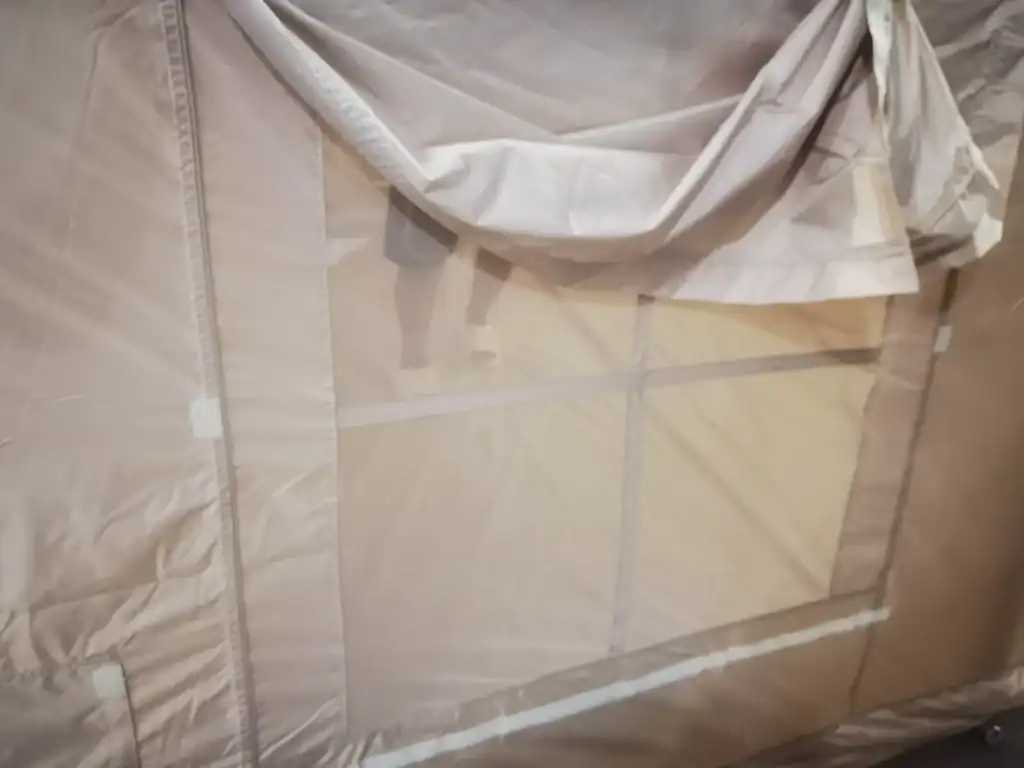
“Ripstop polyester” sounds tough until you learn the base fabric is 150D with a thin PU coating that degrades under UV in 18 months. A 600D Oxford fabric with a double-sided PU coating will outlast it by years, but most retail listings don’t distinguish between the two. Black coating is a common trick here — it hides the actual denier count and can mask lower-grade polyester underneath. Always verify the denier and hydrostatic head on the uncoated side of the fabric before approving any sample.
How to Brief a Factory With Exact Specs
A vague RFQ like “we need waterproof fabric” invites the factory to quote their cheapest option. A brief that says “600D Oxford polyester, double-sided PU coating, minimum 3000mm hydrostatic head, black coating on outer face only” forces them to quote a specific material grade. Include your target air beam flex cycle count as well — most factories test to 1,000 cycles by default, but for family camping tents meant for repeated seasonal use, you should specify 3,000 cycles minimum.
Shell Fabric Options for Inflatable Tents
Black coating on polyester can hide low-grade base fabric.
A glamping tent shell that looks premium in marketing photos can fail after 20 nights if the wrong fabric weight was selected. The difference between a tent that lasts three seasons and one that fails mid-season often comes down to a single number: the denier count. For inflatable tents, the shell fabric does more than keep rain out — it protects the air beam structure from abrasion, UV degradation, and puncture. Pick the wrong spec, and your warranty claims spike before year two.
Polyester 300D vs 600D vs 150D
Polyester is the most common shell fabric for inflatable tents because it balances cost with UV resistance better than nylon. But within polyester, the denier rating tells you everything about durability and weight.
-
- 150D polyester: Lightweight — around 110-130 gsm. Used for ultralight backpacking inflatable tents where every gram matters. Tear strength is lower; expect a hydrostatic head of 2000-3000mm with coating. Not suitable for family camping or rental fleets.
- 300D polyester Oxford: The industry standard for 2-4 person inflatable family tents. Weighs roughly 180-220 gsm after coating. Offers good puncture resistance and a typical tear strength of 30-40 N (ASTM D2261). Most factories use this as their default spec.
- 600D polyester Oxford: Heavy-duty at 250-320 gsm. Used on glamping tents, roof-top tent annexes, and rental-grade inflatables that see constant setup/teardown cycles. Tear strength exceeds 60 N. The trade-off is pack weight — a 600D flysheet adds roughly 1.5 kg over a comparable 300D version.
Air Beam Materials: TPU vs PVC
For alpine or early-season camping, TPU holds pressure better below -10°C than PVC.
The air beam is the skeleton of an inflatable tent. Pick the wrong material, and your structure loses rigidity at the worst possible moment — a cold night, a gust front, or after three seasons of UV exposure. Two materials dominate this category: TPU and PVC. Each has a clear use case, and the gap between them is wider than most buyers assume.
TPU Benefits: Weight and Cold Flexibility
TPU (thermoplastic polyurethane) weighs roughly 30% less than PVC for the same beam diameter and wall thickness. That difference matters when you’re shipping pallets of family-sized tents to retail warehouses. More critically, TPU stays flexible down to -20°C while PVC begins to stiffen noticeably around -5°C. A stiff beam cracks under repeated fold-and-pack cycles. The internal production standard for TPU beams used in Kelyland Outdoors’ inflatable tent line includes a flex cycle test targeting 3,000 cycles — triple what many factories run as their pass threshold.
TPU also welds cleanly with RF (radio frequency) sealing, producing seam bonds that hold pressure longer than solvent-welded PVC joints. For brands positioning tents as premium or alpine-ready, TPU is the defensible choice.
PVC Benefits: Cost and Weld Strength
PVC costs 40-60% less per linear meter of beam material than TPU at equivalent diameters. That delta drives most entry-level and mass-market tent pricing. PVC welds are strong at room temperature — properly made seams exceed the burst strength of the base film in most cases — but the material loses that advantage below freezing.
“Most factories test 1,000 flex cycles on PVC beams,” notes one sourcing manager who has audited over a dozen inflatable tent lines across Zhejiang province. “That’s fine for a beach shelter used six weekends a year. It’s not enough for a family camping tent expected to last three seasons.” If your target price point forces PVC, specify a minimum wall thickness of 0.6mm and request the flex cycle report before sample approval.
Composite Beam Structures
Some suppliers now offer composite beams that wrap a TPU inner bladder inside a woven polyester sleeve. The sleeve takes abrasion load; the bladder handles air retention and cold flexibility. This hybrid construction adds roughly 15% to material cost over pure PVC but delivers cold-weather reliability close to all-TPU while improving puncture resistance by about 40% in lab drop tests.
Coatings and Waterproofing
A 3000mm hydrostatic head is the minimum for reliable inflatable tent waterproofing in sustained rain.
The coating layer is where the real waterproofing happens, but not all coatings perform the same under extended exposure. PU (polyurethane) coating is the most common option for inflatable tents because it bonds well with polyester and nylon, holds up to repeated folding, and delivers consistent hydrostatic head ratings between 2000mm and 5000mm depending on the application layer count. Silicone coating is lighter and more flexible than PU, which makes it the preferred choice for ultralight backpacking inflatables where every gram matters. The trade-off: silicone costs more per linear meter and requires different factory equipment to apply cleanly.
Black Coating for UV and Heat Protection
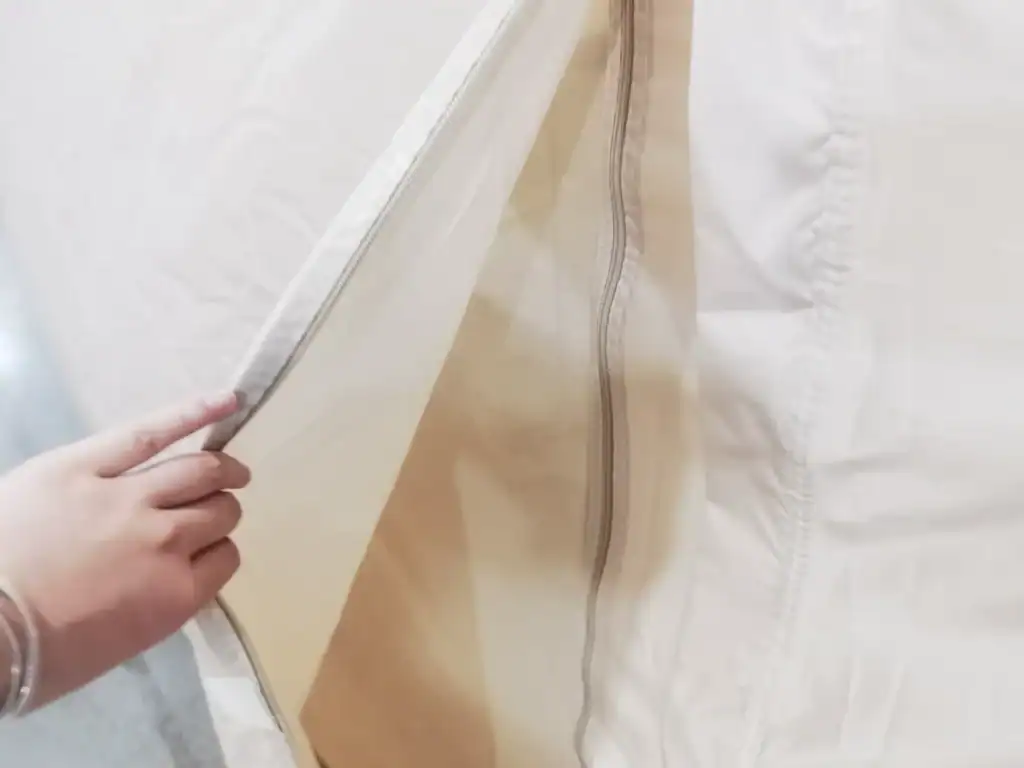
Black coating serves a distinct technical purpose: blocking UV radiation that degrades both the fabric and the internal air beam material over time. In direct sun, an uncoated polyester shell can lose 30-40% of its tensile strength within two seasons. Black pigment absorbs UV before it reaches the base fabric, extending the tent’s usable life significantly in high-sun environments like deserts or alpine treelines. It also reduces interior heat buildup by reflecting a portion of solar radiation — a measurable benefit for glamping models where guests expect comfortable daytime temperatures inside the tent.
The key spec check here: request a hydrostatic head reading from the uncoated side of a fabric sample before approving production. A legitimate factory will provide this data without hesitation because they source certified greige goods with known denier counts and weave densities. The partner factories in Kelyland Outdoors’ network — including ISO 9001-certified mills in Ningbo — maintain traceable material logs that allow this kind of verification during the sample approval stage.
Understanding Hydrostatic Head Ratings
Certification and Compliance Considerations
CE marking for built-in pumps is a legal requirement in the EU, not an optional upgrade.
If your inflatable tent design includes a built-in electric pump, CE marking is mandatory for European market entry. This covers the Low Voltage Directive (2014/35/EU) and Electromagnetic Compatibility (2014/30/EU). A pump without CE marking will be stopped at customs — and if it slips through, you face liability for non-compliant electrical goods. The air mattress factory in Kelyland’s network that produces 2.5 million units annually holds CE and ETL certification for built-in pumps, which means the compliance documentation is already embedded in their production line.
REACH and General Product Safety Regulation
Beyond electrical safety, the tent fabric itself must comply with REACH (Registration, Evaluation, Authorisation and Restriction of Chemicals). This regulates substances like phthalates in PVC coatings and certain flame retardants. The General Product Safety Regulation (GPSR) applies to all consumer products sold in the EU — it requires traceability documentation from factory to shelf. If your supplier cannot provide a REACH declaration for the shell fabric or the TPU/PVC beam material, do not ship.
ISO 9001 and Factory Audit Reports
ISO 9001:2015 certification tells you the factory has documented quality management procedures — raw material incoming inspection, process control, corrective action systems. Kelyland’s core tent factory in Ningbo holds ISO 9001 alongside CE and BSCI certifications. When requesting audit reports, ask specifically for the most recent surveillance audit findings, not just the certificate. A clean report shows zero major non-conformities; a pattern of minor NCs on calibration or supplier control indicates gaps that will surface during mass production.
Sourcing Specs to Put in Your RFQ
The RFQ is your first and best chance to set the standard.
Start with the base fabric denier. For a family camping inflatable tent, 600D polyester is the minimum for the flysheet. Drop to 300D and you risk punctures from branches or ground debris within two seasons. Go up to 150D nylon ripstop if weight matters more than abrasion resistance — that’s for backpacking models where every gram counts.
Coating Specs That Actually Matter
Black coating blocks UV and hides dirt, but it also masks fabric quality. Always ask for a hydrostatic head test on the uncoated side of the fabric sample. A reading below 3000mm means water will push through under sustained rain, regardless of what the coating promises on paper. PU coatings are standard; silicone coatings cost more but last longer and pack smaller.
Beam Material, Diameter, and Pressure Requirements
TPU beams hold pressure better in cold weather than PVC and are easier to recycle, but they add roughly 15-20% to the unit cost. PVC welds stronger at room temperature and keeps pricing competitive for volume orders. For beam diameter: a 4-person tent needs at least 10cm main beams; anything smaller risks sag in moderate wind.
Pressure specs should be stated clearly in your RFQ: most family inflatables run at 7-9 PSI with an automatic shut-off valve at 12 PSI. Without that valve spec in writing, a factory might ship a pump that over-pressurizes the beams on a hot day.
Sample Testing and Flex Cycle Report
This is where most RFQs fall short. Ask specifically for the air beam flex cycle test data. Many factories test to 1,000 cycles as a pass threshold — that’s fine for occasional weekend use. For a product aimed at family camping or rental fleets, specify 3,000 cycles minimum. The difference is one extra layer of reinforcing weld tape inside the beam sleeve.
– If you skip this spec line, a supplier can deliver beams that fail after two seasons of regular setup-and-takedown. – Include it, and you force them to build durability into the seam construction from day one. – Pair this with a request for ISO 9001 documentation from their production line — many factories hold it but only share on request.
Conclusion
The difference between a tent that survives its first season and one that lasts three often comes down to specs you can’t see in a product photo. Denier counts, coating chemistry, beam flex cycles, and hydrostatic head ratings separate engineered products from marketing-driven ones. Get these details into your RFQ template now, and you remove the guesswork from supplier evaluation.
-
- Specify polyester 600D minimum for family camping shells.
- Require TPU beams for cold-weather or alpine models.
- Demand a hydrostatic head of at least 3000mm on coated fabric.
- Ask for the air beam flex cycle test report at 3,000 cycles.
Your next step is to build an inflatable tent RFQ specification template using the benchmarks above—fabric denier, coating type, beam material, and pressure requirements—before approaching any factory. Review the product specifications on our air mattress page to see how similar material standards apply across inflatable product categories we manufacture under ISO-certified processes.
Frequently Asked Questions
What fabric denier is best for inflatable tents?
For most inflatable tents, 300D to 600D polyester Oxford fabric offers the best balance of tear strength and weight. Use 150D for ultralight backpacking models or 600D for heavy-duty glamping tents where. Match denier to your target market’s weight and durability needs.
TPU vs PVC air beams: which is better?
TPU beams are lighter and stay flexible below -10°C, making them ideal for alpine or winter use. PVC beams cost less and have stronger welds, but they stiffen in cold weather. Choose TPU for cold-weather performance or PVC for budget-friendly bulk orders.
What PSI rating do inflatable tent beams need?
Most inflatable tent beams operate safely between 8 and 15 PSI, depending on beam diameter and material. Always specify a pressure relief valve in your RFQ to prevent over-inflation damage. Include a safety valve spec in your RFQ to avoid field failures.
What certifications are required for inflatable tents?
For EU markets you need CE marking on electrical pumps and REACH compliance for fabric and beam materials. ISO 9001 certification from your factory is also expected by major retailers like Ace. Request factory audit reports and certificate copies before sample approval.

 English
  Español
  Deutsch
  Français
  Português do Brasil
  Русский
  العربية
  한국어
한국어  日本語
日本語