 跳到内容

inflatable tent factory audit checklist is the first checkpoint buyers should lock before they approve a supplier, budget, or production slot. Two inflatable tents sit side by side in a warehouse, and their spec sheets look nearly identical. Same TPU air beam construction, same 5,000mm waterproof rating, same style number pulled from the same catalog. One supplier quotes 30% more on FOB pricing. An inflatable tent factory audit checklist tells you what that premium actually buys: a heat-sealing line that holds above 180°C through production hours, batch-level quality tolerance, and a factory that will show you the thermal logger data to prove it.
Most buyers learn this lesson after a $50,000 order derails. The pre-production sample arrives with clean welds and matched fabric color. The mass production run shows up with thinner TPU film, valves that leak at the seams, and a seller that stops returning messages. That gap between sample approval and bulk delivery is where trading companies hide. It is also where a genuine manufacturer with in-house equipment earns the extra 30% — the same machines, the same operator settings, the same material lot from start to finish.
Write this benchmark down before your next supplier call: a real inflatable tent factory holds ISO 9001, CCC, and CE certification on the specific product category, not just on the company letterhead. That combination narrows the legitimate factory pool in China to fewer than 50 suppliers nationwide. If a candidate can’t produce those certificates with matching product scope, treat the low quote as the risk it is.
Why 60% of ‘Factories’ on Alibaba Are Actually Trading Companies
The markup is the least of your costs.
A TPU heat-sealing operator in a tent factory watches one number all day: the machine temperature. On legitimate production lines it stays above 180°C, and that setpoint determines whether your air beam seams survive a burst test at 3.5x working pressure. The sales rep who sold you the order has never looked at that readout.
That gap is the real cost of buying from a middleman instead of the manufacturer. It’s not the markup layer on the quote — it’s the loss of control over everything that happens after your deposit clears.
What the middleman can’t fix when production goes sideways
-
- Markup with zero influence: A trading company doesn’t own the production schedule. When the actual factory gets busy with bigger customers, your order gets deprioritized and nobody tells you until the ship date slips.
- Sample-to-run drift: Pre-production samples get extra care because they’re tied to winning the order. Mass production runs are judged by speed. Materials get swapped, quality tolerance stretches, and the difference shows up in burst tears and leaking seams.
- Dispute dead-ends: When a shipment fails inspection, the trading company blames the factory and the factory says you were never their client. Without a direct relationship, your recourse is an invoice dispute across international borders.
This is why verifying an inflatable tent factory in China starts with physical proof of production. Kelyland’s 17 core strategic factories — including the Ningbo tent facility that produces 800,000 units annually under ISO 9001:2015 — open their doors to buyers before a contract is signed. That open-door policy is the baseline for any supplier claiming to be a manufacturer.
Skip this verification step, and the cost isn’t just the middleman’s margin. It’s the container that arrives with failed seams, a retail season that stalls, and a brand reputation that takes the hit.
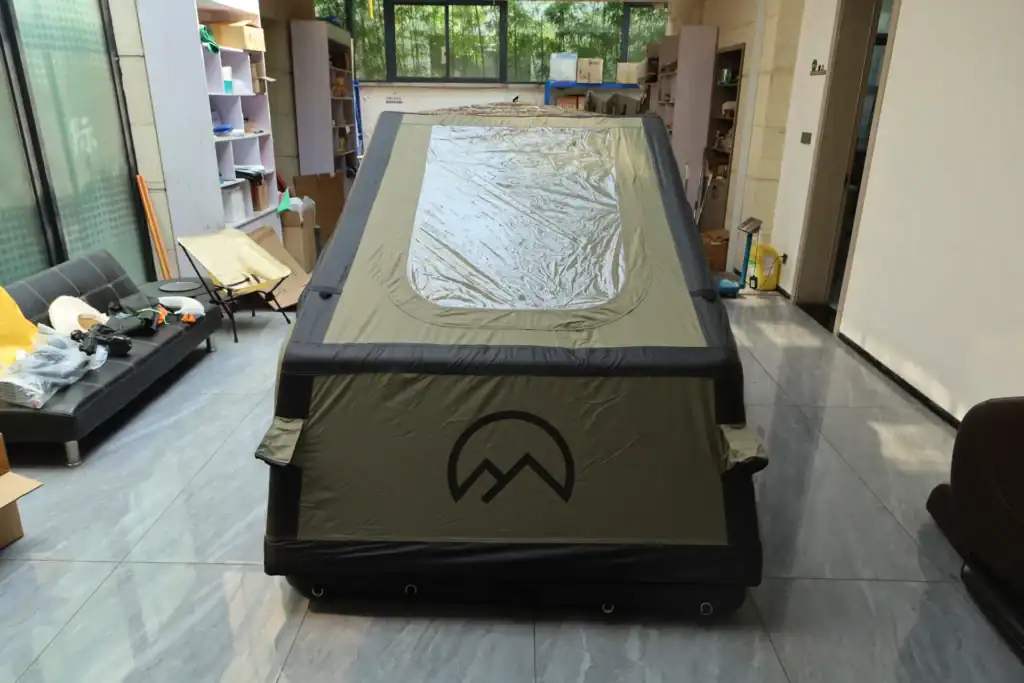
Red Flag #1: Generic Product Photos with No Custom Variations
If the same tent photo appears on three supplier sites, none of them built it.
Generic product photos are the cheapest tell. A factory with real production lines shoots dozens of angles, material swatches, and in-progress frames. A trading company reuses the same five images from Alibaba or a competitor listing.
Reverse image search exposes this fast. Take the supplier’s main product photo and drop it into Google Images or TinEye. If the same tent shows up on multiple supplier sites under different company names, you are not talking to the maker.
What reverse image search actually proves
It proves the photo is stock. It does not prove the supplier is fake on its own, but it shifts the burden of proof. Ask the salesperson for a fresh photo of the same model holding today’s newspaper or writing your company name on a piece of paper.
-
- Upload: Drop the supplier’s hero image into Google Images or TinEye.
- Check matches: If the image appears on foreign brand sites or multiple unrelated supplier pages, the listing is borrowed.
- Look for process shots: Genuine factories photograph heat-sealing lines, half-built air beams, and workers on the floor. Those images rarely get copied.
A real manufacturer can send fresh photos on demand. Kelyland’s tent factory in Ningbo, which produces 800,000 units annually, keeps a live showroom and a warehouse of finished models. A trading company has no production floor to show, so it recycles the same generic shots.
Red Flag #2: They Can’t Show You a Live Video of Their Production Line
A live video walkthrough is the fastest way to expose a trading company.
Ask any supplier for a live WeChat video call and watch what happens next. A genuine manufacturer agrees immediately and walks you to the production floor within minutes. A trading company pauses, offers a photo album instead, or schedules the call “for next week” — time zones never seem to work out.
Inflatable tent production is noisy, hot, and visually unmistakable. Rolls of TPU film, heat-sealing machines with hissing pneumatics, half-welded air beams hanging from workstations. That scene cannot be staged in an office.
What to Ask for on the Live Video Call
-
- A beam in the heat-sealing machine: Ask to see an air beam being welded right now — not a finished beam on a table. The operator should be fusing two layers of TPU film together in the press.
- The temperature display: Legitimate Chinese inflatable tent factories run their TPU heat-sealing machines above 180°C continuously during production hours. Ask the operator to read the current temperature out loud.
- Thermal logger history: This is the step most buyers skip. Real factories track sealing temperatures across shifts because seam integrity depends on consistent heat. Ask to see the logger screen with an 8-hour production history. Photos can be staged; logger data is operational proof.
- Raw material rack: Have them walk to the TPU film inventory. Rolls carry batch numbers, thickness specs, and supplier labels. No raw film on site means no in-house welding.
Why This Matters for Your Order
The factory that welds your air beams controls the most critical failure point of the entire tent. Kelyland’s core tent factory in Ningbo — 800,000 units annually, with CE, BSCI, and ISO 9001:2015 certification — lets buyers walk the floor via live video before contracts are signed. That openness is not a courtesy. It is the natural behavior of a factory that actually makes what it sells.
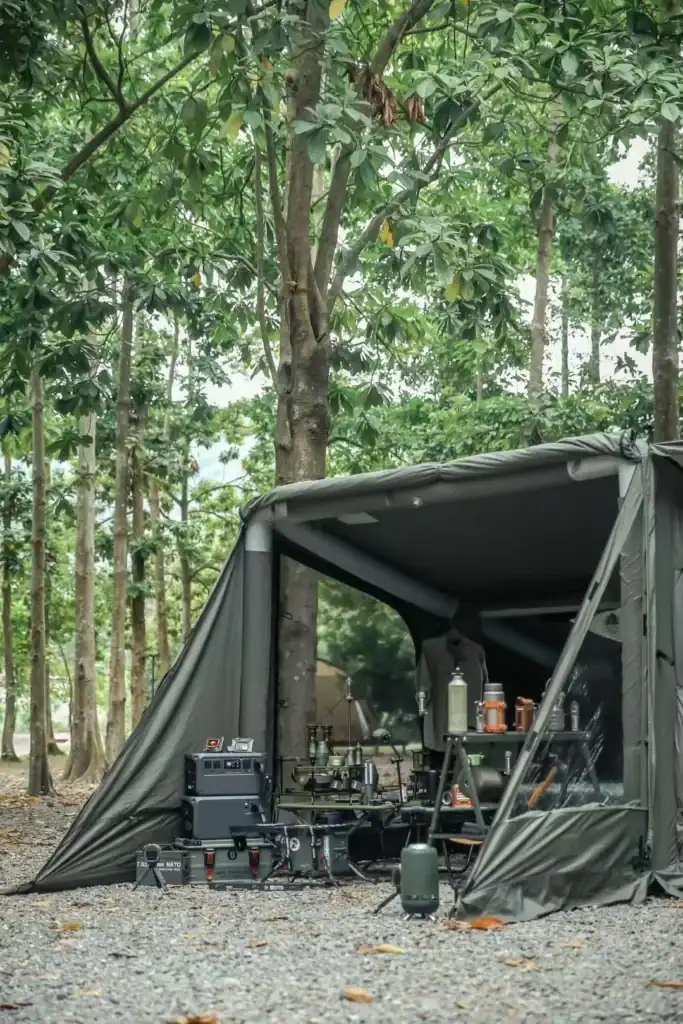
Red Flag #3: No In-House TPU Heat Sealing Equipment
A supplier without in-house TPU heat sealing equipment is an assembler, not a manufacturer.
TPU heat sealing is the one process that determines whether an inflatable tent survives its first season. It is also the process trading companies cannot fake. Stitching, framing, packing, and even design can all be subcontracted. High-frequency welding that fuses TPU beams into an airtight structure cannot.
When a supplier lacks in-house heat sealing equipment, they send beam panels to a third-party welding shop. Your pre-production sample comes from one line. Your mass production order comes from another. Welding width, dwell time, and temperature settings change. The sample inflates perfectly; the batch starts leaking along the seams on the fourth camping trip.
How to verify in-house capacity
Photos of a heat-sealing machine prove nothing—every trading company can pull those from the internet. Ask for thermal logger data instead. A legitimate inflatable tent factory keeps TPU welding heads above 180°C continuously during production hours. The logger records temperature, pressure, and dwell time per cycle. That data is harder to fake than any photo.
-
- Ask for: the welding machine’s thermal logger report covering a full production day. Confirm temperature stayed above 180°C and cycles align with your order quantity.
- Walk away if: the supplier offers only one scanned photo of a welding machine and no data logs. That means the machine is not theirs.
Scale is another hint. One of the air mattress factories in the Kelyland network—located in Xiangyang, Hubei—holds CE and ETL certifications and turns out 2.5 million units annually. That output is only possible when heat sealing sits on the factory’s own production floor, not routed to an outside workshop.
Red Flag #4: They Refuse Third-Party Testing of Air Beam Burst Pressure
No third-party burst test report means no safety claim.
Burst pressure is the number that separates an engineered air tent from an inflatable toy. Safety-certified tents must withstand 3.5 times their working PSI before a beam ruptures. A tent running at 7 PSI needs beams that survive past 24 PSI. That margin covers material fatigue, weld weakness, and TPU that degrades in UV.
Why in-house testing is not enough
A supplier that refuses third-party testing will claim their in-house rig is calibrated and trustworthy. That’s not the same as an independent lab with no financial stake in your order. ‘We tested it ourselves’ usually translates to ‘we inflated it until we got nervous and stopped.’.
The factories in Kelyland’s network operate under ISO 9001:2015 standards, with inspections at every production stage and reports available on request. The Ningbo tent factory holds CE and BSCI alongside ISO 9001. When a partner says a beam passed, there is a paper trail.
What a real factory audit requests
-
- Burst pressure ratio: Demand a third-party report showing minimum 3.5x working PSI. That ratio is a floor, not a quality tolerance to negotiate down.
- Thermal logger data: Legitimate factories keep TPU heat-sealing machines above 180°C during production hours. Logger readouts beat photos of machinery every time.
- Batch traceability: A burst test on one sample beam proves nothing. The report must reference the production batch, weld parameters, and operator.
If a supplier hesitates on any of these three, consider the audit complete. An independent burst test runs a few hundred dollars. A collapsed tent in a customer’s campsite costs your brand far more — plus the recall, the chargebacks, and the trust.
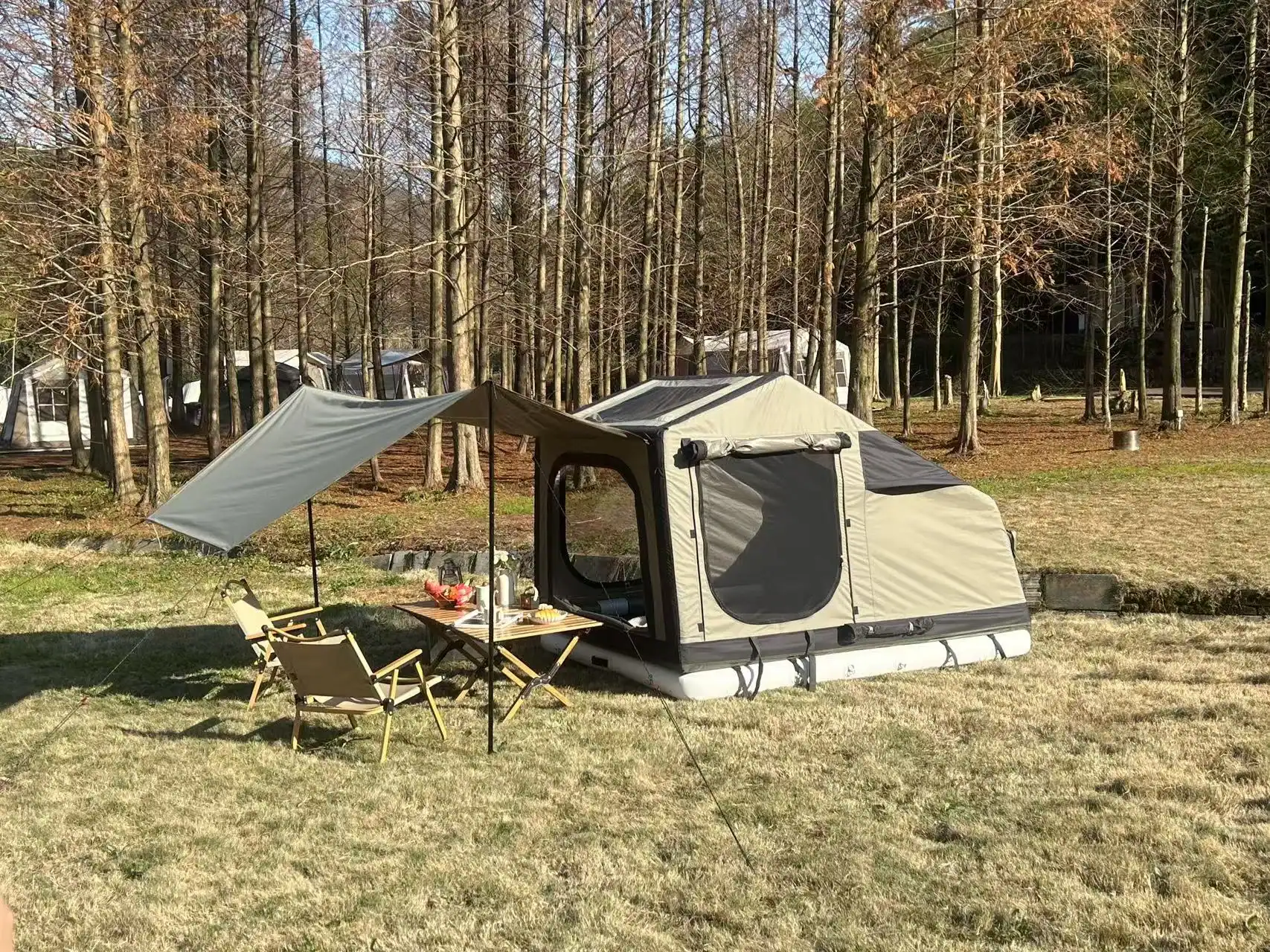
Red Flag #5: Certification Documents Are Scanned Copies Only
Fewer than 50 suppliers nationwide hold ISO 9001 + CCC + CE for the same product line.
A scanned PDF certificate from a Chinese supplier proves nothing. Editing software makes it trivial to alter a real certificate and resave it as a fresh PDF. The question every buyer should ask is not ‘can the certificate be seen?’ but ‘can the certificate be verified with the issuing body?’.
Verify ISO 9001 Through CNCA’s Public Database
In China, ISO 9001 certificates are issued by certification bodies accredited by CNCA, the Certification and Accreditation Administration under the State Administration for Market Regulation. CNCA maintains a public registry of valid certificates. The certificate number should match the supplier’s legal company name and certification scope exactly on that database.
Most buyers never run that check, which is why expired or cancelled certificates still circulate in sales decks. Ask for the certificate number first, then run it through the CNCA portal before quoting FOB prices or discussing sample timelines. A number that fails to resolve means the ‘factory’ just failed the most basic credibility test.
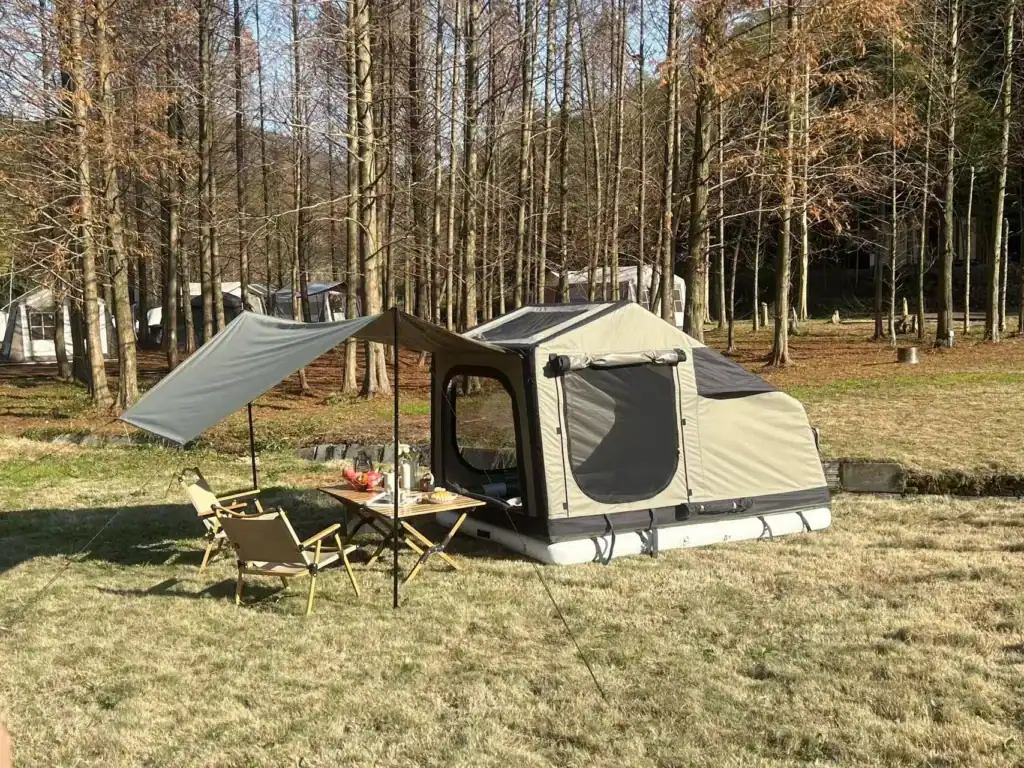
CE and CCC: Check the Notified Body and CQC
CE-marked inflatable tents must show a Notified Body number on the certificate. That body’s website should confirm the certificate exists. For China’s domestic market, CCC certificates come from CQC. Holding ISO 9001, CCC, and CE simultaneously for the same product category narrows the genuine supplier pool to under 50 nationwide.
At Kelyland Outdoors, the factory network’s certifications — ISO 9001:2015, CE, CCC, BSCI — vary by product line and factory, and those records are open for client verification. That is the level of transparency a buyer should expect. If a supplier hesitates to share their certificate number for third-party verification, the hesitation itself is the answer.
Red Flag #6: MOQ Claims Below 50 Units for Complex Inflatable Tents
Below 50 units, the math on welded TPU beams and machine setup doesn’t work — unless the ‘factory’ isn’t making them.
An inflatable tent is one of the most capital-intensive products in the camping category. TPU air beams must be welded on heat-sealing machines that hold above 180°C, every beam goes through air-retention testing, and each size needs its own pattern set plus prototype rounds. That fixed cost structure collapses at 30 units.
Compare that with what real factories quote. Kelyland’s standard inflatable tent models run 300–1,000 pieces per order; only the simplest items flex down to 50–100. Their Ningbo tent partner alone produces 800,000 units a year. A factory operating at that volume cannot justify sacrificing line hours for a three-dozen-unit order.
Some suppliers still promise 30 units as their minimum order quantity. That quote is either a loss or a bait-and-switch. Tooling amortization, TPU film roll minimums, and machine setup make the math impossible at that volume. Buyers discover which one it was when the first batch fails pressure testing or the ‘TPU’ beams stiffen in cold weather.
What the low quote actually hides
-
- Material substitution: PVC film swapped in for TPU to protect margin. It’s cheaper, but it loses flex in cold weather and bleeds air retention noticeably faster.
- Hidden frame structure: A fiberglass insert designed to mimic the look of an air beam so the tent stands without real inflation. It adds weight and voids the design intent.
- Spot-market brokering: The middleman buys the run from whichever factory has spare capacity that week. Every reorder lands with different seam tape, valve placement, and shade.
The damage shows up at reorder time, not in the first batch. You scale from 30 to 200 units and the second run arrives off-spec. Season windows close. Retail buyers cancel. That’s the real cost of chasing an impossibly low order floor.
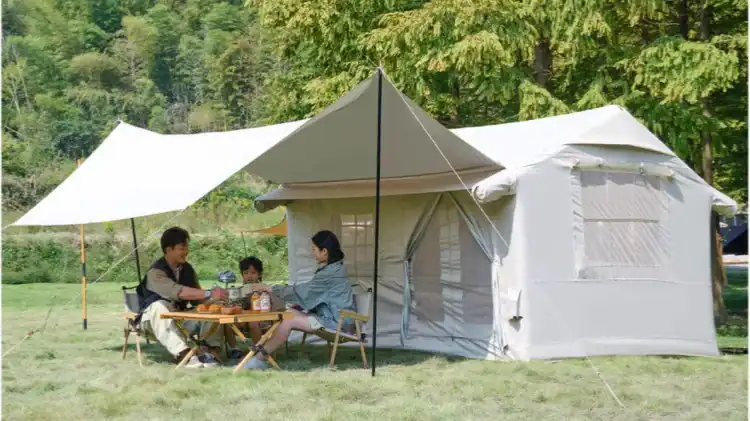
How Kelyland Outdoors Opens Factory Doors to Clients Before Contract Signing
A factory that opens its floor before a PO is a supplier that expects to be audited.
Most supplier meetings happen in conference rooms. Kelyland flips that order. Before any contract is signed, buyers can schedule a factory walkthrough at the production facilities Kelyland manages, including the Ningbo inflatable tent line. The point is not a showroom tour; it’s a look at the actual workflow that will build your order.
The Ningbo open-door policy in practice
The Ningbo tent factory runs about 800,000 units a year and holds CE, BSCI, and ISO 9001 certification. Buyers who visit can inspect incoming TPU film, watch heat-sealing stations operate, and see how beam seams are finished before the tent moves to inflation testing. The factory manager explains the pass/fail criteria on the spot.
-
- What to watch: Ask to see a beam inflated to rated pressure and then held for 30 minutes. A real inflatable tent line does this as a standard QC step, not a special demo.
- What to request: Ask for the QC report from the previous order, not just the production calendar. Kelyland’s partner factories keep stage-level inspection records and share them on request.
- What to avoid: If the supplier redirects you to a showroom and avoids the line, treat it as a fake inflatable tent supplier red flag.
The same logic applies across Kelyland’s network of 17 core strategic factories. A pre-contract visit lets the buyer confirm tooling, material stock, and shift capacity before a deposit is paid. It also forces the supplier to treat the audit as part of the negotiation, not an afterthought.
For a supply chain manager, this open-door policy changes the risk calculation. You can validate the production line, review certifications, and see exactly how QC is documented. If a supplier won’t open the floor before contract signing, that alone tells you a lot.
Conclusion
Separating a genuine inflatable tent maker from a trading company is not about who has the slickest catalog. It comes down to evidence: live production video, in-house TPU heat sealing, third-party burst pressure reports, and certifications you can verify through CNCA/CQC. A supplier that passes these checks protects your order from the two most expensive outcomes — collapsed beams on site and brand damage that follows a failed summer season.
-
- Demand live factory video over a phone call; a genuine production line can be shown in real time.
- In-house TPU heat sealing at 180°C continuously is stronger proof than photos of equipment.
- Get third-party air beam burst pressure tests at 3.5x working pressure before approving samples.
- Verify certification stack (ISO 9001 + CCC + CE) through CNCA/CQC instead of accepting scans.
Before you commit to a quote, run the checklist against your shortlist and ask for the documentation that cannot be staged — thermal logger data, test reports, and a live walkthrough of the floor. If a supplier hesitates on any of the seven checks, treat that as a decision point, not a negotiation. Review the inflatable tent and air beam product range on the Kelyland Outdoors site to see what a factory-backed setup looks like in practice.
Frequently Asked Questions
How can I verify a supplier is a real factory?
Ask for a live video walkthrough of their production line and check for in-house TPU heat sealing equipment. Generic photos that appear on multiple supplier sites are a strong sign you are dealing with. Audit the line live before signing any contract.
Why are very low MOQs suspicious for inflatable tents?
Complex inflatable tents require expensive tooling and material setup, so an MOQ below 50 units is rarely economical for a real factory. Extremely low minimums usually mean the supplier is a middleman aggregating. Treat below-50 MOQs as a warning, not a benefit.
What burst pressure should air beams meet?
Safety-certified inflatable tents typically require air beam burst pressure of at least 3.5 times the working PSI. If a supplier refuses third-party burst pressure testing, treat that as a major red flag. Verify the test report before approving production.
Why does TPU heat sealing equipment matter?
In-house TPU heat sealing equipment is the core capability that separates real inflatable tent makers from traders. Without it, the supplier cannot control seam strength or waterproofing, which drives the most expensive field. Confirm the factory has this equipment before order placement.
Can I audit an inflatable tent factory before signing?
A genuine manufacturer should welcome buyer audits before contract signing, often through an open-door policy. At minimum, ask for a live video call inside the production line and validate their ISO or. Walk away if they refuse an audit or live video.

 English
 Español
 Deutsch
 Français
 Português do Brasil
 Русский
 العربية
 한국어
 日本語