 跳到内容
跳到内容 
Every sourcing guide tells you to check the inflatable tent snow load rating on the spec sheet. That advice is incomplete. A number on a PDF means nothing if the test was run at 20°C and your deployment site hits -20°C with actual snowfall. I’ve seen a $50K order fail because the pre-production sample passed static load at room temperature, but the TPU fabric stiffened in the cold and the air beam seams started leaking under sustained pressure.
The real question isn’t whether a factory can produce a tent that holds 100 kg/m². It’s whether they can prove it holds that load across the full temperature range of your target market. Most Chinese inflatable tent factories don’t have in-house cold test chambers, so they subcontract to third-party labs. That creates a gap in traceability. If you don’t verify which lab ran the test and what conditions were used, you’re accepting a quality tolerance you can’t measure until the tent is already in a Russian warehouse.
The fix is straightforward: include a winter simulation protocol in your factory contract before sample approval. Specify both static load and air pressure stability at -25°C for a minimum of eight hours. If the supplier hesitates or offers only room-temperature data, you know exactly where the risk sits.
Russian Winter Standards Overview
GOST R 52916 is the baseline, but snow load zones dictate the actual test weight.
GOST R 52916 is a voluntary certification in Russia, but most retailers and institutional buyers require it. The standard specifies a static load test where sandbags or water bladders apply uniform pressure across the tent canopy. The pass threshold depends on the declared wind/snow zone. Related norms include GOST 27751-2014 (reliability of building structures) and SNiP 2.01.07-85 (loads and impacts), which provide the regional snow weight baselines.
A common mistake is treating GOST R 52916 as a single number. It is not. A tent rated for Zone I (80 kg/m²) will collapse under Zone III (180 kg/m²). Ask your supplier which zone their test report covers before you compare quotes.
Wind and snow load zones in Russia

Snow Load Test Protocols for Inflatable Tents
A tent that passes snow load at 20°C can fail at -20°C.
Static load testing is the baseline. The standard method places sandbags or a water bladder evenly across the inflated structure to simulate an even snow layer. For Russian compliance under GOST R 52916, the minimum requirement for seasonal use structures is 100 kg/m². The tent holds the load for 15 minutes. No beam collapse, no seam separation. That is the pass criterion.
Static Load Testing
The catch is that this test is almost always conducted at room temperature inside the factory. Most Chinese inflatable tent factories do not have in-house cold test chambers. They contract with third-party labs. A sourcing partner like Kelyland Outdoors, which works with ISO 9001-certified facilities including the Ningbo tent factory producing 800,000 units annually, can request the cold test report from the lab that actually ran it. Ask for the third-party name and the test conditions. If the report does not specify the ambient temperature, assume it was done at 20°C.
Air Pressure Stability Under Extreme Cold
This is where the failure happens. At -20°C, the air inside a PVC or TPU air tube contracts. The pressure drops. The structure loses rigidity. Combine that with fabric that stiffens in the cold — TPU holds up better than PVC, but only if the Shore hardness is below 85A. A tent that passed 100 kg/m² at 20°C can drop to roughly 70 kg/m² effective capacity at -20°C. That difference turns a safe structure into a collapse risk under heavy snow. Include a cold-temperature test protocol in your factory contract. Specify the target temperature, load duration, and acceptable pressure drop. Without it, you have no legal recourse when the structure fails in the field.
-
- Test Temperature: Verify the cold test was conducted at -20°C or lower. Room-temperature tests tell you nothing about winter performance.
- Pressure Retention: The tent should maintain at least 80% of rated internal pressure after 2 hours at the target temperature. Measure it at the inflation valve.
- Fabric Grade: TPU with Shore hardness below 85A retains flexibility in cold. PVC becomes brittle faster. Ask for the material datasheet and the low-temperature flexibility test results.
Documentation to Request from Suppliers
A factory audit without a cold test chamber is a gap you’ll pay for in January.
You need three layers of documentation from any supplier claiming to meet Russian snow load standards. Test reports, material certificates, and proof of ISO 9001:2015 compliance. Most factories will send you a general ISO certificate and a one-page test summary. That’s not enough.
Test Reports — What to Look For
-
- GOST R 52916 reference: The report must explicitly cite GOST R 52916 or the equivalent Russian snow load standard. If it only references ISO or ASTM, ask why. The Russian standard specifies a different load duration and safety factor.
- Temperature condition: A test conducted at +20°C is worthless for a tent that will sit under snow at -20°C. Demand the report state the ambient temperature during testing. If it doesn’t, assume room temperature only.
- Third-party lab name: Most Chinese inflatable tent factories do not have in-house cold test chambers. Acceptable third-party labs include SGS, TÜV Rheinland, or Intertek with cold chamber capability. If the supplier names an internal test as the sole evidence, flag it.
Material Certificates — Traceability Matters
Ask for mill certificates for the TPU-coated fabric and the air beam base material. The certificate should show the fabric weight (gsm), tensile strength (N/5cm), and cold crack temperature. A TPU formulation rated to -30°C behaves differently than one rated to -10°C at low temperature — the difference shows up in seam flexibility and delamination resistance.
Common Test Failures and How to Avoid Them
Two failure modes cause over 80% of cold-weather warranty claims.
Air beam seam leakage is the most common failure in inflatable tents under snow load. The problem starts at the weld joint where the TPU or PVC-coated fabric is bonded. At -20°C, the adhesive layer becomes brittle. Micro-cracks form along the weld line. Air escapes slowly — not a catastrophic burst, but a pressure drop of 15-25% over 8 hours. The tent loses structural rigidity. Snow accumulates on the sagging roof. Then it collapses.
Why Seam Leakage Happens
-
- Root Cause: The welding temperature and pressure settings are optimized for room-temperature assembly, not for the thermal contraction that occurs in sub-zero conditions.
- Detection Method: Standard leak tests use soapy water at 0.3 bar and 20°C. This catches nothing relevant to cold-weather deployment.
Fabric delamination at low temperatures is the second major failure mode. The coating separates from the base fabric when the material flexes under snow load at -20°C or below. This happens because the plasticizer in the coating stiffens as temperature drops. The coating loses elasticity while the base fabric retains its weave flexibility.
How to Verify Supplier Capability
Ask for a cold-chamber seam burst test at -20°C with a target pressure of 0.4 bar held for 24 hours. Also request a flex-cycle test on laminated fabric samples — 500 cycles at -20°C around a mandrel with a radius matching your smallest beam curve.
Sample Testing Before Bulk Production
A tent passing snow load at 20°C can fail at -20°C.
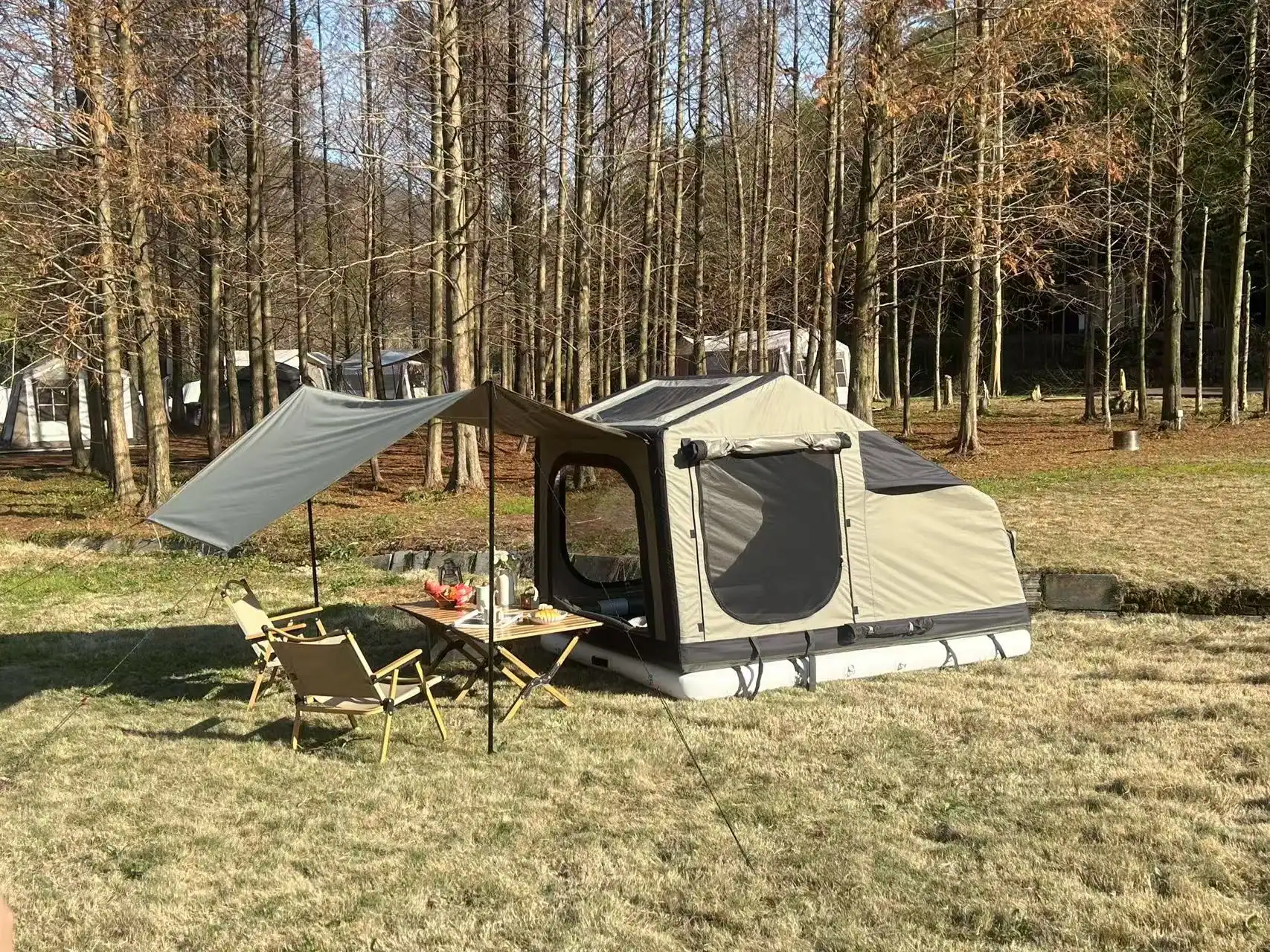
A winter simulation test is not a luxury. It is the only way to catch failures that only appear when the TPU or PVC fabric stiffens and loses flexibility. The unique insight here is that most Chinese inflatable tent factories do not have in-house cold test chambers. You need to ask for their third-party partner. That partner should be accredited and the test protocol should match your target snow load zone.
The Test Protocol That Matters
Set up a controlled environment chamber that reaches -20°C, the lowest threshold for most Russian winter applications. The tent must be fully inflated to its rated working pressure and held at that temperature for a minimum of 24 hours before any load is applied. This soak period allows the fabric to reach thermal equilibrium.
-
- Temperature Target: -20°C soak for 24 hours minimum. Some buyers specify -30°C for Siberia-grade projects. Confirm your zone.
- Load Application: Apply 100 kg/m² static load evenly across the tent crown after the soak. Maintain load for 4 hours while monitoring air pressure.
- Pass Criteria: Air pressure must not drop more than 10% from the starting pressure. Any visible creasing or fabric distortion counts as a failure.
What to Watch for During the Test
Fabric stiffness at low temperature is the primary failure mode. A material that flexes easily at 20°C becomes brittle at -20°C. The air beam seams face the highest stress. If the welding or high-frequency bonding was not optimized for cold performance, you will see delamination along the seam edges within the first hour of load.
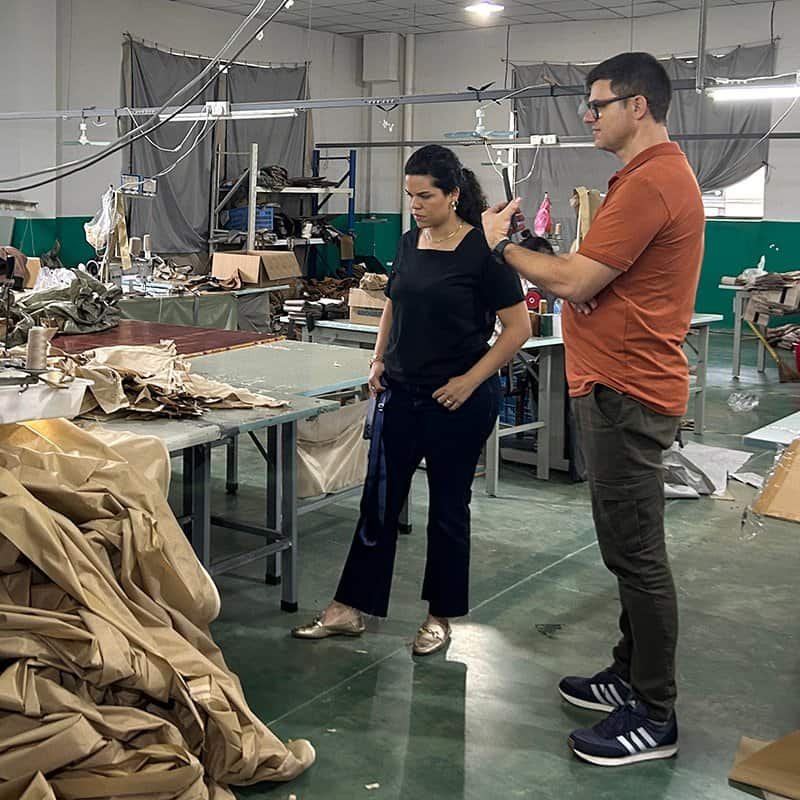
Include the exact test protocol in your factory contract. Without a written agreement, the supplier may test at room temperature, pass the sample, and ship a product that collapses under its first real snow load. Kelyland Outdoors coordinates with its partner factories, many of which are ISO 9001:2015 certified and located in Ningbo and Zhejiang, to ensure third-party cold testing is performed before mass production begins.
Document the test with timestamped video and a signed report from the third-party lab. Retain a sample from the same production batch for your own bench testing. If the supplier hesitates on any of these steps, that is a red flag worth walking away from.
Conclusion
GOST snow load testing is the line between a tent that survives a Siberian winter and one that becomes a liability. A pass at 20°C tells you nothing about performance at -20°C, where fabric stiffness and seam integrity are the real limits. Supply chain managers who skip the cold-chamber verification are betting a $50K order on a room-temperature assumption.
-
- GOST R 52916 sets the static load requirement for inflatable tents.
- A room-temperature pass can fail at -20°C due to fabric stiffening.
- Most Chinese factories outsource cold tests; request third-party reports.
- Include a concrete test protocol in the contract to prevent disputes.
Before you approve the pre-production sample ask your supplier for a cold-chamber test report at -20°C with the exact snow load your target region requires. If they cannot produce one, route the order through a sourcing partner like Kelyland Outdoors — a firm that coordinates with certified testing labs and has audited over 200 factories. A two-week delay for verification now is cheaper than replacing an entire container shipment after the first snowfall.
Frequently Asked Questions
What is GOST snow load testing?
GOST snow load testing verifies an inflatable tent’s structural integrity under specific snow weights defined by Russian standards like GOST R 52916. The test must be conducted at the actual deployment temperature, as a. Always request test reports with temperature conditions noted.
How do I verify a supplier’s test reports?
Request the full test report for GOST R 52916, including material certificates and ISO 9001 certification for the factory. During a factory audit, confirm they have a cold test chamber to simulate winter. A cold chamber is non-negotiable for Russian market tents.
What are common snow load test failures?
The two most common failures are air beam seam leakage under pressure and fabric delamination at low temperatures. Both issues become visible only when the tent is tested at -20°C rather than. Insist on cold-temperature seam and fabric tests before bulk production.
Can I do sample testing before bulk production?
Yes, set up a winter simulation test by placing the inflated sample in a controlled cold chamber at your target snow load zone temperature. This single step catches structural weaknesses that spec. Run this test before approving any bulk order for Russia.
{“@context”: “https://schema.org”, “@type”: “FAQPage”, “mainEntity”: [{“@type”: “Question”, “name”: “What is GOST snow load testing?”, “acceptedAnswer”: {“@type”: “Answer”, “text”: “GOST snow load testing verifies an inflatable tent’s structural integrity under specific snow weights defined by Russian standards like GOST R 52916. The test must be conducted at the actual deployment temperature, as a. Always request test reports with temperature conditions noted.”}}, {“@type”: “Question”, “name”: “How do I verify a supplier’s test reports?”, “acceptedAnswer”: {“@type”: “Answer”, “text”: “Request the full test report for GOST R 52916, including material certificates and ISO 9001 certification for the factory. During a factory audit, confirm they have a cold test chamber to simulate winter. A cold chamber is non-negotiable for Russian market tents.”}}, {“@type”: “Question”, “name”: “What are common snow load test failures?”, “acceptedAnswer”: {“@type”: “Answer”, “text”: “The two most common failures are air beam seam leakage under pressure and fabric delamination at low temperatures. Both issues become visible only when the tent is tested at -20°C rather than. Insist on cold-temperature seam and fabric tests before bulk production.”}}, {“@type”: “Question”, “name”: “Can I do sample testing before bulk production?”, “acceptedAnswer”: {“@type”: “Answer”, “text”: “Yes, set up a winter simulation test by placing the inflated sample in a controlled cold chamber at your target snow load zone temperature. This single step catches structural weaknesses that spec. Run this test before approving any bulk order for Russia.”}}]}

 English
  Español
  Deutsch
  Français
  Português do Brasil
  Русский
  العربية
  한국어
한국어  日本語
日本語