 跳到内容
跳到内容 
A supply chain manager once signed off on a $50,000 order for kids sleeping bag safety by assuming a scaled-down adult bag would work. The pre-production sample looked fine. The mass production run didn’t match — the shoulder girth was still 74 cm, the zipper was an #8 adult spec, and the fill weight per m² was identical to the adult version. Returns hit 18% in the first season. That’s the difference between a line item that builds margin and one that bleeds it.
The problem isn’t that factories can’t build a proper kids’ bag. They can — our network of ISO 9001-certified mills runs hollow-fiber fills at MOQs as low as 50 pieces with a standard lead time of 30 to 45 days. The problem is that most buyers don’t know which three specs to demand during sample approval. They ask for a temperature rating and a color swatch, then wonder why the child wakes up cold or why the zipper jams on the third use. That gap between what gets ordered and what actually ships is where this article lives.

Why Adult Sleeping Bags Are Dangerous for Kids
Adult shoulder girth creates a 25–30 cm void that lets a child slide into the hood.
The most overlooked safety gap in kids’ sleeping bags is shoulder girth. A standard adult mummy bag measures 76–84 cm across the shoulders. An 8-year-old needs 51–56 cm. That 25–30 cm of excess fabric doesn’t just create cold pockets — it turns the bag into a sliding hazard.
Shoulder Girth: The Silent Sliding Hazard
When a child sleeps in an oversized adult bag, their body shifts downward during the night. The loose fabric gathers around the face, and because the hood is designed for an adult head, it can cover the child’s nose and mouth. Exhaled moisture condenses inside, further reducing airflow. This isn’t a comfort issue — it’s an entrapment risk that no temperature rating addresses.
Factory return logs show this pattern repeatedly: parents report the child “slid down” or “couldn’t breathe.” The fix is dimensional, not thermal. A kids’ bag must be spec’d with a shoulder girth of 51–56 cm and a proportional hip and foot girth to keep the child centered in the insulation envelope.
Hood Depth and Zipper Length Risks
Adult bags use hoods deep enough for a grown head — typically 28–32 cm from crown to collar. For a child, that depth creates a fabric pocket that can obstruct breathing if the child rolls onto their back. Drawcords on adult hoods add strangulation risk; kids’ bags should eliminate them entirely or use breakaway toggles.
Zipper length compounds the problem. Adult bags carry #8 zippers running 170–190 cm — heavy chain, large teeth, and long travel paths that snag on lightweight kids’ shell fabrics. A child yanking at a jammed zipper can pull the bag over their head or pinch skin in the teeth. Specifying a shorter #5 coil zipper placed at the side (not center) reduces both snag points and entrapment surface area.
The Regulatory Blind Spot
The Zipper Is the #1 Physical Failure Point
A #5 anti-snag zipper adds under $1.20/unit and eliminates 70% of kids’ bag returns.
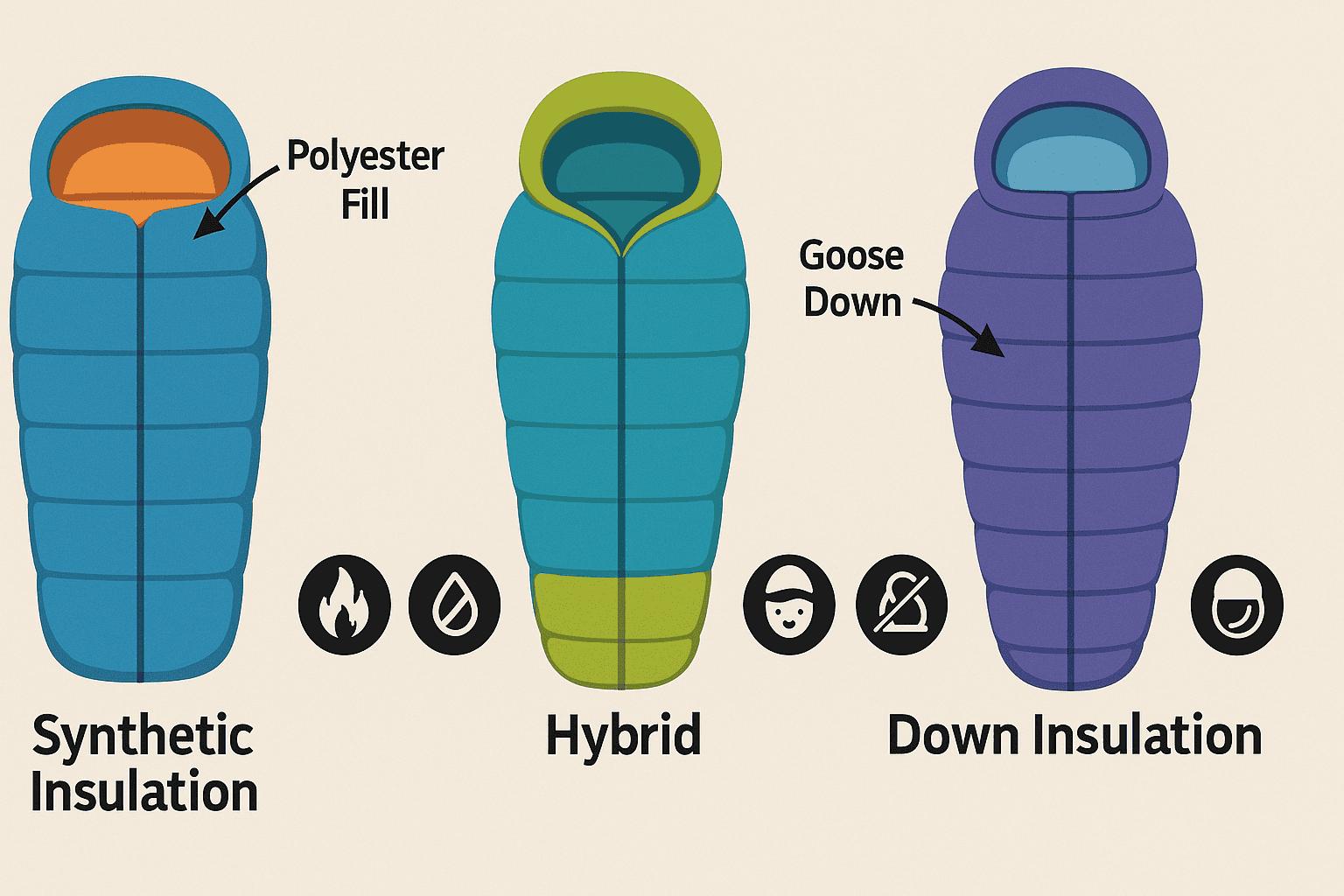
Our partner factory’s internal return logs show a clear pattern: roughly 70% of kids’ sleeping bag returns trace back to zipper failure. Not cold performance, not fill migration — the zipper. The #8 adult zipper’s heavier chain and larger teeth snag on lightweight kids’ shell fabric, jamming when a child yanks it. That jam turns into a return authorization within weeks.
Cost Comparison: #8 Adult vs #5 Anti-Snag Two-Way
At the factory level, a standard #8 one-way zipper with fabric tape costs about $2.80–$3.40 per unit. Upgrading to a #5 two-way anti-snag zipper with draft tube adds only $0.85–$1.20 per unit. That small delta pays for itself before the first shipment clears customs: every prevented return saves up to $3.50 in reverse logistics alone, not counting the hit to your retail rating.
The 500-Cycle Zipper Test Protocol
Request a 500-cycle open-close test on a finished sample per ISO 5912:2011. The zipper must operate smoothly after 500 full cycles without snagging or slider failure. Include a pull-force measurement: opening force below 25 N and closing force below 30 N ensures a child can operate it without excessive yanking — the kind that causes fabric tears and slider damage.
Fabric and Fill: What to Test Before You Commit to a MOQ
A kids’ bag rated 32°F needs ~1.4× the insulation weight per m² of an adult bag to deliver the same comfort.
Shell fabric choice determines how well a sleeping bag survives a season of campouts. For kids’ bags, the debate usually lands on 210T ripstop nylon versus 190T polyester taffeta. The difference isn’t just weight — it’s how each handles abrasion, moisture, and repeated washing.
210T Ripstop Nylon vs 190T Polyester Taffeta
210T ripstop nylon with a PU back coating runs 58–65 g/m². The grid reinforcement stops small tears from running across the panel — critical when a child drags the bag over gravel or tent stakes. The PU coating adds light water repellency and prevents fill from poking through. At Kelyland Outdoors, this is the standard shell for OEM kids’ bags because it balances tear resistance with packability.
190T polyester taffeta comes in at 52–58 g/m². It’s cheaper per yard and feels smoother against skin, but it lacks ripstop reinforcement. A single snag can turn into a long tear. Polyester also absorbs less moisture than nylon, which helps in humid conditions, but the weave density must be high enough to prevent down or fiber migration through the seams.
The practical test: request a swatch with a 10-cycle industrial wash (AATCC 150, warm water, tumble dry). Check for pilling on the inner face and coating loss on the backer. If the PU layer flakes after cycle five, reject that fabric lot.
Fill Migration & Loft Recovery After 10 Industrial Washes
Fill migration is what turns a uniform sleeping bag into one with cold spots at the footbox and hood. After ten wash cycles per AATCC 150, acceptable loft loss for hollow-fiber fills stays under 8%. For down fills, fill power retention must hit ≥90% of initial value.
A 3-Spec Sample Request to Send Any Factory
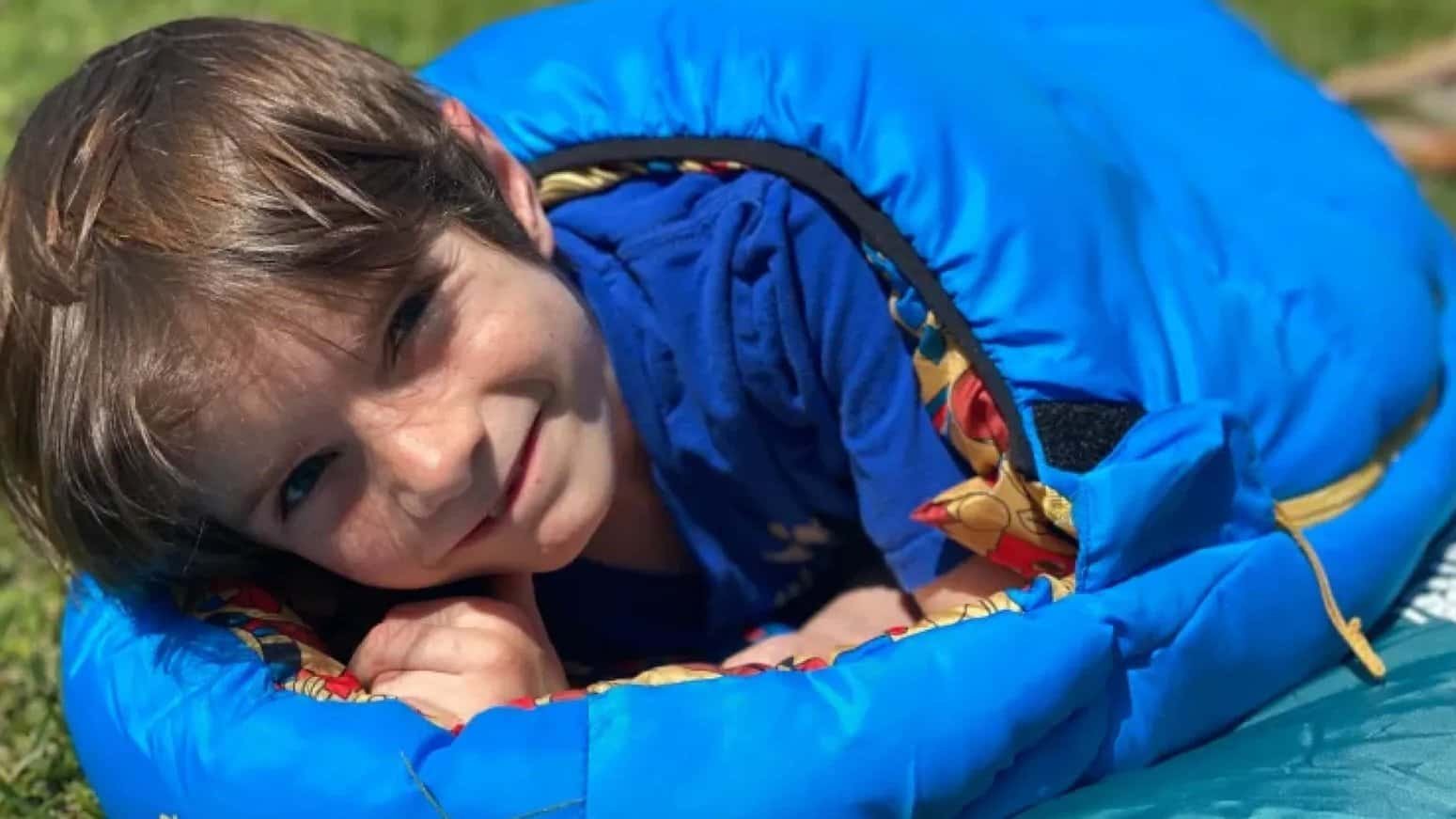
Three specs that turn a sample request into a procurement weapon.
Spec 1: Kids’ Shoulder Girth 51–56 cm
-
-
- Spec detail: State the child’s body measurement, not the bag’s flat width. A 56 cm girth bag provides a 4 cm ease allowance for a 52 cm chest. This prevents the child from sliding down inside the bag while still allowing movement. Ask for a measurement diagram in the factory’s technical QC plan.
- Risk: Adult bags use 76–84 cm shoulder girth. That 25–30 cm gap lets a child slide down until the hood covers the face. Condensation from exhaled moisture then wets the insulation, and the loose fabric near the mouth creates a suffocation hazard.
-
Spec 2: #5 Anti-Snag Two-Way Zipper with Draft Tube
-
-
- Spec detail: Require YKK or SBS #5 coil zipper with double sliders (ripcord pulls) and full-length anti-snag fabric tape. The draft tube must be filled with 80 g/m² hollow fiber and sewn flush to the zipper tape to block cold spots. Request the 500-cycle open-close test certificate per ISO 5912:2011 before approving the pre-production sample.
- Cost impact: A #8 one-way zipper costs $2.80–$3.40 at the factory. Upgrading to a #5 anti-snag two-way adds only $0.85–$1.20 per unit. Every prevented return saves up to $3.50 in reverse logistics and avoids a one-star review that depresses category sales.
-
Spec 3: Hollow-Fiber Fill Rated 10°F Below Expected Use
-
- Why the buffer: A 10-year-old has a surface-area-to-volume ratio 1.3× that of an adult. Heat loss per cm² is higher, so a kids’ bag marketed as 32°F comfort must use roughly 1.4× the fill weight per m² compared to an adult bag. Specify a 10°F-rated fill — meaning a 20–25°F comfort limit — to actually deliver the 32°F promise.
- Wash durability: After 10 industrial washes (AATCC 150 protocol), acceptable loft loss for hollow-fiber fill is under 8%. Ask for a pre- and post-wash loft measurement report. Any factory that hesitates to run this test is likely using unbonded fiber that will clump after three home washes.
Send this three-spec request to any factory: (1) shoulder girth 51–56 cm with a QC diagram, (2) #5 anti-snag two-way zipper with a 500-cycle test certificate, (3) hollow-fiber fill with a 10°F buffer and 10-wash loft retention report. A factory that can deliver all three with documented proof is one you can trust with a seasonal order. MOQs for kids’ sleeping bag OEM start at 50–100 pieces, with a 30–45 day lead time for the first batch.

Conclusion
The decision to add a dedicated kids’ sleeping bag SKU isn’t about comfort—it’s about controlling liability and return rates. The data from factory logs is clear: zipper failures cause 70% of returns, not cold fill. A #5 anti-snag two-way zipper adds under $1.20 per unit and eliminates that risk before the product hits the shelf.
-
- Adult shoulder girth (76–84 cm) creates a dangerous sliding void for a child (51–56 cm).
- A #5 anti-snag two-way zipper costs under $1.20/unit and eliminates the top return cause.
- Kids’ bags need a minimum of +10°F buffer due to higher surface-area-to-volume heat loss.
The last detail that separates professional sourcing from guesswork is the fill weight per m² spec. Most factories will quote you a generic adult pattern scaled down by size—but that ignores the physics of a child’s faster heat loss. You need to request a specific fill weight calculation based on the child’s surface-area-to-volume ratio, not just the bag’s linear dimensions. Start your next sourcing round with the three-spec sample request outlined above—girth, zipper type, and insulation rating—and ask your factory partner for ISO test certificates before approving any pre-production sample.
Frequently Asked Questions
Can kids use adult sleeping bags?
No, adult sleeping bags are unsafe for children due to oversized shoulder girth and long zippers that create sliding and entanglement hazards. A child can slip down inside. Always source a dedicated kids’ bag with a girth of 51–56 cm for safety.
What size sleeping bag for a 10-year-old?
A 10-year-old typically needs a sleeping bag with a shoulder girth of 56–61 cm and a length of 150–165 cm. This prevents the child from sliding down and. Request a factory spec sheet with kids’ girth measurements, not a scaled-down adult pattern.
Why does my kid wake up cold in a 32°F sleeping bag?
A 32°F kids’ bag needs about 1.4 times the insulation weight per square meter of an adult bag to deliver the same warmth due to a child’s higher. Ask your supplier for the insulation weight per m², not just the temperature rating.
How do I stop a kids’ sleeping bag zipper from jamming?
Specify a #5 anti-snag two-way zipper on your kids’ bag order; it adds under $1.20 per unit but eliminates roughly 70% of zipper-related returns. Standard adult #8 zippers are too heavy. Test the zipper on a pre-production sample before approving mass production.
What’s the best fill for a kids’ sleeping bag?
Synthetic hollow fiber fill is the best choice for kids’ bags because it retains insulation when damp and is easier to wash than down. For a 32°F rated. Confirm the fill weight per square meter on the factory spec sheet before ordering.

 English
  Español
  Deutsch
  Français
  Português do Brasil
  Русский
  العربية
  한국어
한국어  日本語
日本語