 Ir para o conteúdo
A baixa estabilidade ao vento em uma barraca de praia alugada é mais do que um problema de atendimento ao cliente; é uma linha direta para perda de equipamentos, reclamações de responsabilidade civil e avaliações de uma estrela prejudiciais. Cada barraca que se solta e rola pela costa representa uma falha na seleção de equipamentos e no procedimento, criando riscos de segurança e prejudicando a reputação da sua marca. Para operadores de frotas de aluguel, gerenciar esse risco é uma parte inegociável das operações diárias, impactando diretamente a lucratividade e os prêmios de seguro.
Este guia fornece o procedimento operacional padrão técnico para proteger seus ativos na areia. Analisamos a aerodinâmica da resistência ao vento e comparamos as diferenças práticas entre bolsas de areia padrão e estacas de metal ineficazes. Também abordaremos métodos de ancoragem avançados, incluindo a técnica ‘Deadman’ e o valor real das estacas roscadas, para ajudá-lo a tomar decisões informadas de compra e operacionais.
Aerodinâmica: Por que os guarda-sóis voam enquanto as barracas ficam no lugar?
Barracas vencem o vento desviando as forças aerodinâmicas para o solo através de uma estrutura rígida e ancorada, enquanto os guarda-sóis tentam sobreviver ao vento liberando pressão, muitas vezes falhando devido à sua forma que gera sustentação e à base de contrapeso simples.
Design do toldo e liberação de pressão
Guarda-sóis e barracas gerenciam a pressão do vento de maneiras fundamentalmente diferentes. Guarda-sóis geralmente apresentam toldos ventilados projetados para liberar a pressão do ar, evitando o efeito de vela que gera sustentação. As barracas, em contraste, usam formas aerodinâmicas esticadas para desviar o vento sobre e ao redor da estrutura, direcionando a força para as âncoras do solo em vez de deixá-la acumular por baixo.
- A forma grande e côncava de um guarda-sol tradicional captura o vento, criando uma zona de alta pressão por baixo que o faz levantar.
- Guarda-sóis modernos resistentes ao vento incorporam aberturas que permitem a passagem do ar pelo toldo, equalizando a pressão e reduzindo a sustentação.
- As capas de barraca são moldadas para minimizar a resistência ao vento, incentivando o fluxo de ar sobre a superfície em vez de prendê-lo.
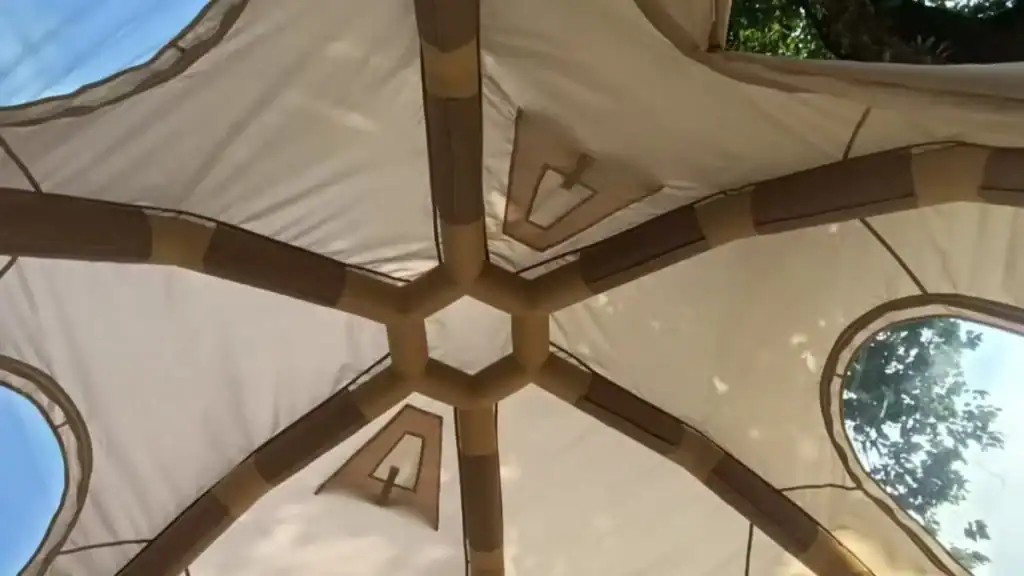
A estrutura do teto de uma barraca de camping, destacando o design exclusivo da estrutura e as conexões de tecido resistentes.
Flexibilidade da estrutura vs. Rigidez estrutural
A estrutura de um guarda-sol é projetada para portabilidade e uso temporário, frequentemente utilizando materiais flexíveis que podem dobrar ou até inverter sob estresse. A estrutura de uma barraca é projetada como um esqueleto rígido e interconectado, projetado para suportar força sustentada, transferindo a carga do vento diretamente para o solo.
- As varetas de guarda-sol feitas de fibra de vidro ou ligas flexíveis são projetadas para dobrar com rajadas de vento, mas não têm a resistência para suportar ventos fortes e contínuos.
- As hastes da barraca, normalmente feitas de liga de alumínio ou aço, criam uma estrutura estável e autossustentável, como uma cúpula ou túnel, que mantém sua forma sob pressão.
- O objetivo principal de uma estrutura de barraca é permanecer rígida e transferir força, enquanto uma estrutura de guarda-sol frequentemente cede para evitar falhas catastróficas.
Método de ancoragem: Contrapesos vs. Integração ao solo
A forma como cada item é fixado ao solo é uma distinção crítica. Os guarda-sóis geralmente dependem de uma única base pesada como contrapeso, que resiste a tombamentos, mas oferece pouca defesa contra o levantamento vertical. As barracas são integradas ao solo com múltiplas estacas e cordas de amarração, criando um sistema tensionado e seguro que puxa a estrutura para baixo ativamente.
- Uma base pesada de guarda-sol é eficaz contra empurrões laterais, mas é facilmente superada pela sustentação aerodinâmica gerada pelo vento.
- As barracas utilizam um sistema de ancoragem distribuído com estacas e cordas de amarração que criam forças opostas para segurar a estrutura firmemente contra o solo.
- Essa diferença significa que uma barraca se torna uma parte semipermanente da paisagem durante o uso, enquanto um guarda-sol simplesmente repousa sobre ela.
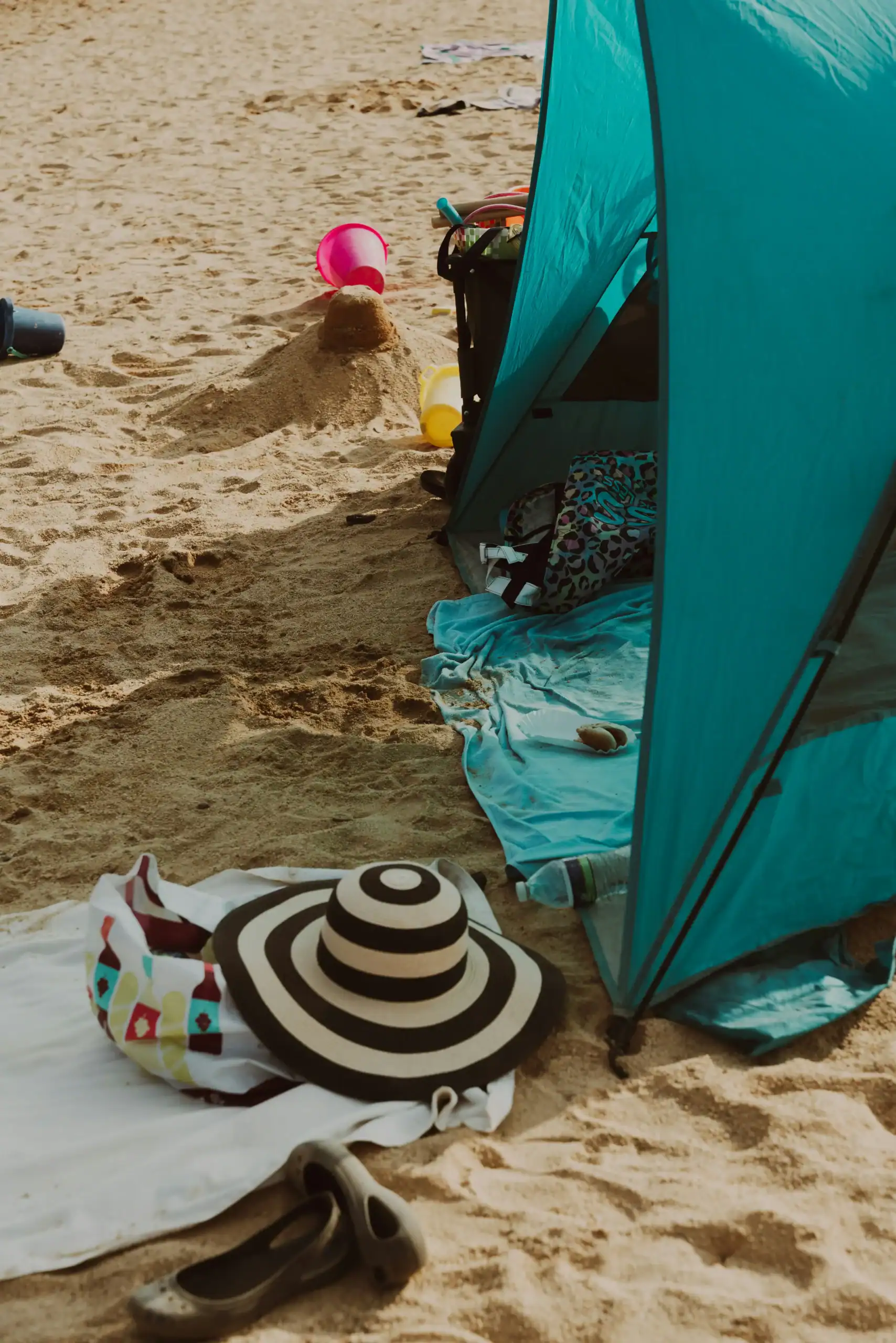
A âncora: Bolsas de areia são melhores do que estacas de metal?
O debate não é sobre qual âncora é melhor, mas sobre qual é correta para o trabalho. O desempenho é ditado inteiramente pelas condições do solo, tornando a escolha entre força de penetração e peso distribuído uma decisão crítica.
Especificidade da condição do solo: O fator decisivo
A escolha entre bolsas de areia e estacas de metal é determinada inteiramente pelo ambiente. Não existe uma âncora universalmente superior; a eficácia é ditada pelo tipo de solo. Um tipo de âncora se destaca onde o outro certamente falhará. As estacas de metal são projetadas para terrenos firmes, compactos ou rochosos. Elas precisam ser cravadas profundamente em um substrato denso para criar uma fixação segura e de alto atrito.
As bolsas de areia, juntamente com outras âncoras especializadas de perfil largo, são projetadas especificamente para solos macios e soltos, como praias ou neve. Nessas condições, as estacas tradicionais não têm área de superfície suficiente para segurar qualquer coisa, permitindo que sejam removidas com força mínima. O mercado reconhece isso, com soluções de estabilidade agora focadas em combinar o design da âncora diretamente com as condições ambientais esperadas.
A Física da Adesão: Área de Superfície vs. Força de Perfuração
Cada tipo de ancoragem usa um princípio mecânico diferente para alcançar estabilidade. Estacas metálicas dependem de perfurar o solo e utilizar o solo compactado ao redor de sua haste estreita para gerar atrito. Este método é eficaz apenas quando o solo é denso o suficiente para resistir ao deslocamento.
| Tipo de Ancoragem | Princípio de Funcionamento | Condição Ideal do Solo |
|---|---|---|
| Estacas Metálicas Padrão | Perfuração e Atrito | Solo firme e compacto; terreno rochoso |
| Bolsas de Areia / Sacos de Areia | Peso Distribuído e Área de Superfície | Areia solta, solo macio, neve |
As bolsas de areia funcionam ao serem preenchidas com areia, utilizando a massa pura e a ampla área de superfície do material contido para resistir a forças de tração. Em vez de depender do atrito de um ponto pequeno, elas envolvem um grande volume de areia, criando um bloco pesado e estático que é difícil de mover.
Inovações em Ancoragem Híbrida
O design moderno de tendas reconhece a necessidade de versatilidade, levando a estratégias de ancoragem híbrida. Sistemas de parafuso ou estilo broca são uma inovação chave, oferecendo resistência ao vento muito maior em solos firmes e moderadamente macios do que estacas padrão. Seu design helicoidal penetra no substrato, proporcionando uma aderência mecânica que resiste a forças de tração vertical.
Outros equipamentos especializados, como âncoras delta, são projetados com lâminas largas e planas para fornecer forte poder de fixação em solos rasos ou soltos, onde estacas padrão não conseguem obter aderência suficiente. Esses designs avançados mostram uma tendência clara em direção a soluções de engenharia que fornecem estabilidade confiável em uma gama mais ampla de condições desafiadoras.
Impulsione sua marca com barracas personalizadas

A técnica “Deadman”: Como enterrar as âncoras corretamente?
A técnica “Deadman” converte solo instável, como areia ou neve, num ponto de ancoragem fiável ao aproveitar o peso massivo e a resistência passiva do solo compactado sobre um objeto enterrado, um método muito superior às estacas tradicionais em substratos soltos.
O Princípio das Âncoras Enterradas
Uma âncora deadman funciona com base num princípio simples da física. Em vez de depender do atrito entre uma estaca e o solo circundante, utiliza o peso puro da terra compactada sobre um objeto enterrado. A força de retenção provém da “resistência passiva do solo”—a recusa do solo em ser deslocado pela força exercida na âncora. Esta técnica é especialmente eficaz em solo solto, como areia ou neve, onde as estacas tradicionais se soltam facilmente. O desempenho da âncora é uma função direta da sua profundidade de enterramento, da densidade do solo e da área de superfície da âncora. Transforma eficazmente solo instável numa base sólida para cabos de estaiamento.
Seleção e Preparação da Âncora
O objeto utilizado para o deadman pode ser um equipamento construído para o efeito, como uma pala de neve de tecido, ou um item improvisado encontrado no local. A característica mais importante é uma área de superfície ampla e plana para maximizar a resistência contra o solo. Âncoras improvisadas comuns incluem troncos, pedras grandes, pedaços de madeira à deriva ou até sacos de armazenamento cheios de areia. Ao preparar a âncora, o cabo de estaiamento deve ser fixado ao seu centro para distribuir a carga uniformemente e evitar que ela torça ou se solte. A própria âncora deve ser suficientemente forte para suportar a tensão sem partir sob carga.
| Tipo de Ancoragem | Exemplos Comuns | Consideração Chave B2B |
|---|---|---|
| Improvisado (No Local) | Troncos, pedras grandes, enterrados bastões de trekking | Custo zero adicionado, mas introduz variáveis na resistência e fiabilidade. Não é uma solução escalável para frotas de aluguer. |
| Construído para Fim Específico (Comercial) | Flocos de neve de tecido, placas de ancoragem projetadas | Oferece desempenho consistente e testado e uma capacidade de carga conhecida. Um complemento premium para ventos fortes pacotes de tendas. |
| Componentes da Tenda Inclusos | Sacos de armazenamento ou bolsas de transporte cheias de areia | Excelente valor agregado. Utiliza componentes existentes do kit para resolver um problema técnico sem custo adicional de fabricação. |
Profundidade e Orientação do Enterro
Para obter o máximo poder de retenção, a profundidade e a orientação da âncora são críticas. O objetivo é enterrar o objeto de modo que fique perpendicular à direção da força de tração do cabo de sustentação. Comece cavando uma vala perpendicular ao ponto de saída do cabo da sua tenda. Uma regra prática confiável é enterrar a âncora a uma profundidade pelo menos igual à sua própria largura – mais fundo é sempre melhor em areia muito solta. Uma vez colocada a âncora na vala, passe o cabo de sustentação para cima em direção à superfície e então compacte firmemente a areia ou o solo por cima, pisoteando para remover bolsas de ar e aumentar a densidade.
Implantação Comum: O Método da Vala em T
A vala em T é o método padrão, comprovado em campo, para instalar uma âncora de estaca. Garante que o cabo de sustentação saia do solo de forma limpa, sem perturbar o solo compactado acima da âncora. Primeiro, cave uma ranhura estreita para o cabo de sustentação que aponte diretamente para longe da tenda. Na extremidade distante dessa ranhura, cave uma vala mais larga e mais profunda perpendicular a ela, formando a barra superior de um formato de ‘T’. Em seguida, coloque a âncora na vala profunda, passe seu cabo de sustentação pela ranhura estreita e enterre todo o sistema. Compacte bem o solo enquanto o preenche para maximizar a capacidade de retenção da âncora..
Design do produto: Por que os bolsos laterais reduzem o estresse?
Estender a pegada de suporte de um produto através de princípios de design de estabilizadores laterais converte forças laterais concentradas em tensão gerenciável, prevenindo falhas estruturais e melhorando a estabilidade sob carga.
O Princípio do Estabilizador Lateral: Distribuindo Força Lateral
O conceito central de um estabilizador lateral é estender a base de uma estrutura para gerenciar melhor as forças laterais do vento ou movimento. No design de produtos, isso significa adicionar componentes que distribuem a pressão por uma área mais ampla. Essa abordagem evita que um único ponto suporte uma carga concentrada e de alta tensão, o que melhora drasticamente a estabilidade e a resiliência geral do produto.
- Alarga a base de suporte para neutralizar forças laterais.
- Converte pressão direta em tensão e compressão em vários pontos.
- Previne encurvamento ou deformação ao criar uma estrutura mais rígida.
Aplicação no design de tendas e mochilas
Em equipamentos para atividades ao ar livre, o princípio do estabilizador é usado para transferir peso e estresse para longe do corpo principal de um produto. Para tendas, alças de amarração estendidas e pontos de ancoragem externos atuam como estabilizadores, esticando o tecido para resistir ao cisalhamento do vento. Da mesma forma, mochilas de alto desempenho usam aletas no cinto de quadril para deslocar a carga da mochila dos ombros diretamente para os quadris do usuário, estabilizando todo o sistema contra o tronco.
- Tendas usam pontos de ancoragem externos para criar tensão e resistir ao vento.
- Os cintos de quadril das mochilas atuam como estabilizadores, estabilizando a mochila contra o tronco do usuário.
- Estas características reduzem o estresse nas costuras e zíperes principais, aumentando a vida útil do produto.
Melhorando a estabilidade e o gerenciamento de carga
Ao distribuir forças, as características estilo estabilizador melhoram muito a integridade estrutural de um produto. Esta filosofia de design é o que permite que o equipamento permaneça seguro e funcional sob condições dinâmicas, como ventos fortes atingindo uma tenda ou o deslocamento do peso de um mochileiro. Espalhar a tensão uniformemente também minimiza a fadiga do material, o que permite que os fabricantes usem tecidos e hastes mais leves sem comprometer a resistência e durabilidade geral do produto.
- Cria uma estrutura de suporte triangular estável que é inerentemente forte.
- Minimiza a fadiga do material ao distribuir a tensão uniformemente pela estrutura.
- Permite o uso de materiais mais leves sem sacrificar a resistência.
Estacas roscadas: Vale a pena o custo extra?
Estacas rosqueáveis são uma ferramenta especializada, não um substituto universal; seu custo mais elevado compra confiabilidade crítica em terreno macio, onde estacas padrão certamente falharão.
Desempenho em Solo Solto e Arenoso
Estacas rosqueáveis se destacam em solo macio ou solto, onde estacas padrão lisas não têm poder de retenção. Seu design helicoidal, semelhante a uma broca, agarra ativamente as partículas do solo e areia ao redor, criando um ponto de ancoragem seguro ao aproveitar um volume muito maior de substrato. Isso as torna a solução definitiva para terrenos desafiadores onde estacas convencionais simplesmente seriam arrancadas sob carga.
- O mecanismo de rosqueamento puxa ativamente a estaca mais fundo no solo a cada volta, compactando o solo circundante e aumentando seu poder de retenção.
- Elas oferecem significativamente mais resistência ao vento em comparação com estacas lisas, que podem facilmente se soltar em areia movediça ou terra macia.
- Este design é particularmente eficaz para fixar lonas grandes, coberturas de eventos ou barracas tamanho família em praias ou em condições de solo solto onde a falha da ancoragem é comum.
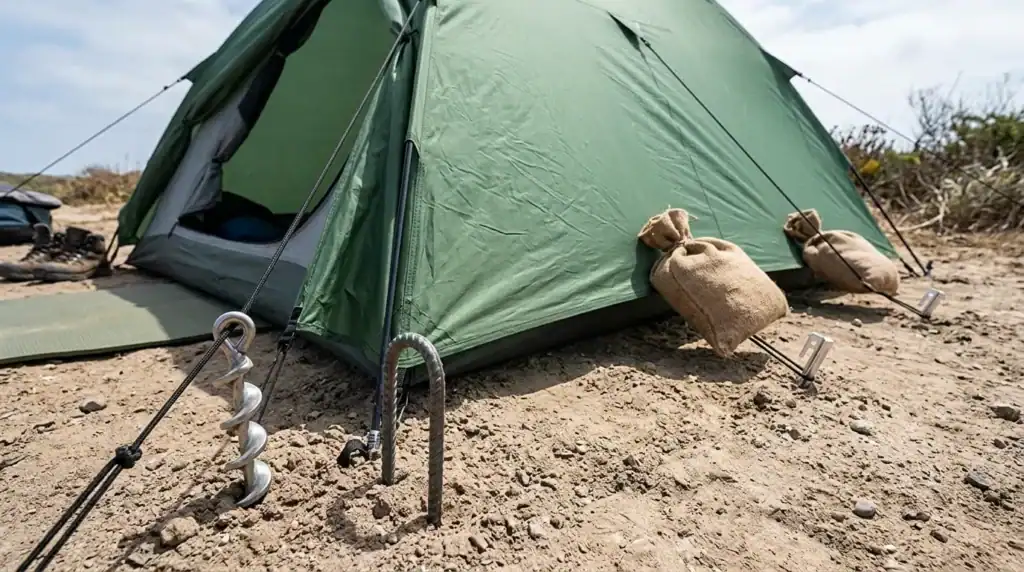
Montagem de tenda da Kelyland Outdoors com estacas reforçadas e sacos de areia para acampamento estável em terreno acidentado
Durabilidade do Material e Justificativa de Custo
O custo unitário mais alto das estacas rosqueáveis é resultado direto de sua construção robusta. Cravar uma estaca no solo por rotação requer materiais de qualidade de engenharia que possam suportar força rotacional significativa (torque) sem entortar, quebrar ou ter as aletas helicoidais cisalhadas. Materiais mais baratos simplesmente deformariam sob o estresse da instalação.
- A maioria dos modelos de alto desempenho é construída em aço temperado ou compósitos de polímero reforçado para garantir integridade estrutural.
- Este nível de durabilidade significa que podem ser reutilizadas em centenas de implantações, oferecendo melhor valor a longo prazo do que estacas descartáveis ou de ambiente único.
- Para usuários profissionais ou campistas sérios que operam em ambientes variados, a confiabilidade adicional em condições exigentes justifica plenamente o investimento inicial.
Aplicações Direcionadas para Máximo Valor
Embora não sejam necessários para solo firme e compacto, as estacas rosqueáveis são uma solução especializada para ancoragem de alto impacto. Seu valor é mais evidente em cenários onde a falha da âncora pode levar a danos ao equipamento ou problemas de segurança, como durante eventos de ventos fortes ou ao montar estruturas semirpermanentes, como acampamentos base ou tendas de eventos.
- Ideal para fixar barracas grandes para famílias, coberturas comerciais e abrigos em áreas abertas e ventosas, como costas ou campos abertos.
- Uma escolha confiável para campistas e gerentes de eventos profissionais que não podem arriscar falhas de equipamento em ambientes onde a estacagem padrão é inadequada.
- Eles servem como um sistema de ancoragem primário essencial em solo macio ou como um backup confiável para qualquer condição de vento forte.
Conclusão
Manter suas tendas de aluguel ancoradas em uma praia ventosa resume-se a escolher o design e os métodos de ancoragem corretos. Tendas com características como bolsas de areia e pontos de ancoragem reforçados são muito mais confiáveis do que aquelas que dependem de estacas padrão. Aplicar técnicas adequadas, como o método de enterramento “Deadman”, protege ainda mais seus ativos, evitando danos e garantindo a segurança do cliente.
Revise seu inventário atual para ver como suas tendas e âncoras se comportam em relação a esses padrões. Quando estiver pronto para construir uma frota de aluguel mais resistente, entre em contato com nossa equipe para explorar opções de fabricação personalizadas para ambientes de praia com ventos fortes.
Perguntas frequentes
Qual é a melhor tenda de praia resistente ao vento disponível para atacado?
Para aquisição por atacado, as tendas mais resistentes ao vento barracas de praia apresentam uma combinação de três elementos principais: um design aerodinâmico e de perfil baixo para reduzir a carga do vento; um toldo ventilado com janelas de malha para permitir a passagem do ar, diminuindo a sustentação; e uma estrutura robusta feita de hastes flexíveis de fibra de vidro que podem se curvar sem quebrar. O sistema de ancoragem também é fundamental, então os modelos de primeira linha incluirão bolsas de areia integradas superdimensionadas e pontos de estaiamento reforçados para estacas pesadas.
Por que as estacas de metal padrão para tendas falham na areia solta da praia?
As estacas de tenda metálicas padrão falham porque dependem da coesão e do atrito do solo para gerar força de fixação. A areia solta da praia praticamente não tem coesão; as partículas não se unem. O perfil estreito de uma estaca padrão não consegue deslocar areia suficiente para criar a resistência necessária, permitindo que seja facilmente puxada pelas forças laterais e ascendentes que o vento exerce sobre a tenda.
Quão eficazes são os bolsos de areia em comparação com as estacas de areia de rosquear?
Ambos são soluções de ancoragem altamente eficazes, mas destacam-se de maneiras diferentes. Os bolsos de areia, que são integrados na tenda, são extremamente convenientes e proporcionam excelente estabilidade usando o próprio peso da areia para segurar a tenda. As estacas de areia de rosquear, ou brocas, oferecem resistência à tração superior, agarrando uma coluna profunda e larga de areia compactada, tornando-as excecionalmente resistentes a serem arrancadas por ventos fortes e sustentados. Para máxima segurança, usar ambas em conjunto é a melhor prática da indústria.
Posso encomendar tendas de praia com pontos de ancoragem “Deadman” reforçados?
Sim, especificar pontos de ancoragem reforçados para ancoragem do tipo “Deadman”—onde as cordas de vento são amarradas a um objeto enterrado, como um saco de areia—é um pedido padrão para encomendas personalizadas por grosso. Os fabricantes conseguem isso usando remendos de tecido com várias camadas, cintas de alta resistência e costuras de bar-tack em todos os pontos de ligação das cordas de vento. Isto garante que os pontos possam suportar a tensão significativa necessária para ancoragem em ventos fortes sem rasgar o tecido da barraca.
As formas aerodinâmicas reduzem significativamente o risco de a tenda ser levada pelo vento?
Absolutamente. O design aerodinâmico é um fator crítico na estabilidade ao vento de uma tenda. Estruturas de perfil baixo, curvas ou em forma de cúpula permitem que o vento flua suavemente sobre e ao redor delas, reduzindo drasticamente as forças de arrasto e sustentação. Em contraste, uma tenda alta e em forma de caixa age como uma vela, apanhando toda a força do vento. A modelagem aerodinâmica de precisão, combinada com características como aberturas de alívio de pressão, é essencial para alto desempenho barracas de praia.
É necessário agrupar sacos de areia de alta resistência com tendas de praia para aluguer?
Sim, é altamente recomendado e considerado uma melhor prática profissional. Agrupar sacos de areia de alta resistência com unidades de aluguer minimiza a responsabilidade e garante uma experiência segura e positiva para o cliente. Fornece um método de ancoragem infalível que não depende da capacidade do utilizador de usar estacas corretamente ou encher bolsos integrados. Esta abordagem reduz significativamente o risco de a tenda ser deslocada pelo vento, prevenindo potenciais ferimentos ou danos materiais.

 English
  Español
  Deutsch
  Français
  Português do Brasil
  Русский
  العربية
  한국어
한국어  日本語
日本語