 跳到内容
跳到内容 
Picture a buyer who approved a $50,000 pole tent order on the strength of a spotless pre-production sample. The waterproof tent fabric in the finished tents met the same spec sheet, but the tents leaked along the stitch lines. That’s the gap between swatch testing and real rain.
Sample approval is where that gap shows up first. A 20mm seam tape on a 25mm seam leaves bare needle holes exposed after a few wet-dry cycles, and once the product ships, absorbing the field returns comes straight out of margin. FOB pricing rarely itemizes tape width; you have to put “25mm hot-air tape over all rain-bearing seams” in the RFQ contract, or the factory will use the cheaper 20mm roll.
Supplier audits across 12 countries keep surfacing the same coating trade-off. PU is cheap and tapes easily but hydrolyzes under heat and humidity. Silicone stays water-resistant but is harder to hot-air tape. TPU resists floor wear but adds weight. That coating-to-tape compatibility is the real determinant of whether a pole tent survives a season of rain — not the 3000mm number printed on the spec sheet.

What Pole Tent Waterproof Fabric Ratings Actually Mean
A swatch rating never survived contact with a needle.
Every tent factory quotes a hydrostatic head number. Most buyers treat it as the final word on waterproofing. It isn’t. That 3000 mm figure comes from a flat swatch of unsewn fabric, not from the pitched tent that will sit in a storm. The swatch test tells you the material can resist water pressure. It says nothing about needle holes, seam tape adhesion, or what happens after a season of UV exposure and folding.
ISO 811: Water Column Basics
ISO 811 clamps a flat fabric swatch horizontally and forces a vertical column of water against it. The rating in millimetres is the height of that column at the moment the third drop of water penetrates. A 3000 mm rating means the fabric held back 3 metres of water pressure before leaking. That is a solid baseline for flysheet material, but it only applies to the fabric itself.
Use ISO 811 for material acceptance. Do not use it to predict finished tent performance. The test does not replicate wind-driven rain, fabric tension at pole corners, or the stress a guy line puts on a seam. It measures a swatch, not a shelter.
Swatch Ratings vs Finished Tent
Suppliers quote the fabric’s swatch performance because it looks good on a spec sheet. The same 75D polyester base can be PU-coated, siliconized, or TPU-laminated, and each finish behaves differently once sewn. A swatch excludes needle holes, which are the primary entry point for water in a finished tent. It also excludes tension points where fabric stretches against the pole structure.
The gap between swatch and finished seam is where most warranty claims are born. A fabric that passes 5000 mm on the test bench can still leak at a stitch line if the seam tape is too narrow or poorly applied. That is why seasoned procurement teams inspect the finished tape on a light table, looking for wrinkles, bubbles, and edge lift. The fabric is rarely the failure point. The seam is.
PU, Silicone, TPU: Trade-Offs
-
- PU coating: Cheap, widely available, and easy to hot-air tape. The catch: PU hydrolyzes under heat and humidity. Storage in a warm warehouse for three seasons can degrade adhesion, and the coating can peel from the base fabric.
- Silicone coating: Superior water resistance and UV stability, and it stays slick. But silicone is notoriously difficult to hot-air tape because adhesives do not bond well to its surface. Factories often skip taping or use a liquid seam sealer, which is slower and less consistent.
- TPU lamination: Best puncture resistance for floors and excellent peel strength. It adds weight and cost, and the film is stiffer, which can complicate folding and packing. TPU makes sense for floors, less so for flysheets where packed volume matters.
The trade-off is not just material cost. It is the QC protocol required to make that coating work in a finished product. PU demands temperature-controlled storage and rigorous adhesive checks. Silicone demands liquid seam sealing instead of tape. TPU demands heavier fabric handling. Each choice changes your production lead time and your defect rate.
That is why the RFQ must go beyond hydrostatic head. Demand aged peel data. A fresh sample can pass any pull test, but a piece of tape that survives 168 hours at 70°C and 80% relative humidity with a peel strength above 20 N/25 mm will survive a summer in the field. Kelyland’s partner factories run this exact protocol, and their ISO 9001:2015 systems track the taping machine temperature logs across every shift.
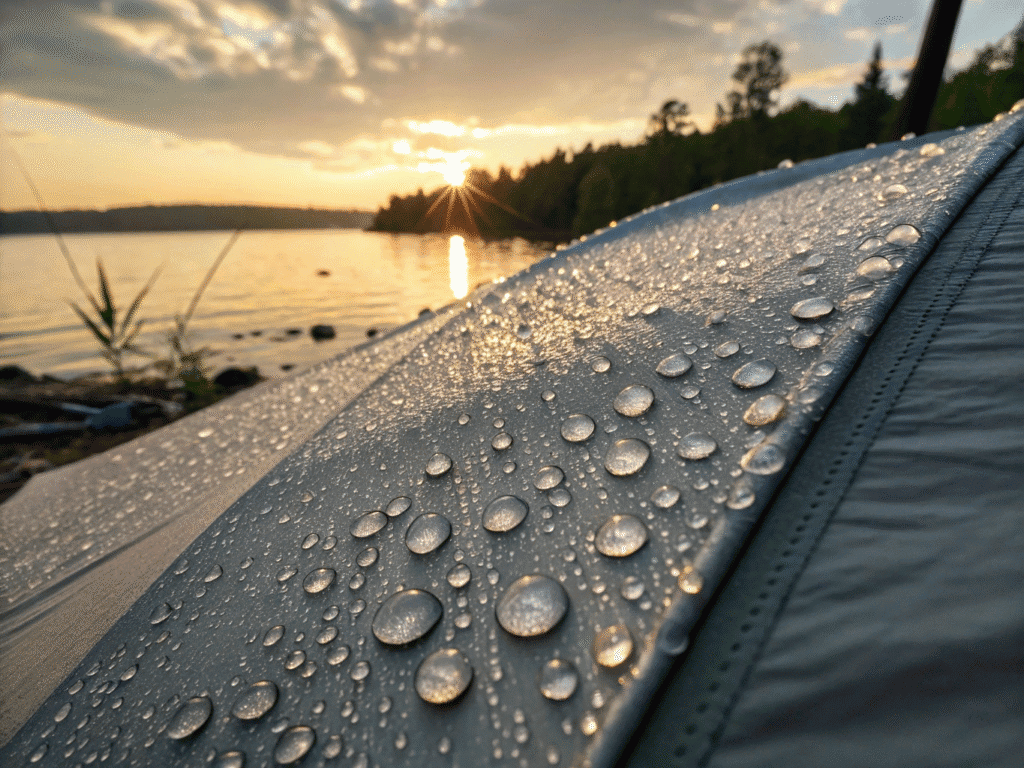
The 5 Rainproof Truths That Stop a Tent From Leaking
Seam tape fails before fabric.
Fly vs Floor: Rating Split
A 3000 mm flysheet is fine for vertical rain. The floor is a different problem. Body weight and ground pressure force water through floor fabric far harder than any rainstorm, which is why the floor should be specified at 5000–10000 mm. A low-rated floor fails before the flysheet, and the warranty claim lands on your desk, not the fabric mill’s.
Tape Width Is a Leak Spec
20 mm tape on a 25 mm seam leaves bare needle holes exposed after wet-dry cycles. The tape expands and contracts at a different rate than polyester, so those holes open. Specify 25 mm hot-air tape over every rain-bearing joint. The cost difference is roughly 3–5% on seam work; the return rate difference is far larger.
If a factory pushes back on 25 mm tape, ask which seam it plans to skip. Every rain-bearing seam — ridge, flysheet edge, floor-to-wall corner — must be taped. No exceptions.
Coating Failure Modes
-
- PU: Cheap and easy to hot-air tape, but hydrolyzes under heat and humidity. Aged storage can peel it off the base fabric.
- Silicone: Water-resistant and slick, but hot-air adhesion is weak, so seam taping reliability drops.
- TPU: Strongest for floor wear and puncture resistance, but heavier and more expensive. Demand aged peel data before choosing it.
A fresh-swatch pass on any coating proves nothing. The adhesive degrades over time. Ask for peel results after 168 h at 70°C/80% RH, with a threshold above 20 N/25 mm. If the factory cannot produce aged data, treat the marketing sheet as fiction.
Condensation Is Not Leakage
Waterproof, non-breathable fabric still wets occupants from inside. That is condensation, not rain penetration. High hydrostatic head with low breathability creates a different complaint: clammy sleeping bags and mildew. Separate the two failure modes in your QC checklist, because the fix for one is not the fix for the other.
ISO 811 tests a flat swatch, not a pitched tent. The leak points are needle holes and tape edges. A light-table inspection of the finished tape catches wrinkles before the tent ships. Kelyland’s partner factories are audited to ISO 9001:2015, with inspections at every production stage and reports available on request. Put that reporting requirement in the supply contract.
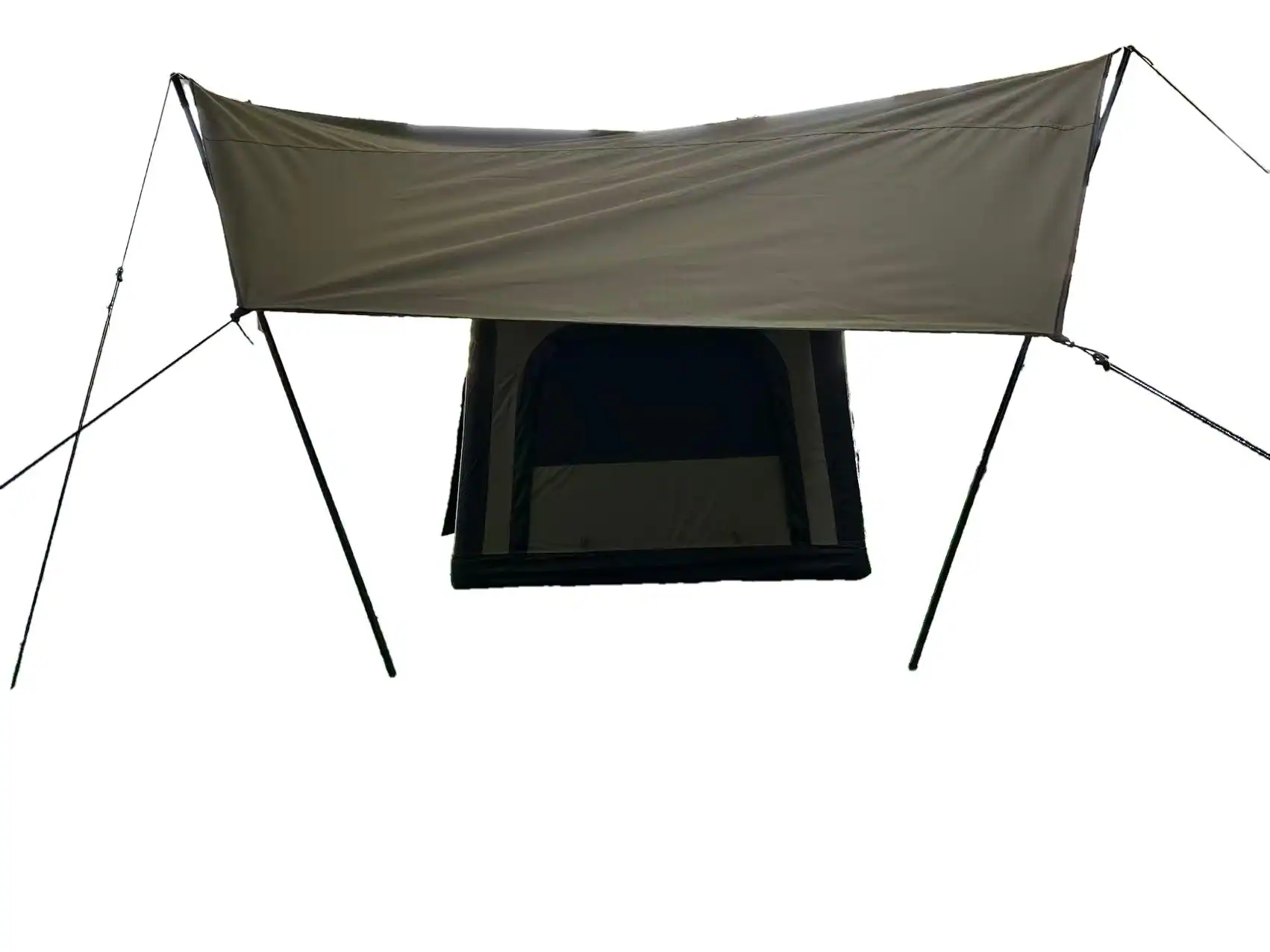
How to QC a Factory’s Waterproofing, Not Just Its Marketing Sheet
The swatch number sells the tent.
A 3000 mm ISO 811 swatch rating on waterproof tent fabric tells you nothing about the tent’s rain behavior. The leak almost always starts at the stitch line, where needles have punctured the coating and tape has to seal the damage. The marketing sheet prints the swatch number; the factory floor decides whether the seams hold.
Soapy Water Seam Test
Run the soapy water seam test on a finished sample before you sign off mass production. Mix a few drops of dish soap into a spray bottle, wet the seam line, and press gently from the inside. Bubbles form where air escapes through needle holes or along tape edges. That catches tape wrinkles and edge channels that a light-table inspection on a flat swatch will never show.
A fresh peel test only tells you the adhesive was applied yesterday. It does not tell you whether the tape holds after three months of humid warehouse storage.
Aged Peel Pull Test
Write this threshold into your RFQ: >20 N/25 mm peel strength after 168 h at 70°C and 80% relative humidity. That aging cycle separates a tent that survives a humid warehouse summer from one that delaminates in the retail box.
PU coatings hydrolyze under heat and humidity; silicone resists water but is harder to hot-air tape. If the supplier quotes only fresh peel numbers, the coating system has not been validated for your market’s climate.
Warehouse and Machine Logs
Two audit checks catch waterproofing problems before they become warranty claims. Run your hand over the fabric rolls in the warehouse — sticky or blocking coating means the PU layer is already degrading. Then ask to see the hot-air taping machine’s temperature log for every production shift. The tent factory Kelyland partners with in Ningbo holds CE, BSCI, and ISO 9001:2015 certification, but the evidence that predicts field returns is a shift log with consistent tape temperatures.
-
- Soapy water seam test: Spray a finished seam sample and press gently; bubbles expose needle holes and tape edge channels.
- Aged peel pull: Require >20 N/25 mm after 168 h at 70°C/80% RH. A fresh-sample pass is not acceptable.
- Machine log review: Check hot-air taping temperature per shift and inspect floor rolls for sticky or blocking coating.
That is why tents leak even with waterproof fabric — the spec sheet never mentions tape age or machine settings. Put these checks in the supplier contract, not just the material datasheet. Kelyland sources custom tent orders with minimum order quantities as low as 50–100 pieces on select items and a standard production lead time of 30–45 days, small enough to gate every batch on these tests before shipment.

Putting This Into an OEM/ODM RFQ
Put these numbers in the contract.
The waterproofing spec means nothing until it sits inside the RFQ contract. A supplier can claim “quality waterproof tent fabric” all day and still ship tents that leak at the stitch lines. The fix is measurable language: hydrostatic head, seam tape width, and aged peel strength on the same page as the price.
RFQ Mini Contract Table
-
- Flysheet — 3000 mm: ISO 811 water column test. This is the minimum for rain protection, not a marketing upgrade option.
- Floor — 5000 mm: Ground pressure forces water up through the floor fabric faster than rain pushes down. Spec 5000–10000 mm on tents that sit on wet ground or packed campsite soil.
- Seam tape — 25 mm: Hot-air taped over every rain-bearing joint. 20 mm tape on a 25 mm seam exposes needle holes after a few wet-dry cycles.
- Aged peel — >20 N/25 mm: After 168 h at 70°C/80% RH. Fresh-sample pull tests miss adhesive breakdown; aged peel catches it.
Two pass/fail clauses close the leak loophole. Clause one: no visible tape wrinkles on any seam, verified on a light table. Wrinkles mean the tape lifted before the tent left the factory. Clause two: 100% seam taping of all rain-bearing joints — fly perimeter, pole sleeves, zipper flaps. Partial taping saves ten minutes per tent and turns into a warranty return.
Also specify that the aged peel test runs on the production lot, not on a sample prepared months ago. The 168-hour aging takes a week, so the factory must pull tape from the sewing line, not from a drawer of pre-qualified samples. One-time test passes don’t protect the 4,000 tents in the container.

MOQ and Lead Time
These thresholds are standard for Kelyland’s tent production network. The dedicated tent and tarp facility in Ningbo runs CE, BSCI, and ISO 9001:2015-certified lines and produces 800,000 units annually. For OEM/ODM tent orders, MOQs start at 50–100 pieces on select items, with a standard production lead time of 30–45 days.
Pair the spec with a pre-shipment inspection step. Kelyland’s process checks every production stage with reports available on request, so seam tape application gets verified before the container loads. That’s the difference between catching an adhesion problem on the sewing floor and catching it in a customer review six months later.
Ask the factory one question during quoting: will you sign the aged peel limit? Suppliers who control their hot-air taping process sign without hesitation. Those who hedge on that single line are the ones who ship leaky tents.
Conclusion
Seam tape, not fabric, decides whether a pole tent survives its warranty period. The thresholds in this article — 3000 mm fly, 5000 mm floor, 25 mm tape, aged peel above 20 N/25 mm after 168 h at 70°C/80% RH — close the gap between the swatch you approve and the tents your customer opens. Skip them, and a $50,000 order fails in the field months after pre-shipment inspection.
-
- 3000 mm flysheet and 5000 mm floor are the baseline acceptance thresholds for tent sourcing.
- 25 mm hot-air tape seals needle holes; 20 mm tape exposes them after wet-dry cycles.
- Aged peel must stay above 20 N/25 mm after 168 h at 70°C/80% RH — fresh samples hide adhesive failure.
- ISO 811 tests a flat swatch only; pair it with a light-table inspection of finished seams.
Before your next RFQ goes out, send this spec table to Kelyland’s sourcing team. Attach your target rain profile and they will match it against fabrics from their partner network, then send a swatch pack that you can run through the same aged peel and light-table checks described above. With minimum orders starting at 50–100 pieces and a 30–45 day production window, you can verify the numbers before committing the full order.
Frequently Asked Questions
What waterproof fabric rating is best for a tent?
For B2B pole tents, specify 3000 mm flysheet and 5000–10000 mm floor as your acceptance thresholds. Seam tape width matters more than the printed fabric rating because needle holes are the. Put both numbers plus seam tape width in your QC spec.
Is 3000 mm hydrostatic head enough for heavy rain?
Yes for a flysheet, provided all rain-bearing seams use 25 mm hot-air tape and pass aged peel tests. 3000 mm on unsewn fabric does not protect a pitched tent with untaped stitching. Require taped seams and aged peel >20 N/25 mm.
Why does my tent leak on the seams if the fabric is waterproof?
Needle holes from stitching create the leak path, and narrow 20 mm tape can expose them as fabric expands. 25 mm hot-air tape covers the stitch line and bonds to the coating. Specify 25 mm tape on all rain-bearing seams.
How is tent waterproofing measured?
ISO 811 clamps a flat swatch and measures water column height in millimetres before leakage. It does not test a pitched tent’s seams, tension points, or finished performance. Treat the swatch number as material acceptance only.

 English
  Español
  Deutsch
  Français
  Português do Brasil
  Русский
  العربية
  한국어
한국어  日本語
日本語