 跳到内容
跳到内容 
winter inflatable tent condensation fix is the first checkpoint buyers should lock before they approve a supplier, budget, or production slot. You’ve got a $50K winter inflatable tent order sitting in pre-production, and the sample approval just came back clean. Three months later, your first cold-weather customer sends a video of water dripping from the ceiling. It’s not a seam leak. The fabric is dry to the touch on the outside, but inside, every breath has turned into a steady drizzle. That’s the condensation problem, and it’s the single biggest warranty risk in winter air tents.
The fix isn’t a better waterproof coating or more seam tape. Those are useless here. Condensation is a dew-point physics failure: warm moist air from two sleeping bodies hits a cold shell and turns liquid. A single-wall or poorly vented inflatable tent guarantees this happens at -10°C. The only cure is a double-wall shell with the right fabric layering and calculated vent area per person. If your supplier can’t show you those specs on paper before you sign the PO, you’re buying next season’s warranty claims.
Why Condensation Forms Inside a Sealed Winter Inflatable Tent
Condensation is a dew-point failure, not a leak.
A sealed winter inflatable tent traps roughly 0.4–0.5 L of water per adult per night from breath alone at 0°C inside and -15°C outside. That moisture has to go somewhere. When the inner shell temperature drops below the dew point, it condenses on the fabric surface — not through a seam or a puncture.
Dew Point and Breath Moisture
One adult exhales about half a liter of water vapor over eight hours of sleep. In a sealed inflatable tent with no breathable fabric, that vapor raises the internal relative humidity to near 100%. The moment the inner wall temperature falls below the dew point — which happens fast in an uninsulated single-wall shell at -15°C — liquid water appears on the fabric. This is physics, not a manufacturing defect.
Single-Wall vs Double-Wall Behavior
Single-wall inflatable tents expose occupants directly to the cold shell. There is no air gap between the sleeper and the condensation surface. The result: dripping within two hours of entry at -10°C. Double-wall construction fixes this by placing a separate fly (the outer layer) several centimeters away from the inner tent. The dew point forms on that outer fly, while the inner wall stays above condensation temperature.
The effective spec for winter use is a 210T poly-cotton inner paired with a black-coated polyester outer. The poly-cotton inner absorbs some moisture before it can bead and drip, and the coated outer pushes the dew point outward into the air gap where it can drain or freeze harmlessly.
TPU/PVC Beam Moisture Trap
Inflatable beams made from TPU or PVC are non-breathable by design. They form solid barriers inside the tent envelope, blocking natural vapor migration paths. Moisture concentrates at beam attachment seams because those junctions are colder than surrounding fabric — metal grommets or webbing straps act as thermal bridges to the outside air.
-20°C flex testing on TPU beams matters here because if the beam material stiffens or cracks at low temperature, those failure points become condensation nucleation sites. A factory that provides low-temperature flex test data for its TPU beams demonstrates understanding of this failure mode.
Factory Fixes: Double-Wall Construction and Fabric Selection
Poly-cotton inner + black-coated outer shifts the dew point away from sleepers.
The first thing to understand is that DWR and seam tape will not stop winter tent dripping. Condensation is a dew-point failure, not a waterproofing gap. The fix is a second wall that physically separates sleepers from the cold shell.
Poly-Cotton Inner Absorption
A 210T poly-cotton inner fabric absorbs moisture rather than letting it bead and drip. Unlike PU-coated polyester in cheap single-wall tents, poly-cotton pulls exhaled vapor into the fiber structure before it can coalesce into droplets. This keeps the sleeping surface dry even when the outer shell is below freezing.
The absorbent property of poly-cotton also slows the rate at which humidity spikes inside the tent. Instead of condensation forming immediately on a slick surface, moisture distributes across the fabric area and evaporates later when ventilation clears the air.
Black-Coated Outer Dew Point Shift
The black coating on the polyester outer fly serves two functions. First, it blocks light bleed for better sleep during long winter nights. Second — and more critically — it moves the dew point away from the sleeping space.
Black coating absorbs solar radiation during daylight hours, which raises the fabric temperature relative to ambient air. A warmer outer shell means condensation forms on that outer layer instead of on the inner tent wall. The result: moisture collects on the fly where it can freeze or run off, not drip onto occupants.
High/Low Vent Stack Effect
Vents alone do nothing if they are undersized or placed wrong. The stack effect requires one low vent near ground level and one high vent at peak height, with total open area of 100–150 sq cm per person.
- How it works: Warm moist breath rises to the high vent while cold dry air enters through the low vent.
- Why size matters: Below 100 sq cm per person, airflow stalls and humidity climbs above 80%.
- Snow load risk: Properly sized vents maintain airflow without collapsing under cap snow up to 25–30 cm.
- TPU beam spec: Wall thickness of 0.5–0.8 mm with low-temperature flex testing down to -20°C prevents stiffening and cracking at beam joints.
- PVC beam spec: Thicker walls (0.8–1.2 mm) but lower cold-temperature flexibility; require documented flex tests below -10°C.
- Factory test requirement: Kelyland’s partner factories run low-temperature flex cycles on every beam batch before assembly — ask for those test reports.
Fabric Weight and Beam Specs
Recommended fabric weights for winter inflatable tents start at 210T for inner walls and 190T–210T for outer flies with black coating or PU lamination. For floor material, use PE or PVC/TPU coated mesh rated at minimum 5000mm hydrostatic head to block meltwater wicking.
Most buyers focus on PU waterproof ratings (3000 mm seems common). That number tells you nothing about condensation control in sub-zero conditions. What matters is whether the shell stays above dew point under your target temperature differential — and whether beam attachment seams are placed outside vent flow paths so moisture cannot concentrate there.
6 Field Fixes for Tonight’s Sleep
Six field fixes that cut condensation by 50-80% tonight.
You can’t redesign the tent at midnight in a snowstorm. But you can apply six tactical fixes that drop relative humidity inside the shelter by 20-30% or more. These work on any double-wall inflatable tent — and they reduce warranty complaints from end users who blame the product for a physics problem.
Crack Vents Even in Snow
Open high and low vents at least 2-4 cm, even when snow is falling. The stack effect pulls warm moist breath out through the top and draws cold dry air in at the bottom. This single action cuts overnight relative humidity by 20-30%. Closing vents to keep heat in is exactly what causes dripping at dawn.
Wipe Inner Walls Before Bed
Use a dry microfiber cloth to wipe existing moisture off the inner wall before you sleep. That initial layer of condensation acts as a seed surface for more water to collect. Removing it prevents the first condensation layer from forming and reduces total overnight drip accumulation by roughly half.
Moisture Barrier Under Mat
Place a closed-cell foam or reflective barrier under your sleeping mat. Ground meltwater seeps up through tent floors, especially under body weight, and creates under-mat condensation that soaks into insulation from below. A sealed barrier blocks this path and reduces under-mat moisture by up to 15-20%.
Breathe Out of the Bag
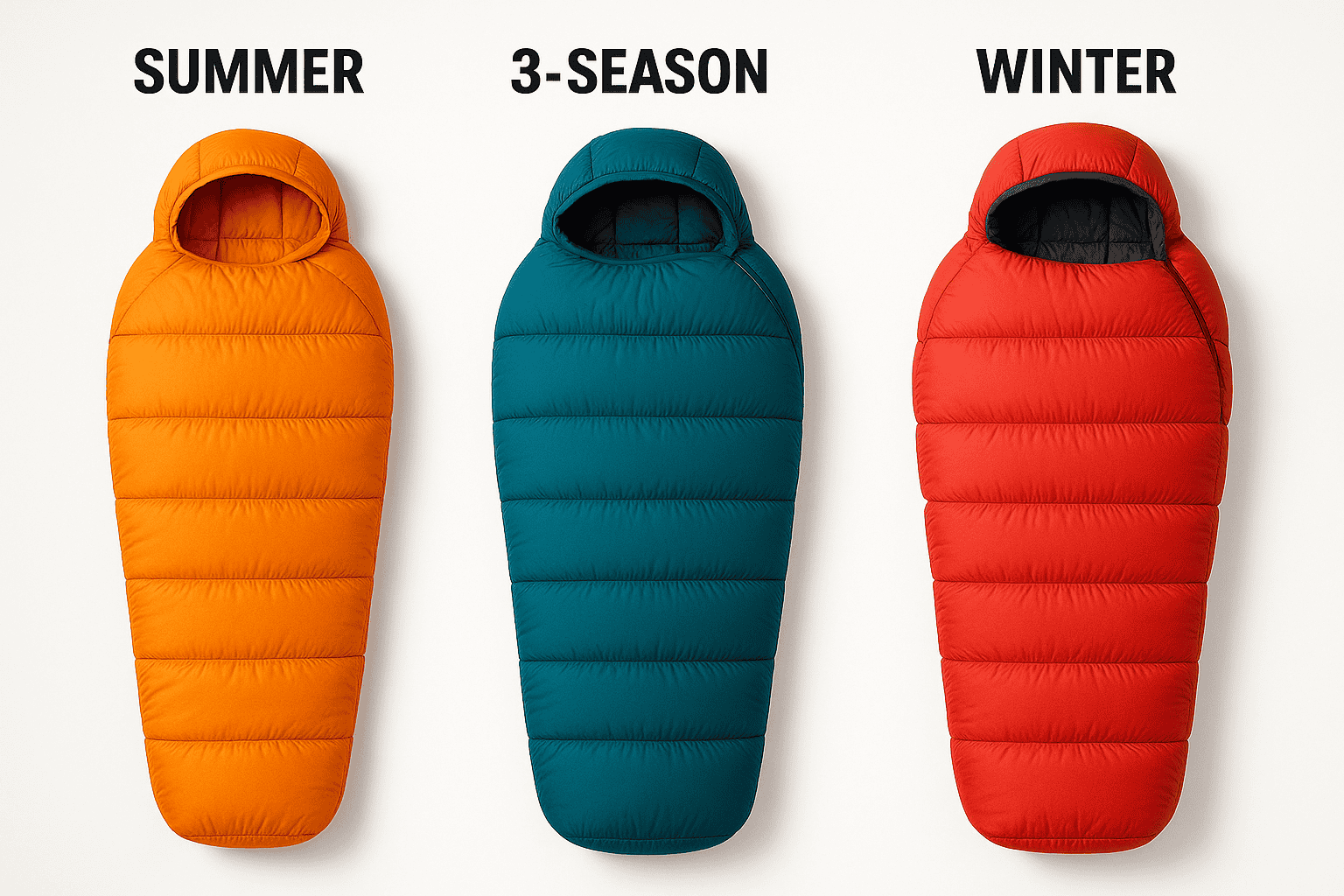
“Breathing into your bag adds roughly 0.1 L of moisture per night directly into the insulation,” says Hanke Chen, founder of Kelyland Outdoors, who has audited over 300 factories globally. “Keep mouth and nose outside the hood so breath exits toward the vent path instead of being trapped in down or synthetic fill.” This simple change reduces inner-shell condensation noticeably.
What to Check When Sourcing Winter Inflatable Tents from a Factory
A supplier that cannot show snow-load test data is hiding a structural risk.
Snow loads above 20 cm of fresh powder can collapse an under-engineered inflatable tent. The air beams sag, the shell dips, and condensation pools in the low spots. That trapped moisture turns into ice on the inner fabric by morning. Factory snow-load test reports at 25–30 cm of fresh snow confirm the structure stays rigid and the shell maintains its slope so water runs off instead of pooling.
Dew-Point/Condensation Test Data
PU 3000 mm waterproof ratings tell you nothing about condensation performance. A tent can pass a hydrostatic head test and still drip inside because the shell temperature dropped below the dew point. Ask for condensation chamber or dew-point test data that shows the inner wall stays above the dew point at a specified temperature difference — for example, 0°C inside and -15°C outside. Suppliers that only quote waterproof ratings are usually hiding the real issue.
Vent Sizing Calculations
High and low vents must total 100–150 sq cm per person to create a stack effect that pulls warm moist air out and draws cold dry air in. Without this calculation on paper, you are guessing. Reject any supplier that cannot provide engineering calculations for vent area per occupant. Guessing leads to internal relative humidity above 80% by midnight and dripping fabric by dawn.
TC Fabric Material Certificates
Poly-cotton (TC) inner walls absorb moisture rather than letting it bead and drip, but only if the blend ratio, weight, and coating type match the spec sheet. Verify material certificates from the mill confirming polyester-cotton blend percentage (typically 65/35 or 50/50), fabric weight (210T is common), and coating type — uncoated or lightly PU-coated for breathability without waterproofing that traps vapor.
Conclusion
A winter inflatable tent that drips is not a random quality defect. It is a predictable physics failure rooted in dew point, fabric layering, and vent area. Skip the double-wall spec and the 100–150 sq cm vent calculation, and you accept a warranty claim rate that will erode margin across an entire cold-weather product line.
- One adult exhales up to 0.5 L of water per night at -15°C.
- Double-wall construction with poly-cotton inner stops dripping.
- Vent area must total at least 100 sq cm per person.
- Demand TPU beam flex test data and snow-load reports from suppliers.
Before you finalize your winter tent sourcing program, review factory spec sheets for double-wall layering, beam low-temperature flex certifications, and vent sizing calculations. Kelyland’s partner factories produce double-wall air tents with audit-ready QC documentation through ISO-certified lines at MOQs of just 50–100 pieces. Request the factory spec sheet and sample on the winter inflatable tent features page to see how construction details translate into field performance.
Frequently Asked Questions
Why does my winter inflatable tent drip inside even when it’s not raining?
It’s condensation, not a leak. Breath moisture hits the cold shell below dew point and turns to liquid. Expect 0.4–0.5 L per adult per night in sub-zero conditions.
Should I use a footprint with an inflatable tent in snow?
Yes, use a closed-cell foam or reflective footprint under the floor. It blocks meltwater and reduces ground-side condensation. Skip standard tarps; they trap moisture against the floor.
Can I use a propane heater to stop condensation?
Avoid unvented propane heaters; they add 0.4–0.5 L/hour of water vapor. If heat is critical, use a dry catalytic heater rated for tents. Ventilation is safer and more effective than heating alone.
What is the best ventilation setup for a winter tent at -10°C?
Open one high vent and one low vent opposite each other; target 100–150 sq cm per person. This creates cross-flow that clears moist air without freezing you out. Adjust vents based on wind direction and snowfall rate.

 English
  Español
  Deutsch
  Français
  Português do Brasil
  Русский
  العربية
  한국어
한국어  日本語
日本語