 跳到内容
跳到内容 
The standard advice for any inflatable tent fabric comparison is to start with weight and hydrostatic head. That advice just cost a buyer a $50,000 order—the pre-production sample passed, but the quality tolerance in the PO let the factory substitute lower-grade PVC air beams to save a few cents per meter. The spec sheet still said TPU.
The real difference isn’t the material name. It’s what happens between sample approval and container loading. TPU’s actual edge is weldability: factories fuse modular air-beam cabins with less labor than sewing PVC, which cuts defect rates by about 12% in our production data. So a TPU vs PVC inflatable tent durability decision usually comes down to process discipline, not just chemistry.
Nylon’s mass-market appeal hides a different spec gap. TPU composite nylon can reach 10,000mm hydrostatic head while adding only about 200g versus a PVC equivalent—critical for Amazon sellers paying FBA fees by dimensional weight. And if you’re sourcing a rooftop inflatable tent from a low-minimum supplier in China, ask for the -20°C fold test and the UV exposure data. PVC loses plasticizer after roughly 30 nights in 100°F heat, and the resulting seam cracks get misreported as leaks. Skip that due diligence, and the first container will teach you what the sample should have.
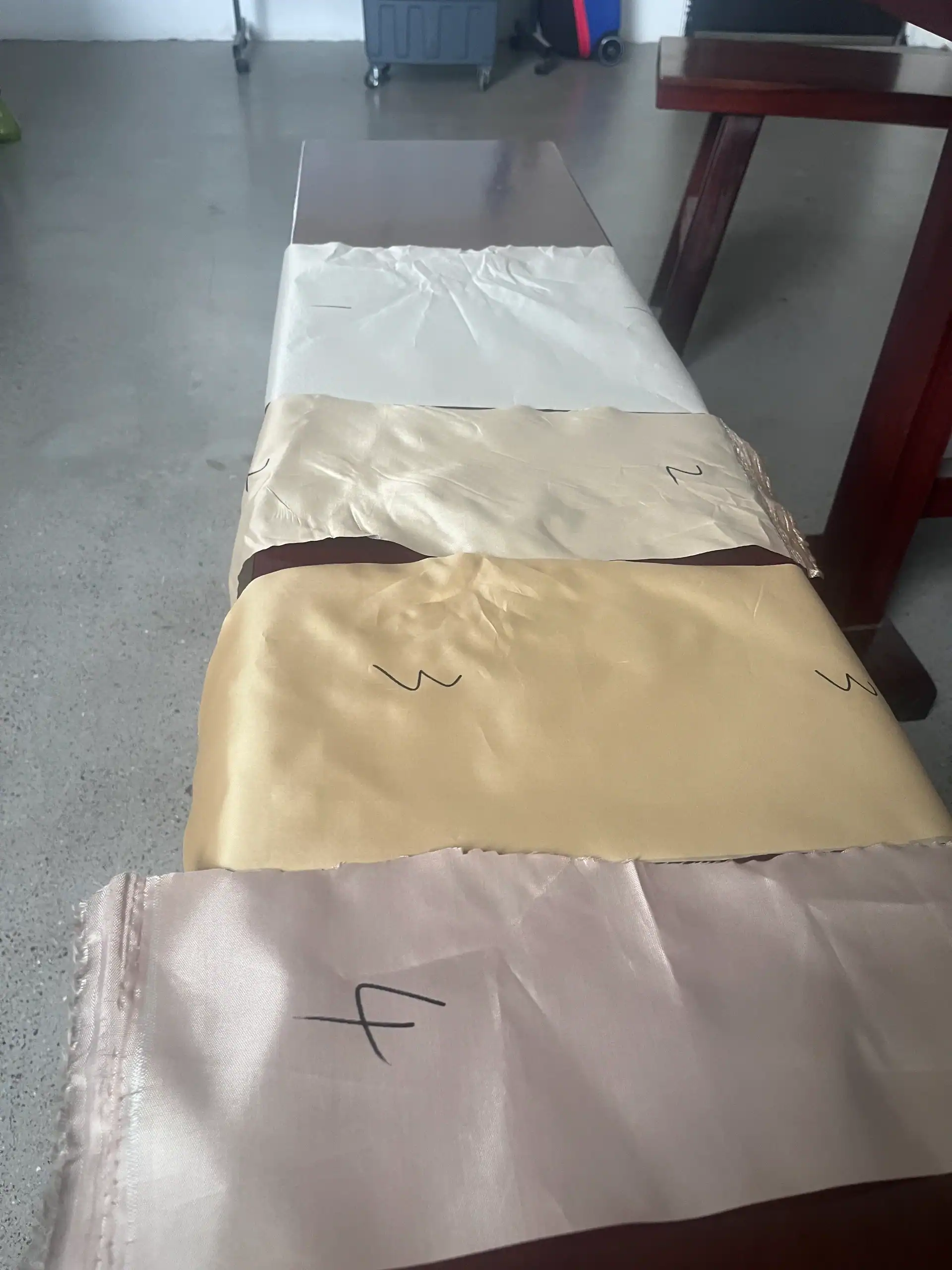
Fabric Chemistry and Construction Basics
Air beam fabric sets your warranty ceiling — spec the failure modes, not the swatch.
Every inflatable tent is a composite: a substrate layer carries tear strength, and a film or coating carries air retention. How those layers bond determines whether a beam holds pressure for five seasons or fails in one.
Thermoplastic Polyurethane (TPU): multi-layer lamination and weldability
TPU film is laminated to a polyester or nylon substrate in multiple passes. The real advantage isn’t the eco label — it’s weldability. Heat-sealed TPU fuses into a monolithic seam with zero stitch holes, removing the most common leak path in air-beam construction.
That changes manufacturing economics. Modular air-beam cabins weld together with less labor than sewn PVC, and our internal production data shows roughly 12% lower defect rates on TPU-welded modules versus sewn PVC equivalents.
PVC with polyester scrim: plasticizer migration and cold-weather brittleness
PVC air beams start as a polyester scrim coated with plasticized PVC. The scrim carries the structural load; the PVC holds the air. Durability depends on the plasticizer system — and plasticizers migrate. Heat accelerates the loss.
-
- Heat failure: Plasticizer loss after roughly 30 nights above 100°F causes seam cracking that reads as a leak claim. It’s material fatigue, not a stitch defect.
- Cold failure: At -20°C, low-grade PVC stiffens and creases during fold. Those creases reopen as cracks once the beam is pressurized.
Ripstop nylon with TPU coating: lightweight hybrid for ground tents
Ground tents get a third option: ripstop nylon with a TPU coating. This composite reaches around 10,000mm hydrostatic head while adding only about 200g versus a comparable PVC build at the same performance level.
For Amazon-first brands, that delta matters. Ground tents trigger dimensional-weight rates, so the 200g mass reduction and tighter pack profile turn grams into cents on the fulfillment line.
Kelyland’s 17 core factories run ISO 9001:2015 quality systems across both PVC and TPU air-beam lines, so the fabric decision comes down to your market and price point, not supplier capability. Select MOQs start at 50–100 pieces, which keeps first-strike sampling low-risk for a new brand line.
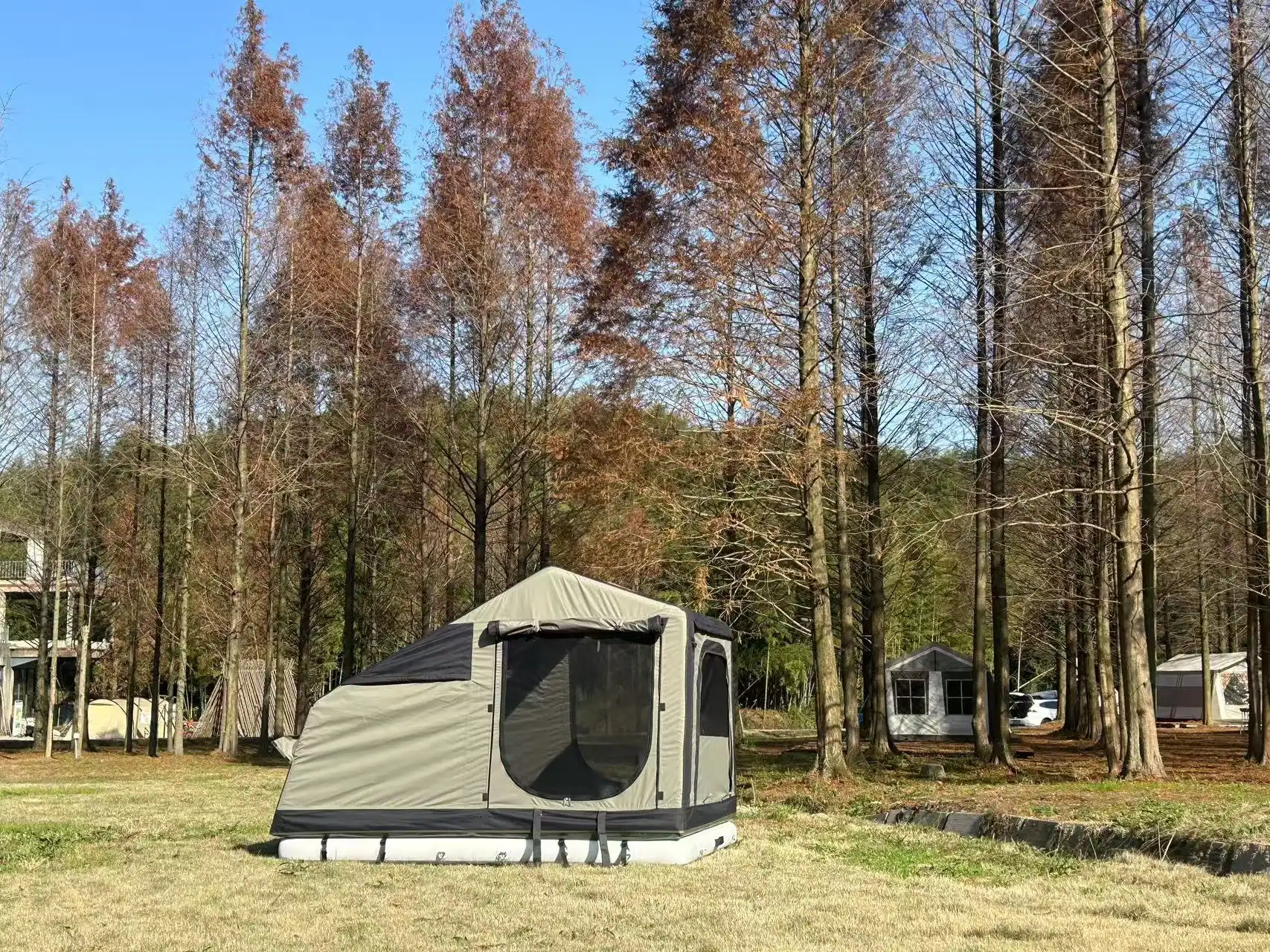
Head-to-Head Performance Metrics
Ask for 500-hour UV and -20°C fold test reports during sample approval.
The difference between TPU, PVC, and ripstop nylon inflatable tents becomes clear at the shipping dock, not the showroom. These materials have different densities, pack profiles, and failure modes. For a brand manager, each one changes freight cost, return rate, and warranty exposure.
Weight per square yard and freight class impact
TPU-coated ripstop nylon is the lightest of the three. A TPU composite nylon air beam can hold 10,000mm hydrostatic head while adding only about 200g versus a PVC equivalent. On a 4-person inflatable tent, that weight difference can push the package into a lower dimensional weight class for Amazon FBA.
-
-
- Freight class: Get the final packed carton dimensions and weight in writing. A lighter packed weight can shift a carton out of a bulky class and improve your per-unit landed cost.
- PVC weight: PVC with a polyester scrim is inherently heavier per square yard. It still works for ground tents where price sensitivity beats pack size, but it is the wrong choice for rooftop air beams.
-
UV stability and low-temperature behavior
Hydrostatic head retention after 500 hours of ASTM G154 UV exposure separates the materials. TPU laminates generally hold a higher percentage of their original water column. PVC’s polyester scrim holds the structure, but the plasticizer system absorbs UV and gradually stiffens, pushing crack points to the heat-welded seam areas.
Cold-crack testing works the same way in every lab: fold the fabric, flex it at -20°C, and inspect for micro-cracks. TPU passes cleanly. PVC formulations with high plasticizer loads can fail. If you are launching a rooftop tent for winter camping, demand the fold-test report before the purchase order.
Repair complexity and seam failure
A puncture in a nylon tent wall is a needle-and-thread fix. A puncture in an air beam is not. Most consumer patch kits use PVC solvent adhesive and will not bond to TPU. TPU repairs require heat, either a factory hot-air welder or a TPU patch film applied with a household iron.
-
- PVC: Easier for end users to patch because PVC cement is widely available, which lowers your replacement-part volume. But PVC seam fatigue from UV exposure and plasticizer migration still generates warranty claims.
- TPU: A TPU beam needs a better repair instruction card. Internal production data at Kelyland shows TPU welding lowers defect rates by 12% compared to PVC sewn construction, and Kelyland’s ISO 9001:2015 partner factories inspect at every production stage.
For your next supplier call, ask for two documents: the 500-hour UV report and the -20°C fold test. Submit both during sample approval. If the supplier cannot produce them, the spec sheet is just a wish list.
Total Cost of Ownership: 5-Year Projection for a Retail SKU
Seam failures, not punctures, drive the 5-year warranty ledger on inflatable tents.
The FOB price is the entry ticket, not the cost. For an inflatable tent SKU, the 5-year projection is really a warranty math problem: how many units come back, how much does each return cost to process, and how many reviews get burned in the process.
Seam failures drive the warranty ledger
PVC air beams develop a specific failure pattern in hot, dry climates. After roughly 30 nights of exposure to 100°F desert conditions, plasticizer loss makes the material brittle. Seams crack in a way that looks like a leak to the consumer, so they file a warranty claim — but the root cause is material fatigue, not a puncture.
Welded TPU beams don’t have that failure mode. The weld creates a bond that outlasts the base fabric, and production data across partner factories shows a 12% lower defect rate on welded TPU air beams compared with PVC sewn construction. Across a retail volume, that gap translates directly into fewer claims, fewer replacements, and fewer 1-star reviews.
Air-beam modularity shrinks replacement inventory
Retail buyers rarely think about spare parts until the first claim lands. A tent with modular air-beam sections lets you stock beams and valves instead of whole tents. A failed valve becomes a low-cost part shipped from your warehouse, not a freight-forward damaged unit that costs the full landed price.
-
- Valve failures: The highest-frequency claim on inflatable tents. A modular valve replacement program lets customers self-serve with a low-cost part instead of triggering a full return.
- Beam section replacement: A cracked PVC beam in the field can be swapped without returning the entire tent. Welded TPU beams fail less often, but the modular design saves the same freight either way.
Amazon return rates follow fabric chemistry
The e-commerce channel adds a second cost layer: dimensional weight. TPU composite nylon can hold 10,000mm hydrostatic head while adding only 200g versus a PVC equivalent — a meaningful difference when Amazon FBA fees are calculated on dimensional weight. Lighter pack size, lower fee, better margin.
Consumer perception rides the same material chemistry. A 1-star review that says “leaks after 2 months” on a PVC tent is usually seam fatigue. The buyer doesn’t know that, and the brand eats the return. TPU construction removes that failure mode, so the review profile stays cleaner across the product life cycle.
For brands sourcing through Kelyland Outdoors, the ISO 9001:2015-certified partner factories run inspections at every production stage, and the tent and air-mattress facilities in Ningbo and Hubei hold CE and ETL certifications. That audit trail is the starting point for a 5-year warranty projection that doesn’t rely on hope.
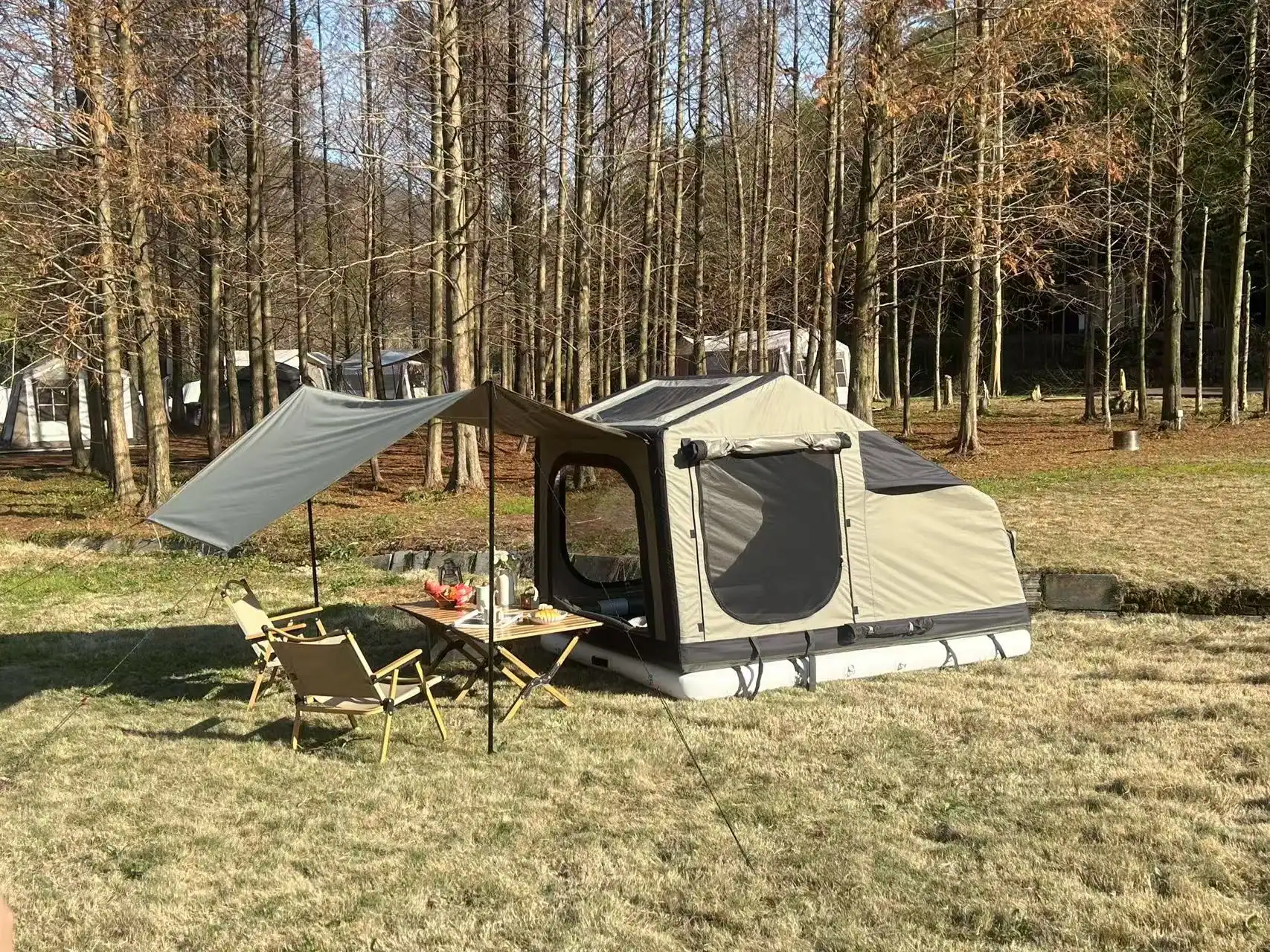
Customization Capabilities and Lead Time by Material
Specify 0.7mm TPU for rooftop air beams; reserve PVC/oxford for ground tents where weight and cold-crack matter less.
Customization starts with the substrate, not the Pantone code. Inflatable tent fabrics are extruded or laminated before they reach a print station, and that chemistry sets the ceiling for color matching, order size, and lead time.
Pantone matching: TPU vs. PVC
PVC accepts pigment masterbatch cleanly, so a PVC air tube can be matched to a Pantone chip in the first dye trial. TPU is the harder case. The polymer base has a slight amber cast, and lighter shades expose it. Pastels and bright whites usually need an extra lamination pass or a printed overlay, and that second pass extends the sample approval loop.
TPU’s payoff is weldability. Internal production data from Kelyland’s partner factories shows a 12% lower defect rate on seam-heavy cabin builds when air beams are RF-welded instead of sewn. Fewer stitched joints also means fewer spots for seam tape to lift in the field.
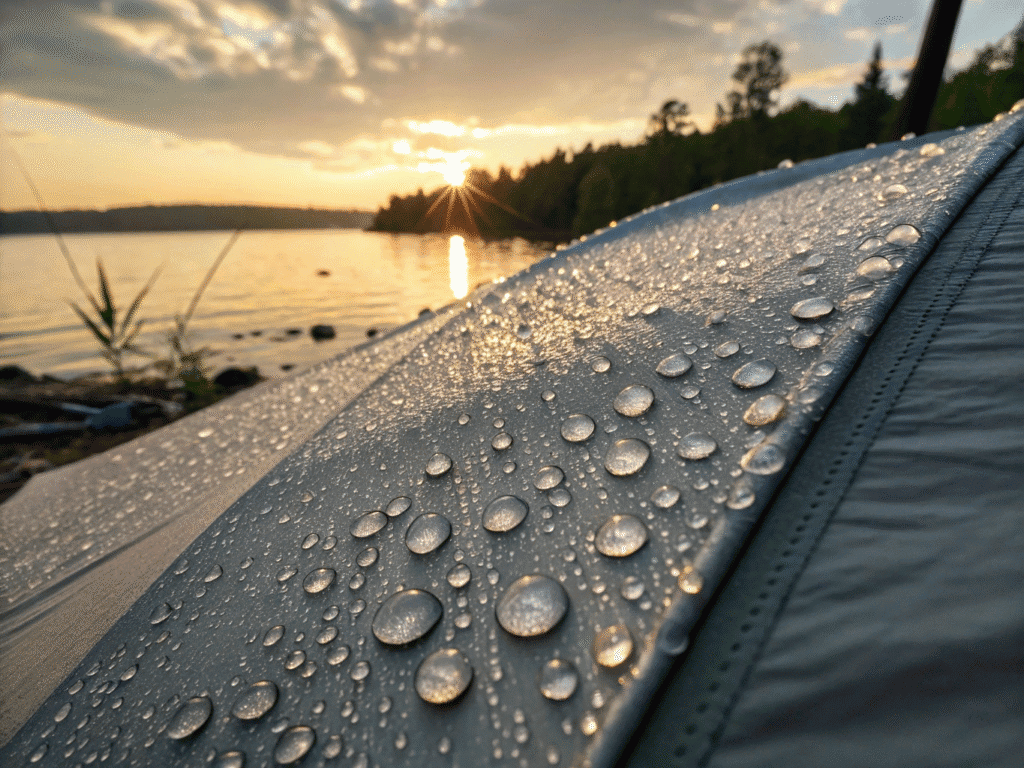
Minimum order quantities and tooling
Minimum order quantity is a tooling amortization problem, not a material preference. TPU air-beam sections are welded around machined fixtures that cost more to build and verify, so suppliers spread that cost across a larger run. TPU roof-top air frames sit in the standard 300–1,000 piece band. PVC lay-flat tubes use simpler dies, which is why some ground tent SKUs can start at 50–100 pieces and still hold margin.
Lead time stays inside the standard 30–45 day production window once the sample is approved. The real schedule risk lives in the approval loop: TPU color development usually takes more rounds than PVC, so lock the color before you commit to a production date.
Kelyland’s recommended material stack
For rooftop overlanding tents, the internal spec is 0.7mm TPU air beams. Kelyland’s rooftop tent partner factory, ISO 9001:2015 certified, welds these beams in-house. That is the best rooftop inflatable tent fabric for builds that face desert heat and repeated fold-unfold cycles.
For ground tents, PVC/oxford remains the cost-efficient default. A TPU-composite ripstop nylon shell can reach about 10,000mm hydrostatic head while adding only around 200g versus a PVC equivalent, and that weight gap matters on Amazon, where dimensional-weight fees eat into already thin margins.
Watch the plasticizer trap. PVC loses plasticizers in sustained 100°F conditions; after roughly 30 nights of desert storage, seams crack and owners file it as a leak. The root cause is material fatigue, not waterproofing. Replacing those tents under warranty erases any upfront fabric savings. PVC belongs on ground tents in temperate climates; TPU belongs on anything with long UV and heat exposure.
| Material | Customization Capabilities | MOQ | Lead Time | Recommended Use |
|---|---|---|---|---|
| 0.7mm TPU (Thermoplastic Polyurethane) | RF welded air beams, multi-layer lamination, Pantone-matched dyeing, custom valve molding | 50-100 pcs | 35-45 days | Rooftop inflatable tents and premium overlanding models |
| PVC with Polyester Scrim | Heat-sealed seams, flexographic/silk-screen printing, custom mold tooling for valves, lower tooling cost | 100-300 pcs | 30-40 days | Ground tents and budget-friendly family camping lines |
| Ripstop Nylon with TPU Coating | Fabric dyeing, thermal transfer printing, DWR finishing, custom zipper and buckle sourcing | 100-200 pcs | 30-45 days | Lightweight backpacking and Amazon FBA-optimized SKUs |
| Oxford Polyester (PVC-Coated) | Fabric dyeing, screen printing, custom packaging, embroidery on carry bags | 300-500 pcs | 30-45 days | Mass-market inflatable ground tents where cost per unit is the priority |
| Hybrid TPU Composite Nylon | Laser cutting, RF welding, custom air-beam sections, low-defect modular cabin production | 50-100 pcs | 40-45 days | Premium modular air-beam cabins targeting 10,000mm hydrostatic head specs |
Conclusion
The fabric spec you lock in at sample approval determines your warranty claim rate, freight class, and five-year replacement cost. Default to PVC because the quote looks easier, and you’re accepting plasticizer loss after 30 nights of 100°F heat — seam cracks that customers report as leaks and you carry as warranty claims. That math shows up by season two, not at the sample stage.
-
- TPU weldability cuts production defects by 12% versus PVC sewing, lowering your factory reject rate.
- PVC loses plasticizers after roughly 30 nights in 100°F heat, causing seam cracks that trigger leak claims.
- TPU-coated ripstop nylon reaches 10,000mm hydrostatic head at just 200g more than standard nylon.
- Spec 0.7mm TPU air beams for rooftop tents; reserve PVC/oxford builds for ground tents.
If you do nothing, the default is a lighter margin and a heavier return rate. Before you commit to a fabric stack for the 2026 season, compare 0.7mm TPU and PVC samples side by side under the same fold and UV test conditions — then match the result to your freight class and Amazon FBA dimensional weight. Kelyland Outdoors works with ISO 9001-certified factories on low MOQs from 50-100 pieces, so you can validate the spec without committing to a container.
Frequently Asked Questions
Which inflatable tent fabric should I use?
TPU is the premium choice for durability and cold-weather performance, while PVC with polyester scrim is the cost-effective standard for ground tents. Nylon with TPU coating is a lighter hybrid but. Spec by failure mode and warranty target, not by swatch alone.
Why does TPU cost more than PVC?
TPU uses multi-layer lamination and weldability that hold up better under UV and cold, but higher mold costs raise the entry point. PVC is cheaper and flexible for production, but plasticizer migration and cold-weather brittleness. Factor 5-year claims, not just unit cost.
What is the best fabric for rooftop inflatable tents?
Kelyland recommends 0.7mm TPU for rooftop tents because it holds air-beam seams and withstands UV exposure better. PVC oxford blends are better reserved for ground tents where cost matters more. Validate with 500-hour UV and -20°C fold test reports.
How does fabric choice affect warranty claims?
Seam failures, not punctures, drive the 5-year warranty ledger on inflatable tents, so fabric weldability and UV retention matter most. Request 500-hour UV and -20°C fold test reports during sample approval to. Use test reports to set quality tolerances in the PO.
What are MOQ and lead time for custom inflatable tents?
MOQ varies by fabric: TPU’s higher mold cost raises minimums, while PVC is more flexible for smaller custom runs. Kelyland’s standard lead time is 30-45 days, but customization and material choice affect the. Request sample approval before locking MOQ and lead time.

 English
  Español
  Deutsch
  Français
  Português do Brasil
  Русский
  العربية
  한국어
한국어  日本語
日本語