 跳到内容
跳到内容 
folding wagon moq sample fees is the first checkpoint buyers should lock before they approve a supplier, budget, or production slot. Two folding wagons sit side by side in a supplier’s showroom. Same silhouette, same fabric color, same wheel diameter. One costs 30% more. That delta isn’t margin—it’s the difference between a wagon that survives two seasons on Amazon and one that generates a return request in month four. When you’re evaluating folding wagon MOQ sample fees, that 30% buys you a powder-coated steel frame instead of raw tube, double-stitched seams on the basket, and a pre-production sample that actually matches the mass production run.
I’ve seen buyers lose a $50K order because they approved a pre-production sample in standard black Oxford, then discovered the production batch used a slightly different weave density. The fabric held up fine in the lab test but sagged under load after three beach trips. That gap between sample approval and mass production is where most first-time importers get burned. A reliable supplier runs the same material spec through both stages—same denier, same coating formulation, same frame tube wall thickness.
Here’s the benchmark you can write down and reference on your next supplier call: for a standard single-fold wagon with 600D Oxford fabric and a powder-coated carbon steel frame, expect an MOQ of 300–500 pieces from a direct factory contact. If an agent quotes you 1,000 pieces for that exact spec, they’re padding the number to cover their own risk—not yours.
What Realistic Folding Wagon MOQs Look Like in 2026
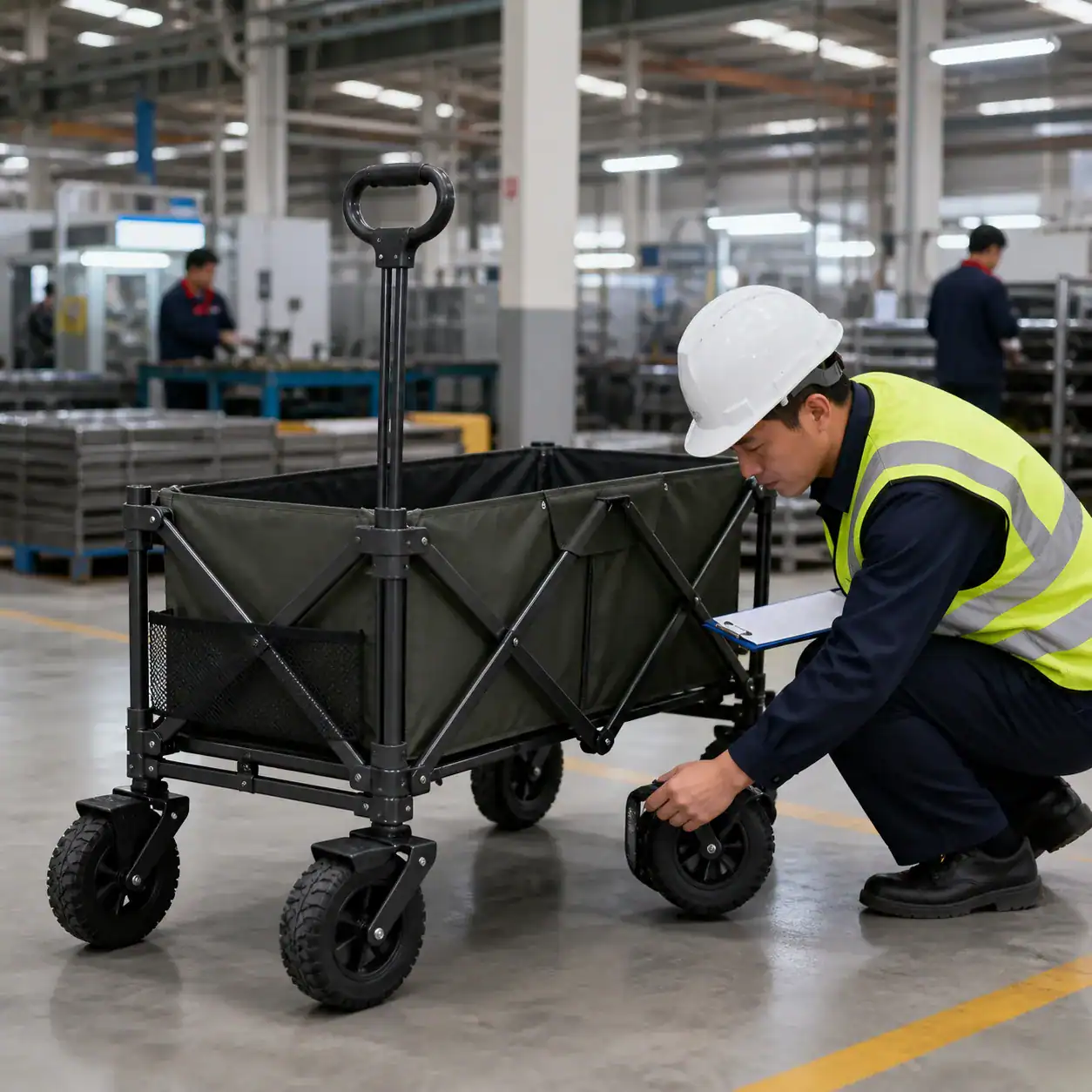
A 600D Oxford wagon on a stock steel frame can often run at 300 pieces.
The MOQ range you see quoted — 50–100 pieces for some items, 300–1,000 for standard models — isn’t random. It maps directly to how much new tooling and material handling the factory has to set up. A folding wagon that uses existing injection molds for the hub caps, a standard powder coating color already in the line, and stock 600D Oxford fabric will hit the lower end of that band. The factory runs those components daily for other buyers. Your order just taps into an existing production slot.
Why Some Items Start at 50–100 Pieces and Standard Models Hit 300
The 50–100 piece threshold exists for one reason: the supplier wants to test your seriousness without committing significant production resources. At that volume, you’re typically getting an unbranded or single-color model packed in generic cartons. No custom dyeing, no custom injection-molded parts, no printed logo on the fabric. The factory treats it as a trial run to validate your payment reliability and market fit before offering better pricing on a repeat order.
Standard models hit 300 pieces because that’s where the economics of a production shift start making sense. A folding wagon requires cutting fabric panels, welding or assembling the frame tubes, installing wheels and brake mechanisms, and final assembly — each step needs a dedicated workstation. Setting up those stations for fewer than 300 units means the per-minute labor cost eats into any margin. Factories with ISO 9001 certification, like Kelyland Outdoors’ partner facility in Jinhua that produces one million wagons annually, structure their lines around batch sizes of at least 300 to maintain consistent quality tolerance across every unit.
How Frame Material and Fabric Denier Change MOQ Flexibility
Frame material is the biggest lever. A wagon built on powder-coated carbon steel uses a common tube size that dozens of factories stock in bulk. The mill delivers standard lengths weekly, so there’s no minimum purchase required from your side — the factory already has inventory risk covered by other clients. Switch to aluminum frames and the MOQ often jumps by 200–300 pieces because aluminum tube sourcing requires dedicated extrusion runs with specific wall thickness specs (typically 1.0mm–1.2mm for wagons). The factory won’t order a custom extrusion profile just for your test batch.
Fabric denier works similarly but in reverse direction. Stock 600D Oxford is commodity-grade; mills produce it by the kilometer and factories keep rolls on hand for immediate cutting. Moving up to 900D double-layer Oxford or requesting Pantone-matched dyeing triggers a minimum fabric purchase from the mill — usually several hundred meters per colorway — which forces a higher MOQ from your end because unused dyed fabric sits as dead inventory if your follow-up order never comes.

Sample Fees: When You Should Pay and When It Should Be Free
A stock sample confirms the shape.
Most buyers lump all samples into one bucket. That’s where the confusion — and the surprise costs — start. There are two distinct types of samples in folding wagon sourcing, and they carry very different financial logic.
Stock Samples vs. Custom Pre-Production Samples
A stock sample is an existing model the factory already produces. They pull it from inventory, snap a few photos, and ship it to you so you can feel the fabric weight, test the folding mechanism, and check the wheel rotation. These samples cost little to produce because no new tooling or material is needed. Some factories will send them free if you cover shipping, which aligns with standard practice: low-cost stock samples may be free when the buyer pays freight.
A pre-production sample is different. This is built from your spec sheet — your chosen fabric denier (say 600D Oxford instead of 300D), your powder coating color, your injection-molded hub cap design, and your custom label placement. The factory has to set up a dedicated production run for one unit. That requires cutting fabric from a custom roll, pulling specific steel tubing for the frame, and potentially creating a new mold for plastic components. This process carries real cost.
How Sample Fee Refunds Actually Work
Here’s where the fine print matters more than most buyers realize. According to established trade terms in this supply chain, paid samples are offered with fees potentially refundable upon bulk order confirmation. But refundable does not mean automatic.
Deposit and Payment Schedules That Protect Cash Flow
A 30% deposit protects the factory’s material cost.
When you place a folding wagon order with a Chinese supplier, the payment split you’ll see most often is 30% deposit and 70% balance before shipment. That ratio isn’t arbitrary. The deposit covers raw materials — steel tubing for the frame, Oxford fabric rolls (600D to 900D), injection-molded plastic parts like hub caps and handles, plus powder coating supplies. A factory producing 300 wagons at $20 per unit has roughly $1,800 tied up in materials before a single frame is welded. They’re not funding that out of cash flow.
Why the balance comes due before shipment
The remaining 70% isn’t held until the container lands at your port because the factory needs working capital to pay its own suppliers and line workers. Once assembly finishes, they’ve got finished goods sitting on the warehouse floor — space that could be used for the next order. Most ISO 9001:2015 certified factories in Jinhua operate on thin margins (8–12%) and can’t carry receivables for 45–60 days while your goods transit by sea. The pre-shipment payment clears their books before loading.
Negotiating better terms as a repeat buyer
-
- Deposit threshold trigger. Orders under US$3,000 typically require full prepayment because the margin doesn’t justify credit risk. Above that, the standard split applies.
- Sample fee tie-in. Ask whether your sample fee is refundable against the first bulk invoice or only from the deposit amount. Most suppliers refund against confirmation of a production order — not from the deposit itself.
- Repeat buyer leverage. After two or three orders with clean payment history, some suppliers will shift to 20/80 or extend net-15 terms on the balance. This is negotiable but rarely offered on first orders.
Hidden Cost Levers in Folding Wagon Sourcing
Powder coating adds $0.80–$1.50 per wagon; anodizing adds $2.00–$3.50.
Most buyers compare unit prices across suppliers without realizing that the finish alone can swing the FOB cost by 10–15%. A folding wagon with a carbon steel frame gets powder coating as standard — it’s baked on at around 180°C and provides solid chip resistance for beach or campsite use. Switch to an aluminum frame, and the factory will usually offer anodizing instead. The difference matters: powder coating on aluminum requires a pretreatment layer or the adhesion fails within six months.
When Anodizing Justifies the Premium
Anodizing creates an oxidized surface layer that’s actually part of the metal, not a coating on top of it. That means no peeling, no flaking, and significantly better corrosion resistance in coastal environments. For a private-label wagon destined for a retailer near saltwater — think Florida or Australia — anodizing is worth the extra $1.50–$2.00 per unit because warranty claims on powder-coated frames start showing up around month 14. The trade-off is color limitations: anodizing only takes certain dyes, so if your brand requires Pantone-matched bright orange, you’re locked into powder coating.
Injection-Molded Details That Add Up
Custom hub caps, molded handles, and branded plastic components require new injection molds. Each mold runs $800–$2,500 depending on cavity count and complexity. A single-cavity mold for a logo-embossed hub cap might cost $1,200 and produce one part every 45 seconds — fine for a 300-piece order where you need 1,200 caps (four per wagon). But if your supplier doesn’t own that mold tooling already, that cost gets amortized into your first order or charged as a separate tooling fee upfront.
-
- Standard powder coating (steel frame): $0.80–$1.10 per unit using stock RAL colors; custom Pantone match adds $0.30 surcharge.
- Anodizing (aluminum frame): $2.00–$3.50 per unit depending on thickness spec (10–25 micron range).
- Custom injection-molded hub cap: $1,200 mold tooling + $0.35 per part at 300-piece order volume.
How to Avoid MOQ Padding by Unscrupulous Agents
A 1,000-piece MOQ on a stock wagon means someone is marking up the factory’s real minimum.
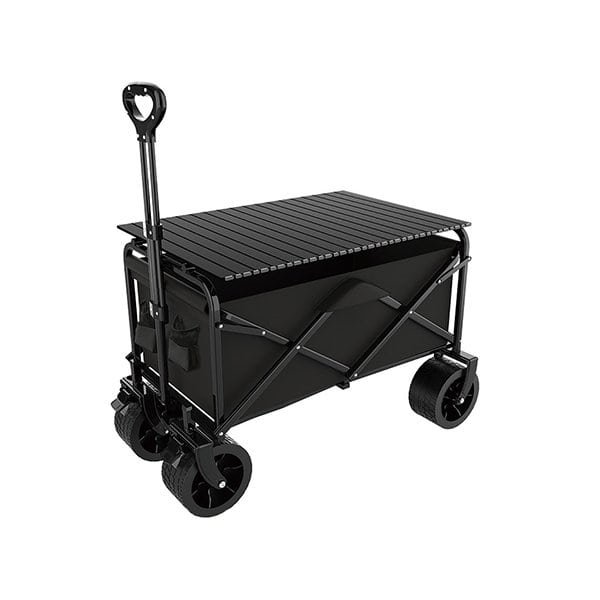
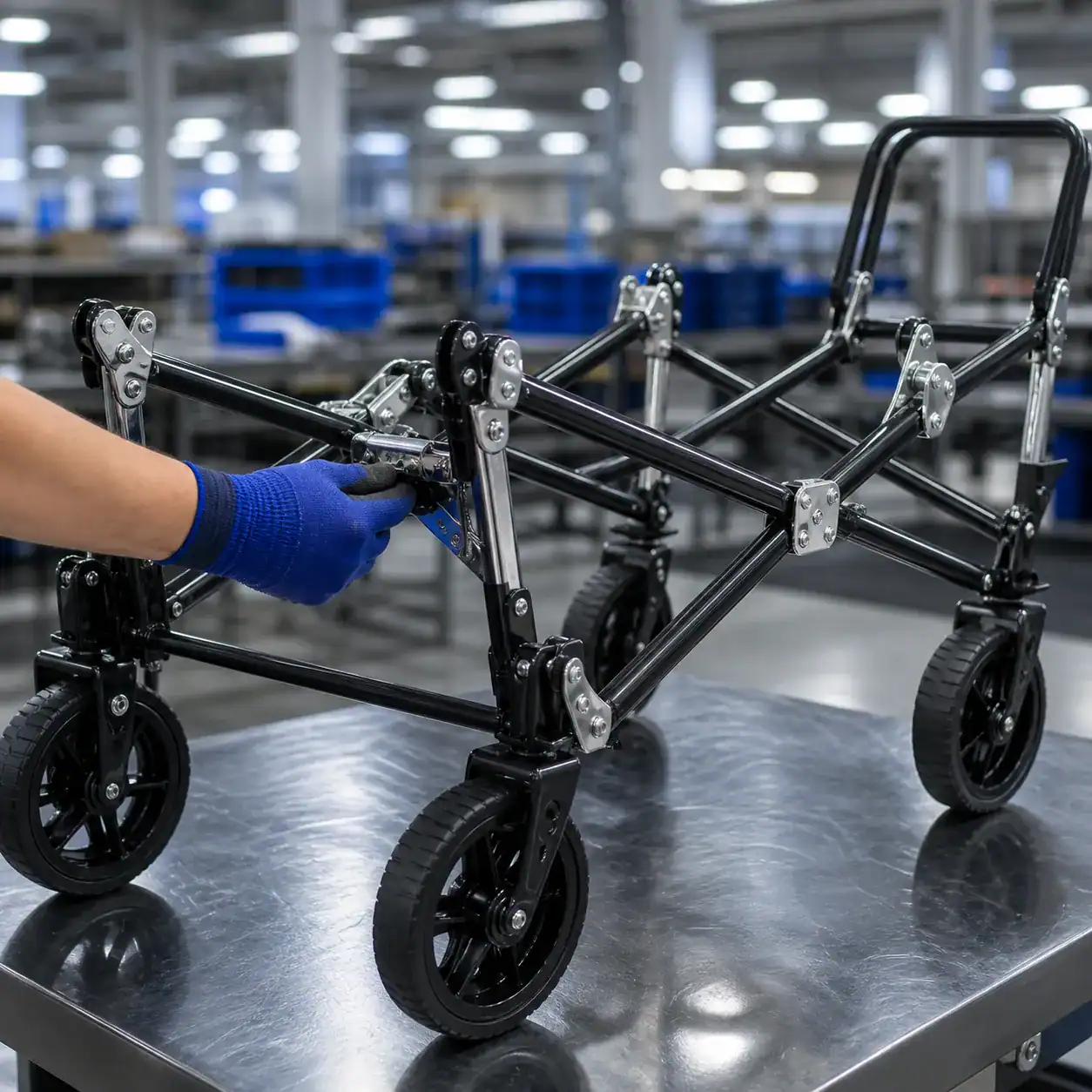
The most common padding tactic is simple: an agent quotes you a 1,000-piece MOQ for a folding wagon that uses standard 600D Oxford fabric and a common powder-coated steel frame. The factory down the street would run that same spec at 300 pieces if you walk in directly. The agent pads the number because they either lack direct factory access or want to bundle multiple small orders into one container to protect their margin. You end up financing inventory you didn’t need.
Questions That Reveal Whether the Factory Actually Owns the Molds
If the wagon design involves injection-molded plastic parts — hub caps, handle grips, corner brackets — ask who owns the mold tooling. An agent claiming a 1,000-piece MOQ on a wagon with custom-molded components might be hiding that the factory charges tooling amortization across your first order. A direct supplier with existing molds can often start at 300 units because the tooling cost is already sunk. Ask specifically: “Are these molds proprietary to your factory, or are they shared across multiple buyers?” If they hesitate, assume padding.
-
- Mold ownership check: “Can you send photos of the injection mold with your factory name tag?” Real factories engrave or sticker their tools.
- Capacity verification: “What was your last production run of this exact model and when?” A factory running 10,000 wagons annually won’t blink at a 300-piece order.
Verifying Real Factory Capacity Before Agreeing to 1,000 Pieces
Building a Pre-Import Cash Flow Model
Most first-time importers forget tooling costs.
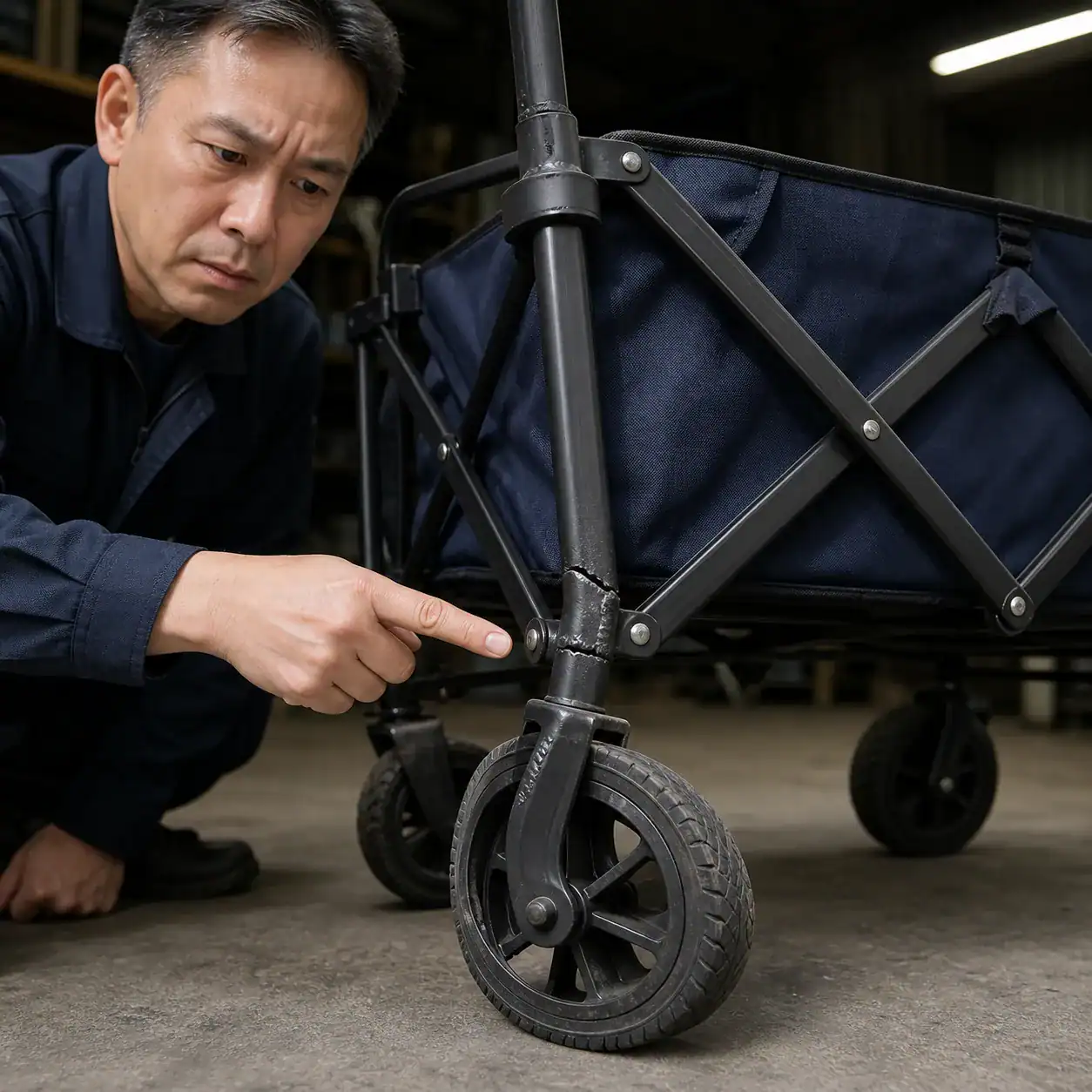
You have a supplier quoting $22 per wagon FOB, a sample fee of $150, and a 30% deposit on a 300-piece order. The natural instinct is to multiply: 300 × $22 = $6,600. That number is wrong. The real cash outflow before you see a single unit includes the sample cost, any tooling or mold charges, the deposit amount, freight forwarder fees, and import duties at your destination. Miss one line item and your margin projection collapses before the container lands.
The Full Pre-Import Cash Flow Formula
-
- Sample cost + tooling: $150 for a pre-production sample is typical. Custom injection-molded hub caps or a new powder-coating jig can add $800–$1,500 in one-time tooling. That sum gets paid upfront and is not recoverable unless the sample fee is refundable against the bulk order.
- Deposit (30%): $6,600 × 0.30 = $1,980 due at contract signing for a standard folding wagon with stock molds and standard powder coating.
- Sea freight + insurance: $1,200–$2,800 depending on port distance and container type (20 ft vs 40 ft). A full container of wagons averages around $1,800 from Ningbo to Los Angeles in current market conditions.
- Import duties + customs broker: $990–$1,650 based on HTS classification (typically 15–25% of FOB value for steel-frame wagons). Broker fees add another $150–$300.
Break-Even Units at Different Landed Costs
Conclusion
The gap between a $25 and a $35 landed cost per folding wagon often comes down to three things you can verify before placing a deposit: the real MOQ floor, whether the sample fee refunds against your first invoice, and who actually owns the injection molds. A direct factory partner with ISO 9001 certification and documented wagon production—like the Jinhua facility producing one million units annually—will answer those questions in the first call.
-
- Confirm MOQ on stock models starts at 50–100 pieces before requesting custom dyeing or molded parts.
- Ask whether the sample fee is refundable from the deposit or against the first bulk invoice.
- Verify powder coating vs. anodizing costs per unit before finalizing frame finish specs.
You now have a decision framework that covers MOQ thresholds, sample fee refund mechanics, and hidden cost levers like frame finishing and tooling ownership. The next step is straightforward: take your spec sheet—fabric denier, frame material, wheel type, and color count—and run it past a supplier who can quote both stock and custom routes side by side. Review current pricing on Kelyland Outdoors’ product page to see how their network of ISO-certified factories handles folding wagon production runs from small-batch launches to full container orders.
Frequently Asked Questions
What is the MOQ for folding wagons?
MOQ for a standard folding wagon on a stock steel frame with 600D Oxford fabric typically starts at 300 pieces. For specific items or simpler customizations, MOQ can be as low as 50-100. Confirm your exact spec to lock in the MOQ.
Are sample fees refundable?
Yes, paid sample fees are often refundable upon confirmation of a bulk order. Low-cost stock samples may even be free if you cover shipping. Always confirm the refund policy before ordering samples.
What is the typical payment schedule?
For new clients or orders over US$3,000, the standard is a 30% deposit with the 70% balance due before shipment. Terms can be negotiated for repeat clients. Expect this structure unless you have an established relationship.
How long does production take?
Standard production lead time is 30-45 days from order confirmation. This varies based on order complexity, quantity, and customization level. Factor in extra time for custom fabric dyeing or molded parts.

 English
  Español
  Deutsch
  Français
  Português do Brasil
  Русский
  العربية
  한국어
한국어  日本語
日本語