 跳到内容
跳到内容 
Subject line: FW: folding wagon packaging specs after the 2.4% claim. The buyer approved the pre-production sample, confirmed the mass production run matched it, and still ate the damage cost because the carton spec ended at logo placement.
The failure pattern is consistent across export lanes. A wagon’s steel frame vibrates against the carton wall at every container frequency, and the 360° wheel hubs press into the fabric sidewall during handling. Most factories test a single packed carton with a short drop and call it transit-ready. That test misses the real load: the bottom carton in a three-to-four-carton stack. When one brand switched to 5-ply BC flute cartons, added 30 mm EPE corner pads, isolated the wheel hubs with molded separators, and ran the drop test at stack height, claims dropped from 2.4% to 0.3% on the same 40HQ route.
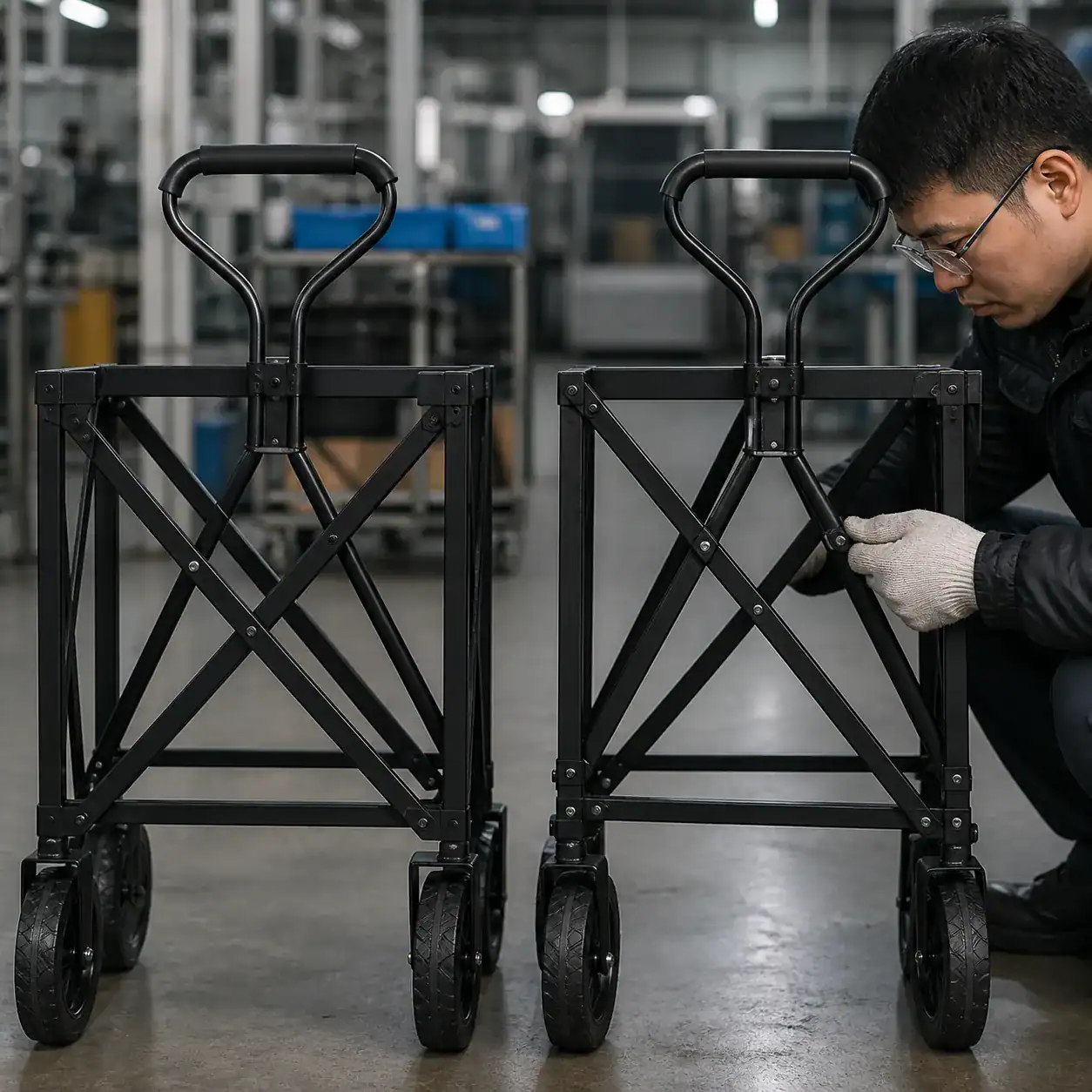
What Happens When Wagon Frames Rub in Transit
Damage at sea is cumulative wear, not a single impact; the carton has to control motion.
A folding wagon enters a 40HQ container as a dense block of steel or aluminum tubes, fabric, and wheels. Load shifts are inevitable, and so is abrasion. One brand switched to 5-ply BC flute cartons with 30 mm EPE corner pads and wheel hub separators, and damage claims on wagon shipments dropped from 2.4% to 0.3%. That improvement came from understanding exactly where freight damage starts: the rubbing points inside the carton.
Common Damage Points: Wheel Hubs and Fabric Tears
Wheel hubs are the heaviest concentrated mass in a folded wagon. In models with 360° rotating wheels, the hub sits close to the carton sidewall and can swing freely unless blocked. When the carton flexes, the hub acts like a hammer hitting the corrugated board and whatever sits beside it. The repeated contact rubs through the powder coating, exposes the metal, and leaves a rust point that buyers see as a defect.
-
- Wheel hubs: The heaviest point in the carton. With 360° rotating wheels, the hub creates concentrated pressure against the sidewall and adjacent frame during in-transit shifting.
- Fabric panels: 600D-900D double-layer Oxford panels sit close to hinges and frame ends. A shifted hub or hinge grinds into the textile and causes tears.
- Baseboard edges: PP and MDF baseboards have hard edges. In a compressed carton stack, those edges can cut through the carton into the fabric surface.
How Vibration Creates Abrasion Inside Cartons
Ocean freight vibrates in a low-frequency rhythm that is far harder on packed products than any single drop. The folded wagon does not need to move much for damage to occur. A gap of a few millimeters between frame and carton becomes a repetitive impact point. Each cycle taps the same spot. Over weeks at sea, the powder coating wears thin and tears in the Oxford fabric appear.
Single-carton drop tests miss this because they measure one impact, not continuous cycling. That is why the folding wagon factory in the Kelyland Outdoors network, based in Jinhua and certified CE and ISO 9001, tests packed wagons at a stack height of three to four cartons. The bottom carton in that stack carries real freight compression, which is the condition your shipment will actually face.
For a brand manager writing folding wagon packaging specs, the message is direct: if the wagon can move inside the carton, it will damage the carton and itself. Wheel hub separators, EPE corner pads, and adequate board grade are not add-ons. The 0.3% claim rate proves they are the baseline.
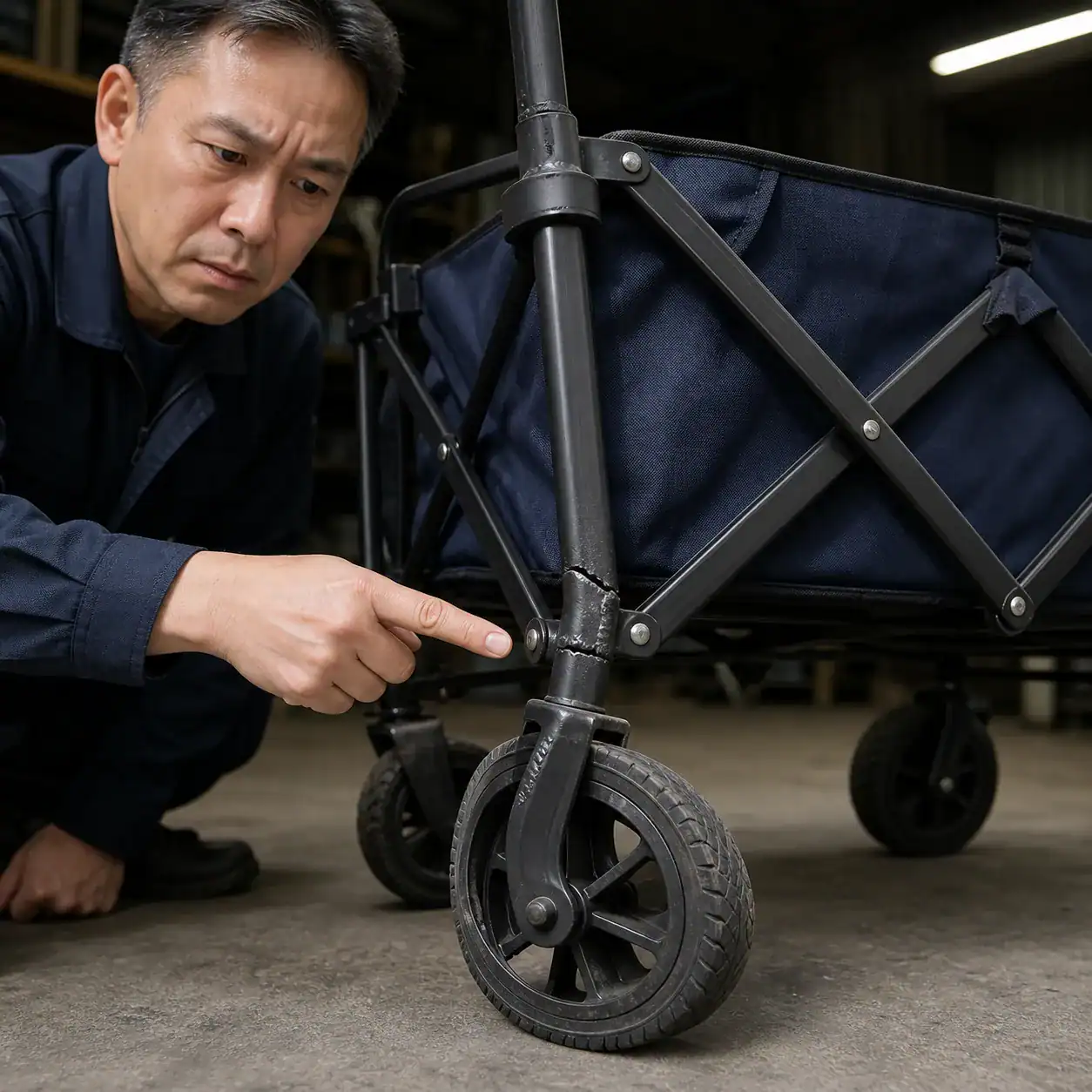
Packaging Upgrades That Protected a 40HQ Shipment
Five-ply BC flute and 30 mm EPE corner pads cut wagon damage claims from 2.4% to 0.3%.
Most folding wagon freight damage starts at the wheel hub. The axle ends sit close to the carton wall, and once the pallet starts vibrating, the hubs work like chisels against the corrugated board. The second failure point is the fabric tub: the 600D-900D Oxford shifts inside the box and rubs against raw steel frame edges. Neither problem shows up in a single-carton photo check. It takes a full 40HQ ride to expose it.
Corner Pads, Foam Inserts, and Wheel Covers
The packaging spec that moves the claim rate is the carton board grade. Many suppliers ship folding wagons in single-wall C-flute cartons because they look fine in the warehouse. They are not fine after ocean freight, when bottom cartons carry the weight of several pallets. The upgrade that has held up in actual shipments is a 5-ply BC flute carton. It resists stacking compression and stays rigid enough to keep the frame from shifting during transit.
Inside that carton, three components matter more than anything else. 30 mm EPE corner pads protect all eight vertical frame corners. Die-cut EPE wheel hub separators, or full hub covers, keep the axle ends from punching through the sidewall. Foam inserts lock the folded frame so it stops swinging like a pendulum during vibration. Get those three right, and the carton absorbs the freight cycle instead of the product.
-
- Corner pad thickness: 30 mm EPE holds up under the stacking loads a 40HQ generates. Thinner foam compresses and transfers impact straight to the frame.
- Wheel hub separator: A die-cut EPE disc between the hub and carton wall stops the axle from cutting through the corrugated board.
- Carton board grade: Single-wall C flute fails in stacked export containers. Specify 5-ply BC flute for folding wagon export orders; the cost delta is small relative to a damage claim.
Strap Blocks and Frame Braces per ISTA 1E
Single-carton drop tests miss the real failure mode. ISTA 1E treats the entire pallet as one load, with the bottom cartons carrying the weight of the unitized stack. That is the condition that tears wheel hubs through sidewalls. Ask the factory to run a pre-shipment drop test at three to four cartons high, not one carton alone. If the packaging survives that, the wagon will likely survive the crossing.
The physical fix is internal bracing. Strap blocks create a gap between the folded frame and the carton lid, so tensioned strapping cannot bow the frame out of shape. Frame braces — die-cut corrugated or EPE inserts placed inside the folded structure — keep the frame from racking side to side. Without them, the wagon’s own mass becomes the hammer that breaks the carton.
The folding wagon factory in Jinhua, Zhejiang, produces 1,000,000 units a year under ISO 9001, and that factory network treats packaging as a structural component rather than a shipping extra. After one brand switched to 5-ply BC flute cartons with 30 mm EPE corner pads and wheel hub separators, damage claims on 40HQ shipments dropped from 2.4% to 0.3%. The packaging spec was the difference.

Implementing Damage-Resistant Packaging with OEM Factories
One brand cut 40HQ damage claims from 2.4% to 0.3% by switching to 5-ply BC flute cartons with wheel hub separators.
The gap between a folding wagon that arrives flawless and one that shows up with a dented tube or torn fabric sleeve is rarely the product itself. It’s the packaging spec. Most damage claims on folding wagons trace back to two root causes: inadequate board grade and unprotected metal-to-metal contact inside the carton. Fix those two things and the claim rate drops dramatically.
Specifying Board Grades and Test Requirements
Single-wall cartons are the default for most low-cost folding wagon imports, and they are the wrong choice for 40HQ consolidation loads. A wagon with a 50kg frame plus accessory components can exceed 20kg packed weight. When that carton sits at the bottom of a three-high stack in a shipping container, the cumulative compression load crushes the corrugation. The fix is a structural upgrade to 5-ply BC flute, which doubles the compression strength compared to standard single-wall board.
-
-
- Board Grade: Specify 5-ply BC flute (B-flute outer, C-flute inner) with a minimum edge crush test (ECT) rating of 32 lbs/in. This handles the stacking loads in a 40HQ where wagons sit three to four cartons high.
- Corner Protection: Require 30 mm EPE (expanded polyethylene) corner pads in the spec sheet. The 30 mm thickness is the threshold that actually prevents power-driven wheel hubs from punching through the carton during lateral impact. Anything thinner than 20 mm is cosmetic.
- Wheel Isolation: Mandate wheel hub separators — die-cut EPE or corrugated inserts that lock each wheel in position. Without them, wheels rotate in transit and create progressive abrasion against the Oxford fabric or powder-coated frame.
- Drop Test Protocol: Factories should conduct the ISTA drop test at the actual container stack height, not single-carton height. A single-carton drop test passes but a bottom-carton drop at 3-4 high fails. The drop sequence must replicate a forklift operator dropping the bottom carton of a stack.
-
One brand in the folding wagon category reduced damage claims from 2.4% to 0.3% by implementing this specification set. The per-unit packaging cost increased by roughly $1.80, but the claim rate reduction saved more than ten times that in replacement product, freight, and customer service handling per 40HQ shipment.
Pre-Shipment Inspection Checklist for Packed Wagons
Verifying these specs at the factory before loading is the step that separates professional procurement managers from those who find out about packaging failures after the container lands at the distribution center. The inspection should happen at the packing station, not in the finished goods warehouse, so you can see the actual packing process.
-
- Carton Stamp Check: Every carton must carry a factory stamp showing the board grade, flute type, and ECT rating. If the stamp is missing or unreadable, assume the supplier used a lower-grade board from a different supplier run.
- Corner Pad Placement: Confirm the 30 mm EPE corner pads are actually positioned over the four top corners of the wagon frame, not just thrown loosely into the carton. Loose pads shift during transit and provide zero protection.
- Wheel Hub Lock: Verify the wheel hub separators are inserted and locked — not resting against the wheels. A properly installed separator prevents rotation; a loose insert is wasted material.
- Fabric Sleeve Check: Inspect the 600D or 900D Oxford fabric for any rub marks at the point of contact with frame tubes. If there’s visible abrasion on random samples, the inner strapping is too loose or the frame edges lack protective edge guards.
- Strap Tension: The straps securing the folded frame should be tight enough that you can’t slide a finger between the strap and the frame. Loose straps allow the frame to shift during vibration testing.
- Drop Test Observation: Run a live drop test on three random cartons at a 3-4 carton stack height, rotating each carton to the bottom position. Watch the impact corner, not the flat panels. If the wheels break through the carton wall or the frame bends, reject the run.
The folding wagon factory in Jinhua that handles this category for Kelyland Outdoors uses a 5-ply BC flute spec with custom EPE inserts for every wagon SKU. The production line conducts a destructive drop test at four-carton height on each packaging batch before releasing goods. That protocol is the reason wagon-related damage claims have stayed below 0.5% across recent 40HQ shipments, a level the operation tracks as a key performance indicator.

Conclusion
Damage claims on folding wagons trace back to how the frame moves inside the carton before the carton ever moves onto a truck. The spec decisions that matter are quiet ones: 5-ply BC flute walls, 30 mm EPE corner pads, wheel hub separators, and strap blocks that hold the steel in place until the consignee breaks the seal.
-
- Five-ply BC flute cartons cut a brand’s wagon damage claims from 2.4% to 0.3% on 40HQ shipments.
- A pre-shipment drop test at 3-4 cartons high replicates real warehouse stacking better than a single-carton drop.
- Specify carton board grade and ISTA 1E vibration tests in your OEM packing agreement, not just the product spec.
If you are reviewing your current folding wagon program, ask the factory for three pieces of evidence: the carton board grade certificate, the corner pad density spec, and the ISTA drop test video. Compare those against the packaging your last shipment arrived in. You can also review the wagon configurations and QC checkpoints in the product lineup to see which models already carry damage-resistant packing as standard.
Frequently Asked Questions
Why do folding wagons get damaged in transit?
Damage is cumulative abrasion from vibration in transit, not a single impact. The carton has to control frame and wheel movement, not just carry the logo. Specify motion-control packaging before mass production.
What packaging specs prevent folding wagon freight damage?
A five-ply BC flute carton with 30 mm EPE corner pads and wheel covers is a proven baseline. One brand cut damage claims from 2.4% to 0.3% with this upgrade. Use those specs as your baseline and test per ISTA 1E.
How do I specify packaging to an OEM factory?
Put board grade, corner pad thickness, and test requirements in writing instead of leaving packaging to the factory. Add a pre-shipment inspection checklist for packed wagons. Confirm the carton spec matches the approved sample.
What are common damage points on folding wagons?
Wheel hubs and fabric tear points are the usual failure spots when frames vibrate inside cartons. Wheel covers and frame braces stop that motion before it becomes a claim. Inspect those areas first when damage claims arrive.
Can packaging upgrades really cut wagon damage claims?
Yes, one 40HQ shipment cut damage claims from 2.4% to 0.3% with five-ply BC flute and EPE corner pads. Results depend on carton fit and how well internal movement is controlled. Test your own packed carton before committing to volume.

 English
  Español
  Deutsch
  Français
  Português do Brasil
  Русский
  العربية
  한국어
한국어  日本語
日本語