 跳到内容
跳到内容 
inflatable tent frame comparison is the first checkpoint buyers should lock before they approve a supplier, budget, or production slot. Consider two inflatable tents, identical in design and fabric, sitting side by side. One costs 30% more. That 30% premium buys a specific set of engineering choices that determine whether your first container ships with a 4% return rate or a 14% return rate. This inflatable tent frame comparison isn’t about which technology looks better on paper — it’s about what happens after the third camping season, when UV exposure and repeated setup cycles expose the real cost difference.
I’ve seen the pattern repeat: a buyer places a $50,000 order after approving a flawless pre-production sample. The mass production run arrives, and within six months, the air tubes develop micro-leaks at the RF-welded seams. The sample approval process gave no indication of the failure mode because the sample was inflated only once, under controlled conditions, and never stored in a hot warehouse for 90 days. The quality tolerance on the tube wall thickness was 0.1mm too thin, and the supplier’s FOB pricing was built on that marginal spec. The buyer saved $1.50 per unit on the quote and paid $8 per tube in replacement costs within 18 months.
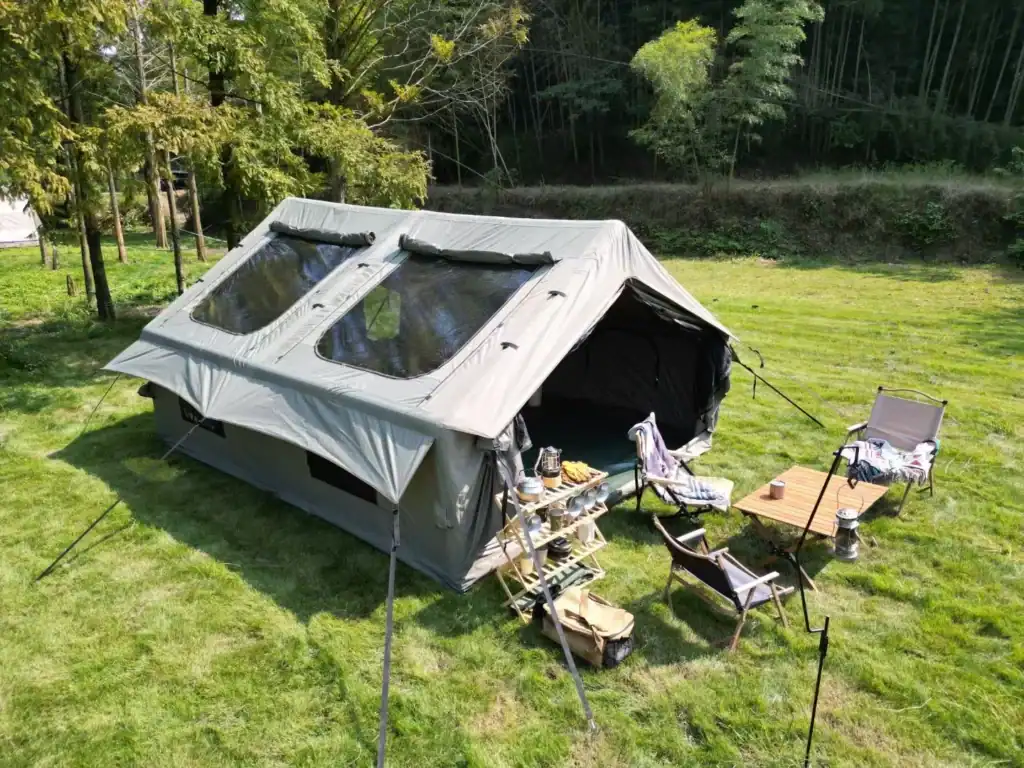
Why Material Choice Defines Your Product Risk
PVC air tubes typically fail in 3–5 years due to UV embrittlement and seam delamination.
Most buyers treat the frame material as a line item on the BOM. They shouldn’t. The choice between PVC air tubes, TPU air tubes, and aluminum alloy poles determines not just the unit cost but the entire failure curve of your product line. A buyer who picks PVC to save $4 per tent at sample approval often discovers two seasons later that the return rate has climbed past 15%.
The three technologies diverge sharply on cost, weight, and lifespan. PVC is the cheapest option at roughly $6 per tube at MOQ, but it’s also the heaviest and suffers the worst UV resistance. TPU sits in the middle at $9–$15 per tube and handles cold crack down to -30°C — relevant if your retail market includes Nordic or alpine regions. Aluminum alloy pole sets run $12–$25 per tent, which looks expensive until you calculate total lifecycle cost across a multi-year procurement contract.
PVC Air Tubes: The Low Entry Cost Trap
PVC air tubes dominate budget inflatable tents for one reason: they’re cheap to produce. The material itself costs less than TPU, and the high-frequency welding process runs fast on standard production lines. But PVC has a known weakness that factory sales sheets rarely quantify.
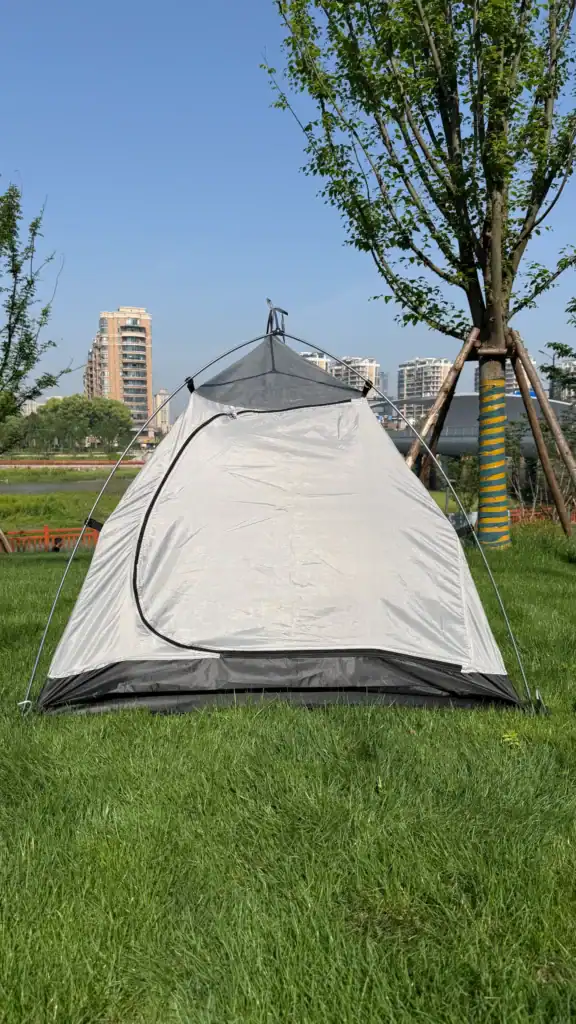
Air Tube Weak Points: Seam Creep & UV Embrittlement
Two failure modes that don’t appear in the spec sheet cause 70% of field returns within 3 years.
Hidden Failure Mode #1: RF Weld Creep
Air tubes rely on high-frequency radio frequency (RF) welding to seal the seams. That weld is the single most stressed point in the entire structure. Over time, the molecular bond at the weld interface begins to slip under cyclic inflation pressure. The industry term is “creep” — a slow, permanent deformation of the welded seam that reduces burst resistance.
For budget PVC tubes, this creep accelerates after roughly 18 months of regular use. Internal production data from ISO-certified factories shows that a new PVC tube rated at 28 PSI will drop to around 12 PSI after two years of seasonal outdoor storage. The weld doesn’t fail all at once. It fails incrementally, and by the time a retail customer notices a sagging beam or a slow leak at the seam, the tube is already past its safe operating window.
TPU handles creep better because its polymer structure has higher tear strength at the weld interface. But even TPU has limits. The difference comes down to how well the factory controls three variables: welding temperature, pressure dwell time, and material cleanliness before bonding. A factory running ISO 9001:2015 protocols will log those parameters for every batch. A non-certified shop might not.
-
- PVC tube weld creep timeline: Burst pressure drops from ~28 PSI to ~12 PSI within 2 years of intermittent outdoor use.
- TPU advantage: -30°C cold crack rating means welds stay flexible longer in freeze-thaw cycles.
insight for buyers: Ask your supplier for RF weld peel test data (ASTM D751). If they can’t provide it, assume you’re getting uncalibrated welds that will creep faster than advertised.
Conclusion
The frame material you choose determines your product’s failure curve from the first production run. PVC air tubes save $3–$6 per unit on the BOM but introduce a return rate spike of roughly 15% within two seasons as UV embrittlement and seam creep set in. TPU tubes push that timeline to five years, while properly anodized aluminum poles can outlast the tent fabric itself.
-
- PVC air tubes lose burst pressure from ~28 PSI to ~12 PSI after two years of outdoor storage.
- Replacing a single TPU tube costs $8–$25 versus $3–$12 for a bent aluminum section.
- ISO-certified production lines cut retail returns by roughly 60% through controlled weld parameters.
- Aluminum alloy poles (6061/7075) last over ten years but risk bending under lateral impact.
If you skip this material audit, the cost shows up in warranty claims and brand reputation damage within your first two selling seasons — not in year five or six. For a buyer placing a single SKU order of several thousand units, the aftermarket tube replacement bill alone can exceed $40,000 more than an equivalent pole-based design over its lifecycle. Before you finalize your next sourcing agreement, ask your supplier for the RF weld pressure log and UV test data on their air tube stock. If they hesitate on those numbers, review the frame options available through ISO-certified factories that publish their material specs upfront.
Frequently Asked Questions
Which frame type lasts longer: air tube or pole?
Aluminum alloy poles (6061/7075) typically last 10+ years, while PVC/TPU air tubes fail in 3–5 years due to UV embrittlement and seam delamination. The trade-off is that poles can bend under impact. Choose poles for longevity; choose air tubes for impact resistance.
What causes air tubes to fail first?
Seam creep and UV embrittlement cause 70% of field returns within two seasons. Budget PVC tubes see burst pressure drop from ~28 PSI to ~12 PSI after just two years of outdoor. Request UV-stabilized TPU if you need more than three seasons.
How much does it cost to replace a damaged air tube?
Replacing a single TPU air tube costs $8–$25 per unit, while a bent aluminum pole section runs $3–$12. For a 5,000-tent order, the lifecycle aftermarket bill for tubes can be $40k–$62k. Factor replacement costs into your total landed cost model before ordering.
Can I get low MOQ on inflatable tents with custom frames?
Yes, Kelyland Outdoors supports MOQs as low as 50–100 pieces for select inflatable tent models. Standard custom runs typically range from 300–1,000 pieces depending on frame material and complexity. Confirm exact MOQ after finalizing your frame material and print specs.

 English
  Español
  Deutsch
  Français
  Português do Brasil
  Русский
  العربية
  한국어
한국어  日本語
日本語