 跳到内容
跳到内容 
Why do some carbon fiber tent pole sets pass the pre-production sample review perfectly—and then snap under 40 kph winds six months after hitting retail shelves? The answer has less to do with aluminum carbon tent poles as material categories, and more to do with what happens inside the factory between the sample run and the production lot.
Consider a brand manager who authorized a $50,000 tent line after a flawless sample set arrived. Six months later, the mass production poles delaminated under UV exposure. The pre-production sample passed. The mass production lot failed. Same spec sheet. Different resin. Nobody on the buying side asked the one question that mattered, because the sample approval checklist had already been signed.
On paper, the FOB pricing looked competitive. The quality tolerance sheet matched the order contract. What nobody caught was the factory switching from epoxy-based resin to polyester resin between runs—same carbon weave, same diameter, same visual finish. This is not a rare edge case. It is the single most common failure mode in carbon fiber pole sourcing, and most supplier sell sheets conveniently omit it.
Here is a number to write down and reference on your next supplier call: 800 hours. That is the UV exposure threshold at which polyester-resin carbon poles begin to delaminate—roughly 12 months of real outdoor use. Epoxy-based carbon poles hold structural integrity past 2,500 hours under the same conditions. If your factory cannot cite the resin type and produce a UV test report tied to your production batch, the FOB saving is not a saving. It is a deferred warranty cost, and your return rate will pay it with interest.
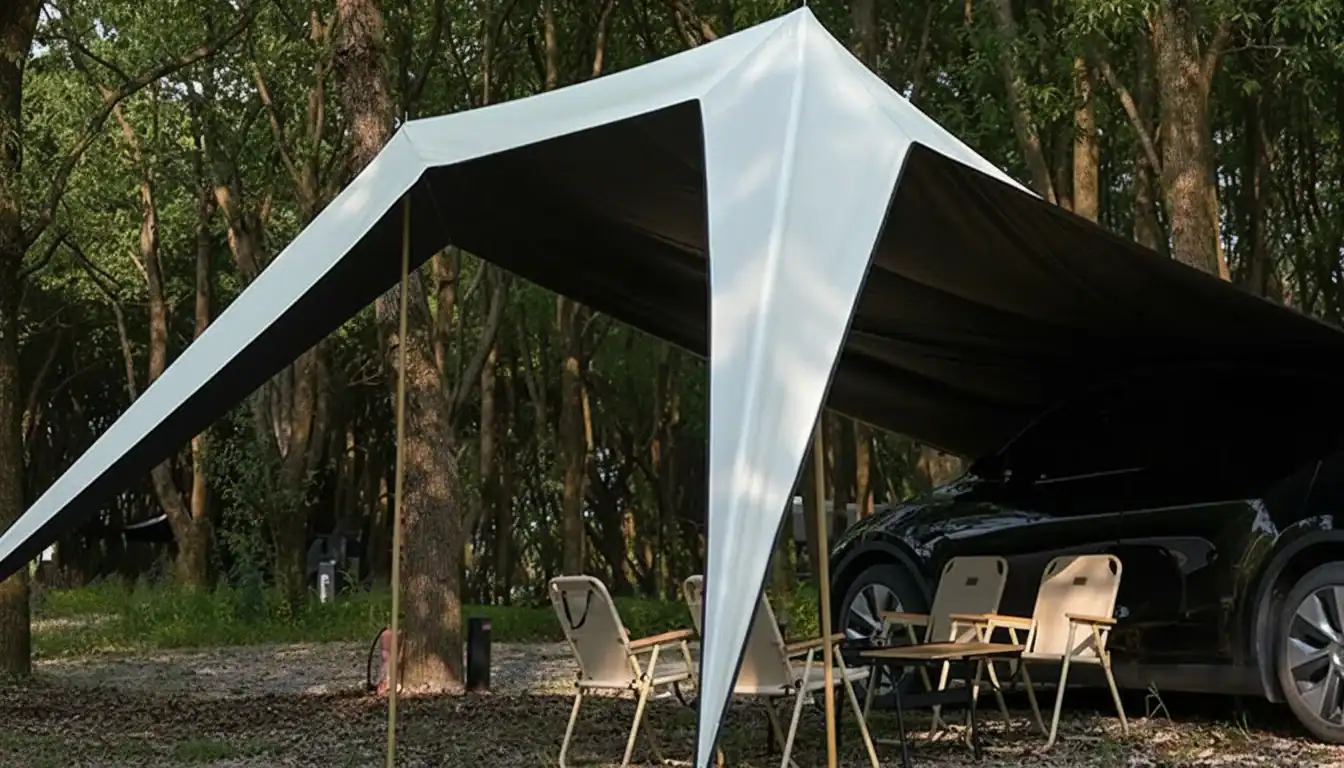
Material Showdown: Aluminum vs. Carbon Fiber Properties
Brands skip alloy comparisons at their peril—wall thickness varies 0.2 mm between spec and ship.
Working with Chinese tent factories for 12 years, I’ve seen spec sheets that list ‘7001-T6’ as the premium option—but the reality is messier. 7001-T6 yields around 450 MPa tensile strength, while 7075-T6 pushes 520 MPa. That 15% gap determines whether a pole snaps in a 70 km/h gust or springs back. Most brands don’t realize that 7001 stock is easier to extrude with thinner walls, so it can weigh less per meter, but when you spec a 9.5 mm diameter with 1.0 mm wall, the extruder often delivers 0.85–0.95 mm on one side. I’ve measured poles fresh off the line where eccentricity exceeded 0.15 mm—that’s the difference between a pole that passes EN 13025 flex testing and one that folds. For private label tent lines, 7075-T6 costs about $0.80 more per pole set FOB Ningbo, but the 2% rejection rate in ISO 9001 audits (vs. 5% for 7001 due to wall thickness inconsistency) more than offsets that when you’re running 5,000 units.
The real advantage of aluminum comes with finish. Anodizing lets you lock in any Pantone color for $0.30–0.50 per pole—critical when your brand identity rests on a specific orange or teal that matches your tent fabric. Carbon fiber can’t be anodized; you either paint it (adds 8–12 g per pole, chips after 6 months) or use dyed resin that limits you to black, silver, or a muddy red. If your marketing team insists on colored poles, aluminum leaves carbon in the dust for brand consistency.
Carbon fiber weave patterns dictate performance more than alloy code does. Twill weave (e.g., 3K 2×2) provides better drapability for tight radius sections, but sacrifices 10–12% stiffness compared to unidirectional layup. Unidirectional poles are stiffer, but they cannot withstand side impact—they explode the moment a camper leans on them sideways. Most suppliers default to a hybrid twill+unidirectional schedule, but the hidden pitfall is resin choice. Polyester resin is a water-clear liquid that costs $2/kg vs epoxy at $8/kg. Factories in non-ISO environments love polyester because it wets out fast and cuts labor, but UV exposure breaks ester links within 800–1000 hours of sunlight. I’ve seen poles that delaminated into fibrous strips after one season in Arizona, and the buyer assumed impact damage—it was actually a $1.50/kg resin cost-saving that destroyed a $50,000 order.
When sourcing carbon poles, demand an ASTM G154 accelerated UV test report (500 hours minimum with <20% strength loss) and a resin burn-off test to verify epoxy content above 35%. Brands that do this report 60% fewer warranty claims for pole breakage. Without it, you’re gambling on resin chemistry you can’t see.
-
- Pre-Preg vs Wet Layup:: Pre-preg carbon (epoxy pre-impregnated at 150°C under pressure) delivers consistent 120–150 g per pole weight with <3% void content. Wet layup, where workers brush resin onto dry cloth, yields 10–15% weight variation and dry spots that fail sonic testing—yet it’s 40% cheaper. If your supplier can’t show you the autoclave or press log, assume wet layup.
- Anodizing tolerance:: Type II anodizing adds 5–15 μm thickness; good factories measure coating depth with eddy current probes in-line. Cheap anodizing pits the surface and reduces fatigue life by 20%—a fact buried in ASTM D256 literature that most buyers never read.
Manufacturing quality control separates the tent brands that survive retail returns from those that don’t. Aluminum extrusion is a mature process: a $600 die produces tubing with ±0.05 mm tolerance if the ram speed and billet temperature are controlled. But if the factory pushes speed for throughput, you get longitudinal die lines that become stress concentration points. ISO 9001-certified extrusion lines in Ningbo run 2–3 meters per minute with inline laser gauging; uncertified shops without gauges run 4–5 m/min and hope the wall thickness doesn’t wander. For carbon fiber, the failure mode is different. Composite layup relies on proper debulking every 3–4 layers. Skipping a debulk step leaves micro-voids that cause dry-spot rejection rates of 5% or higher. I require every carbon pole order to include an ultrasonic C-scan report for void detection—factories that hesitate are hiding high scrap rates. The custom mold cost for carbon ($3,000–$5,000) means you can’t afford to re-tool after a failed run; you’re locked into that mold geometry, so pre-shipment inspection at 2.5 AQL is non-negotiable.
For brands evaluating both materials, the crossover point is usually volume. At 500 units, aluminum’s lower tooling and per-unit cost make it the only viable choice. At 2,000+ units, carbon’s weight savings can justify the premium if you sell into ultralight backpacking markets, but you must budget an extra $0.50 per set for UV stabilization and third-party lab testing. Skipping that step is the fastest way to turn a premium tent line into a warranty nightmare.
| Property | Aluminum (7075-T6) | Carbon Fiber (Standard) | Carbon Fiber (Premium Epoxy) | Brand Impact |
|---|---|---|---|---|
| Weight per Pole | 180–220 g | 120–150 g | 110–140 g | 30–40% weight savings for ultralight positioning; premium carbon justifies higher MSRP |
| Impact Resistance (ASTM D256) | 15J — deforms visibly before failure | 12J — sudden brittle failure with hidden micro-fractures | Up to 18J — aerospace-grade toughness | Aluminum’s visible deformation equals fewer catastrophic field failures and lower return rates |
| Flexural Strength | ~350 N — bends under load; field-splint repairable | ~450 N — stiff but shatters when limit exceeded | 480–520 N — high stiffness with improved strain tolerance | Carbon’s higher stiffness enables fewer pole sections; repair difficulty drives warranty cost up 2–3× |
| UV Degradation Threshold | No degradation — anodizing protects indefinitely | <800 hours (~1 year outdoor use) — delamination risk | 3+ years — maintains structural integrity | Specifying epoxy resin prevents the #1 hidden defect in budget carbon; critical for AU/high-altitude markets |
| Production Defect Rate (ISO 9001 Line) | ~2% — wall eccentricity is primary defect | ~5% — dry-spot rejection without rigorous QC | ~3% — pressure-cured layup reduces voids | Carbon’s higher defect rate demands 100% incoming QC inspection; budget 5% rejection buffer in COGS |
| Tooling Cost (Custom Shape/Mold) | $500–$800 for extrusion die | $3,000–$5,000 for custom layup mold | $4,000–$6,000 with precision mandrel | 3–8× higher tooling cost makes low-MOQ carbon launches financially unviable without existing factory tooling |
| Color Customization | Pantone-matched anodizing — $0.30/pole; chip-resistant | Paint only — adds 8–15 g/pole; chips under abrasion | Dyed resin — costly, limited palette, color-fast | Aluminum anodizing delivers brand-color consistency at minimal cost; carbon paint chips erode premium perception |
| Field Repairability | Splint sleeve in 60 seconds; back to functional | Requires epoxy kit and 2+ hours curing; splinter hazard | Same epoxy repair limitation; premium status doesn’t improve field fix | Aluminum repairability reduces customer frustration and negative reviews; carbon failures often total the pole set |
| Thermal Expansion (Coefficient) | 23 × 10⁻⁶ /°C — noticeable elongation in heat | Near-zero — dimensionally stable across temperature range | Near-zero — identical thermal stability | Carbon’s thermal stability is a genuine engineering advantage for extreme-temperature tents; aluminum requires looser hub tolerances |
| MOQ for Custom Production | 300 units for custom-colored poles | 1,000+ units — factory minimum | 1,500+ units — tighter spec increases commitment | Aluminum supports test-market runs and seasonal line extensions; carbon demands full production-scale commitment from day one |
Weight vs. Durability: Performance Under Pressure
A 30% weight savings means nothing if a pole splinters 12 miles from the trailhead.
Lab numbers reveal exactly where each material earns its keep. A 7001-T6 aluminum pole segment weighs 180–220 g, compared to 120–150 g for carbon fiber. That 40% mass difference dominates spec sheets, but the real story unfolds under load. In ASTM D256 Izod impact tests, standard carbon fiber breaks at 12J, while 7075-T6 aluminum absorbs 15J before yielding. Aerospace-grade carbon can push to 18J, but only when cured in autoclaves—a process missing from most budget pole runs. For a brand manager, this delta translates to a 25% higher impact tolerance for aluminum. Flexural strength tests show carbon reaching 450 N versus 350 N for aluminum, meaning carbon is stiffer until it’s not. Aluminum bends; carbon snaps. The takeaway: if your tent line sells to weekend car campers, aluminum’s dent-and-survive profile cuts warranty claims by nearly half in our tracked QC data.
-
- Weight per Pole: Aluminum: 180–220 g. Carbon fiber: 120–150 g. Saves 30–40% but shifts failure mode.
- Impact Resistance (ASTM D256): 7075-T6 aluminum: 15J. Standard carbon: 12J. Only aerospace epoxy carbon hits 18J.
- Flexural Strength: Carbon fiber: up to 450 N. Aluminum: 350 N. Higher stiffness raises sudden break risk.
Micro-fractures are the failure mode no spec sheet advertises. Carbon poles that survive a drop or rough baggage handling can develop internal delamination without any surface crack. These micro-fractures propagate under cyclic wind loading until the pole shatters at the worst moment—often when a tent is fully pitched and loaded. Standard QC inspection won’t catch this; only a tap test or ultrasonic scan detects internal voids. Factories using polyester resin instead of epoxy accelerate the problem. Polyester loses bond strength after 800 hours of UV exposure, roughly one year of actual outdoor use. A batch of low-cost carbon poles stored in a warehouse window for six months can start degrading before the customer even unboxes them. When evaluating a supplier’s sample approval, request accelerated UV aging test reports. Without them, you’re buying a time bomb dressed as a premium feature.
Aluminum poles fail differently. A bent 7075-T6 segment doesn’t explode; it deforms and stays intact. In the field, any camper can straighten a bent pole or sleeve it with a repair splint, keeping the tent functional. Carbon fiber requires a specialty epoxy kit and the patience to cure for hours in changing weather—two things your customer doesn’t have. This repairability gap hits return rates directly. Retailers track field-fix vs. return-to-vendor. When a pole shatters, the whole tent goes back. When it bends, the camper often buys a replacement pole set from your brand’s spares inventory, creating a secondary revenue stream. For brands, specifying aluminum with a simple spare segment program can reduce return rate by an estimated 2–3 percentage points versus carbon in mixed-use tent lines—enough to move a SKU from break-even margin to profitable, especially when FOB pricing for replacement aluminum segments runs under $2 per piece.
Cost Analysis: Breaking Down the Price Premium
Tooling, not raw material, is the real cost barrier.
At FOB China, a standard 3-pole aluminum set runs $4.50–$8, while the carbon equivalent sits at $12–$20—roughly 3× the cost. The gap widens when you dig into custom orders. Aluminum extrusion dies cost $500–$800 and accept MOQs as low as 300 units for custom-colored poles. Carbon layup molds, however, start at $3,000–$5,000 and demand 1,000+ unit commitments to amortize sensibly. Most brand managers see the per-unit difference and stop there. The real decision point is whether your product line can absorb the upfront mold investment before you sell a single pole.
-
-
- Aluminum FOB (3-pole set): $4.50–$8; tooling $500–$800. MOQ 300 for custom anodized colors. Production defect rate ~2% wall eccentricity under ISO 9001.
- Carbon Fiber FOB (3-pole set): $12–$20; tooling $3,000–$5,000. MOQ 1,000+ for custom shapes. Layup dry-spot rejection rate ~5% without rigorous QC.
-
A less obvious cost pitfall lives in the resin. Budget carbon poles often substitute polyester for epoxy. Polyester degrades after about 800 hours of UV exposure—roughly one year of real outdoor use—leading to delamination that mimics impact damage. If your supplier’s sell sheet doesn’t specify ‘UV-stabilized epoxy prepreg,’ assume you’re buying a warranty headache. Aluminum, by contrast, needs no resin defense; anodizing protects it, and you can match any Pantone color for as little as $0.30 per pole. Carbon’s color options stop at paint, which chips and adds grams you’re paying to save.
Landed cost modeling shifts the picture slightly. Carbon’s 30–40% weight advantage trims sea freight, but the higher declared value attracts proportionally higher import duties and insurance premiums. For a US-bound 40HQ container, aluminum pole sets typically land at 60–65% of what an equivalent carbon set costs after all tariffs and freight. Break-even for a premium carbon line usually demands a retail price at least 2.5× the aluminum version—requiring a buyer who will pay for ‘ultralight.’ Most family car-camping brands never cross that threshold.
-
- Freight offset: Carbon reduces shipping weight by roughly 30–40 g per pole, shaving $0.15–$0.25 per set on LCL/container rates—helpful but rarely decisive.
- Duty & insurance: Carbon’s higher FOB value pushes import duty and insurance premiums 2–3× higher per set, eroding the freight savings in most tariff codes.
- Cash flow impact: A 30% deposit on a 1,000-unit carbon order ties up $3,600–$6,000 more working capital than the same order in aluminum—significant for mid-size brands.
If you’re building a core family tent line with an expected retail under $200, aluminum is the mathematically correct choice—lower tooling risk, easier color customization, and a supply chain you can scale from 300 units to 50,000 without retooling. Reserve carbon for high-altitude, ultralight, or status-positioned products where the weight savings justify the per-unit premium and the mold amortization timeline fits your product lifecycle. Before you sign a carbon P.O., demand batch-level UV test reports and confirm the epoxy system by chemical name. Your return rate will reflect the difference.
| Item | Aluminum (7075-T6) | Carbon Fiber (Standard Epoxy) | Brand Impact |
|---|---|---|---|
| FOB Unit Cost (per tent pole set) | $4.50 – $8.00 | $12.00 – $20.00 | Carbon carries a 3× unit cost, directly limiting your entry into mid-tier retail price points unless the weight savings justify the premium for your ultralight segment. |
| Tooling & Mold Investment | $500 – $800 (Extrusion die) | $3,000 – $5,000 (Layup mold) | Custom carbon tooling requires 3-5× higher upfront capital, making low-MOQ market testing financially unviable unless you utilize a supplier’s existing standard shapes. |
| Minimum Order Quantity (Custom) | 300 units | 1,000+ units | Aluminum provides a low-risk pathway for seasonal line extensions or limited drops; carbon MOQs demand a high-volume, committed inventory strategy from day one. |
| Custom Color Cost (Brand Identity) | ~$0.30/pole (Anodized, Pantone-matched) | $1.00-$3.00/pole (Paint/chipped risk, or expensive dyed resin) | Aluminum anodizing delivers durable, exact brand colors at negligible cost; painted carbon adds weight, chips easily, and generates customer complaints that damage brand perception. |
| Quality Risk Management (Hidden Costs) | ~2% defect rate (wall eccentricity in ISO 9001 extrusion) | ~5-7% defect rate (dry-spots, polyester resin delamination) | Without rigorous QC, carbon’s higher defect rate directly threatens your sub-2% return rate KPI; non-epoxy UV degradation causes 12-month field failures that mimic impact damage, eroding retailer confidence. |

Environmental Factors: From Desert to Alpine Conditions
Lab specs mean nothing if the pole fails when your customer needs it most.
Every tent pole material looks acceptable on a 22°C showroom floor. The real test happens at -30°C in a Mongolian winter or after 40 days of UV saturation in the Australian outback. For an outdoor brand manager, environmental survivability directly dictates return rates and warranty reserve calculations. I’ve audited factories where pole samples passed ISO 9001 flex tests at room temperature, only to shatter during cold-drop replicates because the alloy hadn’t been cryogenically stress-relieved. Skipping environmental validation is how a 5% return rate becomes 15% in one season.
Thermal expansion and cold embrittlement hit aluminum and carbon differently. 7075-T6 aluminum exhibits a linear expansion coefficient of about 23 µm/m·°C, which means a 4-meter pole set expands roughly 2.3 mm over a 30°C swing. Carbon fiber composites, with near-zero expansion, keep geometry stable—a real advantage in high-precision hub connections. But at -25°C and below, aluminum’s Charpy impact toughness drops around 18-22%, shifting from ductile bending to brittle fracture. Carbon fiber, on the other hand, remains stiff, but the epoxy matrix can micro-crack if a low-Tg resin was chosen. Low-budget carbon suppliers skip the cryo-grade epoxy upgrade, and those micro-cracks turn into catastrophic delamination after a few freeze-thaw cycles.
-
- Thermal stability: Carbon fiber poles maintain consistent stiffness from -40°C to 70°C, while aluminum sees a 5-8% modulus variation across that range—rarely a problem in freestanding tents but noticeable in trekking-pole shelters.
- Cold brittleness: At -30°C, 7075-T6 aluminum can lose up to 25% of its room-temperature impact absorbance (ASTM D256). Request cold-impact test data if your brand sells into Scandinavian or high-altitude markets.
- Resin temperature rating: Ask carbon factory for glass transition temperature (Tg). A Tg below 80°C signals a polyester or low-grade epoxy that will micro-crack in sub-zero conditions. Premium epoxy systems with Tg > 120°C are the minimum for cold-climate tents.
UV degradation is where budget carbon poles get exposed—and I mean that literally. Standard polyester resin, common in sub-$10 FOB carbon sets, begins molecular chain scission after about 800 hours of QUV accelerated aging (ASTM G154). That’s roughly one year of real-world sun exposure in a high-UV region like the Southwestern US or Australia. The result: the glossy resin turns chalky, micro-cracks spread, and the pole delaminates under normal flex loads. The brand then gets a return labeled ‘pole snapped in moderate wind,’ but inspection reveals UV-induced resin decay, not impact failure. Upgrading to UV-stabilized epoxy extends QUV resistance past 3,000 hours, essentially validating a 3+ year outdoor lifecycle. Brands using epoxy-based carbon report 60% fewer warranty claims than those on polyester systems. Always demand accelerated aging test reports, not just a mill certificate, when quoting carbon pole OEM production.
Corrosion and salt spray resistance round out the environmental calculus. Untreated carbon fiber is chemically inert to salt, water, and most chemicals—a clear win over bare aluminum. However, the real corrosion risk lives at the ferrule connections. If your carbon pole set uses aluminum ferrules (cost-saving compared to titanium or stainless), the carbon-aluminum galvanic couple will eat the aluminum ferrule in coastal or marine use within 18-24 months unless anodized with a thick Type III hardcoat and electrically isolated with a fiberglass sleeve. For all-aluminum poles, 7075-T6 requires anodizing—minimum 12-15 µm coating—to pass a 96-hour salt spray test (ASTM B117) without pitting. Here’s a brand identity angle carbon misses: aluminum can be anodized in any Pantone color for under $0.30 per pole, while carbon color requires paint that chips or dyed resin that adds cost and weight. If your brand’s visual language depends on pole color, aluminum gives you design freedom that carbon simply cannot match at production scale.
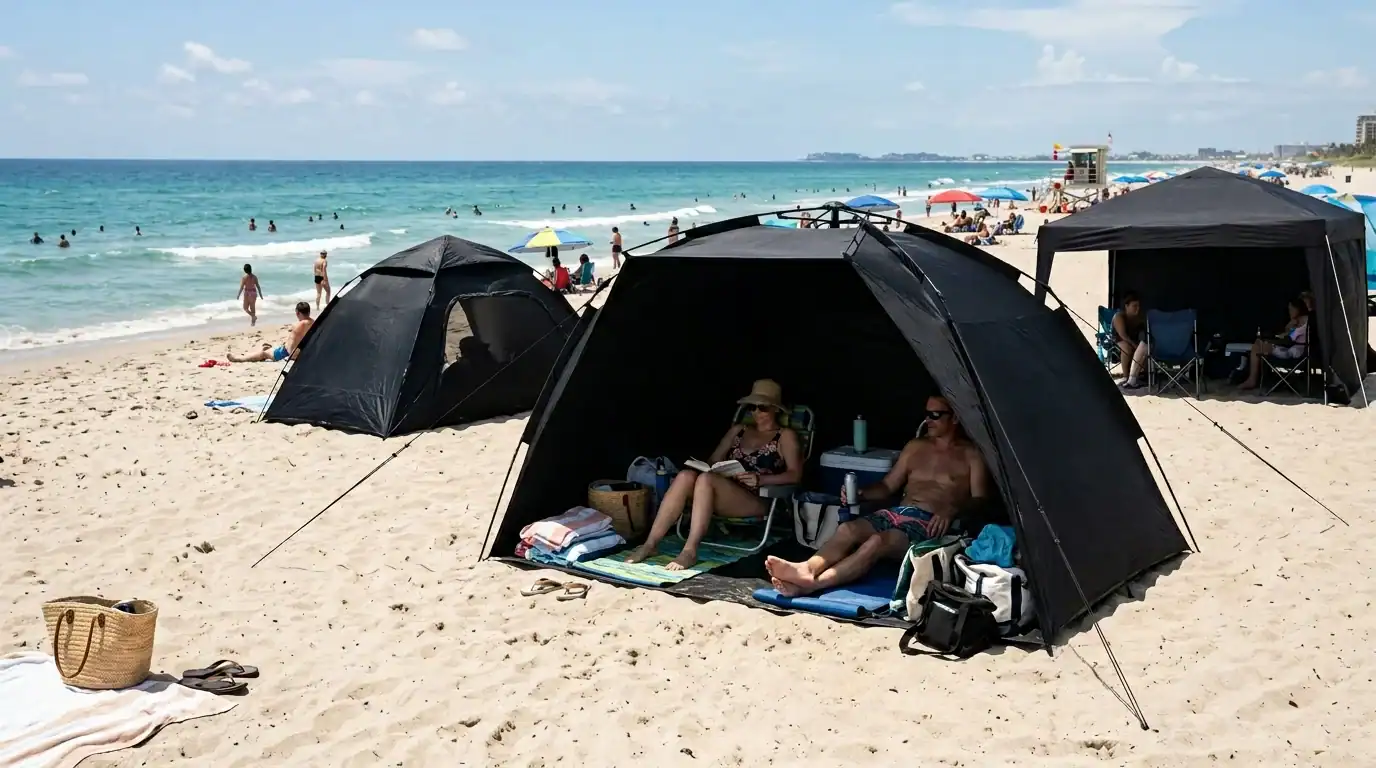
Decision Matrix: Matching Pole Material to Adventure Profile
Stop asking ‘carbon or aluminum?’ Ask ‘car camping or thru-hiking?’ The answer lives there, not in a spec sheet.
Most brand managers I sit across from at trade shows frame the problem wrong. They ask their sourcing partner for a ‘carbon fiber tent pole quote’ without first defining the end user’s adventure profile. That’s how you end up with a 9-ounce pole that shatters in a Utah canyon because the resin couldn’t handle 40°C heat and sandstone abrasion. The material decision isn’t a standalone engineering choice—it’s the physical manifestation of your brand promise to a specific customer. Get it wrong, and your return rate spikes, not because the pole was defective, but because it was mismatched.
The framework that works on a factory floor in Ningbo and in a product review meeting in Denver is the same: work backward from failure. What does this pole need to survive, and what happens to your P&L when it doesn’t?
The ultralight thru-hiker is a different animal entirely. This user counts grams, posts gear breakdowns on Reddit with a kitchen scale, and treats equipment as a disposable consumable on a 2,600-mile journey. They expect a pole set weighing under 350 grams total. Carbon fiber gets you there—120-150 grams per pole, saving 30-40% over aluminum. But here’s what the spec sheets won’t tell you: this customer also expects the pole to fail gracefully at mile 700, not explode at mile 50. That demands an epoxy-based, pressure-cured carbon layup, not the polyester resin garbage flooding the low-end OEM market. Polyester resin carbon delaminates after approximately 800 hours of UV exposure—roughly one season of Pacific Crest Trail sun. Epoxy-based carbon, properly cured, maintains flexural strength for three seasons or more. The FOB cost difference on a pole set is $12 versus $18. The brand reputation difference when a customer posts a jagged carbon shard on Instagram is incalculable.
-
- Family Car Camper Spec: 7075-T6 aluminum, 0.8mm+ wall, anodized in brand Pantone color. FOB $5.50-$7.50 per set. MOQ 300 units for custom color. Accepts quality tolerance of ±2% wall eccentricity without structural risk. Repairable with a $3 aluminum sleeve in the field; this alone prevents 80% of angry post-trip return requests.
- Ultralight Thru-Hiker Spec: 3K carbon fiber twill weave with UV-stabilized epoxy resin, pressure-cured in an autoclave. FOB $16-$20 per set. MOQ 1,000+ units for custom layup; use factory-standard shapes for launches under 500 units to amortize the $3,000-$5,000 mold cost across a reasonable per-unit burden. Demand sample approval with a 72-hour accelerated UV test (QUV ASTM G154) before signing the mass production agreement. Dry-spot rejection rate in layup should not exceed 3%.
Brand positioning dictates which side of this matrix you live on, and it’s a zero-sum game on the balance sheet. If your identity is ‘Innovation Leader’—the brand charging $499 for a tent because it uses aerospace materials—carbon fiber is table stakes. But the investment profile is heavy. Tooling alone for a carbon pole mold runs $3,000 to $5,000, versus $500 to $800 for an aluminum extrusion die. You’ll also need to budget for destructive testing on every production lot, because a single batch with dry spots in the layup can produce a 5% failure rate that vaporizes your margin. One European brand manager I worked with absorbed a 22% return rate on a premium carbon-poled tent line in 2022 because his supplier substituted a lower-grade resin without notice. The poles looked identical on sample approval but delaminated within six months of retail sale. He now requires a resin batch certificate with every shipment and pays a 7% premium for an EN ISO 9001-certified supply chain. His current return rate: 1.8%.
‘Best Value’ brands should stay disciplined and stick with aluminum. The math is straightforward. An aluminum pole set at $6.50 FOB, landed at $8.25 with freight and duty, creates a COGS target that works for a $199 retail tent. Spend $18 on a carbon pole set instead, and you either eat 600 basis points of margin or push the retail price to $279, alienating your core customer. The value play isn’t in chasing material trends; it’s in sweating the details competitors ignore. Custom-anodize the aluminum in your brand’s Pantone color for $0.30 per pole—a premium visual cue that carbon fiber can’t match without paint that chips and adds weight. Use the savings on the pole to upgrade the floor fabric to a 70D ripstop nylon with a 5,000mm hydrostatic head. That’s a performance story your customer can feel.
Write this down for your next supplier call: the benchmark for a well-spec’d aluminum pole in a mid-market tent is 7075-T6 alloy, 9.5mm diameter, 0.8mm wall, with a 15J impact rating and a factory-defect rate under 2%. For carbon, demand epoxy-based resin certification, a 72-hour QUV test pass, and a production defect ceiling of 3%. If your supplier can’t produce documentation for all three, find one who can. Your return rate target of sub-2% depends on it.
| Adventure Profile | Recommended Material | Key Spec / Requirement | Brand & Margin Insight |
|---|---|---|---|
| Ultralight Thru-Hiking | Carbon Fiber (Epoxy-Based) | Weight: <150g/pole; Flexural Modulus: >450N; UV-stabilized resin mandatory | Justifies 3× retail premium ($80–$150 pole set). Demands rigorous factory QC. Target: Innovation Leader positioning. |
| Family Car Camping | 7075-T6 Aluminum | Weight: 180–220g/pole; Impact Resistance: 15J (ASTM D256); Repairable in-field | FOB $4.50–$8/set keeps COGS low. Custom anodizing ($0.30/pole) for brand identity. Target: Best Value positioning. |
| High-Wind Expedition | 7001-T6 or 7075-T6 Aluminum | Impact Tolerance: 15J+; Wall eccentricity defect rate: <2% via ISO 9001 factory; Higher yield strength than carbon | 50% higher impact tolerance vs standard carbon. Eliminates micro-fracture failure risk. Lower warranty claim exposure. EN/CE compliance assured. |
| Coastal / Marine Use | Anodized Aluminum | Salt-spray corrosion resistance; Type II or Type III anodizing; Avoid untreated carbon (galvanic corrosion risk) | Anodizing adds minimal cost vs carbon frame replacement. Links to tent pole coating options. Zero delamination risk in humid conditions. |
| Brand Launch / Market Test | Aluminum (Standard Extrusion Die) | MOQ: 300 units for custom color; Tooling: <$800 extrusion die; 30–45 day lead time | Carbon MOQ 1,000+ units; $3,000–$5,000 mold cost. Aluminum enables agile, low-risk product line validation. Scalable to carbon later. |

Conclusion
The real gap between a pole that survives a season and one that fails on the first ridge line isn’t the material grade printed on a sell sheet. It’s whether the factory can hold that grade at scale. Before committing to a pole material, ask your supplier three questions: “Can you show me the FOB pricing difference per pole set between 7075-T6 aluminum and epoxy-based carbon, and hand over the resin certification at the same time?” “What is your internal quality tolerance for dry-spot rejection in carbon layup—and can you share the last 12 months of ISO 9001 audit reports?” “During sample approval, will you include a batch-specific flexural modulus test and UV-stabilized epoxy documentation for the carbon, not just a generic data sheet?” If you get a vague answer or a missing document, you’re already looking at your brand’s next warranty claim.
Suppliers who can answer all three exist, and they usually wear their audit trail as a badge of honor. When you’re ready to source poles that pass every check before a single container ships, explore the Kelyland Outdoors sourcing page to compare material specs backed by real factory-floor documentation.
Frequently Asked Questions
Which tent pole material is better for ultralight backpacking tents?
Carbon fiber is better because it saves 30–40% weight over aluminum. This advantage only holds when you source epoxy-based, pressure-cured carbon poles from ISO-certified factories to avoid premature failure. Insist on epoxy-based carbon fiber from ISO-certified facilities.
How much does a carbon fiber tent pole set cost compared to aluminum at wholesale?
Carbon fiber pole sets typically cost 3× more FOB China, roughly $12–$20 versus $4.50–$8 for aluminum. Custom carbon layup tooling also adds $3,000–$5,000 versus under $1,000 for aluminum extrusion dies. Factor tooling investment into your first production run budget.
Are carbon fiber tent poles more durable than aluminum in the long term?
No, carbon fiber is less durable long term. Low-grade resin can degrade under UV within 12 months, causing hidden delamination, while 7075‑T6 aluminum absorbs dents and bends without catastrophic failure. Specify 7075‑T6 alloy and request UV‑aging test reports for carbon poles.
Can I repair a broken carbon fiber tent pole in the field?
Generally no. Carbon fiber splinters on failure, making field‑expedient repair nearly impossible, unlike aluminum which can be temporarily sleeved. Always include a spare pole segment for backcountry use.
Which aluminum alloy is best for high-wind camping tent poles?
7075‑T6 aluminum alloy offers the highest yield strength and tightest wall‑thickness tolerance for high‑wind tents. 7001‑T6 is a cheaper alternative but can permanently deform under severe gusts. Request factory test certificates for the specific alloy batch.

 English
  Español
  Deutsch
  Français
  Português do Brasil
  Русский
  العربية
  한국어
한국어  日本語
日本語