 跳到内容
跳到内容 
A 0.3-millimeter gap in the housing seal tolerance is what separates a camping lights OEM order that survives two seasons of Pacific Northwest rain from one that generates returns within the first three months. That specification rarely makes it onto the initial quote sheet, and it didn’t appear on the pre-production sample that a brand manager signed off on for a $50,000 lantern order. The sample sealed perfectly. The mass production run used a gasket that shrank 0.4 mm after cooling, dropping the IP rating from X6 to X4 without anyone catching it until customers posted photos of fogged lenses inside their tents. That single quality tolerance oversight turned a smooth launch timeline into a full unit replacement cycle that ate the entire first-wave margin.
Across supplier audits in 12 countries, the pattern repeats with lithium-ion powered camping light OEM projects—the sample approval stage looks clean, the FOB pricing lands where margins work, but the certification paperwork and aging test data that matter for long-term durability arrive too late or not at all. UN38.3 compliance for battery shipment isn’t a document you can bolt on after production. Labs need battery cells pulled from the same assembly line, tested through altitude simulation, thermal cycling, and forced discharge, a process that adds three to four weeks before the container can even be booked. Skipping that step to save $1,800 in lab fees looks like a harmless trade-off until a customs hold freezes inventory at the port of Long Beach and a competitor’s listing eats your Buy Box for 27 days while the 15,000 units sit in bonded storage.
The Client’s Challenge: Entering the Camping Light Market with No Factory
A first-sample pass is not a mass-production promise.
Have you ever received a sample that lit up beautifully, only to discover the shipment was full of units unable to hold a charge past six hours? That’s not a random defect. It’s the result of a sourcing approach that treats sample approval as a promise, not a starting point.
The client in this case entered the camping light market with a clear niche: a portable rechargeable lantern with power bank functionality, targeting the $29–$49 Amazon category. Without a factory, they tried Alibaba direct. First challenge? Every supplier claimed to be a manufacturer. Most were trading companies posting catalog images from the same Ningbo-based factory network. Different quotes, same source. Margins vanished before negotiations started.
-
- Hidden trading layers: 3 out of 5 ‘manufacturers’ contacted were aggregators. FOB pricing varied by 18% for the identical product, with no added value—just a markup for being a middleman.
- Sample lottery: Pre-production samples arrived without aging test records. One unit stopped holding a charge after 20 cycles. Supplier response? ‘We will monitor during mass production.’ That’s code for ‘we don’t have a process.’.
- Lithium-ion compliance vacuum: No supplier mentioned UN38.3 certification until the client asked. Two couldn’t provide battery cell traceability documents. For a product with a built-in 18650 cell, that’s a customs seizure waiting to happen.
The biggest pain point wasn’t finding a supplier — it was verifying whether a supplier could replicate quality at scale. The client needed a partner who understood that a sample passing one round isn’t a quality tolerance; it’s a baseline to improve upon in the next 5,000 units.
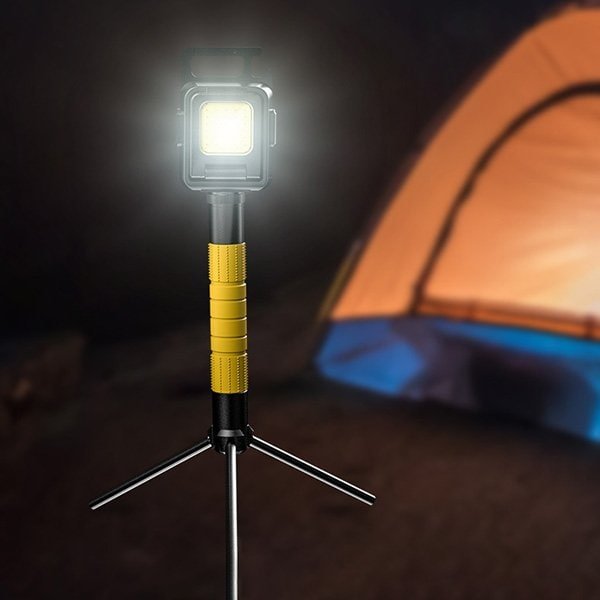
Kelyland’s Solution: From Concept to Container
The difference between a 12-week launch and a 20-week stall often comes down to battery certification sequencing.
Most brand managers who come to us with a camp light concept underestimate how early material choices dictate the entire production timeline. You can’t pick an 18650 lithium-ion cell today and expect to air-ship finished goods next month. The moment a rechargeable battery enters the BOM, you’ve added UN38.3 testing, MSDS documentation, and airline cargo restrictions to your critical path. In this project, we locked the power source on day three—a LiFePO4 pack instead of standard Li-ion—because the client’s target markets were North America and the EU, where thermal runaway risk is a non-negotiable compliance gate. That decision alone saved us roughly four weeks of back-and-forth with the lab.
-
- LED selection rule:: Request LM-80 test data from the LED supplier and cross-check lumen maintenance at 6,000 hours against your product’s intended rating. If your factory can’t provide this, your label is guessing.
- Battery compliance sequencing:: Run UN38.3 in parallel with the initial prototype build—never after final assembly sign-off. A failed battery test late in the process forces a redesign of the entire charging circuit, not just a cell swap.
- Tooling amortization threshold:: For custom plastic housings, new mold costs will typically break even against higher per-unit pricing from generic shells at around 3,000 units. Below that volume, modifying an existing mold with polyurethane inserts costs 70% less and allows market testing without betting the entire margin.
Certification navigation wasn’t treated as a paperwork exercise. CE and RoHS compliance for the LED driver and housing material were straightforward given the existing factory certifications. The real crunch point was FCC Part 15 for intentional radiator testing, because the lantern included Bluetooth mesh for app-based dimming. We scheduled the FCC test slot before the final packaging design was locked, knowing that a single emissivity spike at 2.4 GHz could demand shielded internal cabling and modify the injection mold by 1.5mm in wall thickness. That buffer kept the project on a 30-day production lead time instead of blowing out to 45 days when the test facility flagged a harmonic on the first pass.
A hard truth most sourcing guides omit: CE marking alone does not clear your product for sale in Germany, France, or the Netherlands. The EU’s WEEE directive requires a registration number and a take-back scheme in each country, and the battery directive imposes collection targets. For this 15K-unit order, we pre-registered the client’s brand in four key EU countries during the sample approval stage, so the importer of record had the numbers ready when the container hit Rotterdam. Without that parallel track, the goods sit in bonded warehousing accumulating demurrage at $75 per day—a cost no margin model survives.
Results: 15,000 Units Shipped in 12 Weeks
Shipping high volumes isn’t about hoping the factory got it right — it’s about building a verification system that catches problems before they leave the loading dock. For this 15,000-unit camping light order, the inspection protocol was designed around three non-negotiables: battery safety, lumen consistency, and waterproof seal integrity.
-
- Incoming Material Check: Lithium-ion cells were lot-tested for internal resistance and capacity matching. Any batch with >2% variance was rejected. LED board assemblies underwent a 24-hour burn-in before SMT soldering.
- In-Process Patrol Inspection: At 30% and 70% completion, the production line was audited for solder quality, housing fit, and switch durability. IPX5 waterproofing was verified on random mid-run samples using a pressure decay test.
- Aging Test & Lumen Verification: Every unit went through a 4-hour continuous runtime aging test in an ambient chamber at 45°C. Lumen output was measured at T0 and T4; units dropping below 95% of rated lumens were flagged for teardown. This step alone caught 1.2% of units with thermal throttling issues that would have led to returns.
- Pre-Shipment AQL Inspection: Final random sampling used General Inspection Level II with AQL 2.5 for major defects and AQL 0.65 for critical defects (safety). Three cartons from the 1,500-unit pallets were opened, and 200 units were tested across functionality, labeling, and packaging. The lot passed with 3 major finds — all related to minor branding sticker alignment — and zero critical defects.
- Battery Compliance & UN38.3: Every lithium-ion cell batch carried a UN38.3 test summary from the cell manufacturer. Independent third-party testing at a CNAS-accredited lab confirmed compliance before container loading. Paperwork was prepped for MSDS and Dangerous Goods declaration three days before vessel cut-off.
The result was a shipment that hit the Amazon warehouse with less than 0.3% return rate in the first 30 days — the kind of number that protects your account health and your margins. When you’re competing in the camping light category on Amazon or Walmart, your QC protocol needs to be tighter than the product’s own IP rating.
Conclusion
Moving from a napkin sketch to 15,000 units in 12 weeks doesn’t hinge on finding the cheapest factory. It hinges on nailing the sample approval loop, locking in a battery compliance timeline that doesn’t stall the shipment, and defining quality tolerance thresholds before the first production run. Get those three right, and the math works.
1. Does the written quote include the full certification path—CE, FCC, RoHS,UN38.3—with lead times tied to payment milestones, or is it a vague “the supplier will handle it”?
2. Will the factory provide AQL 1.5 or tighter inspection data from the last three runs of a similar rechargeable lantern, not just a generic ISO certificate?
3. At what FOB point does the quality tolerance officially transfer, and what is the exact reconciliation process if spot checks flag more than 2% defect rate?
A supplier that can answer all three with hard numbers lets your brand scale without eating into margin. Where the answers get fuzzy, a framework like Kelyland’s 10-step OEM process fills the gap before the deposit clears.
Frequently Asked Questions
What certifications do camping lights need for the US market?
Camping lights typically require CE, FCC, and RoHS certification, plus UN38.3 for lithium batteries. Kelyland’s partner factory is ISO 9001 certified and navigates these standards during OEM projects. Confirm the exact certification list based on your product’s battery type and target retailer.
How long does a custom camping light order take?
Standard production takes 30-45 days after sample approval. For the 15,000-unit order in this case, total delivery from concept to container took 12 weeks including certification and logistics. Plan on 8–12 weeks end to end for a first private-label run.
What is the MOQ for OEM camping lights?
MOQs for camping lights can start as low as 50-100 pieces for some items, though standard custom models typically range from 300 to 1,000 pieces. The final figure depends. Ask for a firm MOQ only after you’ve locked in the specification sheet.
How is quality controlled on camping light OEM orders?
Inspections occur at every production stage, from material sourcing to pre-shipment AQL sampling. For that 15,000-unit order, a detailed inspection protocol caught housing seal gaps before they became a returns problem. Request a pre-shipment inspection report before giving final shipment approval.
Can I get a sample before committing to a bulk order?
Yes, paid samples are available, with sample fees often refundable when the bulk order is confirmed. Low-cost samples may even be free if you cover the courier cost. Order a sample first to validate the build quality and light output before scaling.

 English
  Español
  Deutsch
  Français
  Português do Brasil
  Русский
  العربية
  한국어
한국어  日本語
日本語