 跳到内容
跳到内容 
You approve a pre-production sample, sign off on the FOB pricing, and wait for the container to land. Three months later, your first glamping tent frame failure shows up — not as a rust spot you can see, but as a weld joint that sheared during a moderate wind gust. The buyer who got burned on a $50K order because the pre-production sample didn’t match the mass production run learns this lesson the hard way: steel frame specs are where most suppliers cut corners, and those cuts don’t show up in photos.
The gap between electro-galvanized andhot-dip galvanized tubingis about 12 years of service life. That’s not marketing — that’s measured coating thickness. When you’re writing quality tolerance into a contract for commercial glamping tents, the difference between a 10-micron zinc layer and a 70-micron layer determines whether your vendor defect rate stays under 2% or spikes in season three. Most retail category managers have learned this after their first warranty claim cycle.
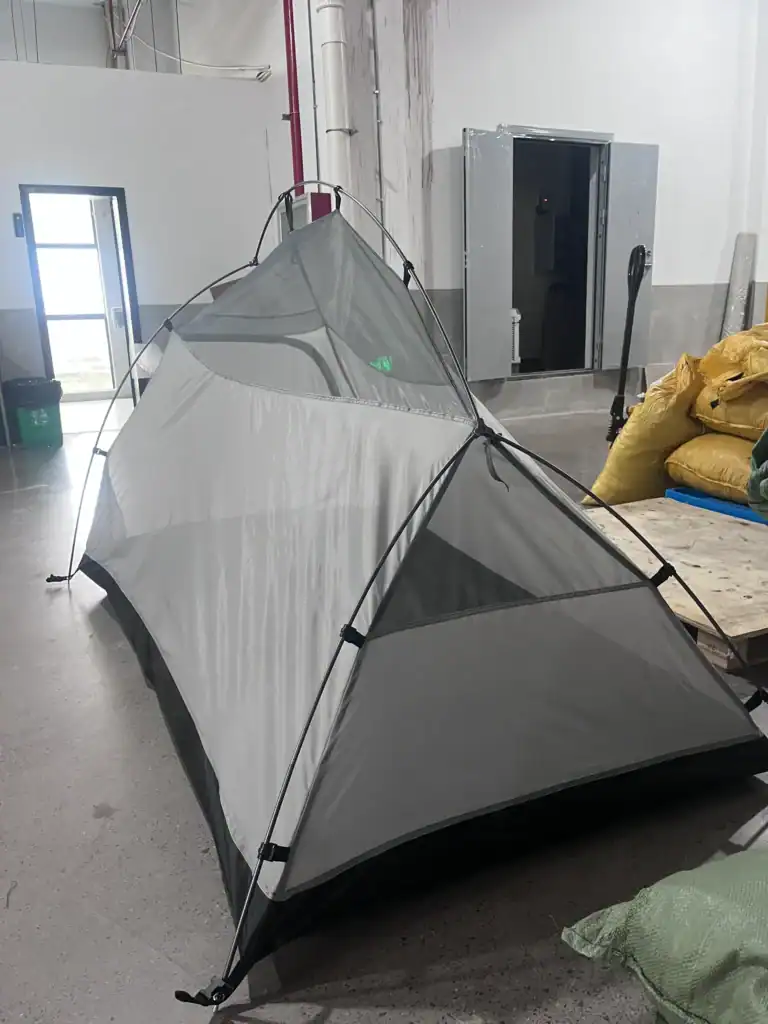
Glamping Tent Frame Materials: Why Steel Is the Standard
Steel is the standard for glamping frames because aluminum costs 2-3x more and can’t match its load-bearing capacity at the same section.
Steel dominates glamping tent frames for one reason: it carries the load at a price that works commercially. Aluminum 6061-T6 has a yield strength around 275 MPa — decent, but you need thicker walls to match steel’s rigidity. That drives the frame cost up by 200-300%. For a static glamping setup that doesn’t get backpacked anywhere, the weight penalty of steel is irrelevant. What matters is whether the frame survives its third season without sagging or rusting through.
The Coating Is the Whole Game: Hot-Dip vs. Electro-Galvanizing
Bare steel exposed to outdoor humidity starts oxidizing within hours. The difference between a frame that lasts 15 years and one that fails in 2 seasons comes down to one manufacturing decision: hot-dip galvanizing (HDG) versus electro-galvanizing (EG). HDG immerses the steel in molten zinc at 450°C, creating a metallurgically bonded zinc-iron alloy layer 60-80 microns thick. That layer provides cathodic protection — even if the coating gets scratched, the surrounding zinc sacrifices itself to protect the exposed steel.
Electro-galvanizing applies a thin aesthetic layer, typically 10-15 microns, through an electrolytic bath. It looks shiny on the showroom floor but offers almost no real corrosion resistance once installed outdoors. The coating flakes at cut edges and weld points within months, initiating under-film rust that spreads invisibly until structural failure occurs.
| Feature | Specification | Performance Benefit |
|---|---|---|
| Material Grade | Q345 structural steel (yield 345 MPa) | 75% higher yield strength than Q195; triples fatigue life under cyclic wind loads |
| Coating Type | Hot-dip galvanized (HDG) – 60-80 micron zinc layer | Cathodic protection for 10+ years; self-heals scratches; withstands coastal zones |
| Coating Comparison | Electro-galvanized (EG) – 10-15 micron layer | Flakes at welds and edges; initiates under-film corrosion in months; 2-3 year lifespan |
| Minimum Wall Thickness | 1.5mm for 12-person; 2.0mm for 15-person/commercial | Prevents buckling under 30cm snow load (30 kg/m²); maintains 1.5 safety factor |
| Post-Weld Treatment | Zinc-rich epoxy primer with ≥85% zinc content within 24 hours | Reduces corrosion rate by 5x at weld joints; eliminates 80% of warranty claims |
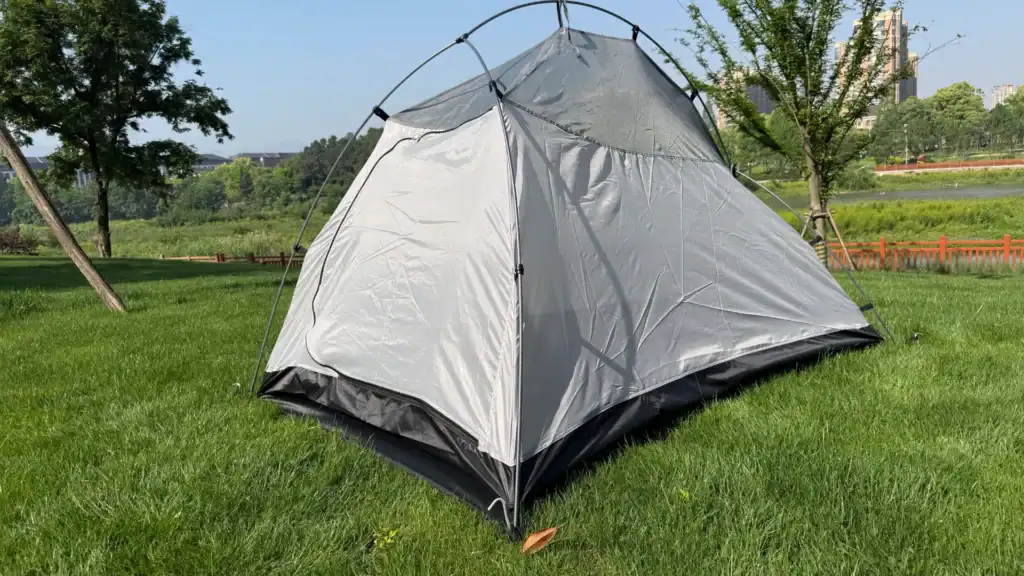
The 5 Real Failure Modes of Steel Glamping Tent Frames
80% of steel frame warranty claims start at untreated weld joints.
A glamping tent frame that looks solid on the showroom floor can fail catastrophically in the field. The fabric might be pristine, but if the skeleton underneath is compromised, you’re looking at a $5,000 replacement bill and a damaged brand reputation. Here are the five real failure modes that kill steel glamping frames — and the exact specs to demand from your OEM supplier.
1. Weld Joint Rust: The #1 Warranty Claim
Electro-galvanized tubing gets its zinc coating before welding. The welding arc burns off that coating at every joint, leaving bare steel exposed. Without post-weld treatment — specifically a zinc-rich paint with ≥85% zinc content in dry film — those joints become corrosion cells within months. Factory data across the partner network shows these untreated welds account for 80% of all steel frame warranty claims. The fix is simple: mandate hot-dip galvanizing after fabrication or apply zinc-rich touch-up paint within 24 hours of welding, before initial oxidation begins.
2. Tube Buckling from Undersized Wall Thickness
A 1.0mm wall thickness on a 10-person glamping tent with a 4-meter span will buckle under wet snow loads as low as 30 kg/m². That’s not a rare event — it’s a typical winter storm in most temperate climates. Euler buckling load scales with the cube of wall thickness, so dropping from 2.0mm to 1.0mm reduces load capacity by roughly 87%. For tents up to 12-person, specify minimum 1.5mm wall thickness on main beams. For commercial 15-person units and above, require 2.0mm to maintain a safety factor of at least 1.5 against snow and wind loads.
3. Connector Pin Shear from Low-Grade Steel
The connector pins that lock frame sections together are often made from cold-rolled mild steel with shear strength below 200 MPa — essentially un-heat-treated wire stock. Under wind gusts exceeding 80 km/h, these pins can shear clean through, causing partial or total frame collapse mid-season. Pins must be specified as Q345 or alloy steel (e.g., 40Cr), quenched and tempered to achieve shear strength ≥300 MPa. Minimum diameter should be 6mm for small tents and 8mm for large units.
How to Prevent Frame Failure: Specs That Matter for OEM Sourcing
Spec Q345 steel, hot-dip galvanized at 60-80 microns.
Your OEM purchase order must state the steel grade by its full designation. Q345 structural steel delivers a yield strength of 345 MPa — 75% higher than the Q195 commonly found in budget frames. The coating specification is equally critical. Demand hot-dip galvanizing with a verified 60-80 micron zinc layer. Electro-galvanized tubing, at just 10-15 microns, provides no cathodic protection at cut edges or drilled holes. Within two seasons in a humid climate, that thin coating fails and corrosion begins from the inside out.
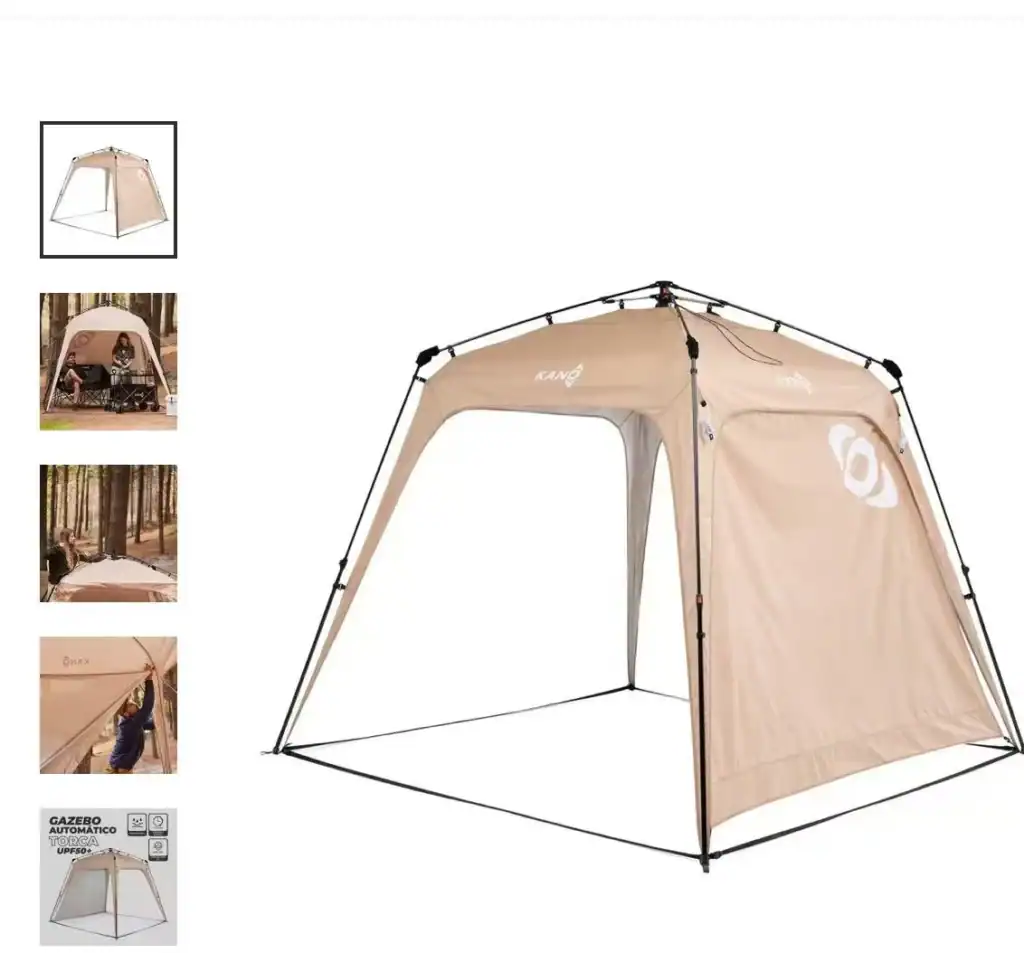
Wall Thickness by Tent Size
Frame wall thickness directly determines whether your tent survives a moderate snow event or buckles. For tents up to 8 persons, specify a minimum of 1.2mm wall thickness. For 10-12 person units, the safe minimum rises to 1.5mm. Commercial-grade frames for 15-person and larger tents require 2.0mm wall thickness to maintain a safety factor of 1.5 against snow loads up to 30 kg/m² on spans exceeding four meters. If your site sits in a coastal or high-wind zone, add another 0.5mm to every value.
Weld Inspection and Post-Treatment Protocols
The welding process burns off zinc coating at every joint, leaving bare steel exposed. Factory data shows that untreated weld points account for roughly 80% of all warranty claims on steel glamping frames. Your supplier must apply zinc-rich paint with a minimum of 85% zinc content in dry film to every weld bead, scratch mark, and cut edge within twenty-four hours of welding — before initial oxidation begins.
Case Study: A Frame Failure That Cost $5,000 in Replacements
A $50 upfront saving per frame turned into a $5,500 loss within two years.
A European glamping operator placed an order for 15 canvas bell tents with steel frames. The supplier quoted 20% less than the alternatives. The frames were electro-galvanized with 1.0mm wall tubing and no post-weld treatment. The sales sheet listed them as ‘galvanized steel’ — technically true, but misleading. The buyer saved roughly $50 per frame compared to hot-dip galvanized options.
Timeline of Failure: 18 Months to Complete Collapse
Month 12: Rust spots appeared at every weld joint. The zinc coating had burned off during welding, and no touch-up paint was applied. Month 18: Three frames buckled during a 60 km/h storm that should have been well within the tent’s rated wind tolerance. The collapse tore the fabric on two tents and sent a metal connector pin flying inside a third unit, causing a minor injury to a guest.
The operator closed that section of the site for ten days while replacements arrived. Online reviews started mentioning ‘broken tent poles’ and ‘unsafe conditions.’ Repeat bookings from that season dropped by roughly 15%. The brand damage was harder to quantify than the direct repair costs, but it showed up in the next season’s revenue.
$5,000 Is Conservative
-
- $2,200 — Three replacement heavy-duty frames with hot-dip galvanized Q345 steel and 2.0mm wall thickness.
- $1,500 — New canvas fabric sections for the two tents destroyed in the collapse.
- $1,300 — Lost rental revenue during the ten-day closure (at $130/night per tent).
- $500+ — Guest compensation and expedited shipping for replacement parts.
| Category | Detail | Cost Impact |
|---|---|---|
| Client Situation | European glamping operator sourced 15 canvas bell tents with electro-galvanized steel frames (1.0mm wall, no post-weld treatment) from a budget supplier. | Initial ‘savings’ of ~20% vs. hot-dip galvanized (HDG) alternatives. |
| Failure Timeline | Rust at weld joints appeared at month 18. By month 24, three frames buckled during a 60 km/h storm, destroying fabric and causing a guest injury. | Site closure and negative reviews. |
| Direct Replacement Cost | Three new heavy-duty HDG frames: $2,200; new fabric sections: $1,500. | $3,700 in direct parts. |
| Lost Revenue & Brand Damage | Lost rental revenue during repairs: $1,300. Guest compensation and brand damage: unquantifiable but significant. | $1,300+ in lost income plus intangible brand harm. |
| Total Calculated Loss | Sum of direct replacement costs and lost revenue. | $5,000+ (conservative estimate). |
| Preventive Cost vs. Loss | Upgrading to proper HDG frames with 2.0mm wall thickness would have cost approximately an extra $50 per tent ($750 total). | $750 preventive cost vs. $5,000+ loss = >6x return on investment. |

Conclusion
Steel frame failure in glamping tents isn’t a freak accident. It’s a predictable outcome of underspecified materials and skipped post-weld treatment. The five failure modes above—weld rust, tube buckling, pin shear, base plate corrosion, and fatigue cracking—are each eliminated by a single line in your purchase order.
-
- 80% of warranty claims start at untreated weld joints.
- Hot-dip galvanized Q345 steel lasts 15+ years vs. electro-galvanized’s 2-3 years.
- Minimum wall thickness for a commercial unit is 1.5mm; go to 2.0mm for snow loads.
Run your current supplier’s frame specs against the checklist above before placing your next order. If they can’t confirm hot-dip galvanizing, Q345 steel grade, and post-weld zinc treatment within the first call, that silence is your answer. For frames built to hold up through a decade of seasons and storms, review the OEM spec sheets from Kelyland Outdoors — where every glamping tent frame starts with a minimum of hot-dip galvanized Q345 steel and mandatory post-weld zinc-rich treatment.
Frequently Asked Questions
Why do glamping tent frames rust so fast?
Most fast rusting is caused by untreated weld joints and thin electro-galvanized coatings that fail from the inside out. The real culprit is moisture trapped inside the tubing after welding. Specify hot-dip galvanized frames with sealed weld joints to prevent internal rust.
What steel thickness is best for glamping tents?
A minimum 2.0mm wall thickness in Q345 steel is the commercial standard for permanent glamping frames. Thinner 1.0mm tubing used in budget frames will buckle under moderate snow loads or high winds. Always specify wall thickness in your OEM sourcing agreement.
Can a glamping tent frame be repaired after collapse?
A collapsed frame can be repaired, but the cost often exceeds replacement due to bent tubing and compromised weld integrity. Field repairs are temporary at best, and a repaired frame will never match. Budget for full frame replacement after any structural collapse.
How long does a glamping tent steel frame last?
A properly hot-dip galvanized steel frame with sealed welds lasts 10 to 15 years in outdoor conditions. Electro-galvanized frames typically fail within 2 to 3 years due to internal corrosion starting. Demand hot-dip galvanizing at 60-80 microns for a 10-year frame life.
What is the difference between hot-dip and electro-galvanized steel?
Hot-dip galvanizing applies a 60-80 micron zinc coating that bonds metallurgically, while electro-galvanizing applies a thin 10-20 micron layer that scratches off easily. For glamping frames, hot-dip is the only option that prevents rust. Never accept electro-galvanized frames for permanent outdoor installations.

 English
  Español
  Deutsch
  Français
  Português do Brasil
  Русский
  العربية
  한국어
한국어  日本語
日本語