 跳到内容
跳到内容 
The gap between sample approval and the mass production run is where smart tent OEM manufacturing usually breaks down. The problem doesn’t announce itself at the factory. It surfaces weeks later, when a $50,000 order lands in the warehouse and the app-controlled venting stops responding — or the sensor readings drift after the first overnight rain. The pre-production sample looked right, passed the basic waterproofing checks, and earned the green light. The production units tell a different story, and the difference is almost always hidden inside the sealed electronics compartment.
Most tent factories can sew a canopy and hand over a strong fabric test report. Very few can validate what happens to a sensor board sealed into a polyester pocket and left outside for a season. Standard QC checklists cover tensile strength, coating adhesion, and packing drop tests. They rarely cover signal strength, battery drain, or connector humidity. So a buyer can lock FOB pricing and quality tolerance around stitch density, then still receive a tent that fails the moment it meets rain. The smart tent sourcing conversation has to start with electronics validation — not fabric samples.
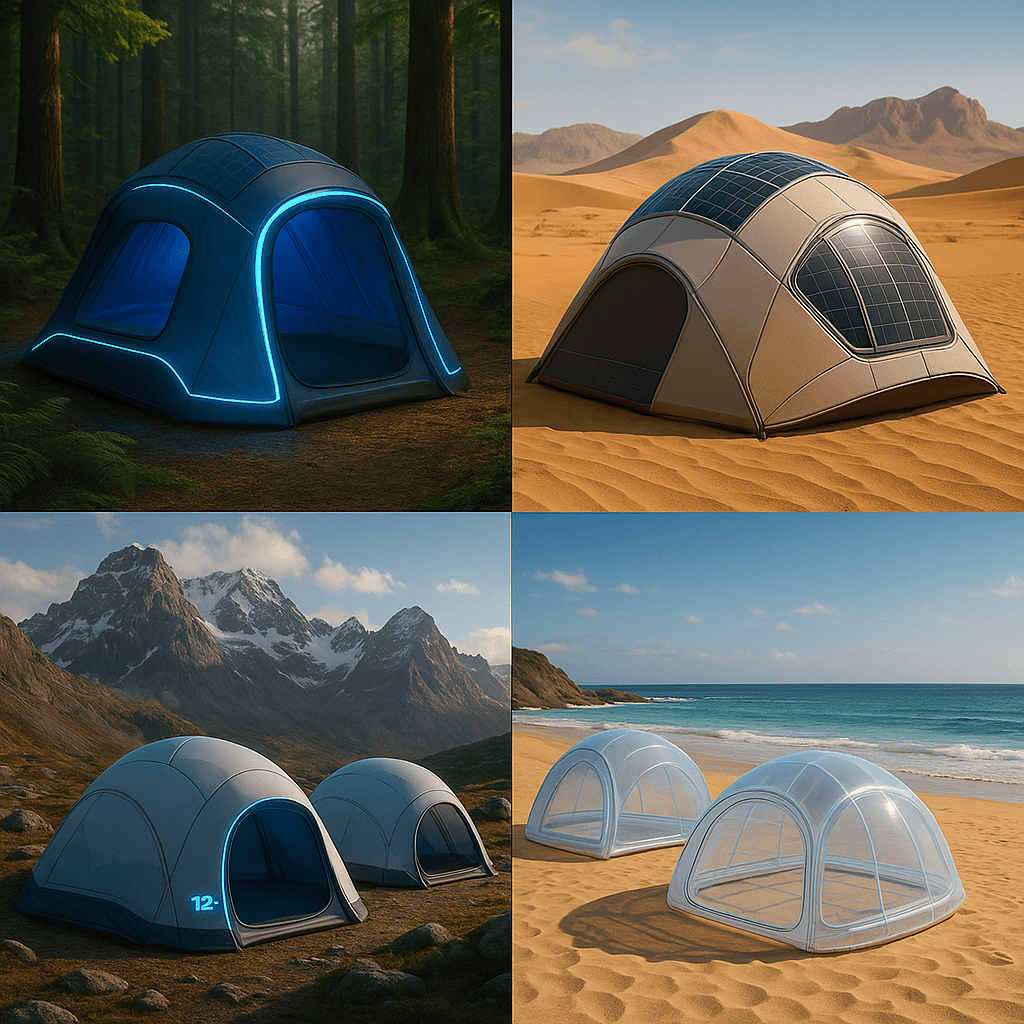
Step 1: Define Your Smart Tent’s Core Features and Sensors
A smart tent is an enclosure plus an electronics assembly line.
Before you send an RFQ, answer one question: what does ‘smart’ actually do for your buyer? That answer sets sensor count, power budget, and firmware complexity. It also decides whether your MOQ stays at 50-100 units for basic customization or moves to 300 units for full electronics integration.
Define the feature set before you touch fabric
Start with four feature categories: temperature and humidity sensors, automated venting, app-controlled lighting, and GPS tracking. A rental fleet buyer needs GPS and battery life more than app UI polish. A weekend camper wants vent automation and lighting. Every feature adds a sealed connection point that must survive rain.
-
- Temperature/humidity sensors: These drive vent automation and frost warnings. They require sealed sensor pockets and IP67-rated connectors. Taped seams will fail in rain.
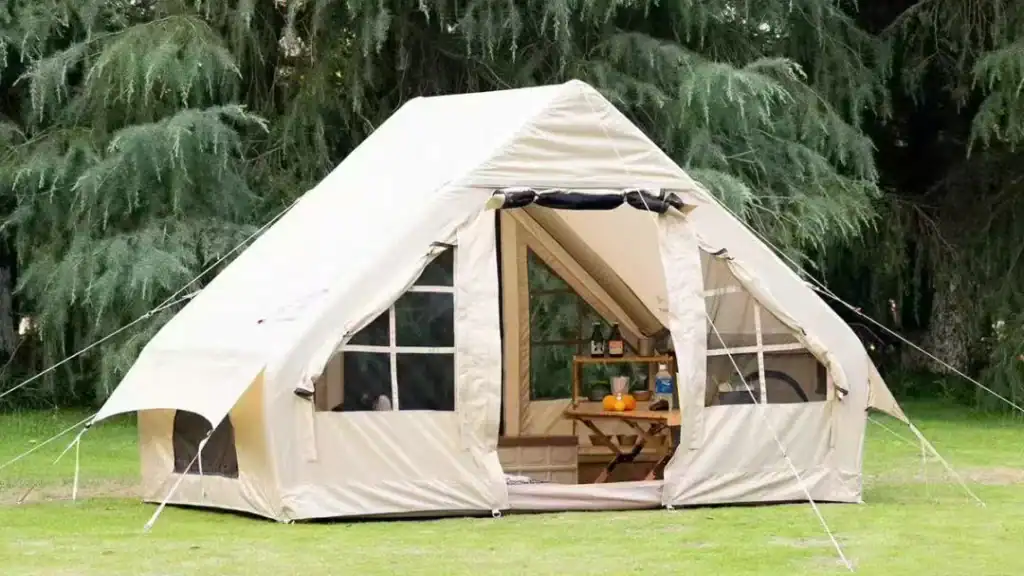
- Automated venting: Needs actuator integration with the frame. Metal poles cause cable routing problems, which is why air-beam frames are the structural baseline for connected tents.
- App-controlled lighting: Raises the power draw. Battery capacity and charging time must be specified in hours before sampling, not after the prototype exists.
If a factory quotes a connected tent without pressure-testing sealed electronic compartments, walk away. Most tent factories can sew a tent but cannot validate sensor integration. The real failure point is IP67 sealing of electronics inside fabric.
Document power source and connectivity
Power source drives certification. Battery-powered tents need UN38.3 for transport, plus CE/FCC for the electronics. Solar hybrid adds a charge controller and changes how sensor pockets are routed. Bluetooth is the lowest-cost link; Wi-Fi and cellular add range but consume more power. Choose before quoting, because each path changes the electronic bill of materials.
Write down expected battery life in hours and the operating temperature range. The factory uses those numbers to select cells, validate firmware, and run the electronics test. Skip this and you inherit prototype delays. Smart tent projects already carry an extra 10-20 days of electronics validation over standard tent orders.
The factory network behind this guide includes ISO 9001:2015 certified tent lines and a 100% pre-shipment electronics testing step. Confirm that capability before you send drawings. A supplier without an electronics assembly line cannot truthfully document sensor calibration or connector sealing.
| Feature | Specification | Why It Matters |
|---|---|---|
| Temperature & Humidity Sensor | ±0.3°C / ±2% RH accuracy | Enables automated venting and climate alerts |
| Automated Venting | Motorized vent with rain sensor | Keeps interior dry without manual setup |
| App-Controlled Lighting | Bluetooth / Wi-Fi LED module | Customizable brightness and color via app |
| GPS Tracking | Cellular / GPS module | Real-time location tracking for rental fleets |
| Power Source | Battery / Solar / Hybrid | Determines UN38.3 cert and runtime |
| Connectivity | Bluetooth / Wi-Fi / Cellular | Defines app control range and data plan needs |
| IP67-Rated Connectors | Sealed, submersible 1m for 30 min | Prevents electronics failure in heavy rain |
| Battery Life Expectancy | Specify in hours (e.g., 24–72h) | Validates electronics against real camping conditions |
Step 2: Select the Tent Structure and Materials
Air beams beat poles for smart tents: cleaner cable entry, no sensor interference, faster setup.
Structure comes first in a smart tent. A conventional pole tent forces cables around aluminum or fiberglass poles, and every cable entry point becomes a stress crack in the rain. Air beams eliminate that problem. They also cut setup time, which matters if you are selling to rental fleets or glamping operators.
Air Beams Over Poles: The Structural Advantage
Air-beam frames are the correct structural choice for connected tents. Metal poles interfere with sensor routing, and rigid joints create pressure points where wiring exits the fabric. Air beams allow clean cable runs and a simpler waterproof seal. The catch: a tent-only factory can sew a tent, but it cannot weld an air beam or pressure-test a sealed sensor compartment. Confirm both capabilities before sending your spec.
-
-
- High-frequency welding: Air beam seams must be welded, not sewn, to hold pressure. Kelyland’s tent line in Ningbo uses this process on inflatable frames and verifies every seam before assembly.
- Pressure testing: Expect 24-48 hours of airtightness testing and static water pressure of at least 16 kPa on the finished frame. Ask for the test report before approving the prototype.
- Electronics sealing: IP67-rated connectors must be sealed into the fabric, not taped over after assembly. The electronics line pressure-tests each sealed compartment before the tent moves to finishing.
-
Canopy Fabric, Coating, and Color Options
The canopy is where most buyers spec wrong. They pick fabric weight first and ignore the coating. For a smart tent, the coating drives both waterproofing and how sensor pockets are welded into the shell. Specify the coating before you lock the fabric.
-
-
- 210T polyester: Lightweight and cost-efficient. PU coating brings it to a solid waterproofing level for three-season use.
- Oxford: Heavier and more abrasion-resistant. Better for rental fleets where tents get packed and unpacked dozens of times.
- TC fabric: Polyester-cotton blend. Premium breathability and reduced condensation, but the highest cost of the three.
- Coatings: PU, silicone, and black coating are the standard options. Black coating gives the best UV block for hot markets.
-
Color is the easy part, but it still needs a decision. Kelyland’s factory network holds 34 fabric colors in stock, which keeps minimum order quantities at 50-100 units instead of forcing a custom dye batch. Most buyers still Pantone-match for brand consistency; the stock library covers the rest.
TPU vs PVC: The Cost-Benefit Decision
TPU adds 25-30% to the unit cost of the air beam. That premium buys better low-temperature flexibility and lighter weight. PVC costs less, but it stiffens below -5°C and can crack at flexing points after repeated cold-weather setups. For a connected tent, the air beam material determines whether your electronics stay protected in a winter storm.
-
- TPU: +25-30% unit cost. Stays flexible below -5°C. Lighter, which lowers shipping weight. The right call for premium or four-season smart tents.
- PVC: Baseline cost. Stiffens below -5°C and weighs more. Works for value air tents and glamping in mild climates.
Match the air beam material to your target market, not the price sheet. If your retail price point supports $300 or more, TPU is the only rational choice — the 25-30% cost premium disappears inside the margin, and you avoid cold-weather failures that destroy a brand.
| Feature | Specification | Advantage |
|---|---|---|
| Frame Structure | Inflatable air beams (TPU or PVC) preferred over metal poles | Metal poles interfere with sensor routing and create stress points at cable entry |
| Air Beam Material – TPU | +25-30% unit cost vs PVC; better below -5°C; lighter weight | Premium/four-season smart tents and cold-climate markets |
| Air Beam Material – PVC | Baseline cost; stiffens below -5°C; heavier weight | Value air tents and glamping applications |
| Canopy Fabric | 210T polyester, Oxford, or TC (poly-cotton blend) | Determines durability, breathability, and print quality for branding |
| Fabric Coating | PU, silicone, black coating (UV block), or PVC | Directly affects waterproofing, UV resistance, and sensor pocket sealing |
| Color Options | 34 fabric color options available (OEM/ODM color library) | Enables brand-specific aesthetics and market positioning |
| Factory Capability | High-frequency welding and pressure testing on-site | Validates air-beam airtightness and IP67 electronics sealing before production |

Step 3: Prototype Sensor Integration and App UI
IP67 failure happens where the connector meets fabric, not in the sensor itself.
Smart tent electronics fail at exactly one point: the seal between a cable and the tent body. Most tent factories can sew a tent but cannot validate sensor integration. They will mount the sensor, tape over the cable entry, and call it waterproof. That approach survives the sample photo and fails in the first heavy rain.
A connected tent OEM factory needs a dedicated electronics assembly line with pressure testing, not just a sewing QC checklist. The connector should be IP67-rated and sealed into the fabric during the layup, before the tent body moves to finishing. Operators then pressure-test every sealed compartment. If the test fails, the panel is reworked before it reaches final assembly.
Build the App UI and Firmware at the Same Time
The tent body and the electronics software must develop in parallel. Waiting for the physical prototype to finish before starting the app adds weeks to the timeline. The factory’s electronics team should begin UI and firmware work once the sensor list and power budget are locked.
-
- App code ownership: Confirm who owns the source code. If you supply the app, the factory provides an API documentation package and handles the hardware-side firmware. If the factory writes the app, put data ownership and transferability in the contract.
- Firmware updates: Decide who pushes updates after sale. That responsibility includes cloud hosting, patch releases, and compatibility with future sensor changes. A factory without a software team cannot support this, so plan a hardware/software split that still ends with one shared test protocol.
Demand a Test Report That Covers Electronics, Not Just Fabric
A standard OEM quality report lists fabric strength, waterproofing, and packing drop tests. It never lists signal strength, battery life, or app connectivity. On a smart tent, those are the specs that determine whether a product survives retail. Add them to the prototype test report before approving mass production.
Expect 2-3 prototype iterations before sign-off. The first round catches connector placement and antenna interference. The second round validates the sealing method. The third should deliver the final test report. If a supplier promises a working smart tent on the first prototype, they are either overconfident or under-testing.
The report must include signal strength at the edges of the tent, battery drain per night, and IP67 waterproofing results after pressure testing. Battery-powered units also need CE/FCC for electronics and UN38.3 for transport. Kelyland’s tent lines run ISO 9001:2015 stage checks and 100% pre-shipment electronics testing, so the electronics validation is documented, not assumed.
| Workstream | Requirement | Specification | Risk Addressed |
|---|---|---|---|
| Sensor Embedding | IP67-rated connectors sealed into the fabric | Embedded at assembly, not taped over after the tent body is sewn | Electronics failing in rain or at cable entry points |
| Sensor Embedding | Pressure-test every sealed compartment | Factory electronics line validates sealing before finishing | Unsealed connectors creating field failures |
| App UI & Firmware | Build app UI and firmware in parallel with tent body production | Software and hardware development run on overlapping timelines | Prototype delays from sequential workflows |
| App UI & Firmware | Confirm app code ownership, API package, and update responsibility | Factory provides API documentation for third-party app integration; cloud hosting agreed up front | Post-sale app failures and ownership disputes |
| App UI & Firmware | Establish one shared test protocol for hardware and software | If the factory has no software team, define a split workflow ending in combined validation | Integration gaps between sensors and app |
| Prototype Validation | Test report covers signal strength, battery life, and IP67 results | Electronics data required, not just fabric strength and waterproofing stats | App failures surfacing only after retail sale |
| Prototype Validation | Plan for 2-3 prototype iterations before approval | Electronics validation can add 10-20 days to the 30-45 day lead time | Missing the outdoor sales season |
Step 4: Mass Production, Quality Control, and Pre-Shipment Inspection
A sewing QC checklist cannot catch a failed IP67 seal.
Step 4 is where most smart tent orders quietly fall apart. A standard tent run checks fabric cutting, printing, sewing, and final folding. A smart tent inserts electronics assembly between sewing and folding — and that is where field failures are born.
4.1 ISO 9001:2015 Inline Inspections
The factory network behind Kelyland’s tent lines operates under ISO 9001:2015, which maps into five stage-gate inspections: fabric cutting, printing, sewing, electronics assembly, and final folding. Each gate requires a sign-off report with photo evidence. If a supplier cannot produce inspection photos from the electronics assembly line, they are not performing sensor validation.
-
-
- Fabric cutting: Panels checked against the approved marker layout. Mismatched panel dimensions show up weeks later as zipper stress and seam pull.
- Printing: Color tolerance matched to Pantone references, with coating thickness verified for the waterproofing layer.
- Sewing: Stitch density and seam strength confirmed. Air-beam channels and sensor pockets are welded or sewn in at this stage.
- Electronics assembly: Sensor placement, IP67 connector sealing, and cable routing checked before the tent body moves to finishing. A tent-only factory cannot document this step.
- Final folding: Packaging configuration, label placement, and manual insertion confirmed.
-
4.2 100% Pre-Shipment Electronics and Waterproofing Test
Spot-checking electronics is the most common corner cut in smart tent production. One unsealed connector in a 300-unit batch creates a handful of field failures that surface on your retail shelf, not the factory floor. The pre-shipment standard is 100% of units tested for sensor function, IP67 waterproofing, and packaging integrity.
-
- Sensor function: Every temperature, humidity, pressure, or GPS module is triggered and confirmed working.
- IP67 waterproofing: Sealed compartments pressure-tested to verify connector housings hold under wet conditions. For air-beam models, the industry benchmark is 24–48 hours of airtightness hold and static water pressure at or above 16 kPa.
- Packaging integrity: Units checked after final folding to confirm packaging survived production without damage.
4.3 Inspection Report and Shipping Readiness
The final QC pack must include the full inspection report with photos, battery transport documentation (UN38.3), and customs-ready export paperwork. Your forwarder should not be discovering missing documents on the day the container is booked.
Standard production lead time is 30–45 days from sample approval, with electronics validation potentially adding 10–20 days. Build that buffer into your seasonal sell-in plan and put penalty clauses in the OEM contract for late electronics validation — not late sewing, but late sensor calibration and IP67 pressure testing. That step slips first and costs the most at retail.
Conclusion
A smart tent order works only when the factory validates the electronics inside the fabric, not just the stitching. The minimum order thresholds — 50-100 units for a pilot, 300 for full sensor integration — and a 30-45 day lead time are useful planning anchors, but IP67 sealing is where connected tents survive or fail. The last 10% that separates professionals from amateurs: demand 100% pre-shipment electronics testing and get the test protocol in writing before mass production.
-
- Start with a 50-100 unit pilot before committing to full sensor and app integration.
- Plan 30-45 days from sample approval; electronics validation can add 10-20 days.
- TPU air beams cost 25-30% more than PVC but perform better below -5°C.
- Require IP67-rated connectors and 100% pre-shipment electronics testing, not spot checks.
Before you send a specification package, review Kelyland’s camping tent lineup and inflatable air-beam structures to see which base design fits your feature set. Then ask their engineering team for an electronics assembly line walkthrough, a sample quote, and the IP67 test report template they use for connected tents. That review separates a factory that can build your smart tent from one that will make you a prototype that dies in the first rain.
Frequently Asked Questions
What is the minimum order quantity for a custom smart tent?
MOQ starts at 50-100 units for simple customization such as logo, color, and packaging. Full electronics integration and custom molds push MOQ higher, typically into the 300-1,000 piece range depending on the. Confirm MOQ after defining the electronics scope and customization level.
Can I integrate my own app with a smart tent?
Yes, factories with an electronics line can provide an API documentation package for third-party app integration. You still need to align the communication protocol (Bluetooth, Wi-Fi, or cellular) and firmware permissions before sample approval. Finalize the API and protocol requirements before sampling.
What certifications do smart tent electronics need?
CE and FCC are standard for electronics, while battery-powered tents may also require UN38.3 for transport and UL/ETL for the charging system. Certification scope depends on target market and. List your target markets and battery specs to get a clear certification quote.
How long does smart tent OEM production take from sample approval to delivery?
Standard production lead time is 30-45 days after sample approval. Full electronics integration, sensor calibration, and certification validation can extend that timeline by two to three weeks. Lock the electronics spec before scheduling mass production.
Can an OEM factory develop a smart tent from my design drawings?
Yes, if the factory has tent engineering plus electronics integration capability. Send detailed drawings, a sensor placement map, power specs, and waterproofing requirements so the supplier can validate manufacturability before quoting. Share the full technical package to get a realistic feasibility review.

 English
  Español
  Deutsch
  Français
  Português do Brasil
  Русский
  العربية
  한국어
한국어  日本語
日本語