 跳到内容
跳到内容 
The buyer who approved that pre-production sample of the fold pop-up beach tent was probably thinking about fabric color and zipper smoothness. Six weeks later, the first batch of returns started coming in. Not because the stitching failed or the color faded, but because the central hub lock stopped engaging after a few trips to the sand. The tent that deployed in one second on video would not collapse flat for storage, and customers were snapping fiberglass poles trying to force it.
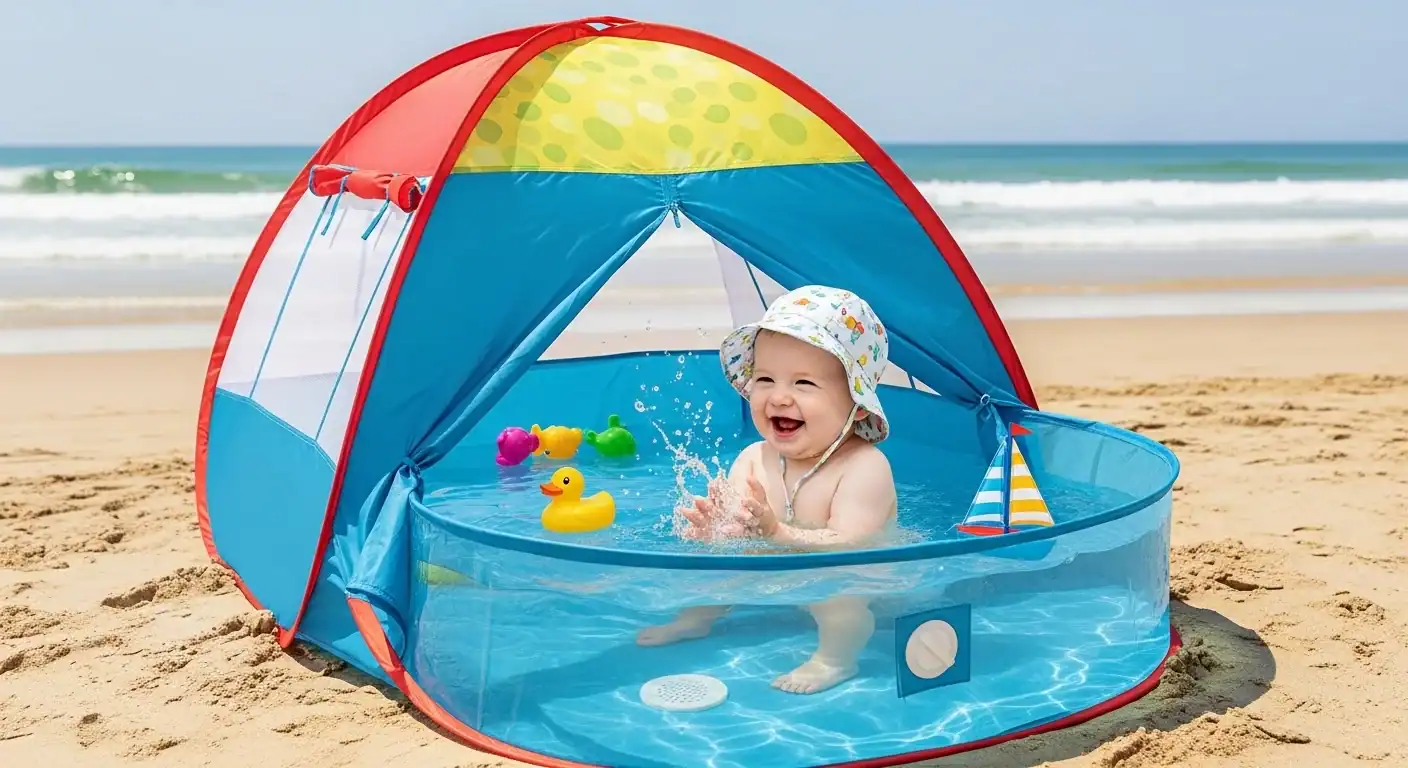
That failure pattern is not a QC miss at final inspection. It is an engineering material choice buried in the hub-and-spoke mechanism that makes instant deployment possible. Generic acetal locking tabs deform under UV and saltwater stress within 50 to 100 open/close cycles, and once those tabs lose their seat geometry, the frame fights every fold thereafter. For a private-label seller targeting under three percent returns on a summer SKU, that cycle window is a ticking clock on margin.
The fix is not more stitching or thicker fabric. It starts with specifying UV-stabilized nylon 66 hubs, SS304 pivot hardware, and pole diameters above 7.5 mm before you sign off on sample approval. Without those specs in the production agreement, you are betting that this batch will somehow outperform every other cheap beach tent already flooding Amazon return bins.
The Hub-and-Spoke Mechanism: Why Your Tent Won’t Collapse
The hub-and-spoke mechanism that sells the tent also causes most returns.
You push the top hub down, spokes bow outward, and the frame locks in place. That one-second action sells every fold pop-up beach tent on the market. It also creates a mechanical weak point that shows up after repeated beach use — not during pre-production sample approval.
How the automatic fold system works
The central slider lock rides on a hub-and-spoke frame. When the user pushes the top hub down, spokes bow outward and tension locks the frame in place. Folding reverses that load, which is why any slop in the hub or lock translates directly into a tent that won’t stay open or won’t fold flat.
Molded acetal tabs hold the slider in position. After 50–100 open/close cycles, UV exposure and saltwater stress cause those tabs to wear or deform — this is where collapse starts. Once tabs no longer seat fully, the frame collapses mid-fold and fiberglass ribs snap at the bend point.

Fiberglass vs. Aluminum: Which Frame Cracks First?
Fiberglass cracks at the ferrule sleeve.
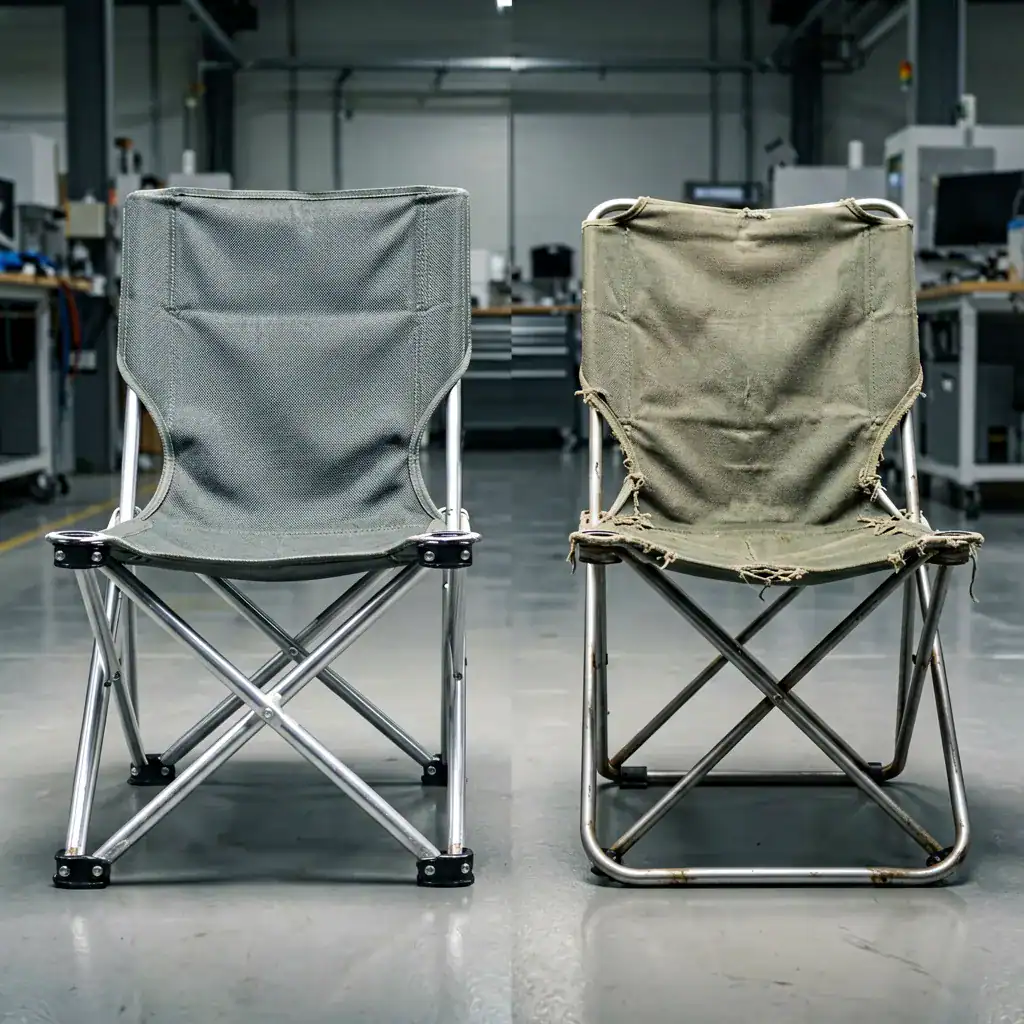
Fiberglass poles crack in a predictable pattern. The break almost always starts just below the metal ferrule sleeve, where the sleeve creates a hard stress concentration point during folding. On 7.5 mm poles — common in budget beach tents — that stress spike hits earlier and harder. A customer folds the tent fast after a day on the sand, and the pole snaps at the junction. That failure shows up as a one-star review within weeks.
Green stick fractures at the ferrule sleeve
The term ‘green stick fracture’ describes a partial break where the outer fibers splinter but the inner core holds briefly before failing completely. It happens because fiberglass has low notch toughness — once a surface crack starts at the ferrule edge, propagation is rapid. Asking for reinforced ferrules with a longer overlap or a tapered transition zone reduces this risk. Some suppliers skip that detail to save two cents per pole.
Corrosion fatigue in aluminum rivets
Aluminum frames resist green-stick fractures better than fiberglass, but they introduce a different failure mode: corrosion fatigue at rivet holes. Saltwater seeps into the joint between the rivet and the aluminum tube, creating localized pitting. Over repeated folding cycles, those pits grow into micro-cracks that propagate through the tube wall. The frame doesn’t snap mid-fold like fiberglass — it develops slop first, then buckles under load after 80–120 cycles in coastal use.
The 30-Second Fold: When the Collapse Becomes a Fight
Flush the hub with fresh water, dry it, then apply PTFE dry lube — that’s the field fix for a jammed slider.
A fold pop-up beach tent shares its core mechanics with an umbrella. The central slider rides up and down the hub, pushing spokes outward until locking tabs seat into position. On a clean surface, that takes two seconds. On a beach, sand grains work into every crevice of the slider channel. After one trip, the friction jumps. After three trips, the slider jams halfway and the user has to force it — which snaps the acetal tabs.
How sand blocks the slider
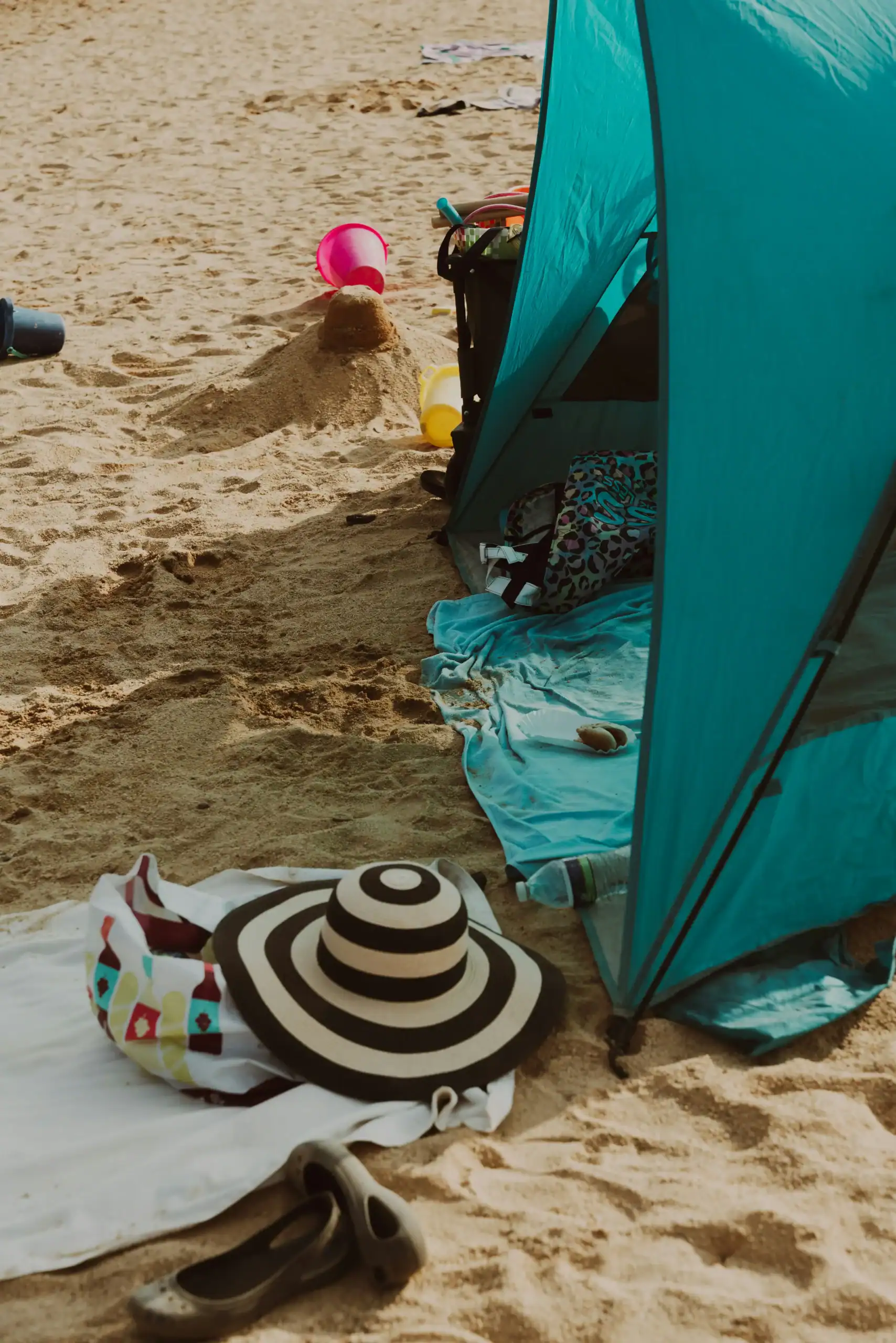
Sand enters the gap between the slider collar and the hub tube during deployment when the tent is staked into loose sand. Each open/close cycle grinds those grains deeper into the sliding interface. The result is a fold that binds at 60% travel and requires excessive downward force. That extra force bends fiberglass ribs at their bend point or cracks the locking tab off entirely.
Why saltwater makes joints stick
Saltwater dries into crystalline deposits inside rivet barrels and around pivot points. Combined with sand, it forms a grinding paste that accelerates wear on moving parts by a factor of three or more based on internal cycle testing observations. Rinsing with fresh water after each beach use reduces this buildup significantly, but most end users never do it.
Field fix: flush and dry-lubricate

Rust and Corrosion: Hidden in Pivot Rivets and Springs
Carbon steel rivets rust after one beach trip.
Most buyers inspect the tent fabric and pole diameter, then sign off on pre-production samples without looking at the pivot rivets and springs. Those small metal parts are the first failure point in a coastal environment. A single saltwater exposure turns carbon steel rivets into rust stains that seize the folding mechanism and bleed orange onto the tent fabric.
Carbon Steel vs. Stainless Steel Hardware
Standard budget tents use zinc-plated carbon steel rivets and springs. The plating scratches during assembly or folding, exposing bare steel. On a beach, that exposed edge corrodes within hours. The fix is to specify SS304 stainless steel for every pivot rivet, spring, and ferrule pin. SS304 adds roughly a few cents per unit in material cost — negligible against a single warranty claim.
- Spec: SS304 stainless steel for all pivot hardware. Request ASTM B117 salt spray test results covering 24–48 hours with no visible rust.
- Risk: Zinc-plated carbon steel corrodes after first saltwater contact. Seized mechanisms cause frame collapse and generate return claims from coastal buyers.
- Fix: Use SS304 hardware exclusively with aluminum frames, or add nylon washers between dissimilar metals to break the electrical path.
- Verification: Ask for close-up photos of hub pivot holes after cycle testing. Any elongation, discoloration, or cracking around rivet bores indicates active galvanic corrosion.
The Galvanic Corrosion Cell Between Rivet and Aluminum Hub
A less obvious failure path occurs when plated carbon steel rivets contact an aluminum hub in saltwater. The two dissimilar metals form a galvanic cell: the aluminum corrodes sacrificially around the rivet hole, widening the bore until the joint loosens or cracks propagate through the hub wall.
This is not a slow process. In continuous beach use, galvanic corrosion can degrade an aluminum hub around its pivot holes within 20–30 open/close cycles — well inside a single season of rental or retail turnover.
Carry Bag Stress: Why the Handle Rips Off After 3 Trips
Handle failure is a stitch-density problem, not a fabric defect.
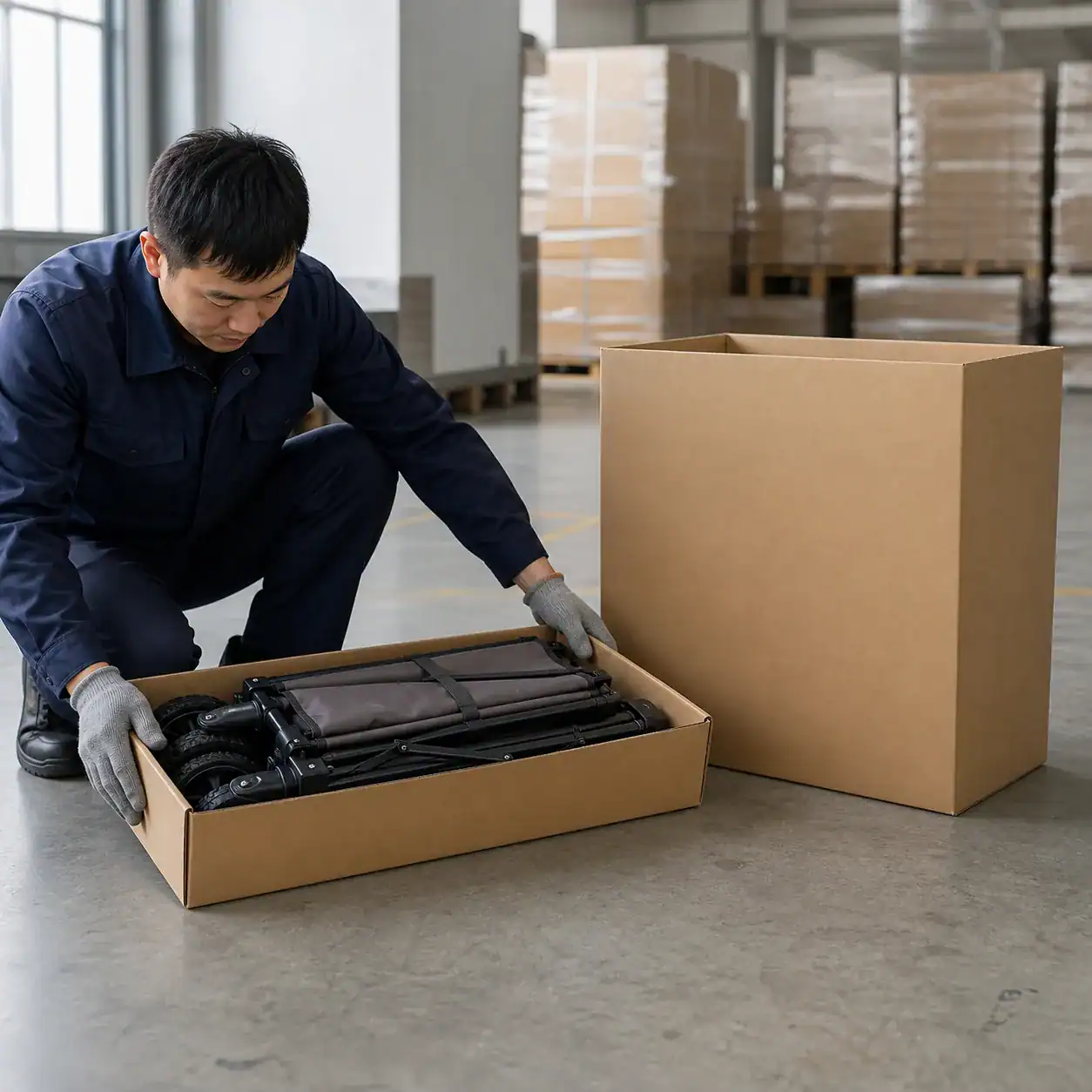
The carry bag handle is the single highest-stress point on a fold pop-up beach tent. After three trips to the beach, the handle rips away from the bag — and your customer files a return. This failure is not random. It is caused by two missing details in the bag spec: bar-tack reinforcement at the stitch line and fabric that can actually take the load.
Bar-Tack Stitching and Reinforcement Patches
A standard straight stitch on a handle seam concentrates all load on one line of thread. Under repeated lifting with a loaded tent inside, that thread line tears through the fabric. The fix is bar-tack stitching — a dense zigzag pattern that distributes force across a wider area. Most budget bags skip this step entirely. When you review pre-production samples, ask for close-up photos of the handle stitch pattern. If you see only straight stitches, request bar-tacking plus an internal reinforcement patch sewn behind the handle webbing.
Choosing the Right Bag Fabric (Denier and Coating)
600D polyester is common on carry bags because it keeps costs low. But at 600 denier, the fabric lacks tear strength at stress points like handles and zipper corners, especially after UV exposure stiffens the coating. 900D double-layer Oxford fabric provides significantly higher tear resistance and holds up to repeated folding and sand abrasion. A UV-resistant coating prevents the outer layer from degrading after a season in direct sun.
Engineering Checks for Your Private-Label Beach Tent Order
The hub material decision determines whether your tent survives 50 cycles or 500.
The central hub mechanism is the single highest-return driver on fold pop-up beach tents. Most suppliers default to generic acetal for the locking tabs and slider. Acetal is cheap to injection mold and slides smoothly for the first few deployments. But under UV exposure and saltwater residue, acetal begins to deform at the tab engagement points. Internal production data from Kelyland’s partner tent factory — which produces 800,000 units annually under ISO 9001 certification — shows that generic acetal hubs start showing locking failure between 50 and 100 open/close cycles.
Acetal vs. Nylon 66: What Changes
Nylon 66 with UV stabilizer and glass-fiber reinforcement maintains its dimensional stability through hundreds of cycles. The locking tabs do not creep under load, so the hub continues to seat fully each time the user deploys the tent. The material cost difference per unit is small relative to the return savings. If a supplier cannot provide a material data sheet comparing durometer and heat deflection temperature between acetal and nylon 66, treat that as a red flag.
Cycle Life Testing: The Benchmark You Need
Do not accept verbal assurances on hub durability. Require a documented open/close cycle test to failure before production begins. A realistic benchmark for a beach-use tent is 500 cycles with no measurable tab wear or frame crack initiation. If the factory has never run this test, you are accepting unknown failure risk on every unit shipped.
Salt Spray Compliance for Coastal Markets
Specify ASTM B117 salt spray testing on all pivot rivets, springs, and metal ferrules in your order contract. A minimum of 24 hours of exposure with zero visible corrosion is the entry threshold for beach hardware. SS304 stainless steel passes this test consistently; carbon steel or zinc-plated hardware will rust within one season.
Custom Injection Molding for Your Hub Design
If you want true product differentiation and direct control over return rates, invest in custom injection molding for your own hub geometry. This lets you specify nylon 66 material, add reinforcing ribs at stress concentration points, and create a branded replacement part that generic suppliers cannot copy. Kelyland’s network includes factories capable of custom mold development for runs starting at low volumes.
Conclusion
The difference between a beach tent that survives the season and one that generates return requests comes down to three specs: hub material, pole diameter, and hardware corrosion resistance. Generic acetal tabs fail after 50–100 cycles. Fiberglass poles under 9.5 mm snap at the ferrule. Carbon steel rivets rust after one saltwater trip.
- Specify nylon 66 hubs with UV stabilizer.
- Require SS304 hardware and ASTM B117 reports.
- Demand bar-tack reinforcement on carry bag handles.
Use those three criteria as your pre-order checklist before you approve any sample or wire a deposit. If a supplier hesitates on cycle test records or material data sheets, you already know the risk profile of their product line. Kelyland Outdoors builds fold pop-up beach tents with custom hub injection molding, reinforced pole specs, and SS304 pivot hardware — starting at MOQs of 50–100 pieces with a standard lead time of 30–45 days. Talk to Hanke’s team for an engineering review of your next private-label spec sheet.
Frequently Asked Questions
What is the lifespan of a fold pop-up beach tent hub mechanism?
The exact answer depends on the product specification, quantity, and order setup. The safest approach is to confirm the commercial terms only after the final requirement sheet is locked. Final terms should be confirmed against the exact product specification and order conditions.
How much does a private-label fold pop-up beach tent cost with a 500-piece order?
The exact answer depends on the product specification, quantity, and order setup. The safest approach is to confirm the commercial terms only after the final requirement sheet is locked. Final terms should be confirmed against the exact product specification and order conditions.

 English
  Español
  Deutsch
  Français
  Português do Brasil
  Русский
  العربية
  한국어
한국어  日本語
日本語