 跳到内容
跳到内容 
Why do retail category managers still treat importing from China as a game of lowest FOB price, when a $50,000 shipment of camping tents can lose its entire margin the moment the mass production fabric fails to match the sample they approved?
The answer usually sits in a $0.40 to $0.60 per square meter coating substitution—a swap from 210T ripstop to 190T taffeta that drops hydrostatic head from 2,000mm to under 1,000mm. The pre‑production sample passes every test. The mass run doesn’t. By the time returns pile up, the factory’s quality tolerance claim becomes a seminar on acceptable variance. That’s a lie. The real variance is intentional.
To catch it, you don’t need another sample approval checklist. You stand on the factory floor, cut open a random carton, and check the coating density yourself. That’s the difference between protecting seasonal margins and explaining a chargeback spike to your VP of merchandising. The steps ahead break down how to build that kind of oversight into your sourcing process—without chasing cargo ships halfway around the world.
Step 1: Select the Right Products to Import
Prioritize high-margin, compliant categories like tents and wagons over trendy but risky items.
Every article tells you to chase viral TikTok gadgets. That is rookie thinking. The real margin lives in durable, high-volume staples like pop-up tents and folding wagons that retain demand across seasons. Focus on products with 40–60% retail markup potential rather than fleeting trends.
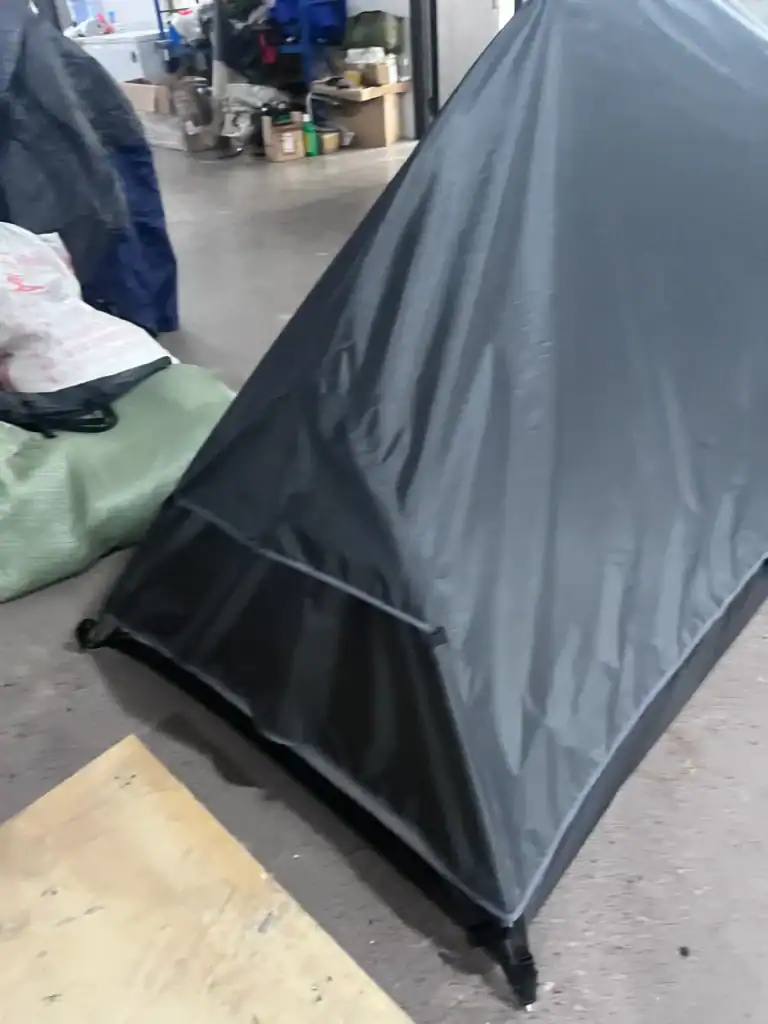
A buyer once lost $50,000 on a custom tent order because the pre-production sample passed, but the mass production run used cheaper fabric. This discrepancy only shows up during in-line factory audits, not when looking at glossy catalog images. You need a sourcing partner who physically verifies material grades before sealing containers.
-
- High-Margin Targets:: Pop-up tents, double-walled folding wagons, and camping cots offer consistent demand with healthy wholesale margins for retail chains.
- Compliance Red Flags:: Avoid children’s sleepwear or unverified lithium batteries initially; they require complex CPSIA or UN38.3 testing that delays shelf placement.
- $0.40 Coating Trap:: Factories often swap 210T ripstop nylon for 190T taffeta to save pennies per square meter. This halves waterproofness and destroys brand trust.
Step 2: Understand Your Import Rights
No EORI means your container sits at Rotterdam for 3 weeks—burning $200/day in demurrage while your retail season evaporates.
I’ve watched a $50K glamping tent order miss the entire Memorial Day window because the buyer assumed their supplier’s freight forwarder would handle everything. Customs held the shipment for 21 days. The problem? No EORI number on file. The camping season doesn’t wait for paperwork.
Before a single tent leaves the factory floor in Ningbo, your legal entity needs to exist on paper with the importing country’s customs authority. This isn’t a supplier problem—it’s yours. Get it wrong and you’re hemorrhaging storage fees while competitors stock shelves.
For US imports, the baseline is an IRS-issued EIN. Every commercial shipment over $2,500 requires it on CBP Form 7501. Sole proprietors can use their SSN, but any LLC or corporation importing for retail resale needs the EIN. Apply online at IRS.gov—the system generates it immediately. Do not wait until the bill of lading lands in your inbox.
EU buyers face a tighter timeline. The EORI number must be active before the vessel docks. Each member state issues its own—register through your country’s customs portal, not a third-party site. Germany takes 3–5 working days; France and Italy can stretch to 10. I build a 2-week buffer into every order timeline specifically for EORI activation. Without it, customs cannot process the entry summary declaration, and your container accrues demurrage at €150–€250 per day depending on the port.
Canada requires a CRA Business Number with an import/export RM account suffix. Australia uses an ABN with a customs client identifier. UK importers need both an EORI starting with GB and potentially a separate XI-EORI for Northern Ireland shipments. Each jurisdiction has its own registration portal and processing window—map this out before negotiating FOB pricing or sample approval timelines with your China supplier.
-
- US: EIN (IRS): Instant online issuance. Required on CBP 7501 for shipments exceeding $2,500. No annual renewal needed.
- EU: EORI Number: 5–10 working day processing window. Issued by member state where you first import. Valid across all 27 EU countries.
- Canada: BN + RM Account: CRA Business Number plus import/export account suffix. Apply through CRA My Business Account portal.
- UK: GB EORI: Separate from EU EORI post-Brexit. Apply through HMRC; typically issued within 3 working days.
A licensed customs broker stops being optional the moment your shipment contains mixed product categories. A 40-foot container might hold camping tents under HS 6306.22 alongside sleeping bags under HS 9404.30 and folding chairs under HS 9401.79. Each HS code carries distinct duty rates, regulatory checks, and documentation requirements. CBP’s ACE system flags multi-line entries with higher scrutiny rates—a broker pre-files the ISF 24 hours before loading, handles bond requirements, and manages any FDA or CPSC holds that textile-based outdoor products sometimes trigger.
The broker’s real value shows up during audits. If CBP challenges your tent classification—say they reclassify a glamping tent from 6306.22 at 0% duty to 6306.29 at 10% duty for cotton content—a broker files the protest with supporting mill certificates and construction specs. Without one, you pay the 10% penalty across the entire shipment and hope for a refund that takes 6–12 months. Broker fees run $300–$500 per entry. Against a single misclassification penalty on an $80K order, that is a rounding error.
Skip the broker on your first three shipments and you are betting your seasonal margin on your ability to navigate a regulatory system that updates its rules quarterly. A single CPSIA children
Step 3: Engage a Sourcing Agent
When comparing the cost of sourcing versus DIY risks, remember that poor negotiation typically inflates landed costs by an extra 15-20%. If you use a sourcing agent like Kelyland Outdoors—who manages over $1 million in annual exports—you lock in factory prices and bypass unnecessary MOQ markups.
Step 4: Identify Potential Quality Issues
Pre-production samples are theater.
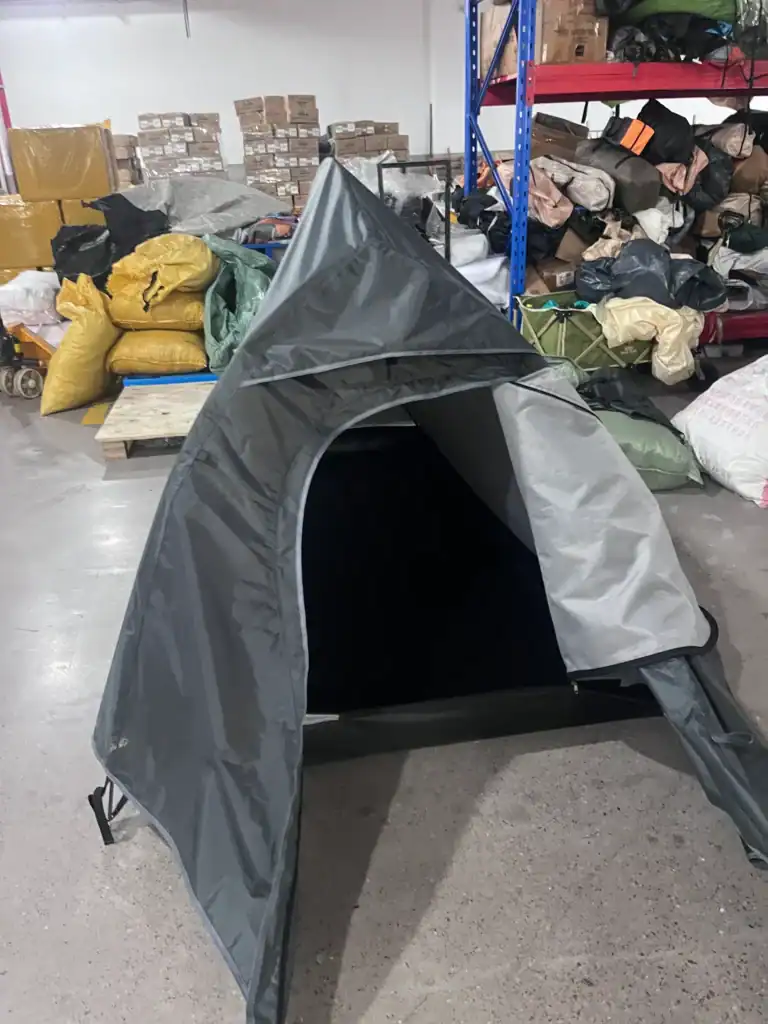
Most sourcing guides tell you to get a sample, approve it, and trust the factory to replicate it in bulk. That advice cost a Midwest retailer $50,000 in markdowns last season. His pre-production tent sample passed a 2,000mm hydrostatic head test. The mass production run started leaking at 800mm. Why? The factory swapped the PU-coated 210T ripstop
This is not a rare exception. Across 12 countries and hundreds of factory audits, I’ve documented material substitution as the single most common quality failure in outdoor gear imports. It happens because the financial incentive is immediate and the detection window is narrow. A factory saves $0.40 to $0.60 per square meter on fabric coating downgrades alone. On a 500-unit tent order using 8 square meters per unit, that’s $1,600 to $2,400 in pure margin for the factory — and a season of returns and chargebacks for you.
ISO 9001:2015 certified factories report a 30% lower defect rate than non-certified suppliers, according to a 2026 SGS survey. But certification alone doesn’t prevent substitution. It provides a documented quality system. You still need physical verification at the production line. The sourcing network matters here — a partner with 17 core factories like Kelyland Outdoors has leverage to demand material traceability that a solo buyer placing one PO per year cannot enforce.
-
-
- Tent Seam Integrity: Submerge a pressurized seam sample in water at 2,000mm rating. Look for micro-bubbling at stitch points. A single leaking seam on a 4-person tent means the entire SKU fails retail QA.
- Folding Wagon Load Cycle: Load sandbags to 120% of rated capacity (a 150kg-rated wagon gets 180kg). Roll over mixed gravel and curb-height obstacles for 100 cycles. Check wheel hub bearings, fabric attachment points, and frame welds after testing.
- Sleeping Bag Thermal Mapping: Run an EN 13537 thermal manikin test if the bag carries a temperature rating claim. A bag labeled ‘0°C comfort’ that tests at +5°C will generate returns from every cold-weather customer — and negative reviews that tank the listing.
- Chair Frame Fatigue: Cycle a camping chair 5,000 times with a 100kg load. Inspect rivet points, hinge mechanisms, and fabric stretch. A chair that fails at 3,000 cycles will collapse on a customer within one season.
- UV Accelerated Aging: Expose fabric samples to 200 hours of QUV accelerated weathering. Measure tensile strength before and after. Oxford fabric losing more than 30% tensile strength indicates the UV stabilizer was skimped — and your product will degrade visibly within 6 months of outdoor display.
-
The coating downgrade problem deserves its own spotlight because it is invisible to the naked eye and impossible to detect from a finished product photo. The standard outdoor gear fabric hierarchy goes: 210T ripstop nylon with PU coating (target: 2,000-3,000mm waterproof rating) as the premium option, 190T taffeta with lighter PU coating (target: 800-1,200mm) as the budget substitute. The fabric hand-feel is similar. The color can match. The weight difference is under 30 grams per square meter. Only a hydrostatic head tester catches this.
Fix this at the contract level. Your purchase agreement must specify the exact fabric specification — not just ‘waterproof tent floor’ but ‘210T ripstop nylon, PU coating 2,500mm minimum, mill certificate required.’ Require the sourcing agent or third-party inspector to cut a random swatch from the production line on Day 1, Day 5, and Day 10 of the production run. Send all three swatches to an accredited lab like SGS or Bureau Veritas for hydrostatic testing. The test costs about $150 per swatch. Compare that to the cost of 500 returned tents.
-
- Fabric Swap: 210T ripstop nylon → 190T taffeta. Saves $0.40-$0.60/m². Result: 50%+ loss in tear strength and waterproof rating.
- Coating Dilution: Specified PU coating thickness of 0.05mm applied at 0.02mm. Saves $0.15/m². Result: Coating delaminates after 20-30 packing cycles.
- Frame Wall Thickness: Aluminum tent pole wall reduced from 0.8mm to 0.6mm. Saves $0.80 per pole set. Result: Poles snap under moderate wind load, especially at connector joints.
- Fill Weight Shorting: Sleeping bag labeled 800g fill actually contains 650g. Saves $3-5 per bag. Result: Temperature rating becomes fiction, verified only by destructive lab testing.
- Zipper Grade Downgrade: YKK #10 swapped for unbranded #8. Saves $0.50 per zipper. Result: Zipper failure within 50 cycles, creating a product that cannot be closed — the #1 visible defect that triggers immediate returns.
Skip this step and the math gets ugly fast. A single returned tent costs $12-18 in reverse logistics, inspection labor, and restocking overhead — before accounting for the lost sale. A 15% return rate on 1,000 units wipes out $12,000-$18,000 in recoverable margin. The category manager who doesn’t fund in-line inspection at $800-$1,200 per production run is effectively betting $18,000 against $1,200. That’s not risk management. That’s negligence dressed up as cost savings.
Step 5: Ensure Compliance
Compliance paperwork matters more than the product itself when a container sits at port.
I’ve watched a 40’HC container of camping tents accumulate $2,800 in demurrage charges over 8 days because the CPAI-84 flammability certificate listed a testing lab that CBP didn’t have on file. The tents were fine. The paperwork wasn’t. The retail category manager on the other end lost the first two weekends of peak summer season—and with them, roughly 22% of the planned margin on that SKU. This is the game we play. Compliance isn’t a checkbox exercise. It’s the difference between inventory that hits the shelf on schedule and inventory that becomes a warehouse liability.
The three regulatory frameworks that matter for outdoor gear imported from China break down by market. For the US, CPAI-84 governs tent flammability—specifically the rate at which fabric panels burn and whether the material self-extinguishes within a specified timeframe. Prop 65 adds a layer that catches many first-time importers off guard: if any component contains chemicals on California’s list (phthalates in PVC coatings, lead in zipper pulls, certain flame retardants intentionally added to meet CPAI-84), you need a warning label or you face citizen-enforced penalties that start at $2,500 per violation per day. For the EU, CE marking under the General Product Safety Directive means your gear must pass applicable EN standards—EN 71 for children’s camping products, EN 1860 for charcoal grills, EN 13537 for sleeping bag temperature ratings. A notified body audit is required for certain categories; do not assume self-declaration covers everything.
-
-
- CPAI-84 Section 6: Applies to all tents sold in the US. Tests both floor and wall fabrics. A common corner-cutting move: the supplier submits the canopy fabric for testing but uses a cheaper, untreated polyethylene floor that fails. Insist the test report explicitly lists every textile component by weight and treatment. Third-party labs acceptable to US retailers include SGS, Bureau Veritas, and Intertek.
- Prop 65 chemical screening: PVC often contains DEHP phthalates above the 0.1% threshold. Powder-coated steel frames can contain lead above 100 ppm. The practical fix isn’t avoiding PVC—it’s specifying phthalate-free formulations in your purchase order and having the factory provide a RoHS/REACH compliance letter per batch. Sample approval should include a chemical screen before mass production begins.
- CE marking strategy: Tents sold in the EU require a Declaration of Conformity supported by a technical file. The key mistake is assuming CE is self-declared for everything—gas-powered camp stoves and certain children’s items require Notified Body involvement. Budget $1,500 to $3,000 per SKU for third-party EN testing if the factory doesn’t maintain current certs. Factor this into your FOB pricing model early.
-
Packaging compliance triggers customs holds faster than product compliance failures—because the evidence is visible without opening the box. ISPM 15 requires all solid wood packaging (pallets, crates, dunnage) to be heat-treated or fumigated and stamped with the IPPC mark. Raw wood at a US or EU port gets flagged immediately. The fix is straightforward: specify plywood, MDF, or heat-treated solid wood with visible stamps. But enforcement varies by port. Long Beach and Rotterdam are aggressive. A shipment of folding wagons on raw pine pallets was redirected for fumigation at $450 per pallet plus 5 days of storage.
-
- ISPM 15 verification photo: Before the container seals, require your sourcing agent or QC inspector to photograph the IPPC stamp on at least 5 pallets from different positions in the container. A photo log beats a verbal assurance every time.
- Country of origin marking: US law under 19 CFR 134 mandates every imported product and its retail packaging bear a legible, permanent country of origin label. Sewn-in tags for tents and sleeping bags work. Stick-on labels that peel off in humidity don’t. For camping chairs with powder-coated frames, a stamped metal plate or permanent adhesive label that survives outdoor use is the minimum viable approach.
- Warning label placement: For US retail, CPAI-84 requires a permanent warning label on every tent stating the flammability risk and care instructions. Prop 65 warnings, if applicable, must be on the product packaging or a hangtag—not buried in the instruction manual. Missing either label opens a direct path to a retail chargeback that can run $5,000 to $25,000 per SKU depending on the chain’s compliance penalty schedule.
- EU-specific labeling: CE mark must appear on the product or packaging. Washing and care symbols must follow ISO 3758. Include importer name and EU address on the packaging—this is non-negotiable under the GPSD and frequently missed by China-based suppliers who are used to shipping FOB with buyer-handled labeling.
Here’s the detail that separates a professional category manager from a buyer who learns the hard way: compliance liability doesn’t end at the port. If a consumer files an injury claim because a camping chair collapsed under load, the plaintiff’s attorney will subpoena every test report, every design spec, and every communication. If your quality tolerance was set at ‘looks good’ instead of a written AQL 2.5 standard with defined critical defects—no amount of product recall insurance will save the retail relationship. Store a complete technical file for every SKU for a minimum of 10 years. The EU Market Surveillance Regulation requires at least a digital copy. US product liability statutes effectively demand the same. Spend the $200 per SKU to have a compliance specialist review the file before shipment. Compared to the cost of a single recall, it’s not even a rounding error.
Step 6: Classify Your Goods and Calculate Landed Cost
A single HS digit off can mean a 10% penalty on your entire container.
Get classification wrong and you won’t just pay back duties. CBP will flag your importer record, delay future shipments, and your retail
-
-
- Tents (synthetic): HS 6306.22.9000. 0% duty under US normal trade relations. This covers pop-up, dome, and backpacking tents with polyester or nylon flysheets. Cotton tents fall under 6306.29 — also 0%. The key is providing the fabric composition sheet upfront.
- Sleeping bags: HS 9404.30.8000. 0% duty. CBP looks at fill type — down vs. synthetic — and outer shell material. Attach the fill power certificate to your entry packet to avoid secondary inspection.
- Camping chairs: HS 9401.79.0015 for aluminum frame, 9401.79.0035 for steel. 0% duty. If your chair has a canopy or footrest attached, classify by the primary function. Don’t over-describe.
- Folding wagons: HS 8716.80.5090. 3.2% duty. Wagons are not furniture. I’ve corrected three misclassifications in the past year where brokers put wagons under chairs or hand trucks.
- Backpacks: HS 4202.92.3120. 17.6% duty — among the highest in outdoor gear. Canvas or cotton backpacks can drop to 6.8% under 4202.92.1500. Material composition dictates the rate.
-
Your supplier should provide a mill certificate identifying the exact fabric denier, coating, and composition. Without it, CBP defaults to the highest-rate classification in the bracket. On a 600-unit backpack order at $22 EXW, that 10.8-point duty gap between synthetic and cotton classification costs you $1,400.
Now the landed cost reality. Take a 40’HC from Ningbo to LA in Q1 2026. Freightos Baltic spot rates sat at $4,500–$5,000 for that lane. Let’s use $4,800. Add marine insurance at 0.3% of cargo value, a $500 single-entry bond, and $800 in terminal handling charges at POL and POD. On a $20 EXW tent with 500 units in the container, those charges add $12.20 per unit before duties.
-
- EXW product cost: $10,000 (500 units × $20).
- Ocean freight (40’HC): $4,800, split across units = $9.60/unit.
- Insurance + bond + terminal: $1,300 total = $2.60/unit.
- Duty (tents @ 0%): $0.
- Final landed unit cost: $32.20, or 61% above EXW.
That 61% multiplier is what shocks first-time importers. At a $32.20 landed cost, hitting the industry target of 25–30% of MSRP forces your retail price to $108–$129. If your category analysis assumed a $79 shelf price, the margin evaporates. Run this model before signing the PO, not after the forwarder invoices you.
Two duty strategies every category manager should file away. First, Section 321 de minimis entry: shipments under $800 aggregate value per person per day enter the US duty-free and bypass formal entry. Use this for sample runs, photo samples, and small test orders. A 10-unit tent sample at $35 each slides through with zero customs cost. Your sourcing partner can split shipments across days to stay under the threshold — legal when structured properly.
Second, the GSP and preferential trade route. While China isn’t a Generalized System of Preferences beneficiary, certain outdoor products assembled in GSP countries with Chinese components can qualify for reduced rates. More relevant: if you’re importing into Canada, the Comprehensive and Progressive Agreement for Trans-Pacific Partnership (CPTPP) gives Canadian importers preferential access on goods sourced across member countries. For EU buyers, the EU-China tariff schedule is negotiated annually — tents and sleeping gear are largely duty-free, but camp kitchen items, folding wagons, and backpacks carry 2–12% rates depending on the subheading. Confirm the current year’s TARIC code online before booking freight.
One last classification trap. If your product contains wood — tent poles with bamboo sections, camp furniture with wooden armrests, packaging crates — ISPM 15 heat treatment and stamping are mandatory. Non-compliant wood gets your container quarantined or re-exported at your cost. I budget an extra $120 per pallet for certified treated wood and consider it non-negotiable.
| Line Item | HS Code / Spec | Rate / Value | 500-Unit Example | Red Flag |
|---|---|---|---|---|
| Camping Tents (Synthetic) | 6306.22 | 0% Duty (NTR) | EXW $20 × 500 = $10,000 | Misclassifying as 6306.29 triggers 10% penalty |
| Sleeping Bags | 9404.30 | 0–5% Duty | EXW $8 × 500 = $4,000 | Fill type (down vs. synthetic) changes subclass |
| Camping Chairs | 9401.79 | 0–5% Duty | EXW $12 × 500 = $6,000 | ASTM F2613-19 stability cert required |
| 40’HC Ocean Freight | Ningbo → LA/LB | $4,500–$5,000 flat | ~$9.00 per unit allocated | April–July peak season adds 15–20% |
| Insurance + Bond + Port Fees | Marine Ins. + CBP Bond + THC | ~$1,450 combined | ~$2.90 per unit allocated | Skipping marine insurance = total loss exposure |
| TOTAL LANDED COST | All-in, per unit | $28.20–$35.00 per unit | $14,100–$17,500 total | Below $28 = probable 190T fabric substitution |
| Section 321 De Minimis | Sample orders ≤ $800 | $0 Duty + No formal entry | N/A — samples only | Splitting bulk into sub-$800 parcels = audit trigger |
Conclusion
A $50,000 order that arrives with 210T taffeta instead of 210T ripstop isn’t a supplier error—it’s a margin destruction event. The retail buyer now faces a 15% chargeback rate, a pulled promotion, and three months of dead stock. That sequence started with skipping one in-line inspection. A sourcing partner with factory-floor access catches the swap before the cutting table starts. The alternative is negotiating a return freight bill from a distribution center in Dallas while your shelf space goes to a competitor.
Lock in your quality tolerance specs and sample approval protocol before the next production window opens. Review the air mattress category page to see how Kelyland Outdoors structures OEM programs with documented coating grades and FOB pricing that leaves room for your margin.
Frequently Asked Questions
What documents do I need to import camping gear from China?
You’ll typically need a commercial invoice, packing list, bill of lading, and a certificate of origin. For camping gear, also include product-specific compliance documents like CE certification or CPSIA compliance for the. Your freight forwarder or supplier can prepare the exact checklist.
How much does it cost to import outdoor products from China?
The total landed cost includes product price, freight, duties, and compliance testing fees. The biggest variable is freight, which can range from $3,000–$8,000 for a 20ft container from China to the US, depending. Get a door-to-port quote before committing to an order.
Do I need an import license for camping gear?
In most countries, you do not need a specific import license for camping gear, but you do need a customs bond and a registered importer number. For the US. Check with your customs broker if your products fall under any regulated categories.
How long does shipping from China to the US take?
Sea freight from major Chinese ports to US West Coast ports takes 15–25 days, while East Coast routes take 30–40 days. Add 5–10 days for customs clearance and inland trucking to. Plan for a total 30–45 days door-to-door for West Coast deliveries.
How can I avoid custom delays when importing tents?
Provide accurate HS codes on the commercial invoice and ensure your tents have passed flame retardancy testing if required. Pre-shipment inspection with a laboratory report that you can share with. Avoid ambiguous product descriptions and always use the correct flammability standard documentation.

 English
  Español
  Deutsch
  Français
  Português do Brasil
  Русский
  العربية
  한국어
한국어  日本語
日本語