 跳到内容
跳到内容 
inflatable tent moq lead times is the first checkpoint buyers should lock before they approve a supplier, budget, or production slot. You get a sample approved, it looks perfect, and you place the order for inflatable tents. The deposit goes through. Then you wait. And wait. By the time the container lands at your warehouse, the peak season window has shrunk from eight weeks to four. That is the real cost of underestimating inflatable tent MOQ lead times — not the price per unit, but the missed shelf space.
Most suppliers quote a standard production window of 30 to 45 days. But that number rarely includes sample rounds, material sourcing delays, or ocean transit. For a first-time custom order with new TPU beam sizes or a specific Pantone color on the flysheet, total lead time can stretch past 70 days before you have inventory in hand. The difference between a smooth launch and a fire-drill reorder often comes down to whether you asked for the full timeline upfront — and whether your supplier actually builds slack into their schedule.
Minimum Order Quantities for Inflatable Tents in 2026
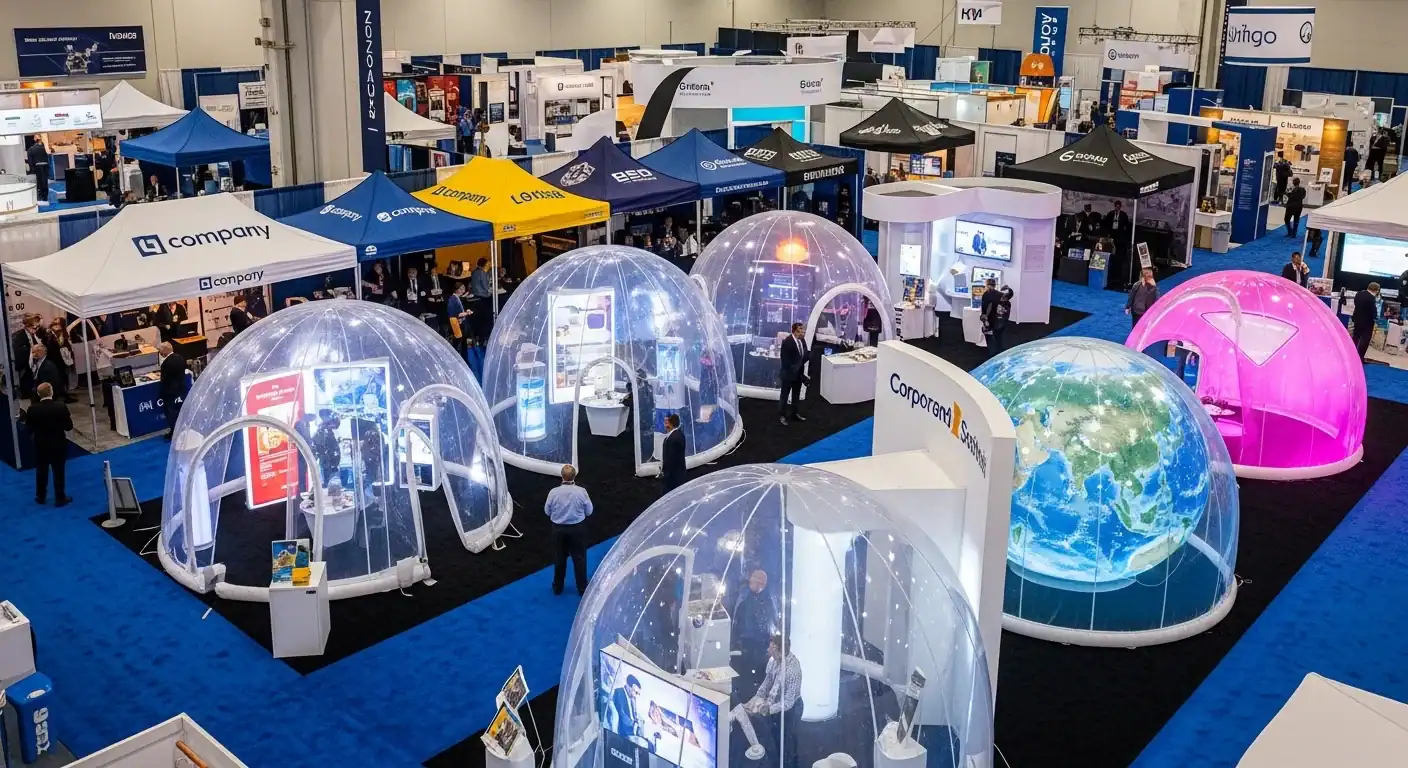
Inflatable tent MOQs start at 50 pieces for stock models — lower than pole tents because no complex metal tooling is needed.
The manufacturing physics explain why. A pole tent requires dedicated metal tooling for each frame joint and hub. That tooling costs $3,000 to $8,000 per SKU. The factory needs to amortize that across the run. With an inflatable tent, the air beams come from roll goods — TPU or PVC film cut to length and welded on a template. No custom dies, no injection molds for joints. The setup cost drops significantly.
Standard MOQ Ranges for Stock Models: 50 to 100 Pieces
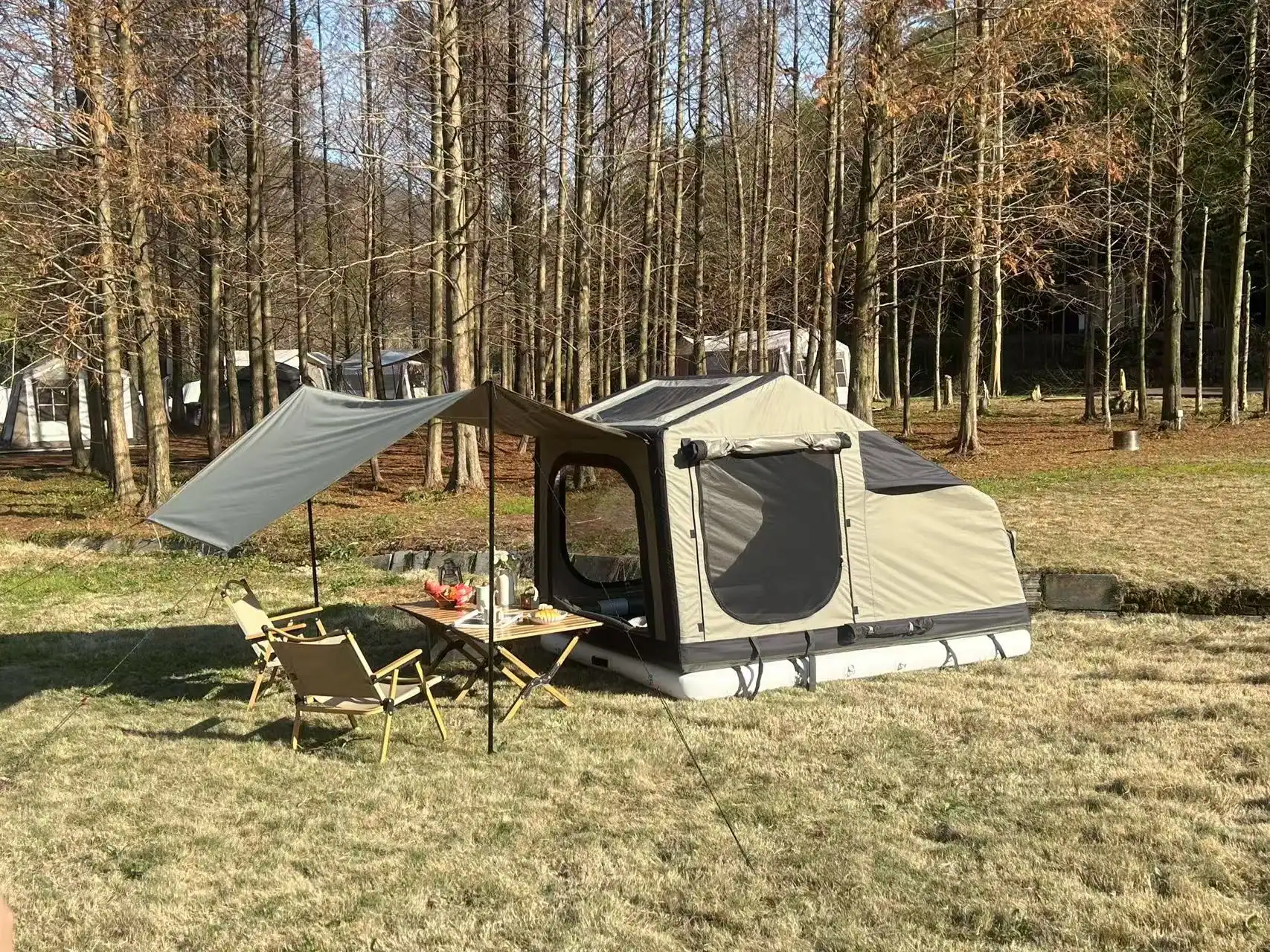
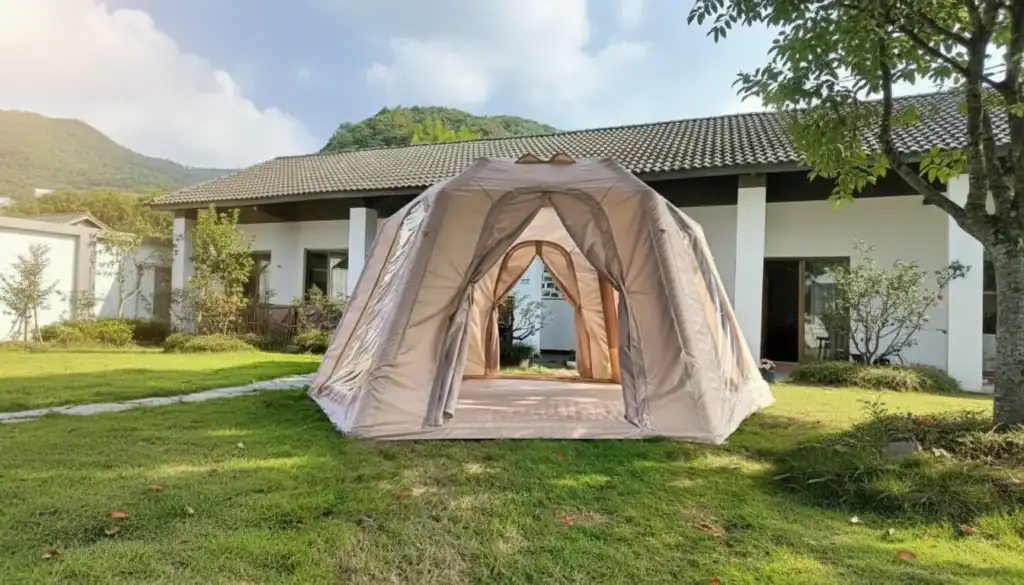
For existing models using standard beam diameters and fabric colors, suppliers like Kelyland Outdoors quote MOQs of 50 to 100 pieces. This applies to common inflatable tent configurations — 2-person tunnel tents, 4-person dome-style air tents, and basic glamping bell tents with PVC beams. The factory has already dialed in the welding parameters and beam dimensions.
Custom Color, Print, and Packaging MOQ Adjustments
Change one variable and the floor moves. Custom TPU film color means the mill runs a minimum batch of that polymer blend — usually 200 to 300 square meters of film. That alone pushes the MOQ to 200 pieces or more depending on tent size. Custom printing adds another layer: digital print setups cost less than screen print at low volumes, but screen print requires plates at $150-$400 per color.
Production Lead Time Breakdown
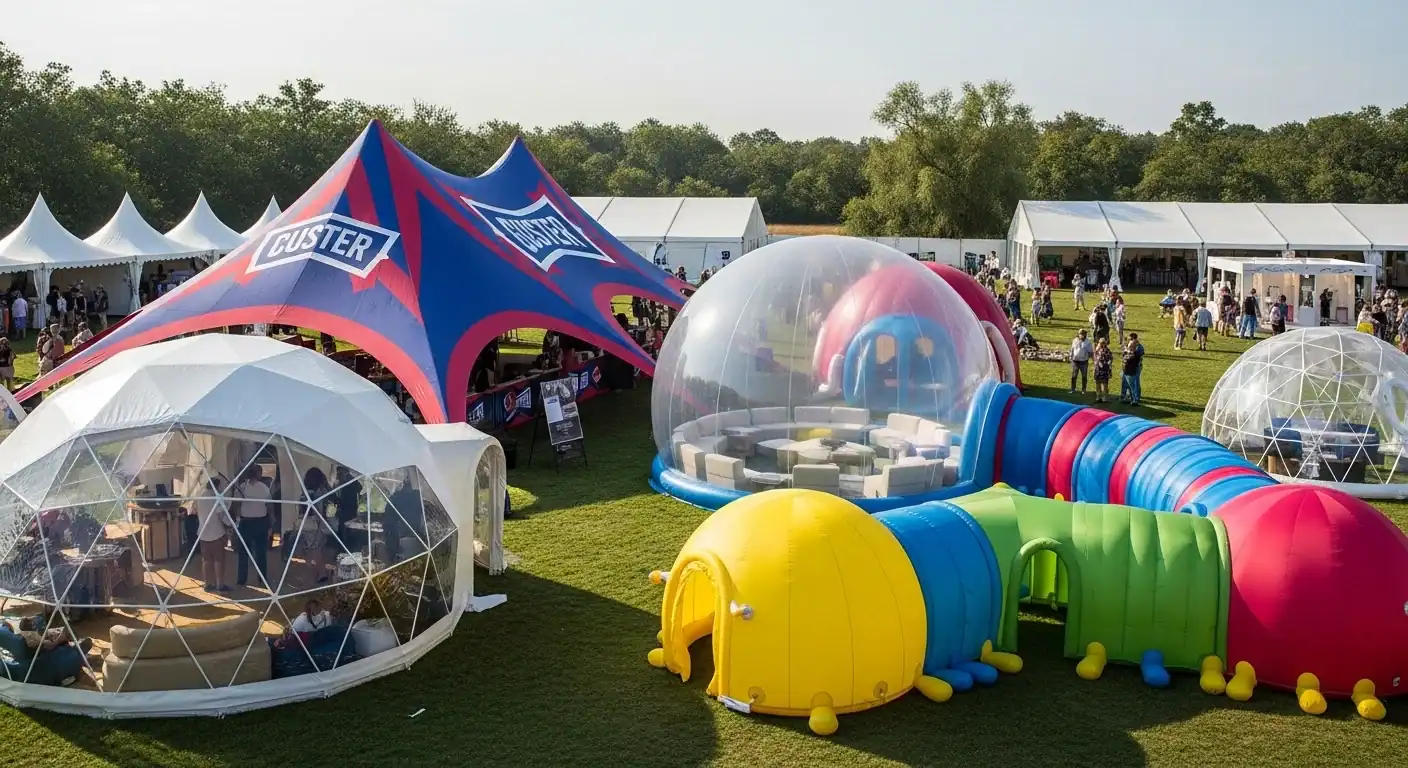
First-time inflatable tent orders often stretch to 70+ days when sampling and shipping are added to the production window.
The standard 30-45 day lead time you see on a supplier’s commercial terms covers mass production only. For a first-time inflatable tent buyer, the real timeline from order placement to container arrival at your warehouse is closer to 70-90 days. That gap matters most when you’re planning inventory for a specific retail season.
Sample confirmation and order scheduling: 7 to 10 days
Before any fabric gets cut, the supplier needs your sign-off on a pre-production sample. This usually takes one week, sometimes two if the TPU color or print alignment needs revision. A missed handoff here—like not replying to the photo approval within 48 hours—can push the entire schedule by another cycle.
Material sourcing and pre-production inspection
Once the sample is approved, the factory orders roll goods and custom welding films specific to your air beam dimensions. For inflatable tents made with PVC or TPU-coated fabrics, this step takes 5-7 days if the material is in stock at the mill. Custom colors add time because the film extrusion line needs cleaning and re-calibration between runs.
Mass production window for different quantities
A standard run of 100 inflatable tents typically takes 15-20 production days across Kelyland Outdoors’ network of ISO 9001:2015 certified partner factories. Bumping that to 500 units adds roughly another week because welding jigs and quality checkpoints are already set up from the initial batch. The bottleneck is rarely machine capacity—it’s how many simultaneous custom projects each factory has booked.
Packing, final inspection, and port loading
Factors That Extend Lead Times
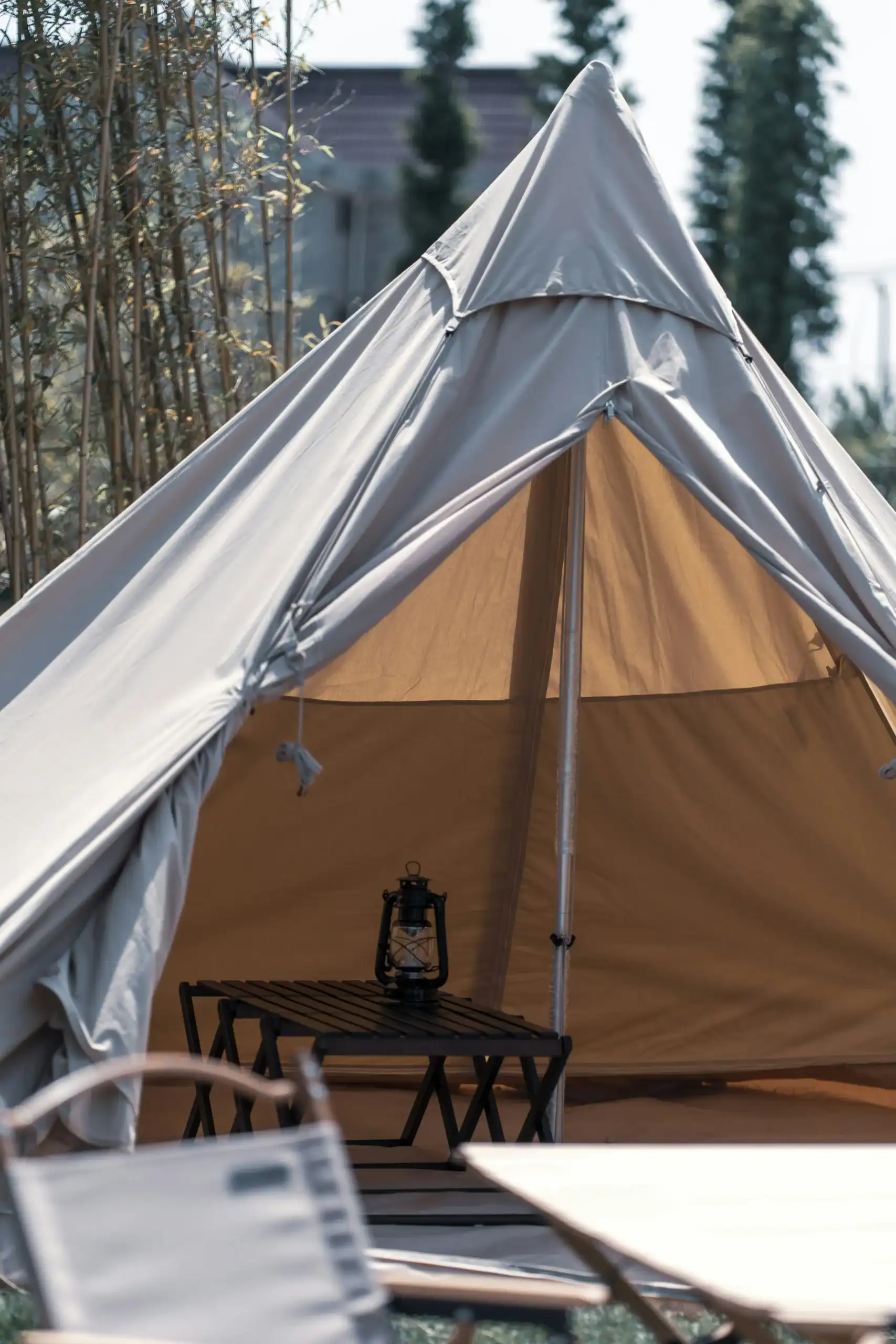
A 30-day quoted lead time can stretch to 70+ days if these four factors aren’t planned for upfront.
Custom TPU or PVC film color is the first hidden delay. Standard roll goods in black, white, or grey are stocked at the factory and ready to cut. A Pantone-matched color requires a dedicated extrusion run from the film supplier, which adds 10 to 14 days just for material arrival. The same applies to multi-layer printing — if your design uses gradient or four-color process graphics on the beam fabric, each color layer needs a separate screen setup and curing cycle. One e-commerce client I worked with lost three weeks because their teal-to-navy gradient required a 12-screen print registration that had to be re-shot twice.
Air Beam Sizes and Custom Molds
Every inflatable tent runs on welded air beams — tubes of TPU or PVC-coated fabric fused by high-frequency welding. If your tent design calls for a beam diameter that the factory doesn’t already have a welding jig for, they must fabricate a new mold or die. That process alone takes 7 to 10 days for simple round beams and up to 20 days for shaped or tapered profiles. Suppliers who quote low MOQs often do so because they reuse existing beam sizes from their catalog. The moment you request a custom diameter — say, switching from a standard 8-inch beam to a 10-inch one — the MOQ floor rises because that mold cost must be amortized across fewer units.
Lunar New Year and Factory Holiday Calendar
This is the most predictable yet most ignored delay in China-based sourcing. Every year, manufacturing in Zhejiang and Guangdong shuts down for two to four weeks around January-February for Lunar New Year. Workers return to their home provinces; factories run skeleton crews at best. If your order lands during this window, add those weeks directly onto your lead time — no exceptions. Some factories close entirely for three weeks starting ten days before the holiday date. The same applies to National Day (October) and summer heat waves when some mills reduce shifts.
Peak Season Order Pressure from Large Retail Clients
Small-batch orders compete for production line capacity against large retail clients who book slots months in advance. A factory producing air mattresses at an annual volume of 2.5 million units (like Kelyland Outdoors’ core partner in Xiangyang) will prioritize a 10,000-piece order over a 100-piece run during peak season — March through June for summer camping gear, September through November for glamping pre-orders. Your inflatable tent supplier may accept your order but quietly push it to the back of the queue behind higher-volume accounts unless you negotiate a firm production slot with written confirmation.
How to Negotiate Better MOQ and Lead Time Terms
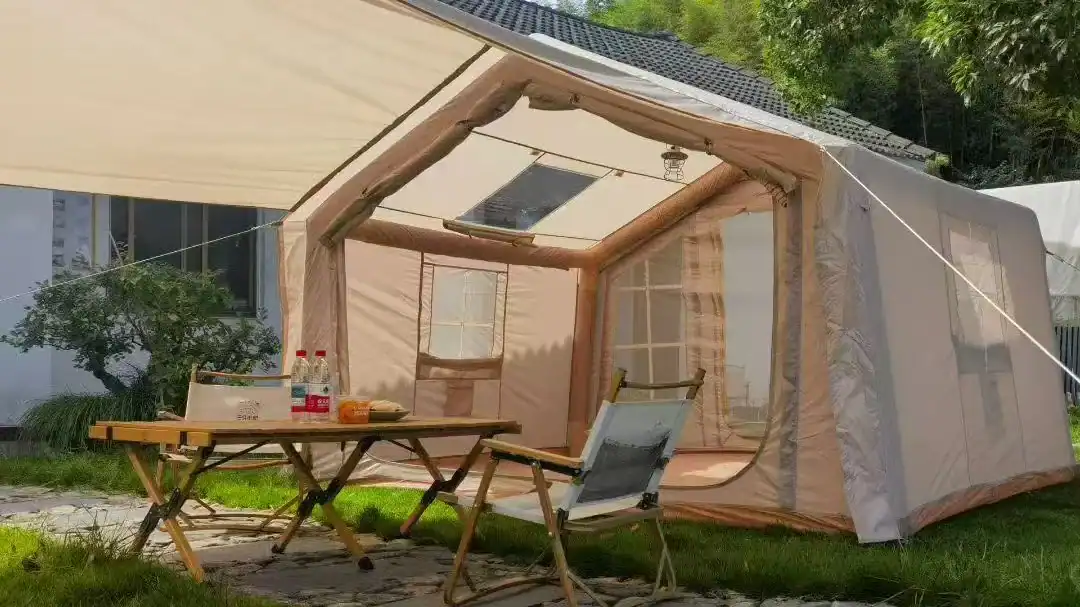
Bundling standard models is the fastest way to drop per-unit MOQ without raising total spend.
Most suppliers set MOQ floors based on how much production line setup time a single SKU consumes. For inflatable tents, that setup involves welding jig changes, air beam size adjustments, and fabric roll swaps. A factory running four different tent models in one batch only stops the line once for each changeover. That efficiency lets them accept a lower minimum per model than if you ordered each one separately.
Bundling standard models to reach MOQ faster
Suppose your supplier requires 300 pieces per SKU but you only need 100 units of three different inflatable tent designs. Bundle those three into one production order. The factory schedules all three back-to-back, shares the same TPU film stock if the colors match, and uses existing welding templates for standard beam diameters. Your total order hits 300 pieces — the MOQ threshold — and you get three SKUs instead of one.
This works best when the bundled models share material specs. A 4-person inflatable tent and a 6-person version using the same TPU thickness (0.4mm or 0.6mm) can run on consecutive shifts with minimal recalibration. The factory avoids sourcing new film rolls or changing welding temperatures, which saves them time and lets them offer you a blended MOQ.
Placing pre-season orders for better factory scheduling
Factories plan their capacity around known demand cycles. From March through July, most inflatable tent lines run at full capacity filling orders for European and North American retailers who need inventory by May for peak season. A buyer who places an order in October or November walks into an empty production calendar.
Sample Questions to Ask Every Supplier
A verbal promise of 30 days is not a schedule — it’s an estimate that disappears when you need accountability.
Most suppliers won’t give you a written production schedule unless you ask for it. A cheerful promise of “30 to 45 days” is not a schedule. It’s a verbal estimate that evaporates the moment you need to hold someone accountable. The first question you should ask every inflatable tent supplier: “Can you send me a week-by-week written production timeline for my order?” If they hesitate or deflect, that’s your signal. A serious factory — like the ISO 9001:2015 certified partners in Kelyland Outdoors’ network — already has this documented internally. They can share it because their process depends on it.
Requesting a Written Production Schedule
Ask for specific milestones: sample approval date, material arrival at factory, welding start, quality inspection window, packing completion, and port loading. Each milestone should have a target date and a responsible person. If the supplier says “we’ll update you weekly,” push for the actual dates upfront. The schedule should be attached to the purchase order, not mentioned in a WeChat message.
Asking About Penalties for Late Delivery
Most Chinese suppliers will not offer late-delivery penalties in their standard terms. You have to negotiate them into the contract. A common structure is 0.5% to 1% of the order value deducted per week of delay, capped at 5% to 10%. For seasonal products like inflatable glamping tents destined for spring retail windows, missing the ship date by two weeks can kill your entire season’s revenue. Make sure the penalty clause covers both production delays and port-side delays caused by incomplete documentation.
Confirming Whether Lead Time Includes Ocean Transit
Conclusion
Getting inflatable tent MOQ and lead times right is the difference between a smooth product launch and a cash-flow crisis. The numbers are clear: standard models start at 50-100 pieces, but first-time orders can stretch past 70 days once sampling and shipping are factored in. Plan backward from your target retail window, not forward from the supplier’s quote.
-
- Standard inflatable tent MOQs run from 50 to 100 pieces for stock models.
- Production lead times of 30-45 days exclude sampling and sea freight.
- Custom TPU colors or beam diameters will raise the MOQ floor.
- Pre-season orders secure better factory scheduling and pricing leverage.
Use this guide as your checklist before sending an RFQ to any small batch inflatable tent manufacturer. Pin down the exact air beam sizes and fabric colors that match your design — then ask whether those specs fit existing production templates. That single question determines whether you hit a MOQ of 50 or need to negotiate upward. Review Kelyland Outdoors’ inflatable tent lineup to see how standard air beam dimensions can accelerate your timeline without sacrificing customization.
Frequently Asked Questions
How to get a quote for Inflatable Tent MOQ and Lead Times: 2026 Sourcing Guide?
The exact answer depends on the product specification, quantity, and order setup. The safest approach is to confirm the commercial terms only after the final requirement sheet is locked. Confirm MOQ after the final spec and customization scope are fixed.
Can I request samples first?
The exact answer depends on the product specification, quantity, and order setup. The safest approach is to confirm the commercial terms only after the final requirement sheet is locked. Sample availability should be confirmed against the current stock and shipping plan.

 English
  Español
  Deutsch
  Français
  Português do Brasil
  Русский
  العربية
  한국어
한국어  日本語
日本語