 跳到内容
跳到内容 
The gap between two winter inflatable tent features can show up as a 30% difference in FOB pricing, yet both spec sheets look the same. Each has TPU air beams, a 4-season fly, and a snow skirt. But the cheaper version uses a thinner PVC blend that stiffens at -15°C, a valve that sticks, and a floor skirt that doesn’t actually hold when buried in snow.
Russian buyers have learned to look past the pretty sample. They now ask for an insulated floor with a real thermal break, a double-wall canopy that reduces condensation, and a vestibule that keeps wet tackle and boots out of the sleeping zone. Fire-retardant treatment is a legal gate, not a premium option: TR CU 019/2011 compliance is required for any tent sold for mass camping in Russia, and a factory that can’t show the certificate rarely gets past the first round of discussions. This is not a trend line—it is a market access condition.
The failure pattern that burns most brands is the gap between sample approval and the mass production run. A $50K order can collapse because the pre-production sample used 0.5mm TPU film while the production line switched to 0.3mm to hit a cost target. That’s where quality tolerance matters. Lock the material spec, not just the look, before you commit to a container.
Why the Russian Winter Tent Market Is Growing
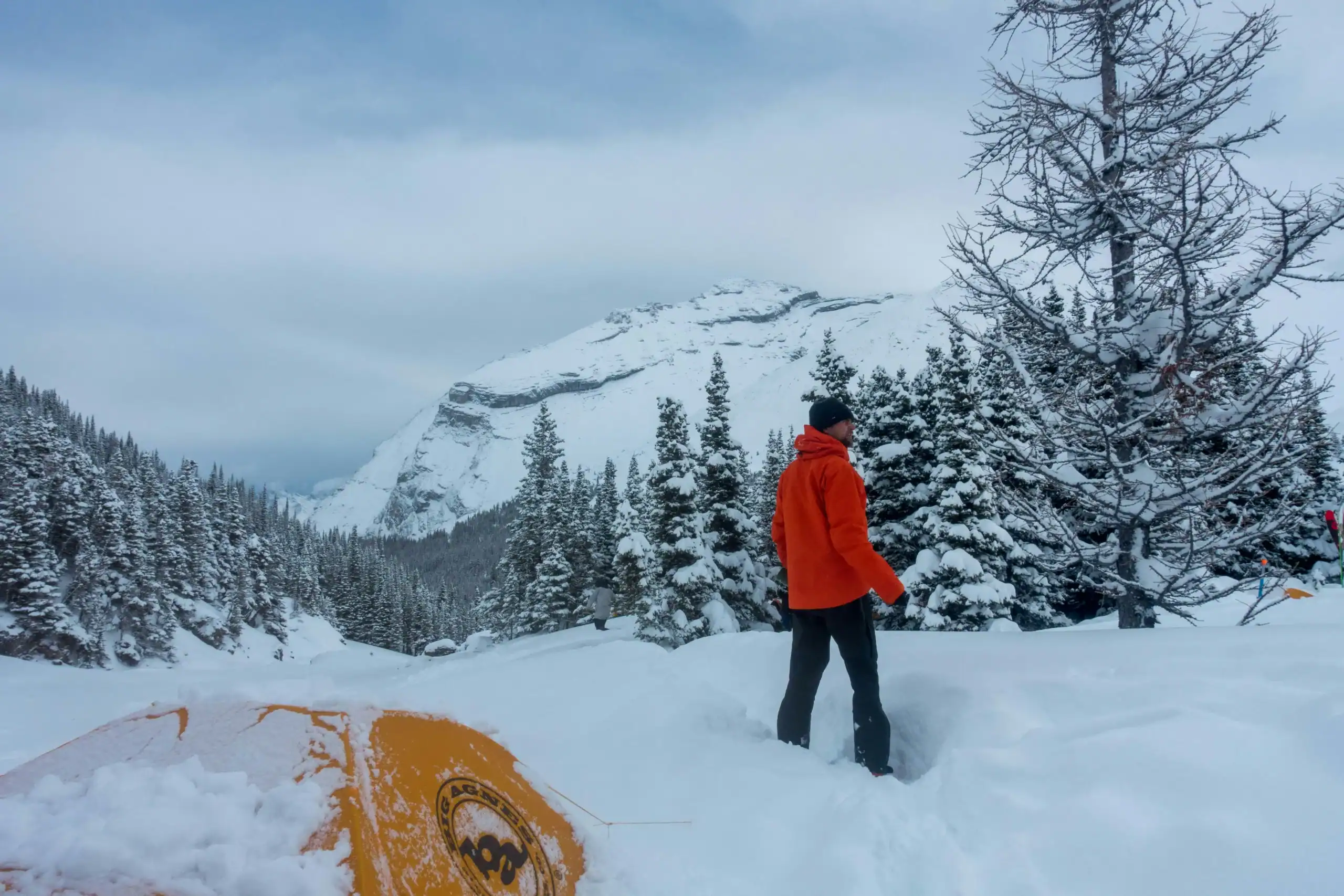
Two demand streams are pulling Russian buyers toward inflatable tents: glamping comfort and ice-fishing survival.
Russia’s winter tent market stopped behaving like a single category several seasons ago. It splits into two buying streams with different specifications, price points, and failure thresholds. Treat both as one product and the spec sheet falls apart.
Glamping and ice fishing segments
The glamping side buys inflatable bell tents and yurts with stove jacks, insulated floors, and fabric rated for heavy snow loads. Operators run these heated shelters all winter, so they spec for durability over long seasonal use. The ice fishing side wants compact 3-4 person tents with blackout walls, a sealed floor, and a vestibule for augers and wet gear.
Both segments share zero tolerance for structural failure. A snapped pole at -30°C is not a warranty claim; it is a safety incident. That is why Russian buyers increasingly request a built-in floor skirting that gets buried in snow — it blocks drafts and snow spray before they push under the inner edge.
The production network behind Kelyland runs a dedicated camping tent factory in Ningbo and a separate glamping tent factory in Shaoxing, both ISO 9001:2015 certified. That lets a brand develop an ice-fishing shelter and a large winter glamping yurt without switching sourcing partners.
Shift from pole tents to inflatables
The most visible shift in Russian RFQs is the move off pole frames. Fiberglass poles lose impact resistance in extreme cold, and aluminum poles deform under a heavy wet-snow load. TPU air beams flex and bounce back — no cracked ferrule, no snapped section, no mid-trip breakdown.
Kelyland’s sourcing desk has seen a 3x increase in requests for a cold-weather package that pairs thicker TPU tubes with insulated floors. Fire-retardant coating sits alongside those upgrades as a compliance gate, not an option — tents sold for mass camping in Russia must meet TR CU 019/2011.
-
- Thicker TPU tubes: The most requested upgrade in cold-weather RFQs, paired with insulated floors.
- Insulated floor with snow skirting: Seals the tent against drafts when buried in snow.
- Fire-retardant fabric: TR CU 019/2011 compliance is a market-entry requirement for mass camping tents in Russia.
Insulated Floors and Double Walls
R-value is measured in a lab.
For a private-label inflatable tent cold-weather package, the floor is where warmth is won or lost. Russian buyers rarely open a spec sheet asking for a specific R-value. They ask whether the floor skirting can be buried in snow to stop drafts and snow spray. That detail separates a tent that works in extreme cold from one that merely survives it.
R-value is only part of the equation
R-value measures thermal resistance of a material in a lab. Practical insulation depends on how well the tent stops air movement. A double-wall build creates an insulating air gap, but drafts through zippers, seams, and the floor perimeter bypass that gap entirely.
At the Kelyland tent factory in Ningbo, which produces 800,000 tents a year, cold-weather floors are assembled as a multi-layer system: PE or PVC/TPU coated mesh for waterproofing, a thermal liner above it, and a skirting that extends past the floor edge. The skirting is what actually gets buried in snow.
-
- Floor skirting: Burying the fabric skirt in snow anchors the tent and blocks wind-driven snow spray. Russian buyers consistently request this feature before they ask about R-value.
- Air gap: The inner tent and outer fly trap still air. That gap works only if corner seams and zipper flaps are properly sealed.
- Thermal liner: A detachable liner adds warmth without trapping daytime heat. It extends the tent’s usable season without adding permanent weight.
Double walls also reduce condensation. The outer fly stays cold, the inner tent stays warmer, and moisture passes through the fabric instead of dripping onto sleepers. That is a functional insulation benefit no R-value chart shows.

Snow-Load-Ready Air Beams
Snow load is a math problem.
Diameter alone will not save the tent. The tube material has to hold pressure in sub-zero temperatures. PVC stiffens and micro-cracks in extreme cold, while TPU keeps its elasticity. That is why Kelyland’s cold-weather package for Russian buyers specifies thicker TPU tubes instead of standard PVC, and the tent factory in Ningbo builds these frames with multi-layer TPU air tubes that stay responsive when snow and wind hammer the structure.
Read the burst pressure spec before you approve the sample
Burst pressure is the failure ceiling. The margin between working pressure and burst pressure is the number that actually matters. Industry-standard practice keeps working pressure well below the burst rating, and a supplier who cannot state both numbers on a spec sheet has not finished engineering the tent.
The freeze-thaw cycle makes this worse. Snow melts against the tent wall, refreezes into an ice crust, and the load on the beams changes character overnight. A beam with a thin safety margin fails first at the weld seam, not the fabric. That is where the inspection reports become the most valuable document in the packing list.
-
- Crown beam diameter: Ask for the largest beam spec on the frame, not the average. That beam carries the most snow on a dome or tunnel profile.
- TPU wall thickness: Thicker TPU walls add cold resilience and a wider safety margin. Standard PVC tubes are a red flag for a Russian winter line.
- Production inspection trail: Kelyland’s Ningbo tent factory runs ISO 9001:2015 processes with inspections at every production stage. Request the seam weld and valve seating check reports alongside the burst-pressure data sheet.
External Vestibule for Wet Gear
A vestibule without a stove jack isn’t a winter vestibule — it’s a wet storage locker.
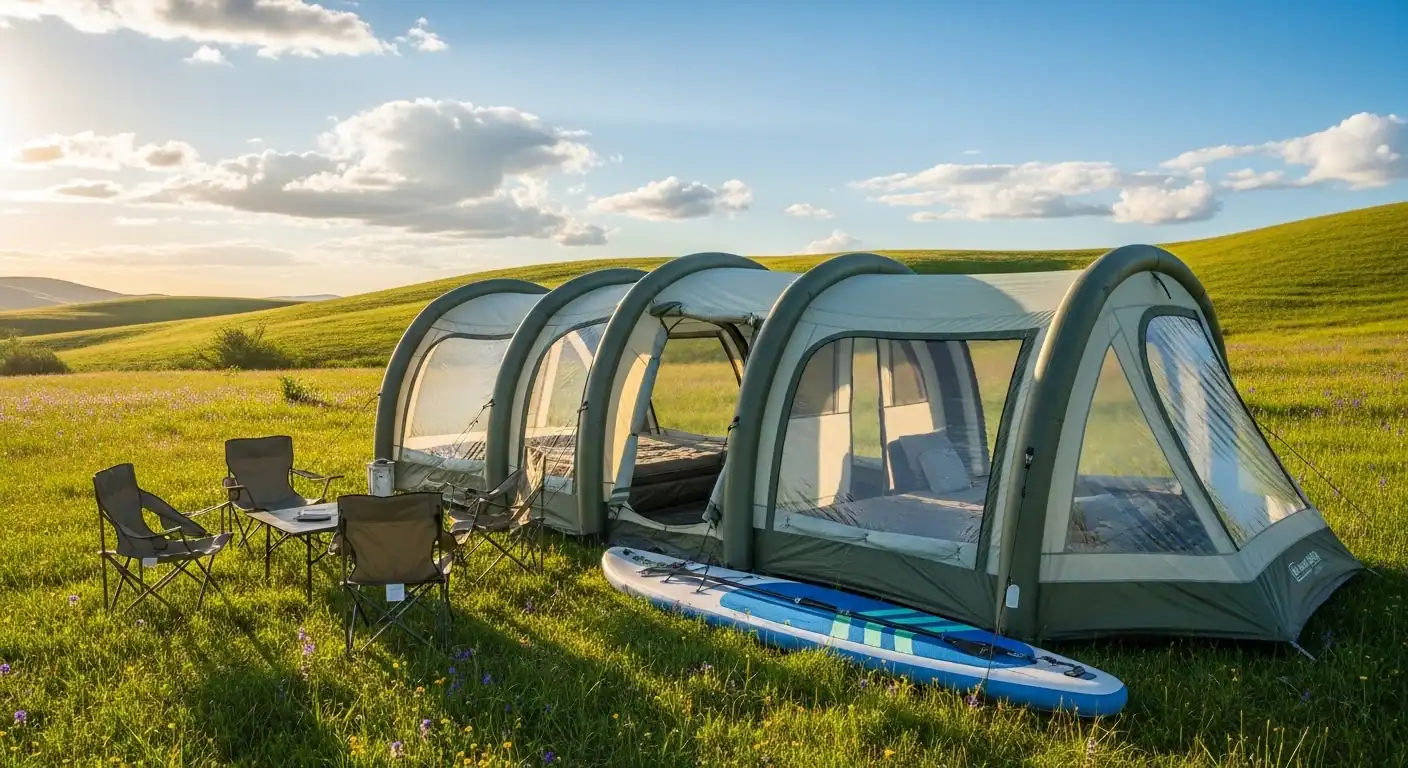
In Russia’s winter camping market, the vestibule is the working area of the tent — the place where damp outer layers come off, boots drain, and the stove gets lit before anyone sits down. A tent without a functional vestibule forces that routine into the sleeping area, which means snowmelt and fuel smell inside the living space.
Cooking in the vestibule
Serious Russian buyers look for a stove jack positioned high enough to clear the vestibule wall, with a heat-resistant shield beneath it. The canvas itself needs fire-retardant treatment — not a coating that washes out after ten exposures, but a formulation that complies with TR CU 019/2011. Any tent sold for mass camping in Russia carries that requirement.
Storage: wet gear stays outside the sleeping area
The floor is where most designs fail. A flat vestibule floor lets snowmelt run back under the inner tent. For ice fishing, Russian buyers increasingly request a built-in floor skirting that can be buried in snow — this prevents drafts and snow spray from entering the main cabin. Kelyland’s core tent factory in Ningbo builds this as a standard cold-weather option on inflatable models.
-
- Ventilation: A zippered vent panel near the top releases stove moisture without dropping the internal temperature.
- Gear loft: A mesh pocket row along the vestibule wall keeps gloves and hats off the wet floor.
- Groundsheet: TPU-coated polyester resists punctures from ice augers and crampons far better than standard PE.
From a sourcing standpoint, a winter vestibule is not a complex engineering problem. It is a materials and sewing problem. A core factory in Kelyland’s network produces 800,000 tents a year in Ningbo, and a separate partner line makes CE-certified gas stoves. That means the tent and the cooking hardware can move through one sourcing program, with one quality standard.

Fast Inflation in Extreme Cold
Below -20°C, the valve and pump carry the whole tent.
Inflating a tent at -20°C is a different engineering problem than at 20°C. The air beam material stiffens, valve gaskets harden, and the pump works harder to push the same volume. Most supplier testing happens on a warm factory floor, not in the conditions your customers actually camp in. That gap is where winter tent reputations get damaged.
Why the valve fails first
The valve is the highest-stress component in cold weather. Plastic valve assemblies lose flexibility at low temperatures, and the internal flap can stick open or closed after repeated inflation cycles. Russian buyers now request reinforced valve seats with wider bores — less surface area for frost to bridge, fewer moving parts to seize.
TPU beams and certified pumps
The cold-weather package from Kelyland pairs thicker TPU air tubes with CE/ETL-certified pumps, the same standard applied across its air mattress line. TPU holds flexibility where PVC stiffens, and the certified pump maintains airflow as temperatures drop. RFQs for tents with this package have tripled at Kelyland as Russian distributors prepare 2026 winter assortments.
Skip the cold-weather valve spec and the failure surfaces in the field, not the factory. A frozen valve on a January ice-fishing trip means a tent that bleeds pressure overnight, and an angry customer deflates it at daybreak. For a brand entering Russia, that’s returns, chargebacks, and a damaged retail relationship before the first season ends.
-
- Valve spec: Reinforced seat, wider bore, minimal moving parts. Confirm the supplier tests it at sub-zero temperatures before sample approval.
- Pump spec: CE/ETL-certified unit rated for continuous inflation in cold conditions, not just at warm ambient temperatures.
- Field check: Request a cold-chamber inflation video from the factory. If they cannot produce one, the design is not winter-ready.
Fire-Retardant Materials
In Russia, FR is a market-entry requirement — no TR CU 019/2011 declaration, no compliant sale.
Fire-retardant treatment is not a spec-sheet checkbox when the destination is Russia. Under TR CU 019/2011, the declaration of conformity must exist before tents go into circulation. Skip it, and customs rejection is only the first problem. Re-export, storage, and the lost sales season land on the buyer’s margin.
What the declaration actually covers
-
- Fabric construction: The EAC declaration ties the fire-safety test to a specific fabric specification. Change the base weave, coating formula, or thread weight without re-testing, and the document no longer covers the batch.
- Batch testing: Samples are drawn from the actual production lot and tested in an accredited lab. Buyers should request the test report number and match it to the shipped goods — a generic company certificate is not proof of compliance.
- Failure outcome: A tent that fails the FR standard cannot be sold inside the Customs Union. The failed batch, the customs fees, and the destroyed margin roll back to whoever signed the purchase order without checking the declaration.
Why winter tents fail FR over time
Winter use adds another risk layer. Many mass-market factories rely on topical FR back-coatings — a chemical layer applied after weaving. These pass the initial lab check but degrade under sub-zero temperature cycling, interior condensation, and repeated folding. By mid-season, a tent can sit below the flame-spread standard it met when it left the port.
What to verify before you approve a sample
Ask two questions. First, is the flame retardant inherent to the polymer or a topical finish? Second, does the factory re-test after sewing and folding, or only on the raw roll? The material-sourcing step in Kelyland’s 10-stage process verifies FR-treated outdoor fabrics at the Ningbo tent plant — an ISO 9001:2015 facility — before cutting. A non-compliant roll found there costs days. The same roll found after stitching costs weeks and a full inspection cycle.
| Feature | Specification | Compliance | Advantage |
|---|---|---|---|
| FR Fabric Base | Polyester, Oxford, or TC Blend with flame-retardant additive | TR CU 019/2011 | Stops flame spread at the source |
| FR Coating System | PU, PVC, or Silicone back-coating with FR agents | TR CU 019/2011 | Delays ignition and reduces toxic smoke |
| FR Components | Fire-retardant thread, zipper tapes, and webbing | TR CU 019/2011 | Eliminates weak points in the tent envelope |
| Test Documentation | ISO 17025 lab reports + Declaration of Conformity | TR CU 019/2011 | Simplifies customs clearance and retail audits |
| Custom Color Dyeing | Pantone-matched dyeing on FR-treated fabric | TR CU 019/2011 | Preserves brand identity with certified flame retardancy |
| OEM Cold-Weather Package | Insulated floor + thicker TPU tubes + FR shell | TR CU 019/2011 | One integrated winter tent solution from a single supplier |

How to Source These Features from Chinese Factories
Send the cold-weather package spec before asking for a price.
Start the conversation with the cold-weather package spec, not a tent model name. Kelyland’s inbound RFQs for OEM inflatable tent cold-weather packages — thicker TPU air beams, insulated floors, snow-buriable skirting — have tripled in the last 12 months. That combination is now the entry ticket for the Russian winter market.
What the spec sheet must include
TR CU 019/2011 fire-retardant documentation should arrive with the pre-production sample. If the fabric test report doesn’t exist at sample stage, it won’t appear at container stage. That paperwork gap delays customs clearance and can sink a seasonal launch. Ask for the declaration of conformity alongside the sample.
-
- MOQ: Specific cold-weather models start at 50-100 pieces — enough inventory to test Russian demand without committing to a full container of stock.
- Lead time: Standard production runs 30-45 days. Custom fabric dyeing adds roughly a week, so build the sample approval loop into the calendar before you commit to a launch date.
- Samples: Paid samples are refundable against the bulk order. Low-cost samples can be free when you cover shipping. Always test the cold-weather package, not the base model.
- QC reporting: Partner factories inspect stitching, valve placement, and beam welds at every production stage, with reports available on request.
Why the factory network matters
Kelyland works through 17 core strategic factories and over 200 manufacturing partners, most ISO 9001:2015 certified. The inflatable tent line runs through its Ningbo partner with 800,000 units of annual capacity. That scale keeps TR CU documentation consistent across production runs.
Put the floor skirting in the drawing package. Russian buyers request skirting that buries into snow to block drafts and spray. A factory that hasn’t built this detail before will miss seam placement or add unnecessary weight. The pre-production sample should show the skirting seam and anchor-point reinforcement before you approve mass production.
| Feature | Factory Capability | Kelyland Advantage |
|---|---|---|
| Insulated Floors & Double Walls | Core tent factories in Ningbo/Shaoxing with TC fabric, Oxford, and double-wall construction; insulated floor skirting for snow burial | OEM/ODM engineering team supports cold-weather package specs; 3x increase in RFQs for insulated winter tents |
| Snow-Load-Ready Air Beams | TPU/PVC air tube manufacturing with custom beam diameters, burst pressure testing, and cold-resistant material compounding | 17 core strategic factories plus 200+ partners enable material benchmarking and sample verification before mass production |
| External Vestibule for Wet Gear | Custom pattern making and sewing lines for integrated vestibules, ice fishing tent layouts, and cooking/storage zones | Flexible MOQs from 50-100 pieces for pilot runs; standard production lead time of 30-45 days |
| Fast Inflation in Extreme Cold | Cold-resistant valves, high-pressure pumps, and oversized inflation ports sourced from specialized component suppliers | Full bill-of-materials sourcing under one roof; pre-shipment inspection validates valve and pump performance |
| Fire-Retardant Materials | Fire-retardant coated fabrics and trims; documentation support for TR CU 019/2011 compliance | ISO 9001:2015 certified factory partners; export paperwork and customs guidance included in every order |
| End-to-End Sourcing Process | 17 core factories and over 200 manufacturing partners, most ISO 9001:2015 certified, across tent, fabric, and component production | One-stop management from design and prototyping to QC, global logistics, and post-sale support; no need to coordinate multiple vendors |
Conclusion
Skip these five features and a $50K order can evaporate in a single -30°C night — collapsed beams, frozen valves, returned units. TR CU 019/2011 alone blocks market entry without certification, and every week spent re-engineering after sample approval pushes a November launch into February. Treating cold-weather engineering as the baseline is the only positioning that holds in Russia’s winter tent segment.
-
- TR CU 019/2011 fire-retardant compliance is a market-entry requirement, not an optional coating upgrade.
- Floor skirting that buries into snow blocks drafts and snow spray — Russian buyers increasingly request it on winter RFQs.
- Thicker TPU air tubes and insulated floors anchor the cold-weather package behind Kelyland’s 3x RFQ increase.
- A 30-45 day production lead time plus sample approval means winter lines are locked before September.
Deferring the decision until spring forfeits the production slot needed for a November launch; the brands that order samples now will be the ones with certified, snow-load-ready tents when the 2026-27 winter season opens. Review the inflatable tent specifications on the Kelyland Outdoors product page and compare each feature against this list before you send the next RFQ. That comparison costs an afternoon; rebuilding a rejected winter line costs a season.
Frequently Asked Questions
What features do Russian winter campers demand in inflatable tents?
They demand insulated floors, double walls, snow-load-ready air beams, an external vestibule, fast cold-weather inflation, and fire-retardant fabric. These five features directly drive buying decisions for glamping and ice fishing segments. Use this checklist to shortlist factory specs.
How should inflatable tent air beams handle snow load?
Specify larger beam diameters and higher burst pressure so the structure sheds snow without collapsing. The actual rating depends on tube size, fabric strength, and frame geometry, so verify with a load test and not. Request snow-load test data before mass production.
What R-value is practical for an insulated floor?
Look for a floor with a claimed R-value of at least 2.0 and a separate insulated inner groundsheet for real cold-weather comfort. Lab R-value matters, but practical performance depends on seam. Confirm the floor build-up and draft seals, not just the R-number.
Can Kelyland customize winter inflatable tents?
Yes, Kelyland supports OEM/ODM customization for inflatable tents, including fabric, beam, valve, and branding options. Their network handles prototyping and small-batch production, with MOQs starting as low as 50-100 pieces for select items. Send your spec sheet to get a sourcing timeline.
What fire-retardant compliance is needed for Russia?
Inflatable tents for the Russian market should meet fire-retardant requirements under TR CU standards. Confirm the exact certificate with your supplier and have the fabric test report included in your compliance package. Ask for the TR CU test report during sample approval.

 English
  Español
  Deutsch
  Français
  Português do Brasil
  Русский
  العربية
  한국어
한국어  日本語
日本語