 跳到内容

inflatable tent after-sales support is the first checkpoint buyers should lock before they approve a supplier, budget, or production slot. “The pre-production sample was perfect. But the first batch of inflatable tents we received had a slow leak at the drop-stitch junction on every unit over six meters.” That conversation happens more often than most retail category managers want to admit. The gap between a hand-inspected prototype and a mass production run of 500 units is where real-world inflatable tent after-sales support gets tested — and where most supplier relationships break down.
A $50,000 order shouldn’t hinge on whether the factory stocked spare air beams or if their QC team logged the production lot number from the failing batch. But that’s exactly what determines whether you restock for peak season or sit with empty shelves while replacement parts take 45 days to manufacture. The five warranty clauses in this article come directly from contract reviews I’ve done across Chinese factories, where a missed detail in defect coverage or valve repair terms turned a routine claim into a three-month dispute.
The benchmark you need for your next supplier call: any credible inflatable tent warranty should cover air beam failure for at least one year, not just the shell fabric. If the beam coverage is shorter, you’re accepting that the component most likely to fail has the least protection.
Why After-Sales Support Matters for Inflatable Tents
A failure traced to a lot number is fixed in one production cycle.
You’re six months into selling an inflatable tent under your own brand. Then the first customer complaint lands: a slow air leak at the drop-stitch junction of the main beam. The seller emails the supplier. Silence for three days. Then a response: “Please send photos.” The seller sends them. Another three days pass. We will check with our QC team.” A week later, they offer to replace the tent — but only if you pay return shipping, which costs nearly half the unit price.
This scenario plays out more often than most importers realize. The difference between a supplier who protects your brand and one who damages it comes down to what’s written in the after-sales clauses before you place the first order.
Common failure modes: air beam leaks, valve cracks, seam tears
Inflatable tents fail in predictable patterns. The air beam develops micro-leaks at the drop-stitch termination points — this is where internal thread tension concentrates during inflation and deflation cycles. Valve housings crack at the threaded base when over-torqued during assembly or when exposed to temperature swings below freezing. Seam tears occur along welded or glued lap joints where fabric layers separate under sustained pressure.
These aren’t rare defects. They are engineering trade-offs that every inflatable tent manufacturer manages through material selection and process control. The factories Kelyland Outdoors partners with use TPU-coated nylon for air beams — a material that maintains flexibility down to -20°C and resists UV degradation better than PVC alternatives.
The cost of poor warranty support for retailers
When a supplier drags out a claim for weeks, you absorb the cost in three ways: refunding or replacing the unit from your inventory, losing future sales from that customer, and fielding negative reviews that deter new buyers. For a retail category manager managing 50+ SKUs across multiple suppliers, one bad after-sales experience with an inflatable tent can shift an entire category away from that source.
5 Warranty Clauses to Negotiate Before Signing
A beam warranty that expires before the tent shell leaves retailers holding the bag.
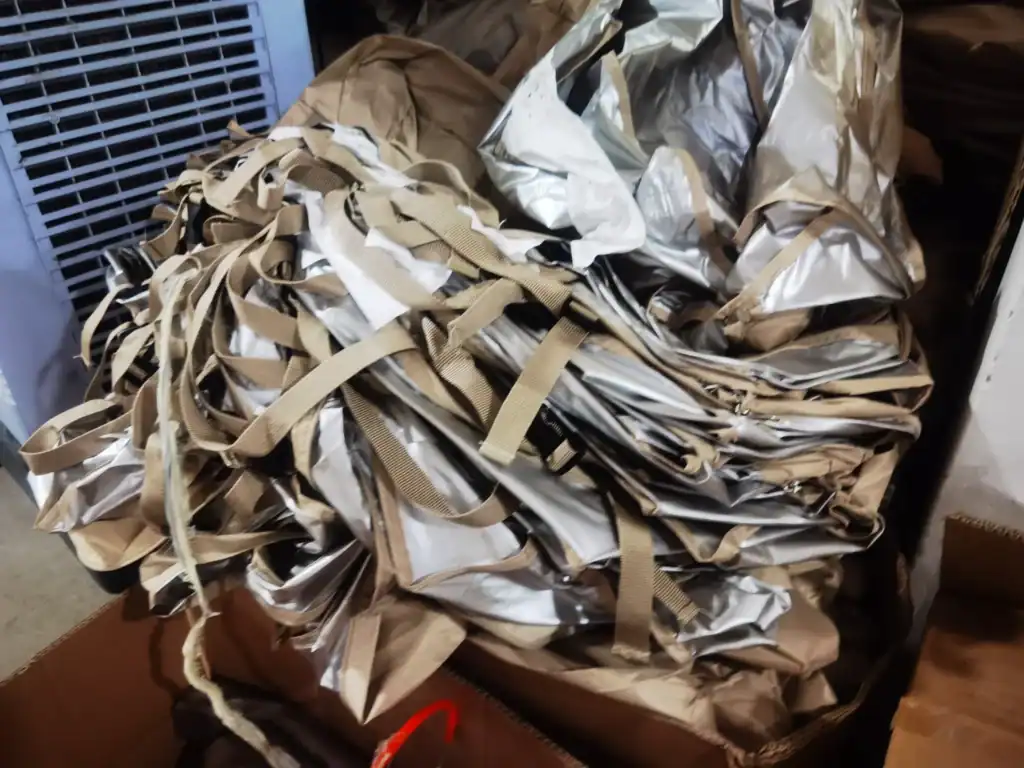
Most inflatable tent warranties split coverage between two components: the fabric shell and the air beam system. A common gap appears when the beam warranty runs 90 days while the fabric gets one year. Beams fail first — they endure repeated inflation cycles, UV exposure, and abrasion at the drop-stitch junction. If your contract treats them as separate line items with different terms, you will manage claims on the most failure-prone part under a shorter clock.
Defect Coverage Period and What Counts as Manufacturer Defect
Negotiate a single defect coverage period for both beam and fabric — minimum one year from shipment date. The definition of “manufacturer defect” needs specificity. Does it include slow air loss at weld seams? Valve stem cracking after 30 inflation cycles? Delamination at TPU-to-fabric bonds? Vague language like “workmanship issues” gives suppliers room to reject claims on borderline failures. Spell out three to five common failure modes in the clause so both sides agree on what triggers a claim.
Spare Parts Availability: Valves, Beams, Repairability
Ask whether replacement beams are stocked or made to order. Made-to-order beams take up to 45 days — that is six weeks your retail shelves sit empty during peak season. A supplier with dedicated spare parts inventory can ship a replacement valve assembly or pre-sealed beam within a week. Confirm that repair kits (patch material, seam sealant, replacement valves) are included with bulk orders so your customers can fix minor punctures without filing a claim.
Repair vs Replacement Thresholds and Return Shipping
“We will repair or replace at our discretion” is not acceptable for commercial importers. Set a clear threshold: any defect requiring more than two field repairs qualifies for full replacement. Return shipping costs matter more than most buyers realize. If the supplier requires the buyer to ship a failed tent back to China for inspection, the buyer eats $80–$150 in freight per unit plus customs paperwork. Negotiate that photo-and-video evidence suffices for most claims, with return only required for major structural failures.
Response Time for Claims and QC Root Cause Reports
Inflatable tent QC traceability lot number protocols separate serious suppliers from reactive ones. A good after-sales team asks for the production lot number before processing any claim. If they do not request it, their traceability is weak and future defects will repeat across multiple batches without correction. Lock in a written response time: initial acknowledgment within 48 hours, root cause report within ten business days of receiving evidence.
Brand Protection for Private-Label Warranty Claims
Private label inflatable tent warranty negotiation must include brand protection clauses. When an end customer files a claim against your brand name, you need rapid resolution — not a supplier who ghosts you for two weeks while negative reviews pile up online. Agree that emergency replacements can be drop-shipped directly from the factory to your customer under neutral packaging if needed.
Case Study: How a 3-Year Inflatable Tent Claim Was Resolved
A drop-stitch junction failure took 18 months to surface — the slow leak pattern was invisible during standard QC inflation tests.
The Defect Pattern: Slow Air Loss at Drop-Stitch Junction
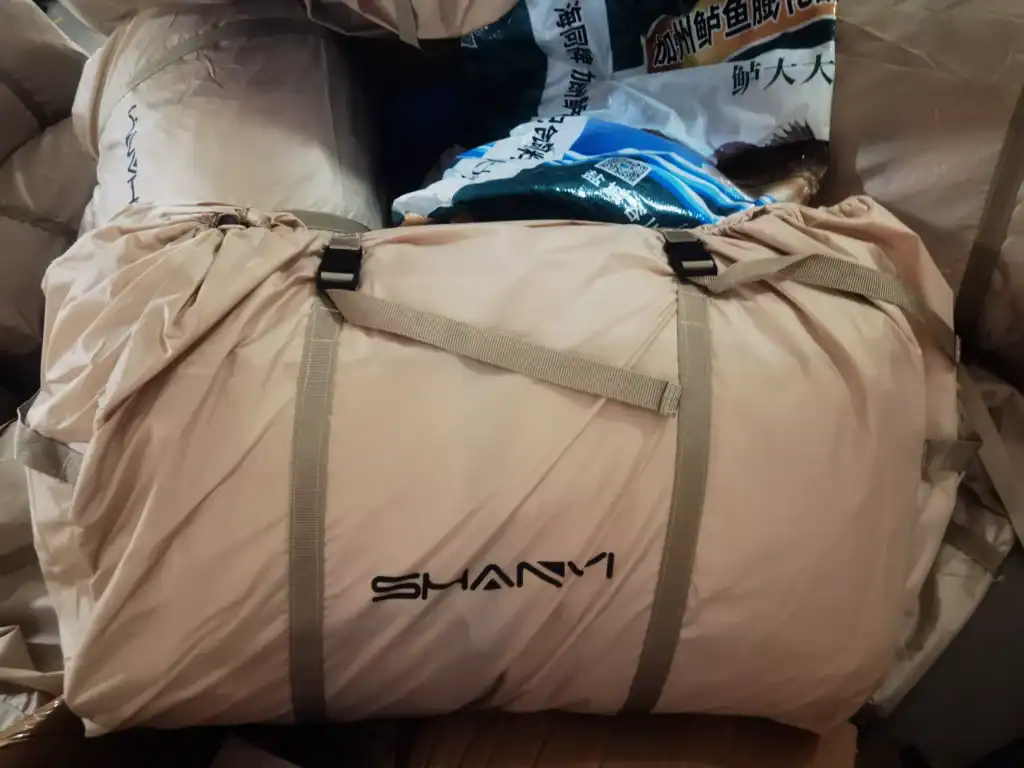
An Australian retailer flagged a recurring issue across its 3-season inflatable tent line. Units that passed factory inflation tests — holding pressure for 24 hours at the QC bench — were losing 15-20% of their air volume after two nights of field use. The leak source wasn’t a valve or a seam tear. It was the drop-stitch junction where the internal beam wall meets the outer shell fabric.
Drop-stitch construction relies on thousands of polyester threads connecting two fabric layers under tension. When the thread density at the perimeter weld is inconsistent, micro-gaps develop over time. The tent holds air during static testing because the gaps only open under dynamic load — when campers shift weight, wind gusts stress the structure, or temperature changes alter internal pressure. Standard QC inflation cycles catch gross leaks but miss this failure mode entirely.
The retailer had sold roughly 1,200 units from that production run before complaints surfaced. Replacement costs, return shipping, and lost future sales added up to roughly $28,000 in direct exposure before factoring in brand reputation damage.
Factory Response: Replacement Parts and QC Corrective Action
The supplier’s after-sales team followed a structured triage process. First, they requested photos of each failed unit and the production lot number printed on the tent’s spec tag. This confirmed all affected units came from a single batch produced during a July heatwave — when ambient humidity in the Ningbo factory exceeded 85%, affecting TPU weld adhesion at the beam junctions.
Within two weeks, the factory shipped replacement air beams for every claimed unit. Because they stock pre-welded beam assemblies for their most common inflatable tent models — rather than making them to order — lead time was seven days instead of the typical 45-day cycle for custom beams. That kept the retailer from going out of stock during peak season.
QC corrective action: The factory added a dynamic pressure hold test to its inline inspection protocol. After standard inflation, each tent undergoes a 30-minute cycle with incremental weight loading (simulating occupant movement) while monitoring pressure drop via digital sensors. They also tightened humidity controls in the welding workshop below 60% RH during TPU bonding shifts.
Traceability upgrade: Each production lot now carries a QR code linking to weld parameters (temperature, pressure, dwell time) for every beam station operator on that shift. If another pattern emerges in future claims, root cause identification drops from weeks to hours.
Building an After-Sales Playbook with Your Supplier
Field failure data is free R&D if you structure it right.
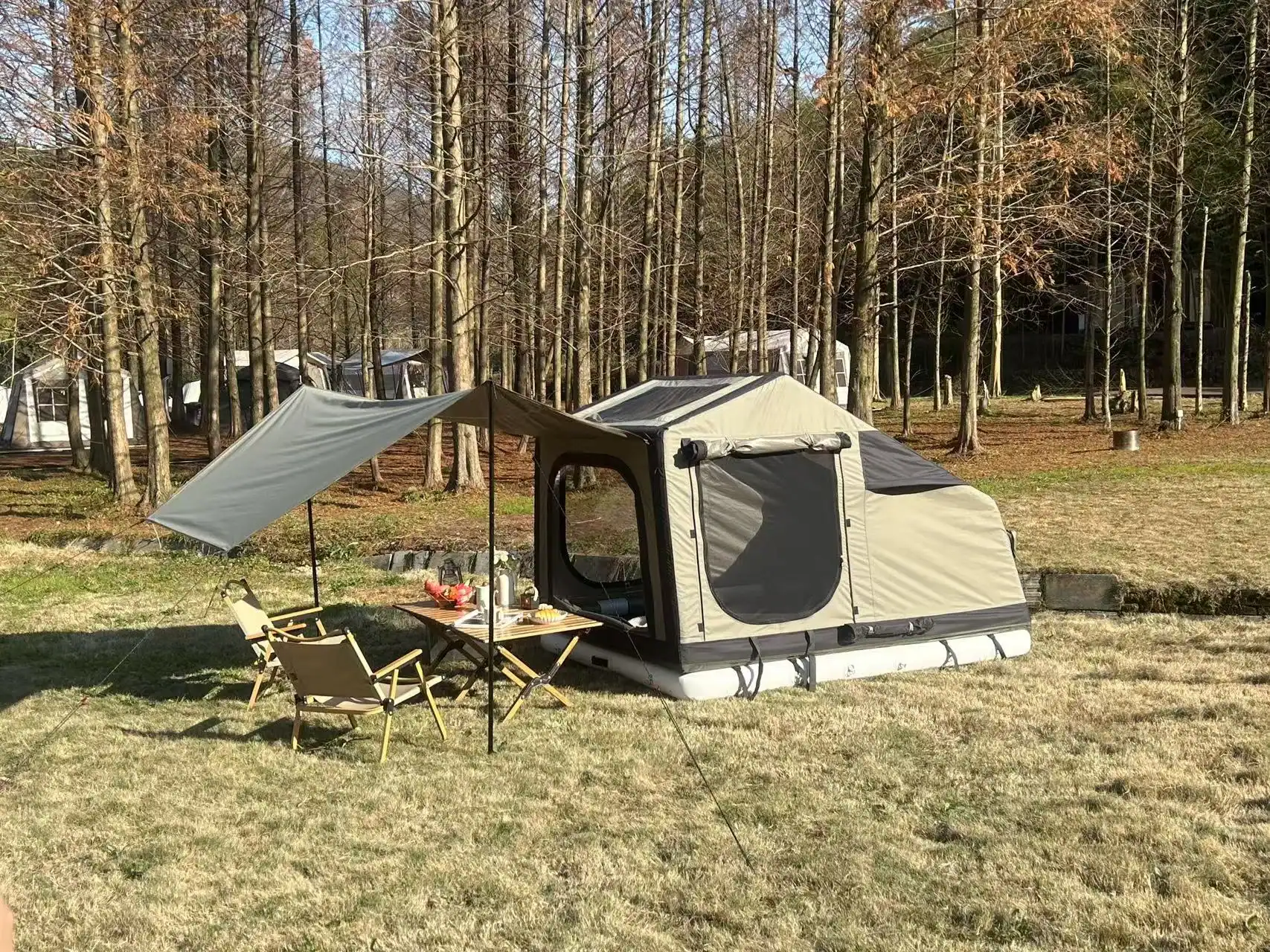
The after-sales relationship with your supplier should not end when the replacement part ships. The real value comes from turning field failures into production improvements. A supply chain manager who treats warranty claims as a feedback loop — rather than a cost center — gets better product on the next order.
Documenting Field Failures with Photos and Serial Numbers
When a retailer reports an inflatable tent losing pressure at the drop-stitch junction, the first thing a good after-sales team asks for is the production lot number. If the supplier does not ask for it, their QC traceability is weak — and that same defect will repeat across multiple batches. Build a standard claim template: clear photos of the failure point, the lot number or date code from the sewn-in label, and a brief description of use conditions (number of setups, terrain, temperature range).
Without this structure, you get vague emails like “the tent leaks” and no way to isolate whether it was a bad beam weld, a valve crack, or user error. The after-sales manager needs that data within 48 hours of the customer report to trigger corrective action before the next production run starts.
Using Claims Data to Improve Next Production Run
A pattern of slow air loss at beam-to-floor seams tells your factory something specific: either the heat-seal temperature drifted during that shift, or the TPU film thickness was below spec on that batch. A supplier with ISO 9001:2015 procedures — which Kelyland Outdoors’ partner factories follow — can pull shift records and material certs for that lot number and identify exactly where the process broke down.
That corrective action then feeds back into the next production agreement: higher inspection frequency at that weld station, updated temp settings on the RF sealer, or a switch to 0.6mm floor material instead of 0.4mm. You do not pay extra for this improvement — you get it because you documented failures properly and demanded root cause reports.
Conclusion
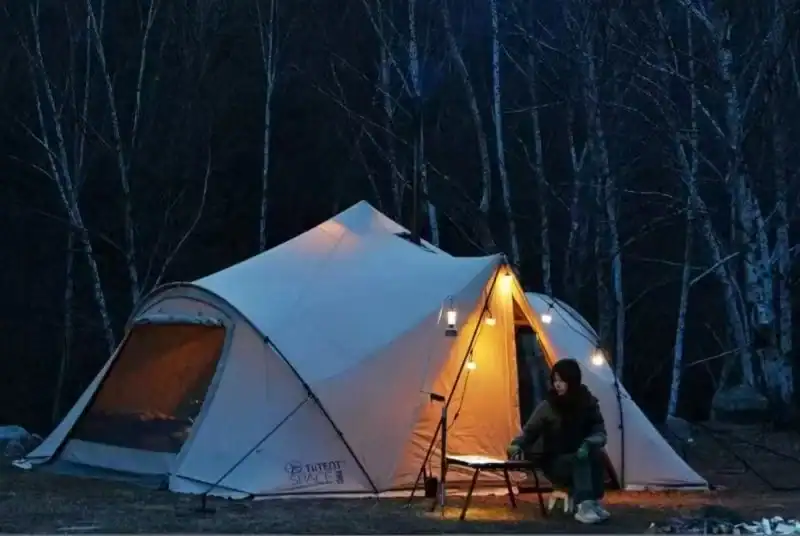
An inflatable tent warranty is only as good as its weakest clause. A mismatch between beam and fabric coverage, a vague definition of manufacturer defect, or a 45-day lead time on replacement beams can turn a routine claim into a peak-season stockout. The suppliers who ask for the production lot number before processing a claim are usually the ones with QC systems that prevent the defect from repeating.
-
- Negotiate beam warranty to match the tent shell term.
- Confirm whether replacement beams are stocked or made to order.
- Verify the supplier requests lot numbers for claim processing.
Before you finalize your next sourcing agreement, take these three clauses and run them past your supplier’s after-sales team. If they hesitate on any of them, you know where the gaps are. Review Kelyland Outdoors’ inflatable tent specifications and warranty terms on their product page to see how a structured post-sale support system works in practice.
Frequently Asked Questions
How to get a quote for Inflatable Tent After-Sales Support: 5 Warranty Clauses?
The exact answer depends on the product specification, quantity, and order setup. The safest approach is to confirm the commercial terms only after the final requirement sheet is locked. Final terms should be confirmed against the exact product specification and order conditions.
Can I request samples first?
The exact answer depends on the product specification, quantity, and order setup. The safest approach is to confirm the commercial terms only after the final requirement sheet is locked. Sample availability should be confirmed against the current stock and shipping plan.

 English
 Español
 Deutsch
 Français
 Português do Brasil
 Русский
 العربية
 한국어
 日本語